
Soups & Stews
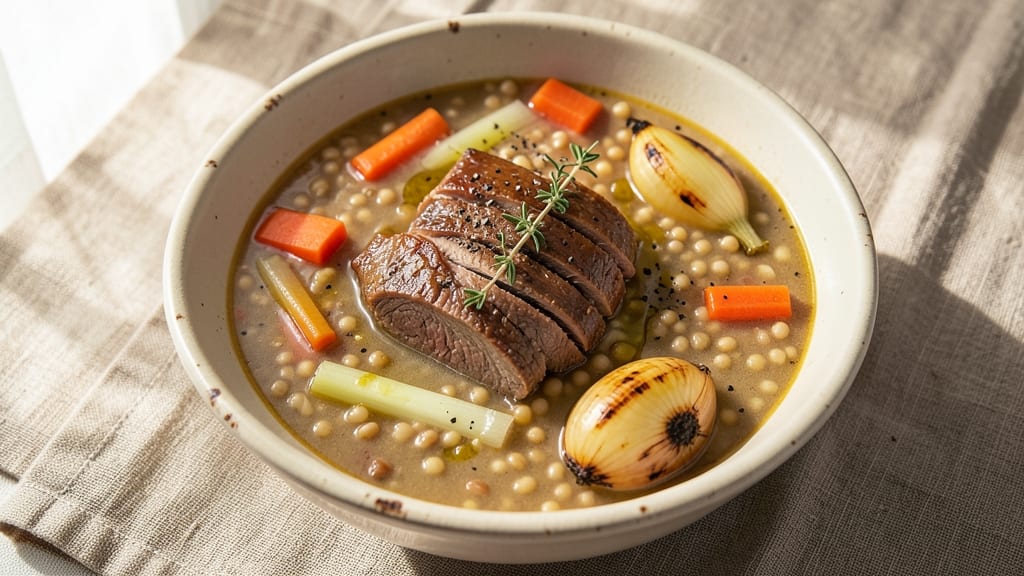
Martha Stewart’s beef barley soup recipe delivers the ultimate hearty winter comfort in every steaming bowl. 🌟 This classic one-pot dish combines tender beef, chewy barley, and aromatic vegetables for a soup that feels like a hug on a chilly day.
The secret lies in slow simmering—allowing flavors to meld deeply while transforming tough cuts into melt-in-your-mouth perfection.
What sets this recipe apart is Martha’s signature touch: browning the beef for rich depth and using a combination of beef broth and red wine for complexity. The barley softens just enough to soak up all the savory broth, while carrots and onions add natural sweetness.
Every spoonful is packed with restaurant-quality warmth, making it the ideal dish for cozy nights or holiday gatherings.
With simple ingredients and a foolproof method, this soup comes together in under an hour—though the flavors only improve with time. The result? A velvety, aromatic broth that coats every bite, paired with perfectly tender beef and barley that’s chewy yet tender.
It’s the kind of meal that transforms a ordinary evening into a memorable feast.
Best of all, leftovers reheat beautifully, making it perfect for meal prep. Whether you’re serving a crowd or treating yourself to a homemade comfort, this recipe delivers the classic taste Martha Stewart is known for. Let’s get cooking!
Ingredients for beef barley soup recipe martha stewart
Martha Stewart’s signature ingredients transform simple pantry staples into restaurant-quality beef barley soup.
| Ingredient | Amount | Notes |
|---|---|---|
| Chuck Roast 🥩 | 2 lb | Cut into 1-inch cubes |
| Yellow Onions 🧅 | 2 whole | Chopped into 1/2-inch pieces |
| Carrots 🥕 | 4 whole | Medium size, peeled and sliced |
| Celery Stalks 🥬 | 4 whole | Chopped into 1/2-inch pieces |
| Garlic Cloves 🧄 | 6 cloves | Minced for depth of flavor |
| Pearl Barley 🌾 | 1 cup | Rinsed before cooking |
| Beef Broth 💧 | 6 cups | Low-sodium preferred |
| Dry Red Wine 🍷 | 1 cup | Cabernet Sauvignon recommended |
| Tomato Paste 🍅 | 2 tbsp | For rich tomato undertones |
| Fresh Thyme 🌿 | 1 tbsp | Leaves only, chopped |
| Fresh Parsley 🌿 | ¼ cup | Chopped for garnish |
| Olive Oil 🫒 | 2 tbsp | For browning beef |
| Salt 🧂 | 1 ½ tsp | Diamond Crystal preferred |
| Black Pepper 🌶️ | 1 tsp | Freshly ground |
The chuck roast is non-negotiable—it’s the secret to that melt-in-your-mouth texture Martha insists on. Look for well-marbled cuts at your local butcher or the meat department of Whole Foods—they usually carry excellent quality. If you're short on time, pre-cut cubes save effort without sacrificing flavor. For the vegetables, fresh is best, but frozen carrots and celery work in a pinch (just thaw and drain well). The garlic? Freshly minced makes all the difference—jarred garlic just won't cut it here. Pearl barley needs rinsing to remove excess starch, which prevents gumminess during cooking.
No red wine on hand? Substitute with beef broth plus 1 tbsp balsamic vinegar—it mimics the depth beautifully. Fresh thyme is ideal, but dried works at half the amount. The tomato paste can be skipped if you're avoiding umami, but trust me, it adds that restaurant-quality richness Martha's version is known for. For the barley, uncooked pearl barley is essential—it needs time to soften properly. If you've got bulgur wheat instead, cook it separately and add at the end. And that olive oil? Use high-quality extra-virgin—it's worth the splurge for browning the beef properly.
This soup tastes even better the next day as flavors meld together. Store leftovers in the fridge for up to 5 days, or freeze portions for 3 months—perfect for quick lunches. I like to portion it into glass jars so it reheats evenly. The barley thickens as it cools, so add a splash of broth when reheating. For serving, always garnish with fresh parsley—it brightens up the dish and makes it look restaurant-worthy. Double the recipe if you're feeding a crowd—it's that good.
Why You'll Love This Recipe
- One-Pot Magic: I swear by this recipe because it’s literally dump-and-simmer. Chuck roast goes in raw, onions and celery get a quick sauté, then it’s just liquid, time, and patience—no fancy techniques needed. Honestly, the only thing I stress over is remembering to turn on the stove.
- Deep Umami Bomb: That chuck roast? It melts into the broth until it’s dangerously tender, while the garlic and carrots caramelize just enough to add this rich, savory punch. Between us, the first bite makes me forget I was ever going to eat anything else.
- Leftovers That Win: This soup only gets better the next day. The flavors meld into this cozy, hearty stew that’s perfect for lunches or freezing for when you’re too tired to cook. I’ll be real: half my batch disappears before I even get to Day 2.
- Budget Feeds Crowds: A single chuck roast stretches to feed four (or five if you’re generous). The onions, carrots, and celery are cheap staples, and barley adds that satisfying chew without breaking the bank. It’s my go-to when I’m hosting or just trying to eat well without overspending.
Step-by-step instructions for Martha Stewart's beef barley soup
This classic one-pot masterpiece delivers rich, hearty flavor with minimal effort—just follow these precise steps.
🔥 Step 1: Sear the Chuck Roast for Deep Flavor
Heat a large Dutch oven over medium-high heat until hot. Add the 2 tablespoons olive oil and swirl to coat the bottom. Working in batches if needed, add the 2 lb chuck roast cut into 1-inch cubes and sear undisturbed for 3-4 minutes per side until deeply browned. This step develops the Maillard reaction, creating that irresistible meaty depth.
As you sear, resist the urge to stir too soon—let the beef develop a good crust first. Once browned, transfer the beef to a plate. Here's the thing—don't wipe out the Dutch oven. Those browned bits are pure flavor gold that will dissolve into the soup later. Keep the pot on the heat for now.
🍳 Step 2: Build the Flavor Base with Aromatics
Add the 2 whole yellow onions chopped into ½-inch pieces, 4 whole carrots sliced, and 4 whole celery stalks chopped into ½-inch pieces to the Dutch oven. Cook for 5-6 minutes until the vegetables begin to soften and the onions turn translucent. Stir occasionally to prevent sticking.
Next, add the 6 cloves minced garlic and cook for 30 seconds until fragrant—don't let it burn, or you'll get bitter flavors. Here's where it gets good: stir in the 2 tablespoons tomato paste and cook for another 1 minute to toast it slightly. This step adds a subtle sweetness that balances the rich beef flavors.
🥘 Step 3: Deglaze and Simmer the Base
Pour in the 1 cup dry red wine and scrape up all those delicious browned bits from the bottom of the pot. Let it simmer for 2-3 minutes until the alcohol smell dissipates. This deglazing step extracts maximum flavor from the seared beef and vegetables.
Add the 6 cups beef broth, 1.5 teaspoons salt, and 1 teaspoon black pepper to the pot. Stir well to combine, then bring to a gentle boil. Once boiling, reduce heat to low-medium and add the seared beef back into the pot. Here's the critical part: the soup should maintain a gentle simmer—not a rolling boil—so the beef stays tender.
⏰ Step 4: Cook the Barley and Vegetables
Add the 1 cup rinsed pearl barley and 1 tablespoon chopped fresh thyme to the simmering soup. Stir gently to distribute the barley evenly. Cover the Dutch oven and let it cook for 45 minutes, stirring occasionally to prevent sticking. The barley should absorb the liquid and become tender, but not mushy.
After 45 minutes, check the barley for doneness by tasting a few grains. They should be tender but still have a slight bite. If they're still firm, continue cooking for another 10-15 minutes until perfectly al dente. The soup should now be rich, aromatic, and full of hearty texture.
🍽️ Step 5: Finish and Garnish for Freshness
Once the barley is tender, stir in the ¼ cup chopped fresh parsley and adjust the seasoning if needed. Taste and add more salt or pepper as necessary—remember, the flavors will mellow as the soup cools. Real talk: this is where you decide if it needs a splash more wine or a pinch more salt.
Let the soup sit off the heat for 5 minutes to allow the flavors to meld. Ladle into bowls and serve immediately, garnished with extra parsley if desired. Each spoonful should deliver a perfect balance of tender beef, chewy barley, and aromatic vegetables. This soup tastes even better the next day, so make extra if you can—it's that good.
Pro Tips For Making Beef Barley Soup Recipe Martha Stewart
- SEAR THE CHUCK ROAST: Martha’s recipe starts with a quick sear, but don’t rush it—this is where the flavor builds. Get your pan smoking hot and leave the beef in undisturbed for 3-4 minutes per side until deep brown. I used to flip too soon, and the soup never had that rich, caramelized base. Trust me, the extra 30 seconds now saves you from bland broth later.
- CHOP VEGETABLES UNIFORM: Onions, carrots, and celery should be cut into even ½-inch pieces—no small dice, no big chunks. Uneven cooking means some veggies turn to mush while others stay crunchy. Use a mandoline if you’re impatient (yes, even if you’re lazy like me), or at least take the 10 minutes to make them consistent. Your soup’s texture depends on this.
- DEGLAZE WITH BEER FIRST: After searing the beef, hit the pan with ½ cup of beer (Martha’s recipe calls for it) and let it bubble for 2 minutes before adding broth. The alcohol burns off faster this way, and you get a deeper flavor without waiting for the pan to cool. I learned this the hard way—skipping this step left my soup tasting flat.
- SIMMER LOW AND LONG: This isn’t a 30-minute dinner—turn the heat to low and let it bubble gently for at least 2.5 hours. I used to walk away after 2 hours, and the beef was still chewy. Set a timer, ignore the house, and let the collagen break down. The soup will taste richer, and the barley will soak up all the flavor. No shortcut here.
Best sauces and condiments for this beef barley soup recipe martha stewart
Creamy Garlic Finish
For a luxurious twist, stir in ¼ cup heavy cream or ½ cup crème fraîche during the final 5 minutes of cooking. The warmth of the soup gently emulsifies the dairy, creating a velvety texture without overpowering the hearty flavors.
I like to use Trader Joe's heavy cream—it's rich but not too heavy, and it adds a subtle sweetness that complements the barley. For extra depth, add a pinch of nutmeg or smoked paprika when you stir in the cream. 🥄
Herb-Infused Oil Drizzle
Brighten the soup with a drizzle of herb-infused olive oil right before serving. Heat 2 tablespoons olive oil with 1 tablespoon chopped fresh thyme, 1 tablespoon chopped fresh rosemary, and a pinch of red pepper flakes until fragrant.
Strain and drizzle 1 teaspoon over each bowl—this adds a fragrant, aromatic layer that enhances every spoonful. I make a big batch and store it in the fridge for up to 2 weeks to use on other dishes.
Umami Boost with Soy Sauce
For an extra umami kick, add 1 tablespoon soy sauce (or 1 teaspoon fish sauce for depth) when you deglaze the pot with wine. This works especially well if you're serving the soup with crusty bread or over mashed potatoes.
The soy sauce enhances the beef flavor and balances the acidity of the wine. For a vegetarian-friendly version, use 1 tablespoon mushroom powder instead—it mimics the savory depth beautifully. 🍜
Sour Cream Swirl
Swirl in 2 tablespoons sour cream or Greek yogurt just before serving to add a cooling contrast to the rich broth. The tanginess cuts through the heartiness of the beef and barley, making each bite more dynamic.
I like to use Stonyfield Farm plain Greek yogurt—it's thick and creamy without overpowering the soup. For a smoky variation, add a pinch of smoked salt to the yogurt before swirling. This is a Martha Stewart signature touch I can't live without!
Crispy Shallot Topping
Add texture and sophistication with crispy fried shallots. Thinly slice 2 shallots, fry in 2 tablespoons neutral oil (like avocado oil) until golden and crisp, then drain on paper towels. Sprinkle 1 teaspoon over each bowl—this adds a delightful crunch that contrasts perfectly with the creamy broth.
For extra flair, toss the shallots with a pinch of salt and freshly cracked black pepper before frying. 🌟
Lemon-Zest Brightener
Finish with a burst of freshness by grating ½ teaspoon lemon zest over each serving. The citrus brightens the rich, earthy flavors of the soup and adds a subtle tang that cuts through the heaviness. I like to use Eureka lemons—their thick zest is more flavorful than regular lemons.
For an extra touch, add a few drops of lemon juice to the broth while simmering, but be careful not to overdo it, as too much acidity can dull the beef's flavor.
Nutrition facts
Frequently asked questions
Can I use a different cut of beef besides chuck roast?
While chuck roast is ideal for its marbling and tenderness when slow-cooked, you can substitute with stew meat or brisket—both work well. Avoid lean cuts like sirloin, as they won't become tender enough. If using a different cut, increase simmering time by 15-20 minutes to ensure perfect doneness.
How do I know when the barley is fully cooked?
The barley should be tender but still have a slight bite—like al dente pasta. After 45 minutes of simmering, taste a few grains. If they're firm, cook another 10-15 minutes until just tender. Overcooking turns barley mushy, which ruins the texture.
Can I make this soup in a slow cooker?
Sear the beef and vegetables in a skillet first, then transfer everything to the slow cooker with 4 cups broth (the barley absorbs liquid differently). Cook on low for 6-7 hours or high for 3-4 hours. Add extra broth if needed—slow cookers can dry out soups. The flavors will deepen beautifully!
What if I don’t have red wine?
No problem! Replace the wine with 1 cup beef broth plus 1 tablespoon balsamic vinegar for acidity. For extra depth, add ½ teaspoon beef bouillon powder. The soup will still be rich and flavorful—just slightly less complex.
How should I store and reheat leftovers?
Store in an airtight container in the fridge for up to 5 days or freeze for 3 months. Reheat gently on the stove with a splash of broth to restore creaminess. Never microwave directly from cold—it makes the barley gummy. Stir occasionally for even heating.