
Soups & Stews
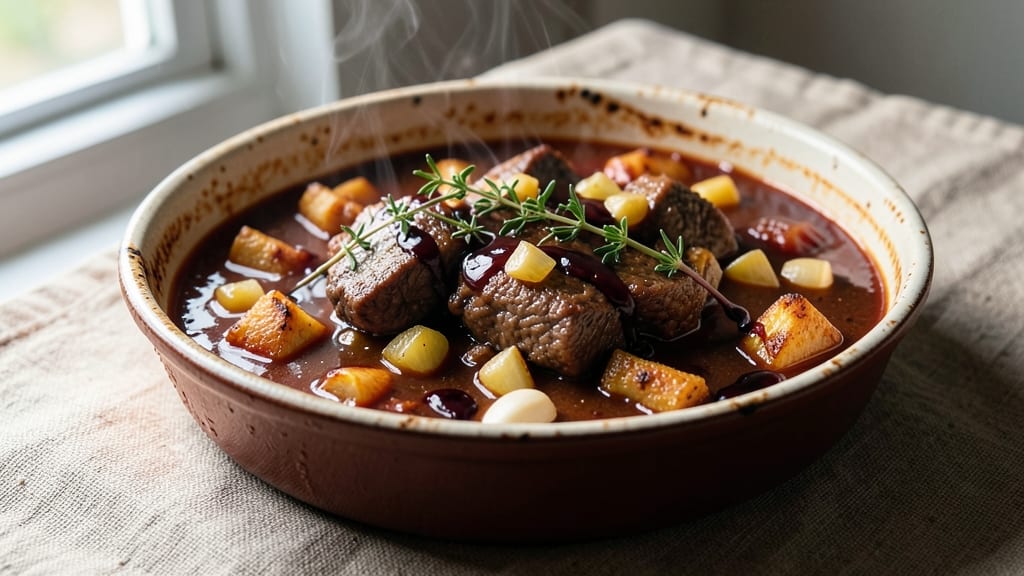
This beef base au jus recipe transforms simple ingredients into a velvety, umami-packed sauce that elevates any braised dish or roasted meat. The key lies in slow simmering beef stock with aromatics and a touch of tomato paste for depth, creating a rich foundation that's restaurant-quality at home. What sets this apart is the optional cornstarch slurry for thickening—just enough to coat the back of a spoon without losing that silky texture.
Professional chefs rely on this technique to turn basic braising liquids into something extraordinary. The process is straightforward: brown beef scraps for maximum flavor, then build layers of taste with onions, garlic, and herbs.
A 30-minute reduction concentrates the flavors, while optional wine or red wine vinegar adds brightness. The result is a sauce that clings beautifully to steak, roasted vegetables, or even mashed potatoes.
What makes this au jus truly special is its versatility—use it as a dipping sauce, drizzle it over grilled meats, or reduce it further for a glossy pan sauce. The deep umami richness comes from slow-cooked beef stock and caramelized aromatics, while the optional cornstarch creates a velvety finish.
It's the kind of sauce that transforms a simple meal into something memorable, with every spoonful delivering that restaurant-quality depth.
The beauty of this recipe is in its adaptability. For a lighter version, skip the thickening agent and serve the sauce as-is for a bright, brothy finish. For extra richness, whisk in a pat of cold butter at the end.
Either way, you'll have a sauce that's foolproof and packed with flavor—perfect for impressing guests or elevating weeknight dinners.
Ingredients for beef base au jus
Restaurant-quality depth starts with these eleven ingredients—each chosen for umami concentration and professional technique.
| Ingredient | Amount | Notes |
|---|---|---|
| Beef Stock 🥩 | 4 cups | High-quality, homemade preferred |
| Yellow Onions 🧅 | 1 whole | Medium, finely diced |
| Garlic Cloves 🧄 | 4 cloves | Peeled, minced for depth |
| Tomato Paste 🍅 | 1 tbsp | High-quality, no sugar added |
| Red Wine 🍷 | ½ cup | Dry, bold variety (Cabernet Sauvignon) |
| Fresh Thyme 🌿 | 1 tbsp | Leaves only, finely chopped |
| Fresh Rosemary 🌿 | 1 tbsp | Needles only, finely chopped |
| Beef Scraps 🥩 | 1 lb | Browned for maximum flavor |
| Cornstarch 🌾 | 1 tbsp | Optional for thickening slurry |
| Cold Water 💧 | 1 tbsp | For cornstarch slurry |
| Salt 🧂 | 1 tsp | Diamond Crystal preferred |
| Black Peppercorns 🌶️ | ½ tsp | Freshly cracked |
| Red Wine Vinegar 🍶 | 1 tbsp | Optional for brightness |
The beef stock is the foundation—homemade yields superior depth, but high-quality store-bought like Kirkland Signature works in a pinch. Fresh beef scraps from the butcher (not pre-packaged) provide unmatched flavor when browned, while yellow onions should be sweet and firm, not wilting. Garlic cloves should be plump and fresh—avoid those shriveled ones at the back of the bin. For tomato paste, San Marzano is ideal, but any high-quality paste without added sugar will do. The red wine should be bold—Cabernet Sauvignon or Merlot—never cooking wine. Fresh herbs are non-negotiable here; dried will lack the aromatic complexity this sauce demands.
No red wine? Red wine vinegar plus beef broth creates a similar acidity profile, though the flavor won't be identical. Substitute dried thyme and rosemary at half the amount if fresh isn't available, but expect less vibrant notes. The cornstarch slurry is optional—omit for a lighter, brothier sauce or increase to 2 tbsp for a thicker consistency. For a vegetarian adaptation, replace beef stock with mushroom and vegetable stock, though the umami profile will differ. Prefer white wine over red? Use it, but reduce by half to maintain balance. The beef scraps can be substituted with beef bones for even more depth, though they require longer simmering.
Store the au jus in airtight glass containers in the refrigerator for up to 5 days—the flavors deepen overnight. For longer storage, freeze in ice cube trays for single-use portions or silicone molds for larger batches. Thaw gradually in the refrigerator before reheating. This sauce reheats beautifully—gentle simmer only to preserve its velvety texture. Never boil, as that can break the emulsion and make it grainy. The cornstarch slurry should be made fresh before adding to the sauce, as it loses effectiveness when pre-mixed. When reheating, add a splash of beef stock if the sauce thickens too much.
Why You'll Love This Recipe
- Pantry Magic: I swear by this—no fresh herbs, no fancy gadgets, just stock, onions, and a splash of wine. That tomato paste? It’s the secret that thickens everything just enough without tasting like you’re trying too hard.
- Rich in Minutes: Simmering beef stock with garlic and onions until the kitchen smells like a bistro takes about 20 minutes. Honestly, that’s longer than it takes me to debate what to eat for dinner.
- Sauce for Everything: Drizzle it over grilled steaks, toss it with mashed potatoes, or use it to deglaze a pan for next week’s stir-fry. The wine cuts through the richness, so it’s never overpowering—just useful.
- Budget-Friendly Luxury: A big batch costs less than takeout and keeps for days in the fridge. Between us, this is how I feed my family fancy meals without breaking the bank—especially when I bulk it up with cheap cuts of beef.
Step-by-step instructions for crafting beef base au jus
Transform humble ingredients into a velvety, umami-rich foundation that elevates braised dishes to restaurant quality.
Develop the Base with Beef Scraps and Aromatics
In a large Dutch oven, combine the 1 lb beef scraps with 4 cups beef stock and bring to a rolling boil over medium-high heat. This initial boiling extracts maximum flavor from the scraps. Reduce heat to medium-low and simmer uncovered for 45-60 minutes, skimming off any foam or impurities that rise to the surface.
While the stock simmers, finely dice the 1 whole yellow onion and mince the 4 cloves garlic. Add these to the pot along with the 1 tbsp tomato paste, stirring to create a thick paste that coats the bottom. The tomato paste adds depth while preventing the base from curdling. Let this mixture cook for 10 minutes, stirring occasionally, until the onions soften and the garlic becomes fragrant but never browns.
Build Complexity with Herbs and Wine
Add the 0.5 cup red wine and bring to a gentle simmer. The alcohol will cook off completely, leaving behind only its concentrated flavor profile. Stir in the 1 tbsp fresh thyme and 1 tbsp fresh rosemary, ensuring the herbs are fully submerged. Simmer for 15 minutes, allowing the flavors to meld and the liquid to reduce slightly by about 20%. This step develops the aromatic complexity that defines a superior au jus.
Season with 1 tsp salt and 0.5 tsp freshly cracked black peppercorns, adjusting to taste. The salt should be noticeable but not overwhelming—this base will carry through multiple dishes, so balance is key. For an optional brightness, add the 1 tbsp red wine vinegar now or reserve it for finishing later. Taste the base now; it should be rich with meaty depth and herbal notes, but not yet fully developed.
Refine and Thicken the Base
Strain the base through a fine-mesh sieve into a clean pot, pressing gently on the solids to extract every last drop of flavor. Discard the solids or save them for stock. Return the strained base to medium heat and reduce it further by 30%—this concentration intensifies the flavors. The base should now coat the back of a spoon with a velvety texture.
For a silky finish, whisk together 1 tbsp cornstarch and 1 tbsp cold water to form a slurry. Slowly drizzle this into the simmering base while whisking constantly. The slurry will thicken the base to a glossy consistency without making it gluey. Simmer for an additional 5 minutes, stirring occasionally, until the base reaches your desired thickness—it should coat a spoon but remain pourable. Taste and adjust seasoning one final time, adding a pinch more salt or a splash of vinegar if needed.
Rest and Perfect the Flavor
Remove the base from heat and let it rest for 15-20 minutes. This resting period allows the flavors to fully integrate and the base to reach its optimal consistency. The reduction continues even off the heat, so monitor the thickness as it cools. If it becomes too thick, whisk in 1-2 tablespoons of hot water to loosen it.
For the best results, use the base immediately to braise meats or deglaze pans, where its rich flavors will shine. If storing, transfer to an airtight container and refrigerate for up to 5 days or freeze for 3 months. When reheating, warm gently over low heat, stirring frequently to prevent scorching. This base transforms simple braised dishes into masterpieces—every sip should deliver layers of umami, herbal depth, and meaty richness.
Pro Tips For Making Beef Base Au Jus
- Bloom the Onions Slowly: Don’t rush this step—sweat the onions over medium-low heat for 8-10 minutes until they’re translucent and just starting to soften. I learned the hard way that high heat caramelizes them too fast, turning your base bitter before it even begins. A pinch of salt helps draw out moisture, so don’t skip it.
- Deglaze with Wine Immediately: As soon as you remove the beef (if using), pour in that red wine right away—don’t let the pan cool. The residual heat helps the wine reduce faster, cutting down on waiting time. If you’re impatient like me, just add a splash of stock to keep things moving while it works its magic.
- Stir the Tomato Paste: Whisk the tomato paste into the onions with a splash of stock first—this prevents clumping like glue. I used to just dump it in and wonder why my base looked like a science experiment. A minute of stirring before adding wine ensures a smooth, velvety texture.
- Simmer, Don’t Boil: Once everything’s combined, keep the heat at a gentle simmer (tiny bubbles, not a rolling boil). Boiling turns your rich wine and stock into something flat and one-dimensional. My grandmother swore by this, and she was right: patience here makes all the difference.
Regional styles of beef base au jus
French Classic Approach
The French mastered au jus with their signature technique: browning beef scraps in a Dutch oven until deeply caramelized, then deglazing with red wine. This method creates a glossy, wine-infused base that forms the foundation of dishes like beef bourguignon.
The key is using dry Cabernet Sauvignon—its bold tannins cut through the richness while adding depth. French chefs often finish with a butter mount (whisking in cold butter at the end) for a silky sheen. 🍷
German Braising Tradition
German au jus, or "Fond," focuses on slow-cooked beef bones rather than scraps, creating a gelatin-rich sauce perfect for hearty dishes like schnitzel or roast pork. The Germans use dark rye beer instead of wine for a malty sweetness and add carrots and celery to the aromatics for earthy notes.
Their version is often thicker, using a roux (butter + flour) instead of cornstarch for a richer mouthfeel. The sauce is typically served as a dipping sauce for bread or meats.
Italian Pan Sauce Style
In Italy, au jus transforms into a pan sauce called "sugo," where beef drippings are reduced with white wine (like Pinot Grigio) and finished with fresh parsley and lemon zest. The Italians skip thickening agents entirely, preferring a light, bright sauce that clings to grilled meats or pasta.
Their technique involves degrazing the pan immediately after searing beef, then simmering with tomato paste (like the recipe) but adding a splash of pasta water for acidity. This version is lighter and more herb-forward than French or German styles. 🌿
American BBQ Twist
Southern U.S. barbecue pits take au jus in a smoky direction, infusing beef stock with hickory or applewood smoke and finishing with hot sauce or bourbon. The American approach often includes tomato-based BBQ sauce blended into the base for sweetness, while Texan versions might add chopped jalapeños for heat.
This style is thicker, almost like a gravy, and used to glaze ribs or smother pulled pork. The key difference? Smoke and bold seasoning override the wine's role in traditional au jus. 🔥
Japanese Dashi-Inspired
Japanese au jus, or "nikujiru," leans into umami bombs like dashi stock (made from kombu and bonito flakes) blended with beef stock. The Japanese version often includes grated ginger and mirin for brightness and a light cornstarch slurry for a cloud-like texture.
Unlike Western styles, Japanese au jus is served as a broth over rice or noodles, not a thick sauce. The technique emphasizes layered flavors—first simmering beef with shitake mushrooms for depth, then finishing with soy sauce and sesame oil. 🍜
Nutrition facts
Frequently asked questions
Can I make this au jus without red wine?
Yes! Replace the 0.5 cup red wine with 0.25 cup red wine vinegar plus 0.25 cup beef broth for similar acidity. For a completely alcohol-free version, use 0.5 cup beef broth plus 1 tsp balsamic vinegar. The key is balancing acidity to brighten the rich beef flavors without overpowering them.
How do I adjust the thickness for different uses?
For a brothy sauce (like for braising), reduce the cornstarch to 1 tsp or omit entirely. For a glossy pan sauce, increase to 2 tbsp cornstarch and reduce by 40%. If the sauce thickens too much when cooled, whisk in 1 tbsp hot water at a time until smooth.
What's the best way to store and reheat this au jus?
Store in an airtight glass container in the fridge for up to 5 days or freeze in ice cube trays for single-use portions. To reheat, warm over low heat with a splash of beef stock—never boil, or it may break. For restaurant-quality results, always reheat gently to preserve that velvety texture.
Can I use this base for vegetarian dishes?
Yes! Replace the beef stock with mushroom and vegetable stock, and add 1 tbsp soy sauce or miso paste for umami depth. The tomato paste and herbs will still work beautifully, though the flavor profile will be lighter. For extra richness, stir in 1 tbsp nutritional yeast at the end.
Why did my au jus turn cloudy or grainy?
This usually happens when the sauce is boiled too vigorously or the cornstarch slurry wasn't whisked properly. To fix it, whisk in 1 tbsp cold water and simmer gently for 5 minutes. For prevention, always whisk the cornstarch slurry vigorously before adding, and keep the heat at a gentle simmer—never boiling.