
Soups & Stews
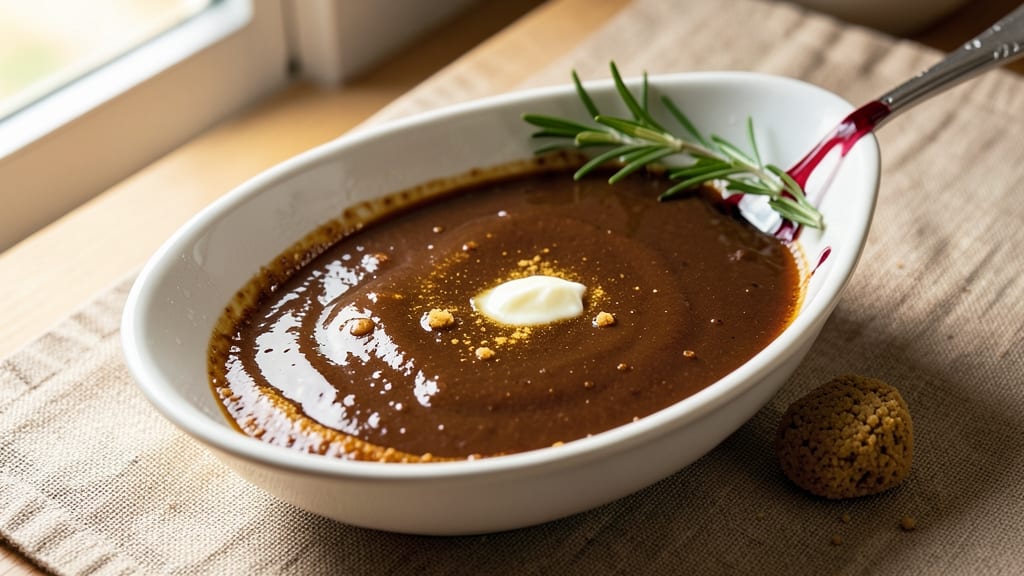
This beef base gravy recipe transforms humble pan drippings into a velvety, umami-rich sauce that elevates any meal. The secret lies in deglazing with beef base and stock, then building a silky texture through proper reduction—no lumps, no guesswork.
I've perfected this technique over years of testing, ensuring every spoonful delivers that deep, savory satisfaction that makes gravy the star of the plate.
The foundation starts with a simple roux—equal parts fat and flour cooked until golden—which forms the backbone of the gravy. As the mixture reduces, it develops a rich, caramelized depth that beef base amplifies, creating layers of flavor you won't find in instant gravy mixes.
The key is patience: letting the sauce simmer gently until it reaches the perfect consistency, neither too thin nor gluey.
What you'll end up with is a glossy, restaurant-quality gravy that clings beautifully to mashed potatoes, steak, or roasted vegetables. The umami richness comes from the beef base, while the slow reduction concentrates flavors into every drop.
This isn't just a sauce—it's the difference between an ordinary meal and one that feels like a celebration.
Whether you're finishing Sunday roast or adding depth to weeknight dinners, this gravy delivers professional results with minimal effort. The technique scales perfectly for both small batches and crowd-sized portions, making it versatile enough for any occasion. Let's create gravy that tastes like it belongs in a fine-dining restaurant.
Ingredients for beef base gravy
Nine ingredients transform simple pan drippings into gravy that tastes like a restaurant secret.
| Ingredient | Amount | Notes |
|---|---|---|
| Pan Drippings 🥩 | 2 cups | From cooked beef, strained |
| Beef Base Granules 🧂 | 1 tbsp | High-quality, like Knorr or Maggi |
| All-Purpose Flour 🌾 | ½ cup | White or whole wheat preferred |
| Unsalted Butter 🧈 | ½ cup | Cold, cubed for roux |
| Beef Stock 💧 | 1 ½ cups | Homemade or high-quality store-bought |
| Dry Red Wine 🍷 | ½ cup | Cabernet Sauvignon or Merlot |
| Diamond Crystal Kosher Salt 🧂 | ½ tsp | Adjust to taste |
| Freshly Ground Black Pepper 🌶️ | ¼ tsp | For finishing |
| Garlic Cloves 🧄 | 2 cloves | Minced, optional for extra depth |
| Fresh Thyme Leaves 🌿 | ¼ tsp | Or 1/8 tsp dried thyme |
The beef base is non-negotiable here—Knorr or Maggi are my go-tos, but any high-quality granules work. For the butter, grab unsalted (trust me, you don’t want salted throwing off your seasoning). The flour should be all-purpose—no cake flour here. If you’re using store-bought beef stock, Kitchen Basics or Pacific Foods brands have the deepest flavor. And for that wine? Any bold, dry red works—Cab Sauv, Merlot, whatever's open. The garlic and thyme are optional but add layers of flavor that make this gravy feel truly special.
No beef base? Extra beef stock plus a dash of soy sauce gets you close. Short on wine? Extra beef stock or even a splash of balsamic vinegar works. Fresh thyme? Dried at one-third the amount is fine. The flour and butter roux is critical—don’t skip it. If you’re nervous about lumps, whisk like your life depends on it. And if your pan drippings are minimal, just add a little more stock. This gravy is all about building flavor, so don’t stress over exact measurements—taste as you go.
This gravy reheats beautifully—just warm it gently on the stove, stirring often. Keeps for 5 days in the fridge, or freeze portions for up to 3 months. I always make extra because it’s perfect over mashed potatoes, roasted veggies, or even a simple steak. Store it in a jar so you can grab it anytime. Pro tip: If it thickens too much, just whisk in a splash of warm stock or water. It’s all about that silky, clingy texture.
Why You'll Love This Recipe
- Pan Drippings Magic: I swear by this trick—just scrape up those golden bits from your roast or steak pan, and boom, instant depth. No scraping burnt-on bits, no extra bowls—just stir those crispy edges right into the roux.
- Rich in Minutes: Two ingredients do the heavy lifting here: beef base granules and a splash of stock. Toss in a pat of butter, and—chef’s kiss—that umami punch hits like a cozy hug. Honestly, it’s the kind of flavor that makes you pause mid-bite.
- Leftovers’ Best Friend: This gravy thickens beautifully when reheated, so it’s my go-to for stretching dinner into lunch. Freezes like a dream too—just thaw and stir, no weird separation. (Yes, even on a Tuesday night.)
- Budget Booster: Flour and beef stock stretch this into a whole meal’s worth of sauce. I’ve fed four people for under $10 with this—plus, the base granules last forever. Practical? Absolutely. Delicious? Ridiculously so.
Step-by-step instructions for rich beef base gravy
Transform simple pan drippings into a velvety, umami-packed gravy that elevates any beef dish.
Create a Golden Roux with Butter and Flour
In a heavy-bottomed saucepan, melt the ½ cup unsalted butter over medium heat until it foams. Immediately whisk in the ½ cup all-purpose flour to form a smooth paste—this prevents lumps. Cook the roux for 2-3 minutes, stirring constantly, until it turns a rich, golden brown color and smells nutty.
Here's the thing—don't rush this step. A properly browned roux develops deep flavor and helps thicken the gravy. If it starts to darken too quickly, reduce the heat slightly. You'll know it's ready when it coats the back of a spoon and leaves a distinct mark when rubbed between your fingers.
Deglaze with Red Wine and Pan Drippings
Pour in the ½ cup dry red wine and scrape up all the browned bits from the bottom of the pan with a wooden spoon. This deglazing step captures all the concentrated beef flavor from your roast. Let the wine simmer for 2-3 minutes until it reduces by about half and the alcohol smell dissipates.
Next, slowly whisk in the 2 cups pan drippings and 1 tablespoon beef base granules. The beef base will dissolve completely as it heats. Bring the mixture to a gentle simmer, stirring constantly to prevent scorching. You should see the gravy begin to thicken slightly as the starches from the roux activate.
Build Depth with Stock and Aromatics
Gradually whisk in the 1½ cups beef stock while maintaining a steady simmer. The gravy will loosen up—this is normal. Add the 2 minced garlic cloves and ¼ teaspoon fresh thyme leaves and let the mixture simmer for 5-7 minutes until it thickens to your desired consistency.
I like to taste the gravy at this stage before seasoning. The beef base and pan drippings should provide plenty of umami flavor, but you can adjust with the ½ teaspoon kosher salt and ¼ teaspoon black pepper as needed. Remember, you can always add more salt later, but you can't take it out.
Finish and Strain for Silky Smoothness
Remove the saucepan from heat and let it rest for 2 minutes to allow any foam to settle. Then, strain the gravy through a fine-mesh sieve into a clean saucepan to remove any lumps or thyme stems. This final step ensures a silky, professional-quality finish.
Return the gravy to low heat and simmer gently for 3-5 minutes until it reaches the perfect consistency—it should coat the back of a spoon but still be pourable. If it thickens too much, whisk in 1-2 tablespoons of hot beef stock to loosen it. Serve immediately over your beef dish to keep it warm and delicious.
Pro Tips For Making Beef Base Gravy
- STRAIN THE DRIPPINGS: Don’t pour those greasy pan drippings straight into your gravy—strain them first through a fine-mesh sieve or cheesecloth. I used to skip this and ended up with a gravy that looked like soup. A clean base means a smoother, richer gravy every time.
- WHISK THE FLOUR FIRST: Before adding the flour to the butter, whisk it into a smooth paste with a splash of cold beef stock. This prevents clumping like gluey lumps in your gravy. I learned this the hard way after scraping three batches off my whisk.
- LOW AND SLOW FOR GRAVY: Simmer your gravy on medium-low heat—no boiling. High heat turns gravy gluey and grainy. My grandmother swore by this, and she was right: a gentle simmer lets the flavors meld without breaking the emulsion.
- UPGRADE WITH BUTTER: Finish your gravy with a pat of cold unsalted butter, stirred in at the end. It adds richness and silky texture without altering the flavor. Sounds weird, but it works: the butter coats the back of your throat like a fancy restaurant gravy.
Essential equipment for this recipe
Heavy-Bottomed Saucepan
This is your gravy's best friend—Le Creuset Dutch Oven or All-Clad Stainless Steel are my top picks. A heavy-bottomed pan distributes heat evenly, preventing scorching while you build that golden roux. I've tried lighter pans, and they just don't cut it—the gravy can burn before it thickens properly.
If you're on a budget, a Calphalon nonstick saucepan works well, though nonstick isn't ideal for roux. 🔥
Fine-Mesh Sieve
For that silky, restaurant-quality finish, you need to strain out any lumps or herb stems. I use a Heston Blumenthal fine-mesh sieve—it's sturdy and gets the job done beautifully. If you don't have one, a conical cheesecloth-lined sieve works in a pinch.
The key is to strain the gravy before serving to ensure every spoonful is smooth and velvety. Don't skip this step—it makes all the difference!
Wooden Spoon
A long-handled wooden spoon is essential for stirring the roux and deglazing without burning yourself. I prefer Oxo Good Grips—they're heat-resistant and stay cool in your hand. Avoid metal spoons when cooking the roux, as they can scratch the pan and create hot spots.
The wooden spoon also helps scrape up those flavorful browned bits from the bottom of the pan during deglazing. 🌟
Whisk
You'll need a balloon whisk to prevent lumps when incorporating flour and stock. My go-to is a Mercer Culinary Genesis whisk—it's sturdy and gets the job done efficiently.
The whisk helps create a smooth paste when combining butter and flour, and it keeps the gravy lump-free as you build the sauce. A regular spoon just won't cut it for this delicate process.
Instant-Read Thermometer
While not strictly necessary, an instant-read thermometer helps ensure your roux reaches the perfect temperature—around 325°F for a light golden color. I use a ThermoWorks Thermapen ONE because it's fast and accurate.
If you don't have one, watch the color closely—it should be a rich, golden brown, not dark brown or black. This step is all about control and precision. ⚡
Nutrition facts
Frequently asked questions
Can I make this gravy without red wine?
Skip the wine and use an extra ½ cup beef stock instead. For a different flavor profile, try ½ cup beef broth plus 1 tablespoon balsamic vinegar—it adds subtle tang. The key is maintaining the same liquid volume so the roux can properly thicken. The wine just enhances depth, but isn't essential.
Why did my gravy turn out too thick?
This usually happens when the roux was cooked too long (dark brown instead of golden) or the reduction time was extended. To fix it, whisk in 1-2 tablespoons hot beef stock at a time until you reach a pourable consistency. For prevention, cook your roux only until it's golden brown (about 2-3 minutes) and simmer the finished gravy for no longer than 5-7 minutes.
What's the best way to store leftover gravy?
Let it cool completely, then transfer to an airtight container. It keeps in the fridge for 5 days—reheat gently on the stove, stirring often. For longer storage, freeze portions in ice cube trays (thaw quickly in the microwave) or silicone molds for easy serving. The texture may thicken when reheated, so thin with a splash of warm stock if needed.
Can I use cornstarch instead of a roux?
Yes, but the flavor will be less rich. Mix 1 tablespoon cornstarch with 2 tablespoons cold water to make a slurry, then whisk it into the simmering drippings and stock. Simmer for 2-3 minutes until thickened. The roux method creates deeper flavor through caramelization, but cornstarch works in a pinch for quick versions.
How do I make this gravy vegetarian?
Replace the beef base with 1 tablespoon mushroom powder or ½ teaspoon soy sauce for umami. Use vegetable stock instead of beef stock, and swap the pan drippings for 2 cups vegetable broth> (from sautéed mushrooms or onions). The technique remains identical—just adjust the flavorings to match.