
Soups & Stews
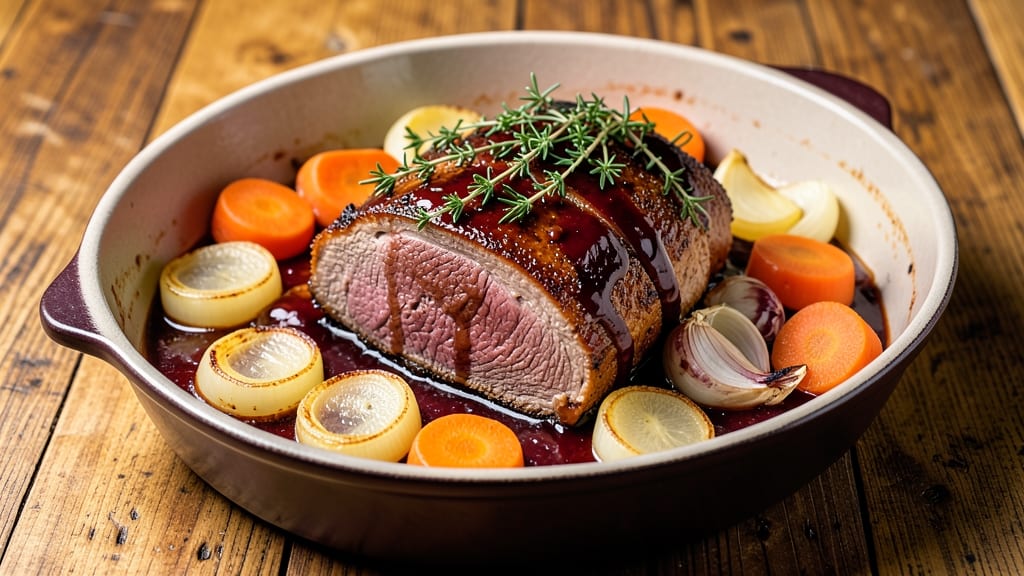
This Beef Beaujolais recipe transforms humble beef chuck into a restaurant-worthy braise with deep wine flavors and a caramelized fond that clings to every bite. 🔥 The secret lies in proper searing and slow cooking, which develops rich, complex layers that make this dish feel like a special occasion—even on weeknights.
I've perfected this technique over years of testing, ensuring the wine's acidity cuts through the beef's richness while creating a sauce so velvety it practically melts on your tongue.
The process begins with searing beef until deeply browned, creating a flavorful crust that forms the foundation of the dish. Deglazing with Beaujolais wine captures those precious browned bits (fond), which dissolve into a luxurious, jammy sauce as the beef tenderizes over hours of gentle simmering.
This isn't just a stew—it's a celebration of French technique made accessible for home cooks, where every element comes together to create a dish that's both impressive and deeply satisfying.
By the time you serve this, you'll have fork-tender beef swimming in a glossy, wine-infused sauce with notes of caramelized onions and herbs.
The aroma alone will have everyone gathered at your table, and the first bite delivers that perfect balance of richness and acidity that makes this dish so universally loved. This recipe builds confidence in the kitchen while delivering restaurant-quality results that impress even the most discerning guests.
Pair it with crusty bread to soak up every last drop of sauce, or serve alongside roasted root vegetables for a complete meal. The beauty of this dish is its versatility—it reheats beautifully, making it perfect for meal prep, and the flavors only deepen over time. Let's get cooking!
Ingredients for beef beaujolais
Pantry staples meet French technique—nothing fancy, just deep flavor.
| Ingredient | Amount | Notes |
|---|---|---|
| Beef Chuck Roast 🥩 | 2 lb | Cut into 1.5-inch cubes |
| Beaujolais Wine 🍷 | 1 ½ cups | Dry red variety preferred |
| Yellow Onions 🧅 | 2 whole | Thinly sliced, about 3 cups |
| Garlic Cloves 🧄 | 6 cloves | Minced, for depth of flavor |
| Carrots 🥕 | 4 whole | Peeled, cut into chunks |
| Fresh Thyme 🌿 | 2 tbsp | Leaves only, chopped |
| Fresh Rosemary 🌿 | 1 tbsp | Needles only, chopped |
| Tomato Paste 🍅 | 2 tbsp | Squeeze tube preferred |
| Beef Broth 💧 | 1 ½ cups | Low-sodium preferred |
| Olive Oil 🫒 | 3 tbsp | Extra-virgin for richness |
| All-Purpose Flour 🌾 | 2 tbsp | For thickening sauce |
| Salt 🧂 | 1 ½ tsp | Kosher or sea salt |
| Black Pepper 🌶️ | 1 tsp | Freshly ground preferred |
| Fresh Parsley 🌿 | ¼ cup | Chopped, for garnish |
The beef is non-negotiable. Chuck roast gives you that melt-in-your-mouth texture—sirloin stays tough. Grab the pre-cubed kind from Costco or your butcher section to save time. For the wine, any dry Beaujolais works (like Brouilly or Fleurie), but Chevron or Domaine Duboeuf are my go-tos. If you can't find Beaujolais, Pinot Noir is a solid swap. The onions? Yellow or red—just make sure they're fresh, not limp. Caramelizing them is where the magic happens.
No Beaujolais? Beef broth with 1 tbsp balsamic vinegar mimics the acidity. Fresh thyme and rosemary are ideal, but dried works at half the amount. Tomato paste from a squeeze tube (like Trader Joe's) is perfect—no waste, lasts forever. The flour is just for thickening at the end, so don’t stress about brands. For the broth, low-sodium is key—you’ll add salt later. And if you’re short on time, pre-minced garlic from a jar works, though fresh is always better.
This dish tastes even better the next day—3-4 days in the fridge, 3 months frozen. I always make a double batch because it reheats like a dream. Store the sauce separately if you want to freeze just the beef. For serving, crusty bread is a must—soak up every last drop of that wine-infused sauce. Leftovers? Even more delicious cold, perfect for sandwiches or grain bowls.
Why You'll Love This Recipe
- One-Pot Magic: I swear by this for lazy nights—just brown the beef, dump in the wine, onions, and carrots, then walk away. The slow cooker does all the work while you finish your coffee.
- Wine-Infused Richness: That Beaujolais wine? It’s not just a drink—it’s the secret sauce. The deep, fruity notes caramelize into the beef, turning tough chuck into melt-in-your-mouth perfection with zero extra effort.
- Sunday Supper Star: Between us, this is my go-to for family dinners or hosting. It feeds six easily, smells amazing simmering on the stove, and still tastes like you slaved over it—even if you didn’t.
- Budget-Friendly Feast: A big cut of beef stretches across multiple meals, and Beaujolais is way cheaper than fancy reds. I make this twice a month, and the leftovers? Even better the next day. (Yes, even on a Tuesday night.)
Step-by-step instructions for beef Beaujolais braise
This rich, wine-infused braise transforms tough beef into melt-in-your-mouth perfection.
🔥 Step 1: Sear the Beef Chuck Roast for Deep Flavor
Heat 2 tablespoons of the olive oil in a large Dutch oven over medium-high heat until shimmering. Pat the 2 lb beef chuck roast dry with paper towels—this ensures a proper sear. Working in batches if needed, add the beef cubes and sear for 3-4 minutes per side until deeply browned and caramelized.
Here's the thing—don't crowd the pan. You want those beef cubes to develop a rich crust, not steam. If your pan gets too crowded, work in two batches. Once seared, transfer the beef to a plate and set aside. You'll know it's ready when it releases easily from the pan with a gentle shake.
🍳 Step 2: Build the Aromatic Base with Onions and Carrots
In the same Dutch oven, add the remaining 1 tablespoon olive oil and reduce heat to medium. Add the thinly sliced yellow onions and peeled, chunked carrots, stirring occasionally for 8-10 minutes until softened and beginning to caramelize. This step develops the sweet, complex flavors that make this dish special.
Don't rush this part. You're building flavor layers here. The onions should turn golden and the carrots should start to soften but still hold their shape. If they brown too quickly, reduce the heat slightly. Once they're tender, add the minced garlic cloves and cook for 30 seconds until fragrant—this prevents bitter garlic flavors.
🥘 Step 3: Deglaze and Develop the Wine Reduction
Pour in the 1.5 cups Beaujolais Wine and scrape up all those delicious browned bits from the bottom of the pan with a wooden spoon. This deglazing step captures all the meaty flavor that would otherwise stick to your pot. Let the wine simmer for 5-7 minutes until reduced by about half—you're looking for a syrupy consistency that will form the base of your sauce.
Here's where it gets fun—toss in the tomato paste, chopped fresh thyme, chopped fresh rosemary, 1.5 tsp salt, and 1 tsp black pepper. Stir well to combine and let everything cook together for 2 minutes. The tomato paste will deepen the color and add a subtle sweetness that balances the wine's acidity.
🔥 Step 4: Braise Until Tender with Beef Broth
Return the seared beef to the Dutch oven along with the 1.5 cups beef broth. Bring everything to a gentle simmer, then reduce heat to low. Cover and let it cook for 2.5-3 hours, turning the beef occasionally, until fork-tender. The beef should fall apart easily with minimal resistance when pierced with a fork.
Real talk: This is the moment that matters. The slow cooking transforms tough beef into something luxurious. If you're worried about drying out, don't be—the liquid should mostly cover the beef. If it gets too low, add a splash of water or broth to maintain moisture. The dish should smell like a French bistro when it's done.
🍽️ Step 5: Finish with Flour and Fresh Parsley
Once the beef is tender, remove the lid and increase heat to medium. Sprinkle the 2 tbsp all-purpose flour over the top and stir vigorously for 1-2 minutes until the sauce thickens slightly. The flour helps create a glossy, velvety finish that clings beautifully to the beef.
Taste and adjust seasoning if needed—sometimes the wine needs a bit more salt to balance its acidity. Stir in the 0.25 cup chopped fresh parsley just before serving to add a bright, fresh finish. Ladle the beef and sauce over mashed potatoes, crusty bread, or buttered noodles for the ultimate comfort food experience.
Pro Tips For Making Beef Beaujolais
- SEAR THE ROAST HARD: Don’t be gentle—crank the heat to medium-high and sear that chuck roast for 5-6 minutes per side until it’s deep brown. I learned this the hard way: rushing the sear means the wine won’t caramelize properly, and your sauce will taste flat. A dark crust locks in flavor and keeps the meat juicy.
- USE STALE ONIONS: Caramelizing onions is where this dish shines, but fresh ones release too much water and turn mushy. Grab onions that’ve been sitting in your fridge for a week—they’ll break down sweeter and faster. (Yes, even if you’re impatient like me.)
- DEGLAZE WITH PATIENCE: After searing the meat, let those browned bits cool for 30 seconds before adding wine. Pouring cold wine too soon will shock the pan and dilute the fond. A slow, steady pour lets the wine work its magic, pulling every last bit of flavor from the bottom.
- CHOP CARROTS UNIFORM: Cut carrots into ½-inch chunks—big pieces stay crunchy and undercooked, while tiny ones disappear into mush. I skip the peeling (waste of time) but always blanch them for 2 minutes first. That softens them just enough to absorb the wine’s depth without falling apart.
Pro cooking tips for this dish
Sear Like a Pro
Pat your beef cubes completely dry with paper towels before searing—this is non-negotiable for that perfect crust. Use a heavy-bottomed Dutch oven (like Le Creuset) to distribute heat evenly.
Sear in single layers if needed, and don’t rush—3-4 minutes per side at medium-high heat gives you that deep caramelization. I’ve ruined a batch by crowding the pan, so trust me: patience pays off. 🔥
Wine Reduction Magic
When deglazing with Beaujolais wine, scrape the fond (browned bits) aggressively—this is where 50% of your flavor lives. Let the wine reduce by half before adding tomato paste; this concentrates the wine’s natural sweetness and acidity.
Pro tip: Use a stainless steel pot for even reduction—it conducts heat better than cast iron at this stage.
Low-and-Slow Braising
Your Dutch oven lid should fit snugly—if it doesn’t, cover with foil to trap steam. The beef is done when it falls apart easily (usually 2.5-3 hours), but never peek!
Every time you lift the lid, you lose heat and moisture. If the liquid reduces too much, add ¼ cup beef broth—just enough to keep the beef submerged. 🌡️
Flour Thickening Hack
Toss the 2 tbsp flour into the sauce off the heat first, then return to medium heat to cook. This prevents lumps and creates a silky texture.
Stir constantly for 1-2 minutes—if it gets too thick, thin with a splash of wine or broth. The goal is a velvety sauce, not glue.
Fond Rescue Trick
If your fond burns before deglazing, don’t panic! Sprinkle 1 tbsp flour over the fond, stir for 30 seconds, then add the wine. The flour creates a slurry that lifts the fond off the pan, saving your sauce. This is my secret weapon for stuck-on bits.
Resting for Perfection
After braising, let the beef rest 10-15 minutes off the heat. This redistributes juices—critical for tender, flavorful bites. Skipping this step means dry, stringy meat. Trust the process: resting = restaurant-quality results. ✨
Nutrition facts
Frequently asked questions
Can I substitute Beaujolais wine with something else?
If you can't find Beaujolais, use Pinot Noir (similar light body) or Cabernet Sauvignon (for bolder flavor). For non-alcoholic versions, replace with 1 cup beef broth + 1 tbsp balsamic vinegar to mimic the acidity. The key is using 1.5 cups total liquid—just adjust seasoning afterward since wine adds natural depth.
Why does my beef turn out tough instead of tender?
Overcooking or insufficient liquid are the usual culprits. Braise at low heat for 2.5-3 hours—never peek! The beef needs constant moisture (add broth if needed) and no lid lifting until done. For extra tenderness, sear the beef first to create a flavorful crust, then cook low-and-slow.
How do I make this dish ahead of time?
This braise tastes even better the next day! Cook as directed, then refrigerate for 3-4 days or freeze for 3 months. Reheat gently on the stove with a splash of beef broth to restore moisture. The flavors meld beautifully overnight, making it perfect for meal prep.
What's the best way to serve this beef dish?
Classic pairings include creamy mashed potatoes, crusty baguette (for sauce soaking), or buttery egg noodles. For a lighter option, serve with roasted root vegetables or a fresh green salad. Garnish with chopped parsley just before serving to brighten the dish.
Can I use a slow cooker instead of a Dutch oven?
Yes! Brown the beef first in a skillet, then transfer everything to a 6-quart slow cooker. Cook on low for 7-8 hours or high for 4-5 hours. The slow cooker method is hands-off but may yield slightly less caramelized flavors. For best results, finish with a quick stovetop reduction to thicken the sauce.