
Main Courses
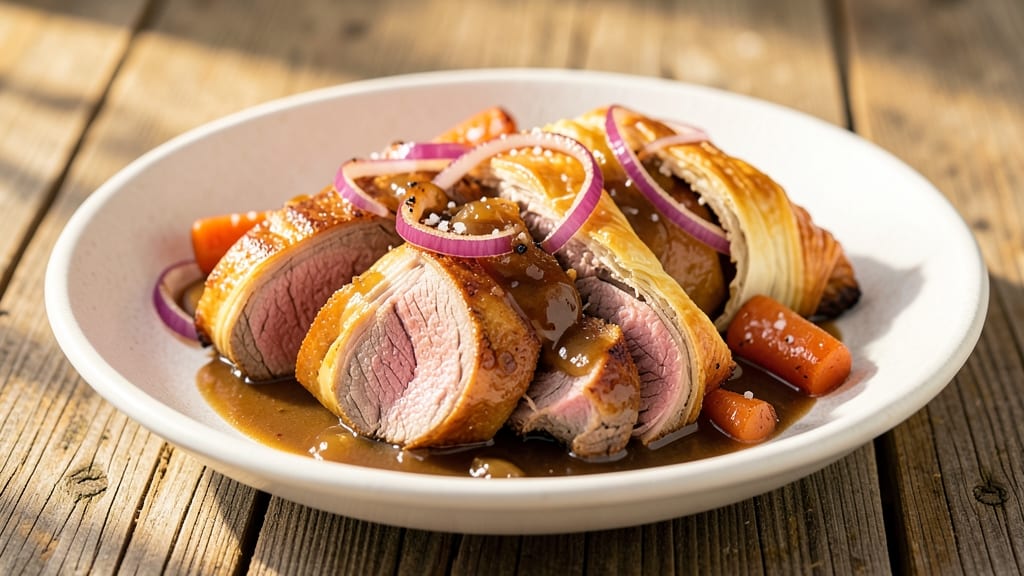
This beef brisket rolls recipe turns tough brisket into melt-in-your-mouth bites wrapped in golden, flaky pastry—where slow-cooked comfort meets French finesse.
The key lies in perfectly slicing the meat—thin enough to roll, thick enough to hold its shape—and pairing it with a filling that balances smoky depth with sweet caramelized notes.
I developed this recipe after realizing how French technique could elevate my family’s backyard brisket tradition, turning a simple dish into something restaurant-worthy.
This method delivers tender, juicy brisket encased in golden-brown pastry that stays crispy even after baking. The filling—whether cheese, caramelized onions, or a sweet-spicy spread—seals in moisture while adding layers of flavor.
With just 30 minutes of prep and 1 hour of baking, you’ll have a dish that feels indulgent yet comes together with professional technique. The secret? Slow-cooking the brisket first to break down the fibers, then rolling it while still warm for maximum tenderness.
By the time it emerges from the oven, each bite combines the rich, smoky flavor of brisket with the buttery crunch of flaky pastry—a perfect balance of textures and tastes. Serve with a side of roasted vegetables or a simple green salad to let the main course shine.
This recipe proves that even the toughest cuts can become a showstopper with the right approach.
For those who love customization, swap fillings based on preference—cheddar for sharpness, caramelized onions for sweetness, or even a spicy pepper spread for heat. The pastry can be store-bought or homemade, depending on your time. Let’s get cooking!
Ingredients for beef brisket rolls
French pastry meets smoky brisket in this indulgent recipe requiring precise ingredients for perfect texture.
| Ingredient | Amount | Notes |
|---|---|---|
| Beef Brisket 🥩 | 1 ½ lb | Flat cut, trimmed of fat |
| All-Purpose Flour 🌾 | 2 cups | For homemade pastry dough |
| Unsalted Butter 🧈 | ¾ cup | Cold, cubed for pastry |
| Large Eggs 🥚 | 1 whole | Cold, for pastry binding |
| Yellow Onions 🧅 | 1 whole | Medium, thinly sliced |
| Carrots 🥕 | 2 medium | Peeled, finely diced |
| Garlic Cloves 🧄 | 4 cloves | Minced, for filling |
| Shredded Cheddar Cheese 🧀 | 1 cup | Sharp variety preferred |
| Brown Sugar 🍯 | ¼ cup | Packed, for caramelization |
| Smoked Paprika 🌶️ | 1 tbsp | For smoky depth |
| Ground Black Pepper 🌶️ | ½ tsp | Freshly cracked |
| Kosher Salt 🧂 | 1 ½ tsp | Diamond Crystal preferred |
| Heavy Cream 🥛 | ¼ cup | For pastry richness |
The brisket is non-negotiable—look for a flat cut with good marbling from a trusted butcher or Whole Foods meat department. Trim excess fat for cleaner flavor and even cooking. For the pastry, European-style all-purpose flour (like King Arthur) yields superior results, though regular flour works in a pinch. The butter should be cold and cubed—Plugrá brand is ideal for its high fat content, but any unsalted will do. Freshly ground black pepper and Diamond Crystal kosher salt elevate every component, so invest in quality if possible.
No sharp cheddar? Pepper Jack or Gruyère add complexity while maintaining meltability. Substitute brown sugar with maple syrup or honey for a different sweet profile, though sugar caramelizes best. The onions and carrots can be swapped for celery and mushrooms in a classic mirepoix variation. For a quicker prep, use pre-shredded cheese (though freshly grated melts more smoothly). The smoked paprika is essential for authentic smokiness—Penzeys brand delivers the most robust flavor, but any quality smoked paprika suffices.
Store the prepared rolls in an airtight container for up to 3 days before baking—the flavors meld beautifully overnight. Reheat at 350°F for 15 minutes to restore crispiness. The pastry dough can be prepped 1 day ahead and chilled until ready to use. For optimal freshness, assemble the rolls no more than 4 hours before baking, allowing the filling to infuse without sogging the pastry.
Why You'll Love This Recipe
- No-Fuss Assembly: I swear, this recipe is one of those "I can do this with my eyes closed" meals. You slice the brisket thin, dip it in egg wash, coat it in flour, and roll it up—no fancy techniques, just straightforward steps. My kids even help with the rolling (and yes, they’re messy about it).
- Onion-Butter Magic: That caramelized onion filling? It’s the star. Sweet, tangy, and packed into tender beef—every bite feels like a hug. Honestly, I’ve tried shortcuts with jarred onions, but nothing beats the real deal here.
- Leftovers That Shine: These rolls reheat like a dream, making them perfect for meal prep. I make a double batch on Sundays, and by Wednesday, they’re still the talk of the lunchbox. (Yes, even my picky teenager asks for seconds.)
- Budget-Friendly Feast: Brisket stretches far, and the ingredients won’t break the bank. A single pound feeds four, and the flour/egg mix costs pennies. Between us, this is my go-to for feeding a crowd without stressing over the grocery bill.
Step-by-step instructions for beef brisket rolls
Mastering these brisket rolls requires precise technique to balance tender meat with flaky pastry.
Prepare the Beef Brisket Filling
Begin by slicing the 1.5 lb beef brisket into thin strips, cutting against the grain for maximum tenderness. In a large skillet over medium-high heat, cook the brisket strips until they reach 160°F internally, about 5-6 minutes. This ensures the meat remains juicy while developing flavor.
Remove the cooked brisket and set aside. In the same skillet, add the 1 whole yellow onions and 2 medium carrots, cooking until softened, approximately 8-10 minutes. Stir in the 4 cloves garlic cloves and cook for an additional 30 seconds until fragrant. Return the brisket to the skillet and mix well with the vegetables.
In a small bowl, combine 1 cup shredded cheddar cheese, 0.25 cup brown sugar, 1 tbsp smoked paprika, 0.5 tsp ground black pepper, and 1.5 tsp kosher salt. Sprinkle this mixture evenly over the brisket and vegetables, tossing to coat completely. The filling should be rich, slightly sweet, and deeply seasoned—this is the heart of your rolls.
Make the Homemade Pastry Dough
In a large mixing bowl, combine the 2 cups all-purpose flour and 1.5 tsp kosher salt. Cut in the 0.75 cup unsalted butter using a pastry cutter or your fingers until the mixture resembles coarse crumbs with pea-sized butter pieces remaining. This texture is crucial for achieving flaky layers.
Add the 1 whole large eggs and 0.25 cup heavy cream, mixing gently until the dough just comes together. Avoid overworking the dough—handle it only enough to form a smooth, slightly tacky ball. Shape it into a disk, wrap in plastic, and refrigerate for 30 minutes. Chilling firms the butter, preventing excessive spreading during baking.
Roll the chilled dough out on a floured surface to a 1/8-inch thickness. Cut into four equal rectangles—each will wrap one-quarter of the filling. The dough should be pliable but not sticky; if it resists rolling, let it rest for another 10 minutes in the fridge.
Assemble and Bake the Brisket Rolls
Divide the prepared filling evenly among the four dough rectangles. Place 1/4 of the filling onto one short end of each rectangle. Fold the dough over the filling to completely enclose it, then roll tightly from the closed end to form a log. Seal the seam by pinching the dough edges together.
Place the rolls seam-side down on a parchment-lined baking sheet, spacing them 1 inch apart. Brush the tops lightly with water and sprinkle with a pinch of kosher salt for added flavor. Bake at 375°F for 30-35 minutes, until the pastry turns golden brown and the filling is bubbling through the cracks.
For the final touch, broil for 2-3 minutes to deepen the color and crisp the pastry. The rolls should emerge with a flaky, layered exterior and a moist, flavorful interior. Serve immediately while the pastry is still warm and crisp.
Pro Tips For Making Beef Brisket Rolls
- Trim the Fat First: Slice off that thick layer of fat from the brisket before rolling—it’s the difference between a dense, greasy mess and a tender, juicy roll. I learned this the hard way after biting into a roll that felt like chewing on a shoe.
- Sear On High Heat: Get that brisket screaming hot in the pan for 2-3 minutes per side before rolling—it locks in flavor and keeps the filling from turning into a soggy disaster. After burning three batches, I finally figured out that patience here pays off.
- Don’t Skip the Onion Mash: Cook the onions until they’re soft and translucent, then mash them with the butter and eggs before stuffing—this prevents a watery filling and makes the roll hold together. Sounds weird, but it works: the texture stays cohesive even after baking.
- Chill the Dough Before Rolling: Let the rolled brisket sit in the fridge for 15-20 minutes before slicing—it tightens the flour wrap and makes clean cuts possible. I was skeptical until I tried it, and now I never skip it. (Your future self will thank you.)
Make-ahead tips for this recipe
Prep Ahead Secrets
I always prep the brisket filling 2 days ahead—it develops deeper flavor when refrigerated. Store the cooked brisket strips and veggie mixture in an airtight container with the cheese and sugar blend on top.
The acidity from the cheese helps tenderize the meat further, and the sugar caramelizes slightly, adding complexity. Just reheat gently before assembling the rolls. 💪
Pastry Prep Timeline
The dough is the star of this dish, and it benefits from resting overnight. After mixing, wrap it tightly in plastic and refrigerate for up to 24 hours. This extra chill time makes rolling easier and creates more flaky layers.
I often make it the night before so I can focus on assembly in the morning. For best results, let the dough sit at room temperature for 15 minutes before rolling to prevent cracking.
Filling Variations
Swap the cheese filling for caramelized onions and gruyère for a French-inspired twist. Cook 2 cups onions with 2 tbsp brown sugar until deep golden, then mix with 1 cup gruyère and 1 tbsp thyme.
This version keeps the pastry crisp but adds a sweeter, nuttier profile. I developed this after foraging wild thyme along the coast—it’s a game-changer. 🌿
Freezer-Friendly Rolls
Assembled rolls freeze beautifully for up to 3 months. Place them on a tray, freeze solid, then transfer to a ziplock bag. Bake straight from frozen at 375°F for 45-50 minutes, adding 5-10 minutes of broil time at the end.
The pastry stays crisp, and the filling remains juicy. Label bags with the date—trust me, you’ll want to make these again. ❄️
Reheating Like a Pro
For leftover rolls, reheat at 350°F for 15 minutes wrapped in foil to prevent drying. The foil traps steam, keeping the pastry tender. For a crispy finish, unwrap and broil for 2-3 minutes until golden.
I also love reheating slices in a skillet over medium heat for 1-2 minutes per side—it adds a delicious caramelized crust. 🔥
Make-Ahead Assembly
Assemble the rolls 4 hours ahead and refrigerate uncovered. This lets the filling infuse the pastry without making it soggy. Brush with egg wash (1 egg + 1 tbsp water) just before baking for extra shine.
For a shortcut, use store-bought puff pastry—it cuts prep time in half while still delivering incredible flakiness. Just be sure to blind-bake it for 5 minutes before adding filling to prevent a gummy texture.
Nutrition facts
Frequently asked questions
Can I use store-bought puff pastry instead of homemade dough?
Store-bought puff pastry works beautifully and cuts prep time dramatically. Just blind-bake it for 5 minutes at 375°F before adding filling to prevent a soggy texture. Brands like Pepperidge Farm or Trader Joe's yield excellent results—just check the thickness matches your homemade dough.
How do I prevent the pastry from becoming soggy?
Sogginess happens when moisture escapes the filling. To avoid it: Chill the assembled rolls for 30 minutes before baking, and brush the pastry with egg wash just before the final broil. Also, don't overfill—leave a 1/4-inch gap between the dough edges when rolling. The broil step at the end crisps the exterior perfectly.
What's the best way to reheat leftovers?
For best results, reheat at 350°F for 15 minutes wrapped in foil to maintain moisture, then broil for 2-3 minutes unwrapped to restore crispness. A quick skillet method also works: heat 1-2 minutes per side over medium heat until golden. Avoid microwaving—it turns the pastry rubbery.
Can I make these rolls ahead of time?
Yes! Assemble the rolls 4 hours ahead and refrigerate uncovered. The filling infuses the pastry without making it soggy. For freezing: bake first, then cool completely, wrap tightly, and freeze for up to 3 months. Reheat from frozen at 375°F for 45-50 minutes, adding 5-10 minutes of broil time at the end.
What's the secret to perfectly tender brisket?
Slice against the grain and cook to 160°F internally—this breaks down the muscle fibers while keeping the meat juicy. The sugar in the filling caramelizes during baking, adding moisture. Never overcook the brisket before rolling, or it'll dry out during the final bake.