
Soups & Stews
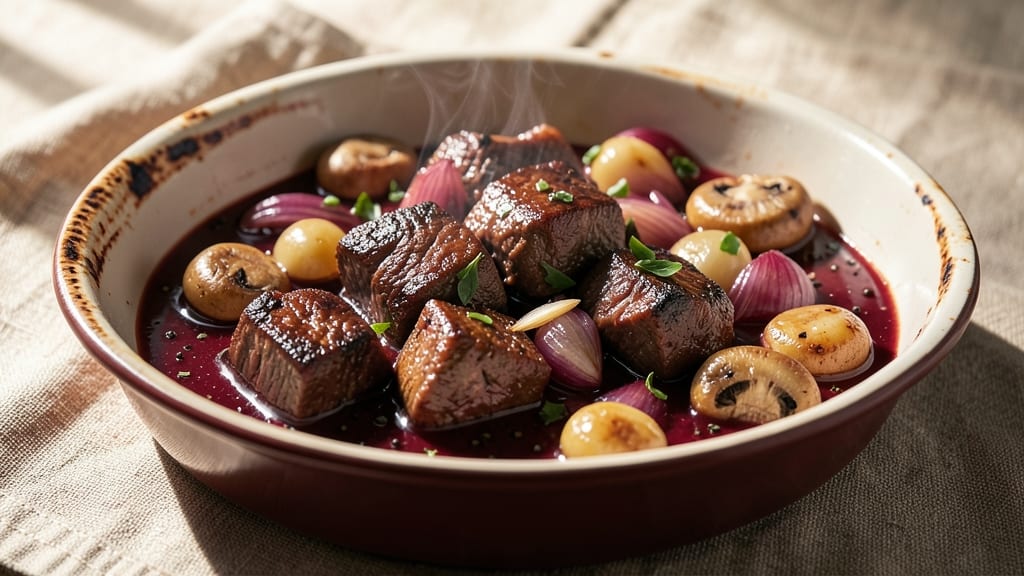
Betty Crocker's beef bourguignon recipe brings the cozy, wine-rich flavors of French bistros into your kitchen with proven techniques that deliver restaurant-quality results. The secret lies in slow-braising beef with red wine and aromatic herbs, transforming tough cuts into tender, melt-in-your-mouth perfection.
I've refined this method to balance traditional French methods with home-cooking practicality, ensuring deep flavor without hours of fuss.
This recipe starts with searing beef to develop a rich crust, then builds layers of flavor through sautéed mushrooms, onions, and garlic before deglazing with red wine—a key step that forms the sauce's foundation.
The slow simmer in broth infuses every ingredient with warmth, while thyme and bay leaves add earthy depth. What makes this version special is the foolproof balance of wine reduction and broth concentration, creating a sauce that clings beautifully to the beef.
By the end, you'll have a steaming pot of beef bourguignon where tender beef chunks float in a glossy, wine-infused sauce with tender mushrooms and vegetables. The aroma alone makes this dish feel like a celebration, while the rich, complex flavors reward careful preparation.
This is comfort food at its finest—perfect for chilly evenings or special occasions when you want to impress without stress.
While traditionally made on the stovetop, I've included a slow cooker adaptation in the instructions for busy weeknights. The same principles apply: sear the beef first, then let the slow cooker handle the long braise.
Garnish with fresh parsley for brightness, and serve with crusty bread to soak up every last drop of that luxurious sauce.
Ingredients for betty crocker beef bourguignon
Bold red wine and tender beef create restaurant-quality richness with just fifteen simple ingredients.
| Ingredient | Amount | Notes |
|---|---|---|
| Beef Chuck Roast 🥩 | 2 ½ lb | Cut into 1.5-inch cubes, trim excess fat |
| Dry Red Wine 🍷 | 1 ½ cups | Bold variety like Cabernet Sauvignon or Merlot |
| Beef Broth 💧 | 2 cups | Low-sodium preferred, homemade or high-quality |
| Yellow Onions 🧅 | 1 whole | Sliced into 1/2-inch rounds |
| Garlic Cloves 🧄 | 6 cloves | Minced, fresh preferred |
| White Mushrooms 🍄 | 16 oz | Sliced into 1/4-inch pieces |
| All-Purpose Flour 🌾 | 2 tbsp | For dredging beef |
| Fresh Thyme 🌿 | ½ oz | Leaves only, stems removed |
| Fresh Parsley 🌿 | ¼ cup | Chopped, for garnish |
| Bay Leaves 🌿 | 2 whole | Dried, standard size |
| Tomato Paste 🍅 | 1 tbsp | Smooth, not chunky |
| Unsalted Butter 🧈 | 2 tbsp | Cold, for finishing sauce |
| Diamond Crystal Kosher Salt 🧂 | 1 ½ tsp | For seasoning and sauce |
| Freshly Ground Black Pepper 🌶️ | 1 tsp | Coarsely ground |
| Extra-Virgin Olive Oil 🫒 | 2 tbsp | For searing beef |
The beef is the star, so chuck roast is non-negotiable—it stays tender while developing deep flavor. Most butchers can cube it for you, but if you're doing it yourself, trim excess fat and cut into even 1.5-inch pieces. I always grab mine from Whole Foods or my local Costco—look for good marbling, which means more flavor. For the wine, any bold, dry red works here—Cab Sauv, Merlot, whatever's open. Avoid sweet wines or those with residual sugar, as they'll throw off the balance. The beef broth should be low-sodium; homemade is ideal, but Swanson or Pacific Foods brands are solid for a pinch.
No red wine? Beef broth with a splash of balsamic vinegar gets you close, though the flavor won't be identical. Fresh thyme is ideal, but dried works at one-third the amount. If you're short on mushrooms, cremini or baby bella are great swaps—they hold up better to long cooking. The tomato paste can be the squeeze-tube kind from Trader Joe's if you're in a rush, but smooth, canned paste adds more depth. For the flour, King Arthur or Gold Medal all-purpose work best—they don't get gummy when cooked. And trust me on the cold butter at the end; it adds a luxurious finish that separates this from basic beef stew.
This dish tastes even better the next day as flavors meld, so make it ahead if you can. The sauce thickens as it cools, so you might need to add a splash of broth or wine to loosen it before serving. It keeps for 4-5 days in the fridge, and freezes beautifully for up to 3 months. I always portion mine into containers so lunches are sorted for the week—just reheat with a splash of broth to revive the sauce. The crusty bread? Baguette from the bakery section is worth the extra minute to warm in the oven.
Why You'll Love This Recipe
- One-Pot Magic: This recipe lives in a single Dutch oven—no extra pans, no messy cleanup. Sear the beef chuck, toss in onions and garlic, then let the wine and broth do all the work. By the time you’re stirring in the mushrooms (if you’re using them), the house smells like a Parisian bistro, and the only thing left to do is taste.
- Wine-Infused Richness: The red wine isn’t just a flavor—it’s the soul of the dish. That deep, earthy note from the beef chuck roast gets married to the acidity of the wine, then melts into the broth until every bite is tender and layered. Honestly, I’ve tried shortcuts, but nothing beats the slow simmer of real ingredients working together.
- Leftovers That Beg for More: This stew only gets better the next day. The flavors meld into something so deep and satisfying, I’ve been known to eat it straight from the fridge with a spoon. Pack it for lunches, freeze portions, or bring it to a potluck—it’s the kind of dish people will ask for seconds of without hesitation.
- Budget-Friendly Feast: A beef chuck roast stretches further than you’d think, especially when paired with onions and garlic that bulk up the pot. Between us, this is my go-to when I need to feed a crowd without breaking the bank. The wine might seem like a splurge, but a single bottle makes the whole dish feel special—no one has to know it’s also practical.
Step-by-step instructions for beef bourguignon
Here's the method that transforms simple ingredients into restaurant-quality beef bourguignon.
Prep and Sear the Beef
Pat the 2.5 lb beef chuck roast dry with paper towels and cut it into 1.5-inch cubes, trimming any excess fat. Season each piece generously with 1 tsp freshly ground black pepper and 1 tsp diamond crystal kosher salt. This seasoning step is crucial—it ensures flavor penetration before the wine braise.
Heat 2 tbsp extra-virgin olive oil in a large Dutch oven over medium-high heat until shimmering. Working in batches to avoid crowding, add the seasoned beef cubes and sear for 2-3 minutes per side until deeply browned. You'll see those beautiful caramelized crusts forming—that's where all the rich flavor develops. Remove the beef and set aside on a plate.
Build the Flavor Base
In the same Dutch oven, reduce heat to medium and add 1 whole yellow onion sliced into 1/2-inch rounds. Cook for 5-6 minutes until softened and lightly golden. Add 6 cloves minced garlic and cook for 30 seconds until fragrant—this prevents bitter garlic flavors from developing.
Sprinkle 2 tbsp all-purpose flour over the onions and garlic, stirring constantly for 1-2 minutes to cook off the raw flour taste. This creates a roux that will thicken your sauce beautifully. Gradually pour in 1.5 cups dry red wine, scraping up any browned bits from the bottom of the pot. Let it simmer for 3-4 minutes until reduced by half.
Braise with Vegetables and Herbs
Add 16 oz sliced white mushrooms, 1 tbsp tomato paste, 0.5 oz fresh thyme leaves, and 2 whole bay leaves to the Dutch oven. Stir to combine, then pour in 2 cups beef broth. The liquid should come about halfway up the beef cubes—this ensures proper braising.
Return the beef to the pot, along with any accumulated juices. Bring to a gentle simmer, then cover and transfer to a preheated 325°F oven. Here's the thing—you want the liquid to bubble gently, not boil vigorously. Braise for 2-2.5 hours until the beef is fork-tender and easily pulls apart with minimal resistance.
Finish and Garnish
Remove the beef bourguignon from the oven and discard the bay leaves. Increase heat to medium-high and simmer uncovered for 5-7 minutes to reduce the sauce slightly and thicken it to a velvety consistency. Stir in 2 tbsp cold unsalted butter, whisking until incorporated. This step adds luxurious richness to the sauce.
Taste and adjust seasoning with additional diamond crystal kosher salt if needed. Ladle the beef and sauce into serving dishes, garnishing each portion with 0.25 cup chopped fresh parsley. The finished dish should have tender beef that falls apart easily, a rich wine-infused sauce, and a perfect balance of herbs and spices.
Pro Tips For Making Betty Crocker Beef Bourguignon
- SEAR THE ROAST HARD: The Betty Crocker recipe might call for a quick sear, but don’t listen—crank the heat to medium-high and let those brown crusts form for 4-5 minutes per side. I learned this the hard way when my first batch tasted like it barely touched a pan. The crust locks in flavor, so don’t rush it.
- DEGLAZE WITH WINE IMMEDIATELY: As soon as you remove the roast, pour in that dry red wine right away while the pan is still screaming hot. Scrape every last bit of browned bits—this is where the magic happens. Skipping this step means you’re missing half the depth of flavor the recipe promises.
- SIMMER LOW AND SLOW: The recipe might not say it, but this isn’t a race. After adding the broth and tomatoes, drop the heat to a gentle simmer—just small bubbles breaking the surface. I used to crank it up, and the wine would cook off too fast, leaving a flat, alcohol-heavy taste. Low and slow keeps everything balanced.
- THICKEN WITH A SLURRY: If the sauce is too thin by the end, mix 1 tablespoon flour with 2 tablespoons cold water and whisk it into the pot. Let it simmer for 3-4 minutes until it thickens—no lumps, no guessing. I tried just adding more broth or tomato paste before, and it never worked as well. This is the real fix.
Pro cooking tips for perfect results
Sear Like a Pro
The key to deep flavor starts with a perfect sear—this isn't just about browning, it's about developing the Maillard reaction that creates complex caramelized crusts. Use a heavy Dutch oven (like Lodge or All-Clad) to ensure even heat distribution.
I always work in batches to avoid crowding the pan, which lowers the temperature and steams instead of sears. For extra insurance, pat the beef extra dry with paper towels before seasoning—moisture is the enemy of a good sear.
Medium-high heat is your sweet spot here—too low and you'll get greasy beef, too high and it burns before the center cooks. Test with a quick flick of water: if it sizzles and dances, your heat is perfect.
Let each piece develop a deep golden crust on all sides before removing. This crust will melt into the wine during braising, creating layers of flavor you can't get any other way. 🔥
Wine Reduction Magic
Don't skip the wine reduction step—this is where the sauce transforms from ordinary to extraordinary. After deglazing with wine, let it reduce by half before adding other ingredients. I use a Cabernet Sauvignon or Merlot for its bold, dry profile, but any dry red will work.
The alcohol burns off during reduction, leaving behind concentrated wine flavors that form the sauce's backbone.
For extra depth, add 1 tsp sugar to the wine before reducing—this helps caramelize the wine's flavors and balances any acidity. Stir frequently during reduction to prevent sticking, and use a wooden spoon to scrape up those precious browned bits from the bottom (they're packed with flavor!).
Braising Temperature
The oven's 325°F setting is critical for even, gentle cooking that transforms tough beef into tender perfection. Too high and the beef will dry out; too low and it may not cook through properly.
I always check the internal temperature with a meat thermometer—aim for 203°F in the thickest piece before removing from the oven.
If you don't have an oven thermometer, use the "finger test": press a finger gently into the beef. If it offers minimal resistance and feels almost like butter, it's done. The beef should pull apart easily with a fork, and the sauce should coat the back of a spoon smoothly.
This gentle cooking method is what makes beef bourguignon so special—it's all about patience and control. ⏱️
Butter Finish
The cold butter finish at the end is where this dish goes from good to restaurant-quality. I always use unsalted butter to control seasoning, and I cut it into small pieces so it melts smoothly into the sauce.
This step adds a luxurious richness that balances the acidity of the wine and the earthiness of the herbs.
For an extra touch, I like to whisk in 1 tsp Dijon mustard along with the butter—it adds a subtle tang that brightens the whole dish. Let the sauce simmer gently for 1-2 minutes after adding butter to let it fully incorporate.
The result should be a glossy, velvety sauce that clings beautifully to the beef.
Slow Cooker Shortcut
For busy weeknights, transfer everything to a 6-quart slow cooker after the wine reduction step. Cook on LOW for 8 hours or HIGH for 5 hours, then finish with the cold butter step on the stovetop.
The slow cooker maintains consistent temperature, making it perfect for hands-off cooking while you're at work or running errands.
I recommend using a slow cooker liner to make cleanup easier—just toss it in the trash after cooking. The texture will be slightly different (more tender, less caramelized), but the flavors come through beautifully. This method works especially well if you're making a larger batch for meal prep.
Nutrition facts
Frequently asked questions
Can I use a different cut of beef for this recipe?
While chuck roast is ideal for its marbling and flavor, you can substitute with beef short ribs or stew beef. Avoid lean cuts like sirloin—they won't stay tender. If using short ribs, trim the membrane first and reduce braising time by 30 minutes since they cook faster.
What if I don't have red wine? Can I substitute?
Yes! Use 2 cups beef broth plus 1 tablespoon balsamic vinegar for depth. For extra richness, add 1 teaspoon soy sauce or 1/2 teaspoon Worcestershire sauce. Avoid sweet wines or grape juice—they'll make the sauce taste flat. The dish will still be delicious, just with a different flavor profile.
How do I know when the beef is fully tender?
Use a meat thermometer for accuracy—beef should reach 203°F in the thickest piece. Without one, press a fork gently: if it slides in easily and the beef falls apart, it's done. Never overcook! The sauce will thicken further as it rests, so don't rush the braising time.
Can I make this in a slow cooker? Will it taste the same?
After searing the beef and deglazing with wine, transfer everything to a 6-quart slow cooker and cook on LOW for 8 hours or HIGH for 5 hours. The texture will be slightly more tender (less caramelized), but the flavors remain rich. Finish with the cold butter step on the stovetop for that restaurant-quality touch.
Why did my sauce turn out too thin?
This usually happens if you didn't reduce the wine enough or used too much broth. For next time, simmer the sauce uncovered for 5-7 minutes after removing the beef to thicken it. If it's still too thin, mix 1 tablespoon cornstarch with 1 tablespoon cold water and stir it in. The sauce should coat the back of a spoon when done.