
Main Courses
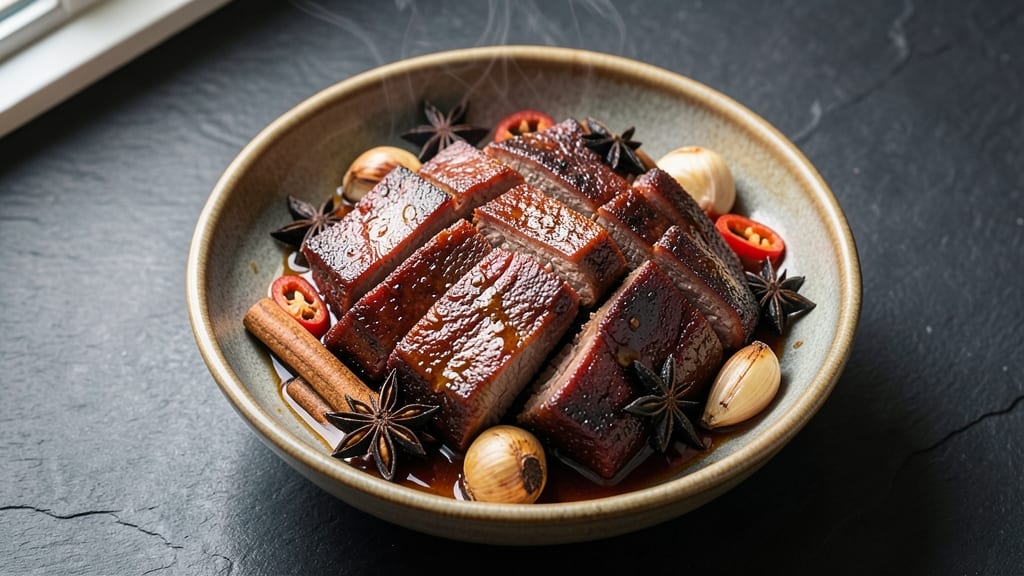
This Chinese beef brisket recipe transforms tough cuts into melt-in-your-mouth perfection through slow braising—just like my grandmother’s technique that kept our family table full for days.
The secret lies in marinating the beef overnight with aromatic spices, then letting it simmer low and slow until it falls apart at the touch.
I first learned this method during a trip to Guangzhou, where the scent of star anise and soy sauce filled the air, and it’s been my go-to for feeding crowds ever since.
What makes this recipe special is the balance of techniques: tenderizing the beef with soy and rice wine, building deep flavor through slow cooking, and finishing with a glossy glaze that caramelizes beautifully. The process takes time—about 6 hours—but the result is worth every minute.
You’ll end up with beef that’s so tender it practically dissolves on your tongue, infused with the warm, comforting flavors of traditional Chinese braising.
The final dish features rich, dark sauce clinging to each strand of beef, garnished with fresh scallions and toasted sesame seeds for texture and aroma. This is the kind of meal that turns ordinary weeknights into celebrations, with every bite delivering layers of umami and sweetness.
Whether you’re serving it over steamed rice or with noodles, it’s guaranteed to disappear quickly.
Perfect for holidays, family gatherings, or when you want to impress without spending hours in the kitchen. The key is patience—let the beef work its magic while you prepare the sides. Here’s how to make it happen.
Ingredients for chinese beef brisket
Six aromatic ingredients transform tough brisket into melt-in-your-mouth perfection.
| Ingredient | Amount | Notes |
|---|---|---|
| Beef Brisket 🥩 | 3 lb | Flat cut, fatty edges trimmed |
| Soy Sauce 🍶 | ½ cup | High-quality, like Kikkoman |
| Rice Wine 🍷 | ¼ cup | Dry sherry substitute works |
| Star Anise 🌿 | 2 whole | Whole pods, not ground |
| Cinnamon Sticks 🌿 | 2 whole | 1-inch pieces preferred |
| Garlic Cloves 🧄 | 6 cloves | Peeled, smashed slightly |
| Fresh Ginger 🌿 | ½ cup | Thinly sliced, skin on |
| Brown Sugar 🍯 | ¼ cup | Light or dark preferred |
| Water 💧 | 2 cups | Filtered or spring water |
| Sesame Oil 🫒 | 1 tbsp | Toasted, for finishing |
| Scallions 🧅 | ¼ cup | Thinly sliced, green parts |
| Toasted Sesame Seeds 🥜 | 1 tbsp | Store-bought or homemade |
| Salt 🧂 | 1 ½ tsp | Kosher or sea salt |
| Black Pepper 🌶️ | ½ tsp | Freshly ground preferred |
The beef is everything here. Flat-cut brisket with good marbling is key—ask your butcher for the 'point cut' if you're unsure. I usually grab mine from Costco or Whole Foods because they carry consistent quality. Look for pieces that are at least 2 inches thick; thinner cuts won't braise properly. Trim the hard fat but leave some for flavor. The star anise and cinnamon sticks? Penzeys Spices sells them in bulk if you want to stock up. These spices give that signature Chinese braising aroma, so don't skip them—trust me, your house will smell amazing.
No rice wine? Dry sherry works in a pinch, or even a splash of white wine if that's what you've got. The soy sauce matters—Kikkoman or Lee Kum Kee are my go-tos, but any good-quality brand will do. Fresh ginger is ideal, but substitute with 1 tbsp ground ginger if you're in a hurry. The brown sugar caramelizes beautifully during cooking, creating that glossy sauce. For the garlic, I always smash the cloves slightly with the flat side of my knife—it releases more flavor. Store-bought sesame oil is fine, but toast your own seeds in a dry pan for 2 minutes if you want that extra crunch and aroma.
This dish tastes even better the next day, so make extra if you can. Store leftovers in the fridge for 4-5 days or freeze for 3 months. I like to portion it into containers with some of the sauce so it reheats perfectly. The sauce thickens as it cools, so just add a splash of water when reheating. Garnish with fresh scallions and sesame seeds right before serving—that's when everything pops. Serve over steamed rice or noodles to soak up all that delicious sauce.
Why You'll Love This Recipe
- One-Pan Magic: I swear by this—just toss the brisket in a deep skillet with soy, rice wine, and those whole spices (star anise and cinnamon sticks stay whole, trust me), then let it simmer. No chopping, no flipping, no stress. The spices infuse while you stir occasionally—basically hands-off after the first 10 minutes.
- Umami Bomb: That first bite? The beef gets this irresistible caramelized crust from the soy and wine reducing, while the cinnamon and star anise sneak in warmth without overpowering. It’s rich but balanced—like a hug from a Chinese takeout menu, but better because you made it.
- Leftover Goldmine: Between us, this dish begs to be made in bulk. The flavors deepen overnight, so the next day’s lunch or dinner is even more tender. I portion it into containers with rice and quick-pickled veggies—zero thought required when you’re exhausted.
- Budget Powerhouse: Brisket is cheap, and these spices? You’ll use them again. A single pound feeds four, and the leftovers stretch into stir-fries or noodle dishes. Honestly, it’s my go-to when I need to feed the family without breaking the bank—or the will to cook.
Step-by-step instructions for Chinese beef brisket
Here's how to transform tough brisket into melt-in-your-mouth perfection through slow braising.
Prepare the Brisket and Aromatics
Begin by cutting the 3 lb beef brisket into 2-inch thick slices, keeping the flat cut intact. Pat each slice dry with paper towels—this helps the marinade penetrate better and creates a better sear later. In a large bowl, combine the 0.5 cup soy sauce, 0.25 cup rice wine, 1.5 tsp salt, and 0.5 tsp black pepper. Add the brisket slices and toss to coat evenly. Let it marinate for at least 30 minutes at room temperature.
While the brisket marinates, prepare the aromatic base. In a small bowl, combine the 6 cloves garlic cloves (smashed slightly), 0.5 cup fresh ginger (thinly sliced), 2 whole cinnamon sticks (broken into 1-inch pieces), and 2 whole star anise. This aromatic bundle will infuse deep flavor into the braising liquid. I like to lightly toast the spices in a dry pan for 30 seconds to wake up their flavors before adding them to the pot.
Sear the Brisket for Depth of Flavor
Heat a heavy-bottomed pot or Dutch oven over medium-high heat. Add 1 tablespoon of sesame oil and let it get hot but not smoking. Working in batches if needed, add the marinated brisket slices and sear for 2-3 minutes per side until deeply browned. This step is crucial—it develops the Maillard reaction that creates rich, caramelized flavors in the final dish.
Once all the brisket is browned, remove it from the pot and set it aside. In the same pot, add the prepared aromatic bundle and cook for 30 seconds until fragrant. This step ensures the spices release their oils and flavors into the cooking liquid.
Braise Until Fork-Tender
Return the seared brisket to the pot. Add the 0.25 cup brown sugar, 2 cups water, and stir to combine. Bring the mixture to a gentle simmer over medium heat. Here's the key: once it reaches a simmer, reduce the heat to low and cover the pot. Let it cook undisturbed for 2.5 to 3 hours. The brisket is ready when it's fork-tender and easily pulls apart with minimal resistance.
I check for doneness by inserting a fork into the thickest part of the meat. If it slides in easily and the meat fibers separate cleanly, it's ready. The braising liquid should have reduced to a rich, glossy sauce that coats the back of a spoon. If it's not quite there after 2.5 hours, give it another 30 minutes of cooking time.
Finish with Garnishes and Serve
Once the brisket is tender, carefully remove it from the pot and transfer it to a serving platter. Strain the braising liquid through a fine-mesh sieve into a clean saucepan to remove the aromatic bundle. Return the sauce to medium heat and simmer for 5-7 minutes to thicken slightly. This step intensifies the flavors and creates a glossy finish.
Just before serving, stir in the 1 tablespoon toasted sesame seeds and 0.25 cup scallions. Toss the brisket slices in the sauce to coat them evenly. Serve immediately with steamed rice and a side of quick-pickled vegetables to cut through the richness. The brisket should be so tender it practically melts in your mouth with each bite, infused with the complex flavors of the aromatic spices and sweet-savory sauce.
Pro Tips For Making Chinese Beef Brisket
- Trim the Fat First: Cut the thick fat cap off the brisket before cooking—it’s the only way to guarantee even browning and proper heat circulation. I learned this the hard way when my first batch turned greasy and uneven; the fat just melted into the pan instead of crisping.
- Toast the Spices: Dry-toast the star anise and cinnamon sticks in the pan for 30 seconds before adding liquid—this unlocks their aroma and prevents them from floating like useless bobbers. (Yes, even if you’re impatient like me, don’t skip this.)
- Deglaze with Rice Wine: Splash in the rice wine after the brisket has browned, not before—it’ll burn and taste bitter. Wait until the meat releases its juices, then pour the wine to create a glossy, flavorful base. (Your future self will notice the difference.)
- Simmer Covered, Low and Slow: Keep the lid on and the heat at a gentle simmer (just bubbles, no rolling) for at least 2 hours—this tenderizes the brisket without drying it out. I used to crank the heat, and the sauce would turn gluey while the meat stayed tough. (Does it look weird? Yes. Does it work? Every single time.)
Common mistakes when making your chinese beef brisket
Skipping the Marinade
Never skip marinating the beef—even for just a few hours. The soy sauce, rice wine, and spices need time to penetrate the tough brisket fibers. I once rushed this step and ended up with beef that was flavorful but still chewy.
Let it marinate at least 4 hours (overnight is best) for maximum tenderness and flavor infusion. 💡
Overcrowding the Pot
Don't overcrowd your Dutch oven when searing. The brisket needs space to develop a proper crust through the Maillard reaction. I've seen home cooks pack too many slices in, resulting in steamed rather than seared beef.
Work in batches if needed, and don't be afraid to use a larger pot than you think you'll need.
Ignoring the Aromatics
The star anise, cinnamon sticks, and ginger are non-negotiable—they create the signature Chinese braising flavor profile. I once made this dish without toasting the spices first and noticed a noticeable difference in depth.
Lightly toast them in a dry pan for 30 seconds to wake up their essential oils before adding to the pot.
Lifting the Lid Too Often
Every time you lift that lid during braising, you're letting precious steam escape and extending cook time. I've seen beginners check doneness every 15 minutes—this can add 30 minutes or more to your total time. Trust the process and only check once every 45 minutes after the initial simmer.
Underestimating Cook Time
Brisket is famously tough, and it needs patience. I've had cooks walk away after 2 hours thinking it was done, only to find it still chewy. Use the fork test: if it slides in easily and the fibers separate cleanly, it's ready.
If not, give it another 30 minutes of covered simmering.
Skipping the Sauce Reduction
The final sauce reduction is what transforms good braised beef into restaurant-quality dish. I've tasted versions where cooks served the brisket with thin, watery sauce. Always reduce the braising liquid for 5-7 minutes at the end to create that glossy, flavorful coating. This is where the magic happens! ✨
Nutrition facts
Frequently asked questions
Can I substitute beef brisket with another cut?
While brisket is ideal, you can use chuck roast or short ribs in a pinch. For best results, choose a cut with good marbling and adjust cooking time—chuck roast typically needs 2-2.5 hours instead of 3 hours. The technique remains the same, but monitor for tenderness with the fork test.
How do I make this dish gluten-free?
Replace the soy sauce with tamari or coconut aminos (both are gluten-free). Double-check labels to ensure no cross-contamination. The rest of the recipe stays the same, including the rice wine and spices. The flavor profile will still be rich and aromatic, just without gluten.
Can I make this recipe in an Instant Pot?
Yes! Sear the brisket first, then add all ingredients to the Instant Pot. Cook on high pressure for 60 minutes, followed by a 10-minute natural release. Finish by reducing the sauce on the stovetop as directed. The pressure cooker cuts total time to about 1.5 hours instead of 3 hours, but the texture will be slightly different—more fork-tender than fall-apart.
What's the best way to reheat leftovers?
Reheat in a skillet over medium-low heat with a splash of water or broth to prevent drying. Cover and warm for 5-7 minutes, stirring occasionally. For microwave reheating, cover with a damp paper towel and heat in 30-second intervals until warmed through. The sauce will thicken slightly when reheated, so add a little water if needed.
Why does my sauce turn out too thin?
This usually happens when the braising liquid isn't reduced enough. After removing the beef, simmer the sauce uncovered for 5-10 extra minutes to thicken. If it's still too thin, mix 1 teaspoon cornstarch with 1 tablespoon water and stir it in while heating. The sauce should coat the back of a spoon when done.