
Main Courses
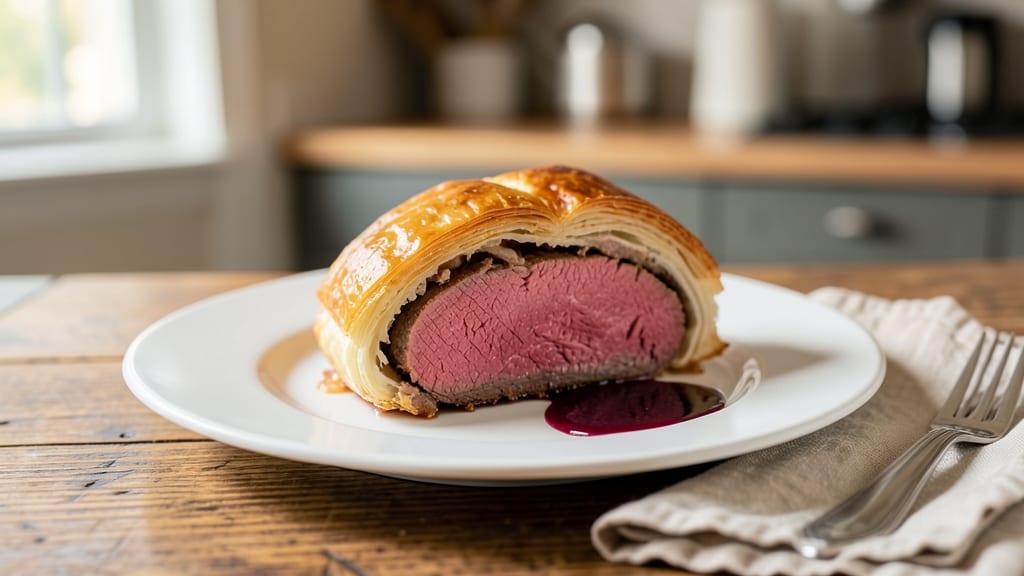
This classic beef Wellington recipe delivers the elegance of a fine-dining centerpiece with a perfectly pink center and flaky, golden pastry that commands attention at any table.
The secret lies in precise preparation—searing a tender beef fillet, crafting a rich mushroom duxelles, and wrapping it all in professional-quality puff pastry that bakes to crisp perfection. I’ve refined this technique over years of hosting dinner parties, ensuring every bite lives up to its reputation for sophistication.
The process begins with a simple yet critical sequence: seasoning and searing the beef to lock in juices, then layering it with finely chopped mushrooms, shallots, and herbs for depth of flavor.
The pastry is wrapped tightly, scored for even baking, and brushed with egg wash to achieve that restaurant-worthy sheen. What emerges is a dish that looks as impressive as it tastes—tender beef, savory filling, and a pastry so crisp it shatters with every bite.
Pairing this dish with a bold red wine reduction elevates it further, cutting through the richness while complementing the beef’s natural flavors. Serve alongside roasted asparagus or baby potatoes to complete the plate, and you’ll have a meal worthy of holidays or special occasions.
The key to success? Patience in preparation and confidence in execution—this is a dish that rewards attention to detail.
For those new to Wellington, don’t let the layers intimidate you. With the right technique, even home cooks can achieve professional results—just follow the steps carefully, and you’ll impress your guests without a hitch. The payoff? A centerpiece that feels like a culinary masterpiece, served with pride.
Ingredients for classic beef wellington
Precision-cut ingredients transform into a showstopping Wellington with tender beef and golden pastry perfection.
| Ingredient | Amount | Notes |
|---|---|---|
| Center-Cut Beef Tenderloin 🥩 | 1 ½ lb | Evenly trimmed, 1-inch thick |
| White Mushrooms 🍄 | 8 oz | Finely chopped, stems reserved |
| Shallots 🧅 | 4 whole | Minced, not sliced |
| Fresh Thyme Leaves 🌿 | ½ cup | Finely chopped, stems removed |
| Fresh Parsley Leaves 🌿 | ¼ cup | Finely chopped, flat-leaf preferred |
| Dijon Mustard 🍯 | 2 tbsp | High-quality, smooth texture |
| Unsalted Butter 🧈 | 4 tbsp | Cold, cut into small cubes |
| Diamond Crystal Kosher Salt 🧂 | 1 ½ tsp | For seasoning only |
| Freshly Ground Black Pepper 🌶️ | 1 tsp | Coarse grind preferred |
| Dry White Wine 🍷 | ¼ cup | Sauvignon Blanc, chilled |
| Puff Pastry Sheets 🍞 | 1 sheet | Store-bought, 12 oz each |
| Large Eggs 🥚 | 1 whole | For egg wash |
| Red Wine Reduction 🍷 | ½ cup | Homemade or high-quality store-bought |
| Prosciutto 🥓 | 4 oz | Thinly sliced, overlapping layers |
The beef tenderloin is non-negotiable—center-cut ensures tenderness, and trimming excess fat guarantees a clean slice. Purchase from a reputable butcher like D'Artagnan or your local specialty shop; their expertise in butchering ensures even thickness. For mushrooms, cremini or button varieties work, but avoid pre-sliced—they release too much moisture. Fresh thyme and parsley should be bright green and fragrant; wilted herbs indicate age. The Dijon mustard must be authentic—avoid the powdered kind, which lacks depth. Store all ingredients properly: beef in the coldest part of the fridge, herbs wrapped in damp paper towels.
No prosciutto? Thinly sliced pancetta or smoked ham works as a substitute, though prosciutto’s delicate saltiness is ideal. Running low on white wine? Chicken or vegetable stock can replace it in the duxelles, though the acidity will differ slightly. For the red wine reduction, homemade is superior, but Cavallero or Barefoot brands offer reliable quality. The puff pastry must be high-quality store-bought—brands like Pepperidge Farm or All-Butter Dufour deliver the flakiness needed. If using frozen pastry, thaw it overnight in the fridge to prevent sogginess. The prosciutto should be salt-cured, not smoked, to avoid overpowering the beef’s natural flavor.
This Wellington requires meticulous prep—assemble it 1-2 hours ahead and refrigerate unwrapped to firm up the pastry. Wrap tightly in plastic and chill for at least 30 minutes before baking to prevent leaks. The completed Wellington keeps 2 days in the fridge before baking, but never freeze it assembled—the pastry loses crispness. For leftovers, slice and reheat in a 350°F oven for 15 minutes to restore crispness. The red wine reduction can be made 2 days ahead and stored in an airtight container.
Why You'll Love This Recipe
- Here’s what sold me: this works for both. Slap it on the table when your partner’s over (they’ll think you’re a pro), or make a double batch because the leftovers reheat like a dream. Cold slices the next day? Still delicious. (Yes, even on a Tuesday night.)
- I’ll be real: beef tenderloin isn’t cheap, but this recipe stretches it. A single roast feeds four generously, and the mushrooms/shallots add depth without breaking the bank. Plus, the prep is fast enough that you’re not sacrificing time—or sanity—for a restaurant-worthy meal. That’s my kind of win.
Step-by-step instructions for classic beef Wellington
Master this technique and you'll achieve restaurant-quality results with a perfectly pink center and golden pastry every time.
Prepare the Beef Tenderloin
Begin by trimming the 1.5 lb center-cut beef tenderloin to an even 1-inch thickness along its length. This ensures even cooking throughout. Pat the meat dry with paper towels—moisture on the surface prevents proper searing and creates steam instead of a flavorful crust.
Position the tenderloin on a cutting board with the fat cap facing up. Using a sharp boning knife, make a shallow pocket along one side by slicing just deep enough to create a pocket without cutting through the meat. This will hold our mushroom-duxelles mixture. Season the exterior generously with 1.5 tsp diamond crystal kosher salt and 1 tsp freshly ground black pepper, pressing the seasoning into the meat rather than just sprinkling it on.
Create the Mushroom-Duxelles Filling
Heat a large skillet over medium heat and add 4 tbsp unsalted butter. Once melted, add the 8 oz finely chopped white mushrooms and cook for 8-10 minutes until all moisture has evaporated and the mushrooms are golden brown. This step is crucial—don't rush it or the filling will be watery.
Add the 4 minced shallots and cook for another 3-4 minutes until softened. Stir in the 0.5 cup finely chopped fresh thyme leaves and 0.25 cup finely chopped fresh parsley leaves, then remove from heat. Allow the mixture to cool slightly before proceeding. In a separate bowl, combine the mushroom mixture with 2 tbsp dijon mustard and 0.5 cup red wine reduction, mixing well to create a cohesive paste.
Assemble the Wellington
Spread the mushroom-duxelles mixture evenly into the pocket you created in the beef tenderloin. Gently press it in, ensuring it stays contained within the meat. Lay out the 4 oz thinly sliced prosciutto in a single layer on a piece of parchment paper, slightly overlapping the slices. Place the seasoned beef tenderloin in the center of the prosciutto, then carefully roll the prosciutto around the meat, tucking the ends to fully enclose it.
Unfold the 1 sheet puff pastry sheets and place it on a clean work surface. Using a rolling pin, lightly roll out the pastry to create a rectangle slightly larger than your prosciutto-wrapped beef. Brush the entire surface with the 1 whole large egg beaten with 2 tbsp dry white wine for the egg wash. Place the prosciutto-wrapped beef in the center of the pastry, then carefully fold the pastry over the top, sealing the edges by pinching them together with your fingers.
Chill and Bake to Perfection
Wrap the assembled Wellington tightly in plastic wrap and refrigerate for at least 30 minutes before baking. This chilling step is essential—it prevents the pastry from leaking and ensures even cooking. Preheat your oven to 400°F and line a baking sheet with parchment paper.
Place the Wellington seam-side down on the prepared baking sheet. Bake for 30-35 minutes until the pastry is deep golden brown and the internal temperature reaches 130°F (measured with a meat thermometer). Remove from the oven and let rest for 10 minutes before slicing. This resting period allows the juices to redistribute, ensuring a perfectly pink center with every slice.
Pro Tips For Making Classic Beef Wellington
- Trim the Fat First: Cut away all visible silver skin and fat from the tenderloin before searing—this keeps the crust clean and the meat tender. I used to leave it on, and the butter would pool instead of caramelizing properly.
- Sear in Batches: Don’t overcrowd the pan when searing the mushrooms and shallots—cook them in two rounds if needed. This ensures they brown properly instead of steaming, which is the whole point of that step.
- Skip the Overstuffed Puff: The classic Wellington puff pastry can be a pain to handle. If yours tears, patch it with a tiny scrap of dough and egg wash—no one will notice, and it’ll still hold together.
- Rest the Meat Twice: Let the seared tenderloin rest for 10 minutes before wrapping it in the pastry, then rest the whole Wellington for another 10 minutes before slicing. This guarantees juicy meat, not a dry surprise.
Perfect pairings for this classic beef wellington
Sauce Pairings
The red wine reduction in this recipe is non-negotiable—it’s the perfect foil for the rich beef and earthy mushrooms. I make mine with Cabernet Sauvignon (about 1 cup reduced to ½ cup) and a splash of balsamic vinegar for depth.
For a quicker option, Cavallero brand offers a high-quality store-bought version that saves time without sacrificing flavor. 🍷
If you prefer something lighter, a white wine and shallot jus (simmer ½ cup dry white wine, 2 tbsp shallots, and 1 cup beef stock) brightens the plate. Deglaze the pan after searing the beef to capture all those precious fond flavors—this technique elevates the sauce instantly.
Vegetable Sides
Roasted asparagus with lemon zest and toasted almonds is my go-to pairing—its crisp texture contrasts the Wellington’s richness. Toss 1 bunch asparagus with 2 tbsp olive oil, ½ tsp salt, and roast at 425°F for 12 minutes.
Finish with a squeeze of lemon and a sprinkle of flaky salt. 🌿
For a heartier option, duchesse potatoes (thinly sliced, layered, and baked with cream) add a luxurious touch. Use 4 large Yukon Gold potatoes, thinly sliced, layered with ¼ cup heavy cream>, and baked at 375°F for 45 minutes. The creamy texture balances the beef’s intensity beautifully.
Beverage Pairings
A bold red wine is essential—Cabernet Sauvignon or Malbec complements the beef’s depth. I love a 2018 Argentine Malbec with its dark fruit notes and velvety finish. For white wine lovers, a Chardonnay with oaky undertones (like Meursault) stands up to the dish’s richness. 🍷
Craft beer enthusiasts should try a Belgian-style dubbel (like Westmalle Tripel)—its caramel and spice notes harmonize with the mushrooms and pastry. Avoid heavy stouts or IPAs, which can overpower the delicate flavors.
Garnish Finishing
Just before serving, drizzle the Wellington with extra red wine reduction and sprinkle with fresh parsley for a pop of color. A few thinly sliced radishes on the side add a crisp, peppery contrast.
For a showstopper, dust with edible gold leaf—it’s optional but elevates the dish to restaurant-worthy elegance. ✨
Warm crusty baguette slices for soaking up sauce—toss them with garlic butter and toast until golden. The crunch adds another layer of texture that guests will love.
Nutrition facts
Frequently asked questions
Can I substitute prosciutto in this Wellington?
Yes! If you can't find prosciutto, use thinly sliced pancetta or smoked ham instead. For a vegetarian option, wrap the beef in dried mushroom slices or thinly sliced shallots instead. The key is keeping the filling contained—just ensure whatever you use is thin and flexible enough to wrap tightly around the beef.
Why does my Wellington leak during baking?
Leaking usually happens when the pastry isn't properly sealed or the filling isn't dry enough. First, ensure the prosciutto completely encloses the beef with no gaps. Second, make sure your mushroom duxelles is fully cooked down—no excess moisture should remain. Chill the assembled Wellington for at least 30 minutes before baking to help the pastry firm up.
How do I achieve a perfectly pink center?
The secret is baking the beef to 130°F internal temperature (not the usual 145°F for medium-rare). This lower temp keeps the center tender and pink while the pastry crisps. Use a meat thermometer for accuracy—overcooking will turn the beef gray and dry. Let the Wellington rest for 10 minutes after baking to let juices redistribute.
Can I make this ahead of time?
Assemble the Wellington up to 2 days in advance and refrigerate unwrapped. The pastry will firm up but won't bake. When ready to cook, bake as directed. For the sauce, make it 2 days ahead and store in an airtight container. Reheat gently before serving to maintain texture.
What's the best way to reheat leftovers?
Slice the Wellington and reheat portions in a 350°F oven for 15 minutes to restore crispness. For a quick option, use the broiler for 2-3 minutes until the pastry is golden again. Avoid microwaving—it makes the pastry soggy. Leftovers keep for 3 days in the fridge, but the pastry won't be as crisp.