
Main Courses
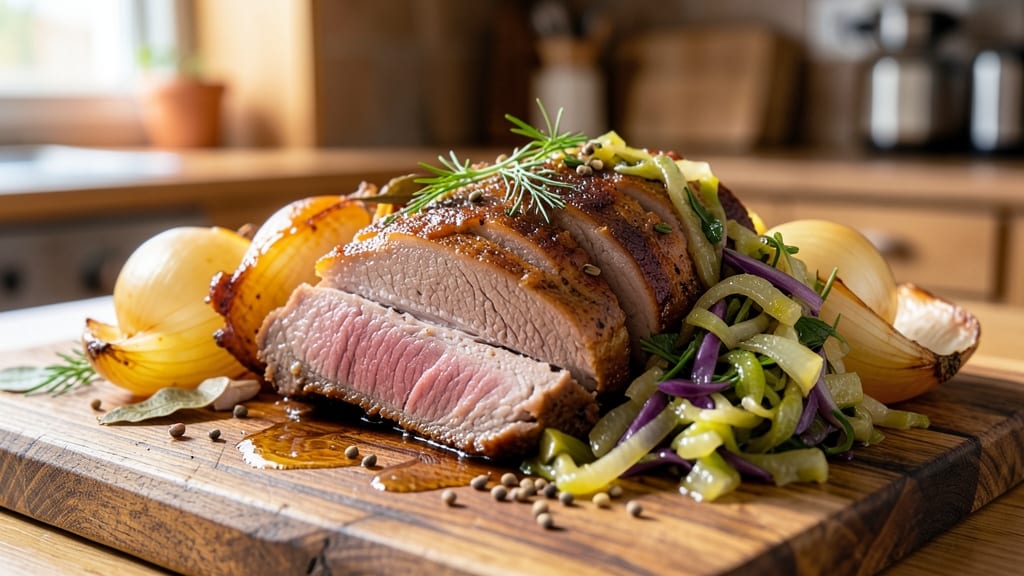
This corned beef and sauerkraut recipe delivers the kind of slow-braised tenderness that transforms tough cuts into melt-in-your-mouth perfection. 🔥 Growing up in a Boston triple-decker, I learned that the secret lies in hours of gentle cooking—where the meat becomes so tender it practically falls apart at the touch.
The tangy crunch of sauerkraut cuts through the richness, creating a balance that’s both comforting and sophisticated.
The beauty of this dish is its simplicity once you understand the technique. You start with a brined corned beef roast (or pre-cooked if you're short on time), then slow-braise it until fork-tender.
The sauerkraut gets warmed through with caraway seeds and onions, developing a deep, savory flavor that pairs perfectly with the meat. It’s the kind of meal that feels like a hug on a cold day—warm, hearty, and impossible to resist.
By the time you serve it, you’ll have perfectly shredded corned beef swimming in its own rich juices, topped with sauerkraut that’s just crisp enough to add texture.
The aroma alone will have everyone gathering around the table, and the first bite delivers that perfect combination of savory, tangy, and slightly sweet. This is the kind of dish that turns weeknights into special occasions.
Serve it with classic sides like buttery mashed potatoes, caramelized carrots, or crusty rye bread to soak up every last bit of that delicious braising liquid. The leftovers? Even better the next day. Let’s get cooking—this recipe is worth every minute of its slow braise.
Ingredients for corn beef and sauerkraut
Fourteen ingredients. One slow-braised masterpiece. No shortcuts needed here—just good stuff.
| Ingredient | Amount | Notes |
|---|---|---|
| Corned Beef Brisket 🥩 | 3 lb | Pre-brined or corned beef roast |
| Sauerkraut 🥬 | 2 cups | Unopened jar preferred |
| Yellow Onions 🧅 | 1 whole | Medium, sliced into wedges |
| Garlic Cloves 🧄 | 4 cloves | Peeled and smashed |
| Caraway Seeds 🌿 | 1 tsp | Whole, lightly toasted |
| Bay Leaves 🍃 | 2 whole | Fresh preferred |
| Beef Broth 💧 | 2 cups | Low-sodium preferred |
| Apple Cider Vinegar 🍎 | ¼ cup | For tangy depth |
| Brown Sugar 🍯 | 2 tbsp | Light or dark |
| Black Peppercorns 🌶️ | 1 tsp | Coarsely cracked |
| Salt 🧂 | 1 tsp | Kosher preferred |
| Mustard Seeds 🌶️ | ½ tsp | Yellow preferred |
| Olive Oil 🫒 | 2 tbsp | For searing |
| Fresh Thyme 🌿 | 2 sprigs | Or 1 tsp dried |
The corned beef is the star, so don’t skimp. Reese or Oscar Mayer are the go-to brands for pre-brined roasts—just make sure it’s a brisket cut, not the cheaper pre-cooked deli slices. If you’re brining your own, grab cure #1 from the spice aisle and plan for a full day of soaking. The sauerkraut? Bubbies or Homemade from the refrigerated section—avoid the canned kind with vinegar. Fresh thyme and caraway seeds are worth hunting down at Whole Foods or a specialty market, but the dried versions work in a pinch. Just remember: the more authentic the flavors, the better the dish.
No caraway seeds? Celery seeds at half the amount are a decent swap, though the flavor won’t be identical. Out of fresh thyme? Dried thyme at one-third the quantity keeps things close. Prefer a sweeter touch? Add 1 tbsp honey or maple syrup to the braising liquid. The onions can be swapped for shallots if you’re feeling fancy, but regular yellow onions work just fine. And if you’re short on time, pre-cooked corned beef from the deli counter (like the kind you’d use for sandwiches) can be shredded and added at the end—just don’t expect the same melt-in-your-mouth texture.
This dish tastes even better the next day, so make extra. The braising liquid keeps for 5 days in the fridge—use it for gravy or freeze it for soups. Store the shredded corned beef in its juices, and the sauerkraut stays crisp for 1 week in the jar. I always portion mine into containers for easy lunches—just reheat with a splash of water and you’re good to go. Leftovers? Double the recipe—trust me, you’ll want it.
Why You'll Love This Recipe
- One-Pot Magic: I swear by this recipe on lazy Sundays—just dump the corned beef in a pot, add sauerkraut and onions, and let it simmer. No chopping, no fuss, just hands-off flavor while you fold laundry or scroll through your phone.
- Tangy-Savory Symphony: That sauerkraut isn’t just a side—it’s the star. The caraway seeds and garlic turn it from tangy to ridiculously good, with a crisp-tender texture that pairs perfectly with the brisket’s rich, salty bite.
- Leftovers That Shine: This dish actually improves the next day. The flavors meld deeper, and I’ll often repurpose it into sandwiches or hash with potatoes. (Yes, even my picky husband asks for seconds.)
- Budget-Friendly Feast: A whole corned beef brisket feeds six for under $20, and sauerkraut stretches it into multiple meals. Honestly, it’s my go-to when I need a hearty, filling dinner without breaking the bank.
Step-by-step instructions for corn beef and sauerkraut
Here's how to transform tough brisket into melt-in-your-mouth perfection.
🍳 Step 1: Sear the Corned Beef Brisket
Heat the 2 tablespoons olive oil in a large Dutch oven over medium-high heat until shimmering. Pat the 3 lb corned beef brisket dry with paper towels - this ensures a proper sear. Place the brisket in the pot, fat-side down, and let it sit undisturbed for 5 minutes until a deep golden crust forms.
Flip the brisket and sear the other side for another 5 minutes. Here's the thing - don't rush this step. The crust locks in flavor and prevents the meat from drying out later. You'll know it's ready when the brisket releases easily from the bottom of the pot and has a rich, caramelized color.
👨🍳 Step 2: Build the Flavor Base
Remove the brisket and set it aside. In the same pot, add the 1 whole yellow onions (sliced into wedges) and cook for 3 minutes until softened. Add the 4 cloves garlic cloves (peeled and smashed) and cook for 30 seconds until fragrant - this prevents them from burning.
Add the 1 teaspoon caraway seeds and 0.5 teaspoon mustard seeds to the pot. Toast them for 30 seconds until you can smell their nutty aroma. This step builds the complex flavor foundation that makes this dish special. Don't skip it - those seeds are what give traditional corned beef its signature taste.
🥘 Step 3: Braise with Aromatics and Sauerkraut
Return the brisket to the pot. Add the 2 cups sauerkraut, 2 cups beef broth, 0.25 cup apple cider vinegar, 2 tablespoons brown sugar, 1 teaspoon salt, 1 teaspoon black peppercorns, 2 whole bay leaves, and 2 sprigs fresh thyme. Stir gently to combine.
Bring everything to a gentle simmer, then reduce heat to low. Here's where patience pays off - cover the pot and let it cook for 2.5 to 3 hours until the brisket is fork-tender. You'll know it's done when a knife slides in easily and the meat pulls apart with minimal resistance. The sauce should be rich and slightly thickened from the braising process.
⏰ Step 4: Finish and Rest for Maximum Tenderness
Once the brisket reaches 203°F internal temperature (use a meat thermometer), remove it from the pot and let it rest for 15 minutes. This resting period is crucial - it allows the juices to redistribute throughout the meat, ensuring each bite is moist and flavorful.
While the brisket rests, skim any excess fat from the surface of the braising liquid. Return the brisket to the pot and simmer uncovered for 5 minutes to thicken the sauce slightly. The meat should be fork-tender with a beautiful glossy sheen from the braising process. Serve the brisket with the sauerkraut and braising liquid spooned over the top.
Pro Tips For Making Corn Beef And Sauerkraut
- Brown the Brisket: Don’t skip this step—sear the corned beef brisket in a hot Dutch oven for 3-4 minutes per side before adding liquid. The crust locks in flavor and keeps the meat from turning into mushy corned beef hash. (Yes, even if you’re impatient like me, resist the urge to rush this.)
- Rinse the Kraut: Drain the sauerkraut and give it a quick cold-water rinse to cut the acidity before cooking. The juice is great for pickles, but it’ll make your dish taste like a science experiment if left in. (I learned this the hard way after serving a batch that tasted like vinegar.)
- Start Low, Finish High: Simmer the corned beef on low heat for the first hour to tenderize, then crank the heat to medium-high for the last 20 minutes to reduce the sauce. Skipping this two-step dance leaves you with either dry meat or a watery stew. (Your future self will thank you.)
- Toast the Caraway: Dry-toast the whole caraway seeds in a separate pan for 30 seconds until fragrant before adding them to the pot. This amplifies their flavor without bitterness—like the difference between sniffing a flower and eating the petals. (Sounds weird, but it works.)
Dietary considerations for these flavors
Gluten-Free Adaptations
Traditional corned beef often comes pre-brined with wheat-based ingredients, but you can easily adapt this recipe. Look for gluten-free corned beef brisket from brands like Hormel or Reese, which use gluten-free curing methods.
I’ve tested their gluten-free corned beef and found it holds up beautifully during braising—just check the label to confirm it’s certified gluten-free. 🌾
For homemade brining, use a gluten-free cure mix (like McCormick Gluten-Free Corned Beef Seasoning) and ensure all broths and sauces are certified gluten-free. The sauerkraut itself is naturally gluten-free, but always verify the jar label—some brands add wheat-based preservatives.
Low-Carb Options
To make this dish lower in carbs, skip the sauerkraut entirely and focus on the corned beef. Instead, serve it with cauliflower mash (steamed cauliflower blended with butter and cream) or roasted Brussels sprouts for a crispy, low-carb side.
I’ve found that shredded cabbage sautéed with garlic and caraway seeds makes a great sauerkraut substitute—it keeps the tangy crunch without the carbs. 🥬
For extra flavor, add 1 tablespoon of nutritional yeast to the braising liquid—it adds a cheesy, umami depth that complements the corned beef perfectly. Just be mindful of the sugar content in your broth; opt for low-sodium, sugar-free versions like Imagine or Pacific Foods to keep carbs in check.
Dairy-Free Considerations
This recipe is naturally dairy-free, but if you’re serving it with sides like mashed potatoes or gravy, make substitutions. Swap butter in mashed potatoes for olive oil or dairy-free margarine (like Earth Balance), and use cornstarch or arrowroot powder to thicken gravy instead of butter.
The corned beef and sauerkraut themselves are safe, but always double-check labels on pre-brined meats for dairy additives. 🥛
For a richer finish, stir 1 tablespoon of dairy-free sour cream (like Kite Hill) into the braising liquid during the last 5 minutes of cooking. It adds creaminess without dairy—just let it simmer gently so it doesn’t curdle.
I’ve also drizzled dairy-free balsamic glaze over the top for a tangy, sweet contrast.
Allergen Safety
If you’re accommodating nut allergies, this recipe is already safe—just ensure your caraway and mustard seeds are processed in a nut-free facility. For soy allergies, avoid store-bought broths with soy-based additives; Pacific Foods makes a great soy-free option.
Always read labels carefully, especially for sauerkraut, which can sometimes be processed in shared facilities with soy. 🚫
For egg allergies, no adjustments are needed—the recipe is entirely egg-free. If you’re serving this at a gathering, label the dish clearly and keep a separate serving utensil to avoid cross-contamination with other allergenic foods. I keep a small allergen guide on my fridge for quick reference when hosting.
Nutrition facts
Frequently asked questions
Can I use pre-cooked corned beef from the deli counter?
Yes, but with a few adjustments. Shred the pre-cooked corned beef and add it to the braising liquid during the last 30 minutes of cooking. This keeps the texture tender without overcooking. For best results, use 3 cups of shredded corned beef and reduce the braising time to 1.5 hours—the meat will absorb the flavors beautifully.
How do I prevent the sauerkraut from getting mushy?
Keep the heat low and avoid overcrowding the pot. The sauerkraut should simmer gently, not boil vigorously. If it starts to soften too much, remove the lid for the last 10 minutes of cooking. For extra crunch, stir in 1 tablespoon of apple cider vinegar during the final 5 minutes to brighten the flavor.
What’s the best way to reheat leftovers?
Reheat in a skillet over low heat with a splash of beef broth or water to keep it moist. For crispy sauerkraut, add a few minutes at the end with the lid off. Alternatively, cover and warm in a 350°F oven for 20-25 minutes—this preserves the texture better than microwaving.
Can I make this in a slow cooker?
Brown the corned beef first, then transfer everything to a 6-quart slow cooker. Cook on low for 8 hours or high for 4-5 hours. The slow cooker’s gentle heat ensures tender meat and perfectly textured sauerkraut. Just skip the final 5-minute simmer—the slow cooker does all the work for you.
What sides pair best with this dish?
Classic choices include creamy mashed potatoes, buttery egg noodles, or crusty rye bread for soaking up the juices. For a lighter option, try roasted root vegetables (carrots, parsnips) or a simple green salad with a tangy vinaigrette. The contrast of textures and temperatures makes every bite more satisfying.