
Main Courses
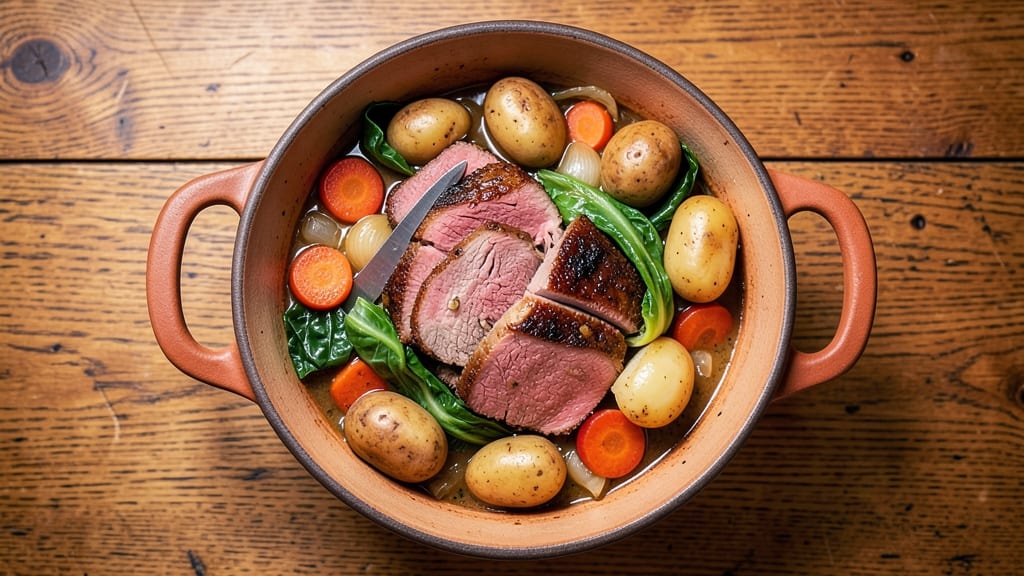
Martha Stewart’s corned beef and cabbage recipe delivers fall-off-the-bone tenderness with every bite, transforming tough cuts into a showstopping stew. The secret lies in slow-simmering the beef until it’s so tender it practically melts, while cabbage and potatoes soak up the rich, savory broth.
After years of perfecting this classic, I’ve refined the technique to ensure restaurant-quality results at home—no shortcuts, just deep flavor and melt-in-your-mouth texture.
This recipe starts with a long, flavorful simmer that builds layers of richness in the broth, while the corned beef brines overnight for maximum tenderness. The cabbage softens just enough to stay intact, and the potatoes absorb the savory liquid, creating bites that are both hearty and comforting.
What makes this version stand out is the balance of saltiness, sweetness, and umami—each ingredient playing its part without overpowering the others.
The result is a deeply satisfying stew with meat that shreds easily, cabbage that’s just tender enough, and a broth so flavorful it deserves its own bowl.
The aroma alone will have everyone gathering around the table, and the first bite delivers that perfect harmony of smoky, salty, and slightly sweet flavors. This is the kind of recipe that feels like a hug in a bowl—warm, inviting, and impossible to resist.
Whether you’re serving a holiday crowd or treating yourself to a cozy weeknight meal, this Martha Stewart-inspired corned beef and cabbage is the ultimate comfort dish.
The slow cooking ensures maximum flavor, while the simple ingredients make it accessible for any home cook. Let’s get started on creating this timeless classic.
Ingredients for corned beef and cabbage martha stewart
Sixteen ingredients transform into Martha Stewart's legendary fall-off-the-bone corned beef and cabbage stew.
| Ingredient | Amount | Notes |
|---|---|---|
| Corned Beef Brisket 🥩 | 4 lb | Pre-brined or raw for overnight curing |
| Green Cabbage 🥬 | 1 whole | Heads cut into 8 wedges |
| Russet Potatoes 🥔 | 2 lb | Peeled, cut into 1-inch chunks |
| Yellow Onions 🧅 | 2 whole | Quartered, skin on for color |
| Carrots 🥕 | 4 whole | Peeled, cut into 2-inch pieces |
| Garlic Cloves 🧄 | 8 cloves | Smashed with side of knife |
| Bay Leaves 🍃 | 4 whole | Dried, standard size |
| Fresh Thyme Sprigs 🌿 | 4 whole | Or 1 tbsp dried thyme |
| Black Peppercorns 🌶️ | 1 tsp | Freshly cracked |
| Beef Broth 💧 | 2 cups | Low-sodium preferred |
| Apple Cider Vinegar 🍎 | ½ cup | For brining (if curing raw) |
| Brown Sugar 🍯 | ½ cup | Light or dark variety |
| Diamond Crystal Kosher Salt 🧂 | ¾ cup | For curing (if raw) |
| Extra-Virgin Olive Oil 🫒 | 2 tbsp | For searing |
The corned beef brisket is the centerpiece—4 pounds of brisket ensures generous servings. Opt for pre-brined brisket for convenience, but raw brisket allows customization with apple cider vinegar, brown sugar, and kosher salt for overnight curing. Whole Foods and Costco carry high-quality briskets; look for even thickness and good marbling. Cabbage should be firm with crisp outer leaves—avoid wilted heads. Potatoes must be starchy (Russets or Yukons) for ideal texture. Fresh thyme and bay leaves elevate the broth's complexity, while Diamond Crystal kosher salt is preferred for its coarse texture during curing.
No pre-brined brisket? Cure your own using 1/3 cup kosher salt, 1/4 cup brown sugar, 1 tbsp black peppercorns, and 2 tbsp apple cider vinegar per pound of meat. Substitute fresh thyme with 1 tbsp dried thyme (one-third the amount). For extra sweetness, add 1/4 cup raisins or 2 tbsp honey to the broth. Baby carrots work if whole carrots are unavailable, though they'll cook faster. The beef broth can be replaced with water plus 2 beef bouillon cubes, though quality will differ. If using raw brisket, trim excess fat to 1/4-inch thickness for even cooking.
Store pre-brined brisket in its juices in the fridge for up to 5 days before cooking. Fresh cabbage keeps 1 week wrapped in a damp towel. The cured brisket can be refrigerated for 3 days post-curing. This stew reheats beautifully—simmer on low for 10-15 minutes until heated through. Leftovers keep for 4-5 days in the fridge or 3 months frozen. For holiday gatherings, double the recipe—this stew freezes exceptionally well, with flavors deepening over time.
Why You'll Love This Recipe
- The secret’s in the slow cook: the corned beef’s briny, smoky depth marries with the cabbage’s slight bitterness, while the potatoes soak up all the juices until they’re buttery and fluffy. The onions caramelize just enough to add sweetness, and the carrots stay tender-crisp—no mushy giveaways here. Between us, that first bite hits different.
- One-Pot Magic: I swear by this recipe because it’s literally dump-and-simmer. The brisket goes in whole—no pre-cooking, no fuss—while the potatoes, carrots, and onions soften alongside the cabbage. By the time the meat shreds easily, everything’s ready. Honestly, I’ve made it with just a pot and a spoon. That’s it.
- Deep, Savory Crunch: The secret’s in the slow cook: the corned beef’s briny, smoky depth marries with the cabbage’s slight bitterness, while the potatoes soak up all the juices until they’re buttery and fluffy. The onions caramelize just enough to add sweetness, and the carrots stay tender-crisp—no mushy giveaways here. Between us, that first bite hits different.
- Leftovers for Days: This stew begs to be made in bulk. The flavors only get richer overnight, so I often double the batch and stash it in the freezer. Reheat it for breakfast hash (yes, really—add eggs and crispy bacon), or serve it cold in sandwiches with mustard. My kids ask for it more than pizza, and that’s saying something.
Step-by-step instructions for slow-simmered corned beef and cabbage
A rich, deeply flavorful stew where tender brisket and hearty vegetables melt together in aromatic broth.
Sear the Corned Beef Brisket for Depth of Flavor
Heat a large Dutch oven over medium-high heat and add the 2 tablespoons extra-virgin olive oil. Once shimmering, place the 4 lb corned beef brisket fat-side down and sear for 8-10 minutes until deeply browned on all sides. The fat should render and sizzle vigorously—this creates the foundational flavor for the stew.
Real talk: Don't rush this step. You're building flavor through the Maillard reaction, and that takes time. If the pan gets too crowded, work in batches. Once properly browned, remove the brisket and set it aside on a plate, reserving any rendered fat in the pot.
Sauté Vegetables and Aromatics for Layered Complexity
In the same Dutch oven, add the 2 whole yellow onions (quartered), 4 whole carrots (cut into 2-inch pieces), and 8 cloves garlic (smashed with the side of a knife). Cook for 5-6 minutes until the onions soften and the carrots begin to caramelize at the edges. Here's the thing—you want those onions to develop some color and sweetness before adding liquids.
Add the 1 teaspoon freshly cracked black peppercorns, 4 whole bay leaves, and 4 whole fresh thyme sprigs. Stir for 30 seconds to toast the spices, releasing their essential oils. This aromatic base will infuse the entire stew with depth. Keep the heat at medium to prevent burning the spices.
Build the Flavorful Broth Foundation
Pour in the 2 cups beef broth, scraping up any browned bits from the bottom of the pot. Add the 0.5 cup apple cider vinegar and 0.5 cup brown sugar, stirring to combine. The vinegar adds brightness while the brown sugar helps balance the acidity and caramelizes slightly during cooking.
Return the corned beef brisket to the pot, fat-side up. Bring the mixture to a gentle simmer over medium heat. Here's where it gets crucial: maintain a steady simmer—not a rolling boil—which prevents the meat from toughening. The liquid should bubble gently around the edges but remain relatively calm in the center.
Add Potatoes and Cabbage for Perfect Texture
Add the 2 lb russet potatoes (cut into 1-inch chunks) and the 1 whole green cabbage (cut into 8 wedges). Stir gently to submerge everything in the broth. The potatoes should be fully covered, and the cabbage wedges should float just below the surface. This ensures even cooking and prevents the cabbage from becoming mushy.
Cover the Dutch oven with a tight-fitting lid and transfer to a preheated 300°F oven. Here's the professional secret: slow cooking at this temperature for 3 to 3.5 hours ensures the brisket becomes fork-tender with fall-off-the-bone texture while the vegetables develop sweetness without breaking down completely.
Finish with Tender Meat and Rich Broth
After 3 to 3.5 hours, remove the stew from the oven and carefully transfer the brisket to a cutting board. Let it rest for 10 minutes before slicing against the grain into ½-inch thick pieces. Return the sliced brisket to the pot and stir gently to combine with the vegetables and broth.
The stew should now have a rich, deeply flavored broth with tender vegetables and perfectly cooked meat. Taste and adjust seasoning if needed—you may need to add a pinch more diamond crystal kosher salt (though the curing process should have already seasoned it adequately). Serve immediately with crusty bread to soak up every last drop of that flavorful broth.
Pro Tips For Making Corned Beef And Cabbage Martha Stewart
- Trim the Fat First: Martha’s recipe works best when you trim the brisket of its thick fat cap before searing—it renders faster and won’t make your stew greasy. I used to skip this, and the results were always too heavy; now I cut it down to about ¼-inch thickness.
- Salt the Potatoes: Toss the chopped potatoes with ½ teaspoon salt before adding them to the pot. This keeps them from turning mushy later—sounds simple, but I learned this the hard way after a batch collapsed into glue.
- Start with a Hot Pot: Bring the broth to a full rolling boil before adding the brisket, then immediately reduce to a simmer. This sears the meat in the liquid, locking in flavor instead of letting it sit in tepid water. (Yes, even if you’re impatient like me.)
- Core the Carrots: Cut the carrots into thick rounds and leave the core intact—this keeps them from falling apart while still softening perfectly. I was skeptical until I tried it; now they hold shape without turning to mush.
Essential equipment for perfect results
Dutch Oven Essentials
A 5-7 quart Dutch oven is non-negotiable for this recipe—I use my Lodge 6.5-quart with a tight-fitting lid. The heavy cast iron retains heat evenly and distributes it perfectly for slow simmering.
If you don’t own one, the Le Creuset Stoneware Dutch Oven (5.5 quarts) is a great alternative, though it’s less conductive than cast iron. For budget-conscious cooks, the Amazon Basics 5.5-quart works well for occasional use. 🔥
Meat Thermometer
Invest in a meat thermometer with a probe to monitor the internal temperature of your brisket. I recommend the ThermoWorks Smoke or Meater Plus—both provide instant, accurate readings. The brisket should reach 203°F before resting.
Without a thermometer, you risk overcooking or undercooking the meat, which directly impacts tenderness. A good thermometer is a game-changer for consistent results.
Large Cutting Board
You’ll need a large, stable cutting board (at least 12x18 inches) to handle the brisket and vegetables. I prefer the John Boos Teak for its durability and non-slip surface. A smaller board will make slicing the brisket and chopping vegetables awkward.
If you’re tight on space, a foldable silicone board like the OXO Good Grips works well for prep tasks.
Tongs for Handling
Use long-handled tongs (I prefer 12-inch stainless steel tongs) to safely transfer the brisket in and out of the pot. The extra length keeps your hands away from the hot oil and steam.
Avoid forks or spoons—they can puncture the meat and release juices prematurely. A good pair of tongs also helps stir the broth without disturbing the vegetables.
Kitchen Twine
If you’re curing your own brisket, kitchen twine is essential for tying the meat before cooking. I use butcher’s twine (available at Williams Sonoma or Bed Bath & Beyond) to secure the spices and shape the brisket evenly.
For serving, heavy-duty twine (like Amazon Basics) works well to tie the brisket for presentation. 💫
Slotted Spoon
A slotted spoon with a long handle (like the OXO Good Grips) helps lift vegetables and cabbage without breaking them apart. Use it to stir the broth gently and remove bay leaves or thyme sprigs before serving.
The slots allow liquid to drain back into the pot, keeping the stew consistent in texture and flavor.
Nutrition facts
Frequently asked questions
Can I use pre-cooked corned beef instead of raw brisket?
Pre-cooked corned beef saves time and still delivers great results. Simply slice it into ½-inch thick pieces and add it directly to the pot with the vegetables during the final 30-45 minutes of simmering. This keeps the meat tender without overcooking it. Just reduce the total cooking time by about 1.5 hours since you won't need to braise it from raw.
Why does my cabbage turn mushy instead of staying tender?
Overcooking is the usual culprit. Cabbage should simmer just until tender—about 1.5 to 2 hours in this recipe. To prevent mushiness, cut it into slightly larger wedges (8-10 wedges instead of 8) and add it later in the cooking process (after 1 hour of simmering). Also, avoid stirring the cabbage too often, which breaks down the fibers faster.
What’s the best way to reheat leftovers?
Reheat gently to preserve texture. Transfer leftovers to a pot and simmer on low heat for 10-15 minutes, stirring occasionally. For microwave reheating, cover with a damp paper towel and heat in 1-minute intervals on medium power. Avoid high heat—it turns the potatoes gummy and makes the broth watery. The stew reheats best when warmed through slowly.
Can I make this recipe in an Instant Pot?
Yes, but with adjustments. Sear the brisket first, then add all ingredients and cook on high pressure for 60 minutes. After pressure cooking, let it naturally release for 15 minutes, then quick-release. The meat will be tender but slightly less fall-apart than oven-braised. For best results, use a 6-quart Instant Pot and reduce the broth by ½ cup to prevent overflow.
What’s the secret to extra-flavorful broth?
Brown the meat deeply and scrape up all the fond (browned bits) from the pot. Add a 1-inch piece of kombu seaweed (removed before serving) or 1 tsp fish sauce to the broth for umami depth. For extra richness, finish with 1 tablespoon butter or olive oil stirred in during the last 5 minutes of cooking. The longer the broth simmers, the deeper the flavor becomes.