
Main Courses
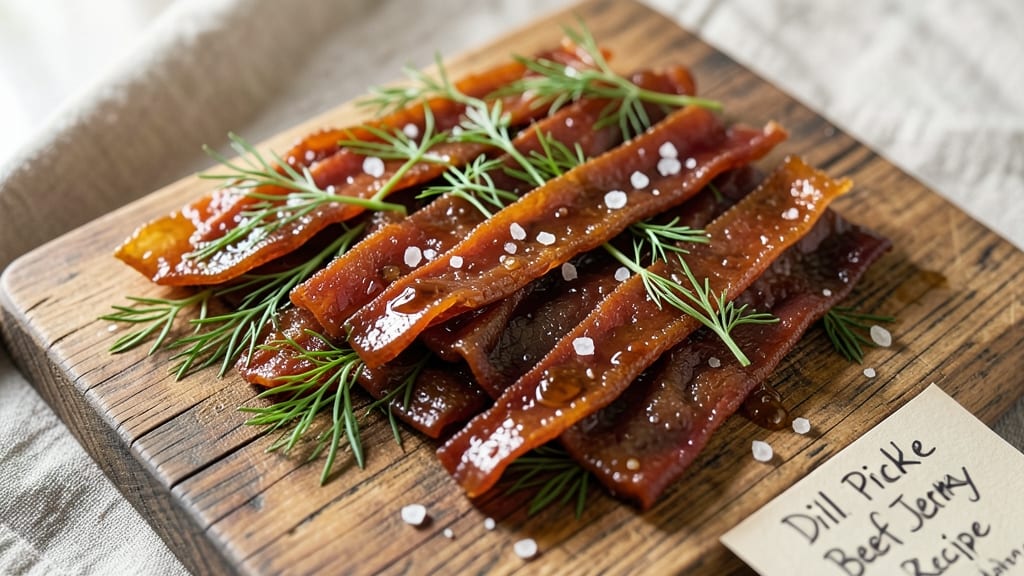
Creating dill pickle-flavored beef jerky transforms traditional jerky into a tangy, briny masterpiece that rivals any snack you can buy. This recipe balances the bold flavors of dill pickles with the smoky depth of cured beef, delivering a texture that’s crisp yet chewy.
I perfected this method after years of experimenting with marinades, and the result is a jerky that’s impossible to resist.
The process combines classic jerky techniques with a modern twist—using a dehydrator or oven for even drying while infusing that signature pickle tang. The marinade is where the magic happens: a blend of vinegar, spices, and pickle juice that penetrates the meat, ensuring every bite is packed with flavor.
No special equipment is needed beyond what most kitchens already have.
By the time you’re done, you’ll have jerky that’s crisp on the outside, tender inside, and bursting with the bright, tangy notes of dill pickles. It’s perfect for snacking, hiking, or gifting—anyone who tries it will ask for seconds.
The best part? This method works with any cut of beef, making it both customizable and foolproof.
Whether you’re a jerky novice or a seasoned maker, this recipe delivers restaurant-quality results without the fuss. Let’s get started on a batch that’ll have everyone asking for your secret marinade.
Ingredients for dill pickle flavored beef jerky
Pickle juice, spices, and thinly sliced beef—this tangy twist on classic jerky needs just these ingredients.
| Ingredient | Amount | Notes |
|---|---|---|
| Lean Beef Top Round Roast 🥩 | 2 lb | Trimmed of fat and sliced thin |
| Dill Pickle Juice 🥒 | 1 cup | From a jar of dill pickles |
| Apple Cider Vinegar 🍏 | ½ cup | For tangy depth |
| Worcestershire Sauce 🍶 | 2 tbsp | For umami richness |
| Brown Sugar 🍚 | ¼ cup | Lightly packed |
| Kosher Salt 🧂 | 1 ½ tbsp | For curing and seasoning |
| Black Peppercorns 🌶️ | 1 tbsp | Coarsely crushed |
| Garlic Powder 🧄 | 1 tbsp | For subtle garlic notes |
| Onion Powder 🧅 | 1 tbsp | For depth of flavor |
| Smoked Paprika 🌶️ | 1 tbsp | For smoky undertones |
| Ground Mustard 🌿 | 1 tsp | For tangy kick |
| Fresh Dill 🌿 | ¼ cup | Chopped finely for brightness |
| Lemon Juice 🍋 | 1 tbsp | Freshly squeezed |
The beef is everything. Top round roast gives you that perfect chewy texture—avoid anything too fatty like ribeye. Look for pre-sliced jerky meat at Costco or Walmart (they sell it in the jerky-making section), or ask your butcher to slice it paper-thin. If you're slicing yourself, freeze the meat for 30 minutes first—it makes slicing a breeze. For the pickle juice, grab a jar of Heinz or Vlasic dill pickles—the brine is what we're after. Fresh dill is a game-changer here (the grocery store usually has it in the produce section), but dried works in a pinch.
No dill pickles? Substitute with 3 tbsp pickle relish plus 1 tbsp extra vinegar—it’ll still give you that tang. Running low on Worcestershire? Soy sauce or liquid smoke adds umami, but Worcestershire is the real MVP. The brown sugar can be swapped for white sugar or honey, though brown gives that caramelized depth. For extra smokiness, swap smoked paprika for chipotle powder. And if you don’t have fresh dill, use 1 tsp dried dill plus 1 extra tbsp pickle juice—just don’t skip it entirely, or your jerky will miss that signature brightness.
Marinate the beef overnight in the fridge—24 hours max, or the texture gets mushy. After dehydrating or baking, let it cool completely before storing. Keeps in an airtight container for 2 weeks at room temperature or 1 month in the fridge. For long-term storage, freeze it in a sealed bag for up to 6 months. Pro tip: Pack it in small snack-sized bags so you can grab a single serving without opening the whole container.
Why You'll Love This Recipe
- Five-Ingredient Magic: The marinade is that simple—just pickle juice, vinegar, Worcestershire, sugar, and beef. No fancy spice blends, no hunting for obscure ingredients. I swear, I’ve made this while scrolling through my phone, and it still turns out perfect.
- Tangy Twist You’ll Crave: That dill pickle juice isn’t just for dipping anymore—it brings this jerky a bright, punchy flavor that cuts through the richness of the beef. The brown sugar balances it just enough to make it dangerously addictive, especially when it’s still got that sticky-sweet crust from the dehydrator.
- Snack Attack Ready: Between us, this jerky is my go-to for road trips, lunchboxes, or when I’m too lazy to cook. It’s the kind of thing that disappears fast—my kids grab it for school, my husband eats it straight from the bag, and I? I’m sneaking pieces while “supervising” the dehydrator.
- Budget-Friendly Protein: A pound of top round is cheaper than most jerky at the store, and you get way more servings. Honestly, I’ve made three batches from one roast, and the leftovers last weeks in my freezer. Plus, the ingredients are all pantry staples—no wasted trips to the store.
Step-by-step instructions for making dill pickle beef jerky
Here's how to transform lean beef into bold, tangy jerky with perfect texture every time.
Prepare the Beef for Curing
Begin by trimming any remaining fat from the 2 lb lean beef top round roast, then slice it into strips about ¼-inch thick and 2-inches wide. I like to cut against the grain for maximum tenderness later. Arrange the strips on a clean cutting board and pat them completely dry with paper towels—this step is crucial for preventing bacteria growth during curing.
Place the beef strips in a large, non-reactive container (glass or food-grade plastic works best). In a separate bowl, whisk together the 1 cup dill pickle juice, 0.5 cup apple cider vinegar, 2 tbsp Worcestershire sauce, 0.25 cup brown sugar, 1.5 tbsp kosher salt, 1 tbsp coarsely crushed black peppercorns, 1 tbsp garlic powder, 1 tbsp onion powder, 1 tbsp smoked paprika, and 1 tsp ground mustard until the sugar and salt dissolve completely. This creates your curing marinade.
Pour the marinade over the beef strips, making sure each piece is fully coated. Add the 0.25 cup finely chopped fresh dill and 1 tbsp lemon juice, then gently stir everything together. Cover the container and refrigerate for 24 hours, turning the beef strips every 8 hours to ensure even curing. The acidity from the vinegar and pickle juice will begin breaking down the proteins, making the jerky tender while preserving it.
Dry the Jerky for Maximum Flavor Concentration
After the 24-hour cure, remove the beef strips from the marinade and pat them dry again with fresh paper towels. Arrange the strips on dehydrator trays or wire racks placed over baking sheets, leaving about ½-inch space between each piece. This spacing ensures proper air circulation for even drying.
Set your dehydrator to 160°F (or use your oven on its lowest setting with the door slightly propped open). Place the trays inside and let the jerky dry for 6-8 hours, checking periodically. You'll know it's ready when the strips feel firm to the touch and no longer feel moist in the center. If you're using an oven, you may need to dry them for 4-6 hours due to higher humidity levels.
Here's the thing—don't rush this step. Proper drying prevents the jerky from becoming chewy. If the edges start to darken too quickly, rotate the trays for even exposure. The final jerky should be pliable but not sticky, with a deep tangy aroma from the dill pickle juice and fresh dill.
Test for Doneness and Package
Once the jerky reaches the perfect texture, remove it from the dehydrator and let it cool completely on a clean surface. While cooling, test one piece by bending it slightly—it should snap cleanly without sticking together. If it feels too moist, return it to the dehydrator for another 30-60 minutes.
When fully cooled, transfer the jerky to airtight containers or resealable bags. I like to portion it into individual serving bags for convenience. Store in the refrigerator for up to 2 weeks or freeze for 3 months to preserve freshness. The flavors will continue to develop over time, with the dill pickle juice and fresh dill creating that signature tangy brightness.
Real talk: The first batch might take some trial and error with drying times, but once you nail it, you'll have a supply of restaurant-quality jerky that's perfect for snacks, camping trips, or protein-packed lunches. Each bite delivers that bold pickle tang with a satisfying smoky heat from the paprika and Worcestershire sauce.
Pro Tips For Making Dill Pickle Flavored Beef Jerky
- Trim the Fat Like Your Taste Buds Depend on It: Top round is lean, but any lingering fat will turn your jerky greasy—not crispy. Use a sharp knife to slice off every visible fat cap before slicing thin. I learned this the hard way when my first batch tasted like a soggy, oily mess instead of the tangy snack I wanted.
- Marinate Overnight or Suffer: Pickle juice and vinegar need time to work their magic. Skip the 4-hour rush and let the beef soak for at least 12 hours—24 if you’re impatient like me. The acid breaks down the meat faster, and the flavor penetrates deeper. Trust me, your jerky will thank you.
- Don’t Crowd the Dehydrator: Pile slices too close, and you’ll end up with jerky that’s more chewy than crisp. Space them at least 1/4-inch apart on the trays—even if it means doubling the drying time. I used to ignore this, and my batches turned out like overcooked leather.
- Add Sugar Last: Brown sugar caramelizes fast, so toss it in only after the jerky has dried for 6-8 hours. Spritz the warm slices with a mix of pickle juice and Worcestershire, then dust with sugar. This keeps the crust from burning while locking in that sweet-tangy punch. (Yes, I burned my first batch because I was eager.)
Perfect pairings for this recipe
Pickle-Inspired Snack Boards
Pair your dill pickle jerky with a charcuterie board featuring complementary flavors like sharp cheddar cheese, crusty bread, and olives. The tangy jerky balances rich cheeses beautifully.
I love adding pickle spears to the board for a nostalgic touch—it’s like a flavor bridge between the jerky and other toppings. 🥒
Spicy Pairing Options
For a kick, serve your jerky with spicy mustard or hot honey—the sweet heat contrasts the tangy pickle notes perfectly. I drizzle Sriracha-infused mayo on sandwiches with the jerky for an extra layer of complexity. Avoid overly sweet condiments; they can overpower the bold flavors.
Beer and Beverage Matches
A crisp lager like Bud Light or Coors Banquet cleanses the palate between bites, while a wheat beer (such as Blue Moon) enhances the dill and citrus notes. For non-alcoholic options, try sparkling water with lemon—the fizz cuts through the richness. 🍺
Sweet Contrasts
Balance the savory-tangy jerky with dark chocolate (70% or higher) or honeycomb pieces. The bitterness of dark chocolate mirrors the jerky’s depth, while honey adds a smooth sweetness. I also enjoy pairing it with peanut butter on whole-grain crackers for a salty-sweet combo.
Game Day Staples
This jerky is a game-changer for tailgating—pack it with chips, guacamole, and salsa for a crowd-pleasing spread. The tangy flavor stands up to bold dips, and it’s easy to grab while watching the game. I always include pickle slices on the platter to tie everything together. ⚡
Nutrition facts
Frequently asked questions
Can I use pre-sliced jerky meat instead of slicing my own beef?
Pre-sliced jerky meat (often sold at Costco or Walmart) saves time and ensures even thickness. Just look for lean top round roast that's already sliced ¼-inch thick. Pat it completely dry before marinating to prevent bacterial growth during curing. This shortcut still delivers perfect results.
How do I know when the jerky is fully dried?
The jerky is done when it feels firm to the touch and snaps cleanly when bent—not sticky or moist. For a foolproof test, let one piece cool completely, then gently press it: if it holds its shape without bending, it's ready. Drying times vary by climate (humidity slows drying), so check after 6 hours and continue until perfect.
What's the best way to store homemade jerky?
Store in airtight containers or resealable bags to preserve freshness. It keeps 2 weeks at room temperature or 1 month in the fridge. For long-term storage, freeze for up to 6 months—just thaw overnight in the fridge before eating. Portion into snack-sized bags to avoid opening the whole container.
Can I make this jerky without a dehydrator?
Yes! Use your oven on its lowest setting (160°F) with the door slightly propped open for airflow. Arrange strips on wire racks over baking sheets, then dry for 4-6 hours. Check frequently to prevent over-browning. A warm, sunny windowsill also works in a pinch (just monitor closely).
Why does my jerky turn out too salty?
Over-salting happens when the salt doesn't dissolve properly in the marinade. Always whisk until fully dissolved, and measure carefully—1.5 tbsp per 2 lbs of beef is perfect. If it's too salty, soak the jerky in milk or lemon juice for 10 minutes to balance the flavor. The sugar in the marinade helps regulate saltiness, so don't skip it!