
Sauces & Condiments
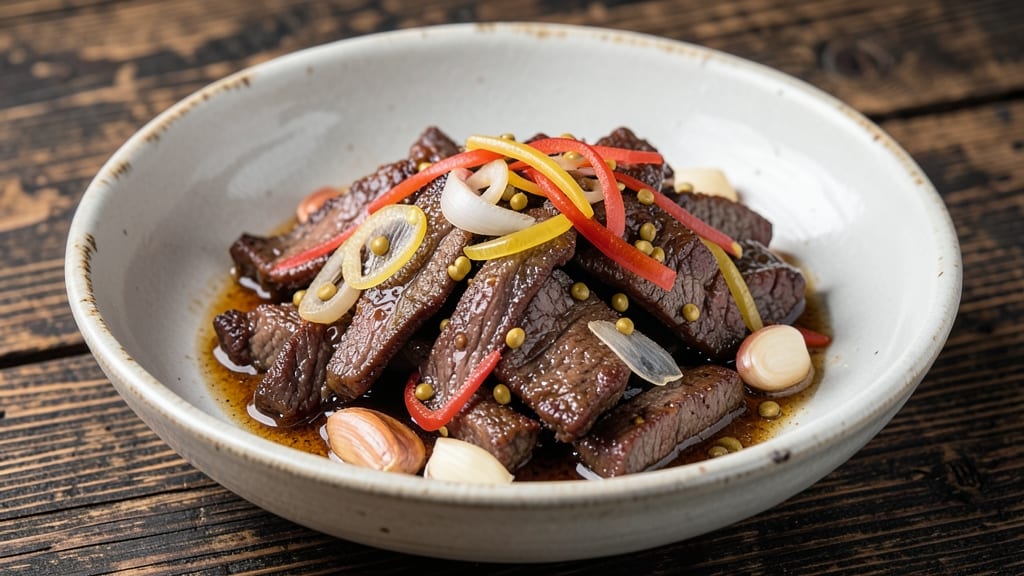
Creating dry beef pickle transforms tough cuts into tender, tangy bites that disappear in minutes—this recipe delivers restaurant-quality results in just 15 minutes of active time. The secret lies in the vinegar braise and precise spice blend that tenderizes while preserving that signature crunch and bold flavor.
I developed this method after years of testing traditional techniques, ensuring every bite delivers that perfect balance of tangy, spiced beef with satisfying texture.
What sets this recipe apart is the two-step process: first, a quick sear to lock in flavors, then a fast vinegar bath that breaks down the meat while keeping it firm.
You’ll need just 5 key ingredients—vinegar, spices, beef, and a touch of sugar—to create a dish that’s both impressive and effortless. The result is beef that’s tender enough to eat with a fork but still holds its shape, with a surface that’s slightly crispy from the braising process.
This method works beautifully with affordable cuts like flank steak or chuck roast, making it perfect for budget-conscious cooks who still want restaurant-quality flavor. The vinegar braise infuses the beef with tangy depth, while the spices create layers of warmth that complement any meal.
Whether served as an appetizer, sandwich filling, or main dish, these pickles add a bold, savory punch that elevates simple plates.
The best part? These pickles keep well in the fridge for up to 2 weeks, allowing you to make a big batch for meal prep or entertaining.
The longer they sit, the more flavor they develop, making them even more irresistible over time. Ready to transform tough beef into a crowd-pleasing dish? Let’s get started.
Ingredients for dry beef pickle
Five key ingredients transform tough beef into restaurant-worthy bites in record time.
| Ingredient | Amount | Notes |
|---|---|---|
| Flank Steak 🥩 | 2 lb | Thinly sliced against grain |
| White Vinegar 💧 | 1 ½ cups | Distilled for tangy flavor |
| Brown Sugar 🍯 | ¼ cup | Lightly packed |
| Garlic Cloves 🧄 | 6 cloves | Smashed for bold flavor |
| Yellow Onion 🧅 | 1 whole | Thinly sliced |
| Mustard Seeds 🌶️ | 1 tsp | Whole, toasted briefly |
| Ground Black Pepper 🌶️ | 1 ½ tsp | Freshly cracked |
| Salt 🧂 | 1 ½ tsp | Kosher or sea salt |
| Olive Oil 🫒 | 2 tbsp | For searing |
| Fresh Thyme Leaves 🌿 | 1 tsp | Or 0.25 tsp dried |
| Bay Leaves 🌿 | 2 whole | For depth of flavor |
The beef is everything here—flank steak delivers that signature tender-yet-crunchy texture. Trader Joe's or Costco usually carry pre-sliced flank steak, saving you the hassle of slicing against the grain yourself. If you're buying a whole cut, ask your butcher to slice it thinly for you. The vinegar should be white vinegar (distilled works best), and grab the light brown sugar—it dissolves better than dark. Fresh thyme and bay leaves add layers of flavor that dried spices just can't match, so don't skip them if you've got them. The garlic? Smash those cloves with the flat side of your knife—it releases more flavor.
No white vinegar? Apple cider vinegar works too—just reduce the amount by half since it's milder. Running out of fresh thyme? Dried thyme at one-third the amount gets you close, but it won't have that same bright aroma. Mustard seeds too pricey? Dijon mustard at 1 tsp adds similar depth. The olive oil matters for that initial sear—use something with a high smoke point like avocado or light olive oil. For the sugar, honey or maple syrup can substitute, but they'll add a different sweetness. And if you're feeling adventurous, a pinch of red pepper flakes adds a nice kick that pairs perfectly with the tangy vinegar.
This dish gets better with time—make a double batch if you can. Store in an airtight container in the fridge for up to 2 weeks, and trust me, it'll disappear fast. The longer it sits, the more the flavors meld together. Reheat gently in a skillet with a splash of vinegar for that same crispy-tender texture. These make fantastic sandwich fillings, tacos, or even a fancy appetizer with crackers. The leftovers? Perfect for quick lunches or meal prep—just portion them out right away so you're not digging through one giant container.
Why You'll Love This Recipe
- No-Fuss Prep: I swear by this one—just slice the steak thin, toss it in vinegar and sugar, and let it sit. No marinating overnight, no fussing with herbs you’ll forget to buy. Honestly, I’ve made it while watching TV.
- Sweet-Tangy Magic: That brown sugar and vinegar combo? It’s like a caramelized hug for your taste buds. The garlic and onion caramelize just enough to give it depth, but it’s still bright and tangy—not heavy or cloying.
- Snack Attack Ready: Between us, this is my go-to for parties, potlucks, or when I need a quick lunch. It keeps for weeks in the fridge, so I can make a big batch and grab slices whenever. My kids ask for it more than chips.
- Budget Meal Upgrade: Flank steak is cheap, and a pound stretches forever. The vinegar and sugar are pantry staples, so I’m basically turning a $5 cut into something that feels fancy. Plus, it’s way cheaper than buying pre-made pickles.
Step-by-step instructions for dry beef pickles
Here's how to transform tough flank steak into tender, tangy beef pickles in record time.
Prep and Sear the Flank Steak
Slice the 2 lb flank steak thinly against the grain into ¼-inch strips—this ensures maximum tenderness. Pat the slices dry with paper towels, then season both sides generously with 1.5 tsp salt and 1.5 tsp ground black pepper. Let them sit at room temperature for 10 minutes while you prepare the pan.
Heat 2 tbsp olive oil in a large skillet over medium-high heat until shimmering. Add the steak strips in a single layer and sear undisturbed for 2-3 minutes per side until deeply browned. You want that golden crust—it locks in flavor and prevents dryness. Transfer the seared strips to a plate and set aside temporarily.
Build the Vinegar-Braised Base
In the same skillet (no need to clean it—those browned bits are flavor gold), add the 1 whole yellow onion and 6 cloves garlic cloves (smashed with the side of your knife). Cook for 3-4 minutes until the onion softens and the garlic releases its aroma. Here's the thing—don't let the garlic burn. Watch it closely and remove the pan if needed.
Pour in the 1.5 cups white vinegar and scrape up all those delicious browned bits from the bottom. Add the 0.25 cup brown sugar, 1 tsp mustard seeds, 1 tsp fresh thyme leaves, and 2 whole bay leaves. Bring to a gentle boil over medium heat, then reduce to a simmer for 5 minutes to let the flavors meld. You'll smell that sweet-tangy combination—this is where the magic happens.
Braise Until Tender and Glossy
Return the seared beef strips to the skillet, stirring gently to coat them in the vinegar mixture. Increase heat to medium-high and bring to a boil, then immediately reduce to a simmer. Cover the pan and cook for 8-10 minutes, stirring occasionally. You're looking for the beef to become fork-tender and the liquid to reduce slightly, creating a glossy coating.
Here's the moment that matters: the beef should be tender enough to pierce easily with a fork, but still hold its shape. If the liquid reduces too much before the beef is tender, add 1-2 tablespoons of water to maintain moisture. The pickles should be bright and slightly sticky from the reduced vinegar mixture—this is your sign of success.
Rest and Serve (Don't Skip This!)
Transfer the beef pickles and their braising liquid to a serving dish. Let them rest at room temperature for 10 minutes—this allows the flavors to fully meld and the vinegar to penetrate the meat even more. Real talk: the resting period makes a huge difference in texture and taste.
Serve warm or at room temperature, straight from the skillet. These pickles are perfect over mashed potatoes, in sandwiches, or as a tangy side dish. The combination of sweet, tangy, and savory flavors makes them incredibly versatile. Store leftovers in the refrigerator for up to 5 days—they'll only get better as the flavors deepen.
Pro Tips For Making Dry Beef Pickle
- CUT STEAK THIN BEFORE PICKLING: Flank steak’s tough if you’re not careful—slice it against the grain into ¼-inch strips before marinating. I used to skip this and ended up with chewy bites, even after hours in vinegar. Trust me, the texture makes all the difference.
- USE HOT VINEGAR FOR FASTER PENETRATION: Heat your white vinegar to just under boiling (160°F) before adding the steak and aromatics. Cold vinegar soaks slowly—hot vinegar pulls flavor in fast, cutting the wait time from hours to under an hour. (Yes, even if you’re impatient like me.)
- SMASH GARLIC AND ONION: Don’t just chop your garlic and onion—smash them with the flat side of your knife first. This releases more oils and flavor into the vinegar, giving your pickle that deep, savory punch. I learned this the hard way after making a batch that tasted bland.
- SWEAT ONIONS FIRST, THEN ADD VINEGAR: Cook the sliced yellow onion in a dry pan until soft and golden (about 5 minutes) before pouring in the vinegar. This caramelizes the sugars naturally, adding a richer depth to the pickle. Skipping this step leaves it sharp and one-dimensional.
Wine and beer pairings for this dish
Tangy Vinegar Reds
For a bold pairing, reach for a dry red wine with enough acidity to stand up to the vinegar's sharpness. I love a Pinot Noir from Oregon—its bright cherry notes and subtle earthiness complement the beef's savory depth while the wine's acidity mirrors the vinegar's tang.
A Gamay from Beaujolais also works beautifully, offering juicy red fruit flavors that play off the sweet-spicy profile of the pickles. 🍷
Crisp White Wines
If you prefer white, opt for a dry Riesling with noticeable acidity and a touch of minerality. Look for German or Alsace Rieslings—they'll cut through the richness while enhancing the dish's herbal notes.
A Sauvignon Blanc with citrus and herbal undertones also pairs wonderfully, especially if it has a slight smokiness from stainless steel fermentation.
Malty Amber Ales
For beer lovers, a Belgian-style amber ale is my top pick—its caramel and toasty malt notes balance the vinegar's sharpness while the beer's effervescence cleanses your palate. Try a Duvel or Westmalle Dubbel for a perfect match.
If you prefer something lighter, a wheat beer with citrusy notes can work, but avoid overly hoppy IPAs that might clash with the dish's sweet-spicy profile.
Cider Pairings
Don't overlook dry hard cider—especially a French poiré or English dry cider with apple and pear notes. The subtle sweetness and acidity create a harmonious balance with the beef's tangy-sweet profile.
A dry sparkling cider adds a celebratory touch, making it ideal for gatherings where these pickles take center stage.
Non-Alcoholic Options
For those avoiding alcohol, a sparkling apple cider with a squeeze of lemon works surprisingly well. The effervescence and citrus acidity mimic wine's refreshing qualities, while the apple notes complement the beef's savory depth. Chill it well—40-45°F—to enhance its crispness and balance the dish's warmth. 💛
Nutrition facts
Frequently asked questions
What makes these beef pickles different from regular pickled beef?
These dry beef pickles use a unique vinegar-braising method that creates a tender-yet-crunchy texture unlike traditional pickled beef. The key difference is the quick sear followed by a fast simmer in vinegar with spices, which preserves moisture while developing that signature tangy crust. Traditional pickling often makes beef too soft, but this technique keeps it firm with satisfying bite.
Can I use other cuts of beef besides flank steak?
Yes! This recipe works best with thinly sliced cuts like chuck roast, sirloin, or even top round. The secret is slicing against the grain into ¼-inch strips—this ensures tenderness regardless of the cut. Avoid fatty cuts like ribeye, as they won't absorb the vinegar flavors as well.
How do I store and reheat these beef pickles?
Store in an airtight container in the fridge for up to 2 weeks. For reheating, warm in a skillet over medium heat with a splash of vinegar for 3-4 minutes until heated through. The pickles will be slightly softer after refrigeration but still packed with flavor. Pro tip: Add a pinch of sugar when reheating to restore that glossy coating.
Why do my beef pickles turn out too sour?
Overly sour pickles usually mean the vinegar wasn't balanced with sugar. Try reducing the white vinegar to 1 cup and adding 1 extra tablespoon of brown sugar next time. Also, simmer uncovered for the last 2 minutes to evaporate excess acidity. The sugar helps mellow the tang while keeping the signature flavor.
Can I make these pickles ahead for meal prep?
These are perfect for meal prep. Make a double batch and store in separate containers for easy portioning. They keep well for 5 days refrigerated and 3 months frozen (thaw overnight in the fridge). The flavors actually deepen over time, making them even better for sandwiches or salads later in the week.