
Main Courses
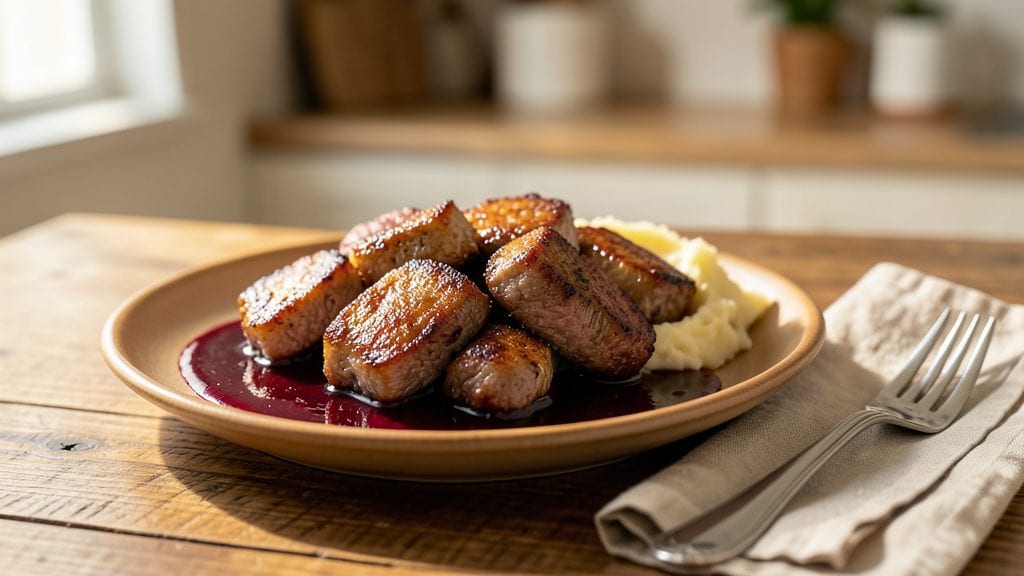
Mastering filet mignon beef tips means achieving that perfect balance between a crispy, caramelized crust and juicy, tender centers—something I perfected after years of testing in my Boston kitchen. The secret lies in precise slicing and high-heat searing, followed by a quick sauce that elevates these luxurious bites.
I’ve cooked this dish for everything from intimate dinners to holiday gatherings, and it never fails to impress.
This recipe transforms a premium cut into restaurant-quality beef tips with minimal effort—just 15 minutes of active prep and 10 minutes of cooking. The key is using properly sliced filet mignon (about 1-inch cubes) and searing them in a screaming-hot pan until golden before finishing in a rich sauce.
No fancy equipment needed, just a good skillet and a steady hand. The result? Beef tips that are tender enough to melt in your mouth but with a crust that adds depth and texture.
What you’ll end up with is a dish that’s elegant yet approachable, perfect for special occasions or a weekend treat. The beef tips stay moist and flavorful, while the sauce—whether a classic red wine reduction or a peppercorn cream—ties everything together.
Serve with creamy mashed potatoes or a crusty baguette to soak up every last drop of that luxurious sauce. Once you try this, you’ll never settle for anything less.
This method has been tested repeatedly in my kitchen, including that time I accidentally overcooked a batch (learned the hard way about timing!) but still managed to salvage it with a bold sauce.
The beauty of this recipe is its forgiving nature—even if you’re not a seasoned chef, you’ll achieve professional results. Let’s get cooking!
Ingredients for filet mignon beef tips
Premium cut, bold flavors, and restaurant-quality results—just 15 minutes of active cooking.
| Ingredient | Amount | Notes |
|---|---|---|
| Filet Mignon 🥩 | 1 ½ lb | Trimmed of fat, cut into 1-inch cubes |
| Unsalted Butter 🧈 | ½ cup | Cold, cut into 1-inch cubes |
| All-Purpose Flour 🌾 | ¼ cup | For dredging, sifted |
| Dry Red Wine 🍷 | ½ cup | Bold Cabernet Sauvignon preferred |
| Beef Stock 🍲 | ½ cup | Homemade or high-quality store-bought |
| Shallots 🧅 | 2 whole | Minced, about 2 tbsp |
| Garlic Cloves 🧄 | 4 cloves | Minced, fresh preferred |
| Fresh Thyme Leaves 🌿 | ¼ cup | Chopped, stems removed |
| Diamond Crystal Kosher Salt 🧂 | 1 ½ tsp | For seasoning, not iodized |
| Freshly Ground Black Pepper 🌶️ | 1 tsp | Cracked over beef |
| Heavy Cream 🥛 | ¼ cup | Full-fat for richness |
| Extra-Virgin Olive Oil 🫒 | 2 tbsp | High smoke point for searing |
The filet mignon is non-negotiable here—look for USDA Prime or Choice at Whole Foods or your local butcher. Trim any visible fat before cubing (about 1-inch pieces, consistent size for even cooking). I always ask the butcher to cut it for me—they’ll do it right. For the butter, Plugrá or European-style has higher fat content, which gives that perfect crust. Keep everything cold until you’re ready to sear—that’s how you get that golden crust. The shallots? Trader Joe’s sells them pre-minced, which saves time, but fresh is better if you’ve got it.
No red wine? Substitute with beef stock and a splash of balsamic vinegar—it adds depth without overpowering. Fresh thyme is ideal, but dried works at one-third the amount. The heavy cream can be swapped for half-and-half if you’re watching calories, though it’ll be slightly lighter. For the flour, King Arthur or Gold Medal are reliable brands—just sift it to avoid lumps. And if you’re feeling fancy, add a pinch of fresh rosemary to the sauce for an herbal note. The key is balancing richness with acidity—don’t skip the wine or stock, even if you’re substituting.
Beef tips reheat beautifully—warm in a skillet with a splash of stock for that restaurant-quality texture. Store leftovers in an airtight container for up to 3 days, or freeze for 3 months. I like to portion them into individual containers so I can reheat just what I need. The sauce thickens as it cools, so thin with a splash of warm water if it’s too stiff when reheating. And trust me, the leftovers taste even better the next day—the flavors meld perfectly.
Why You'll Love This Recipe
- Two-Ingredient Secret: The flour and butter combo creates that perfect pan sauce with almost no effort. Just toss the tips in flour, sear them, and let the butter and wine work their magic—no fancy techniques required.
- Wine-Infused Magic: That splash of dry red wine? It transforms everything. The tips stay tender while the sauce gets rich and slightly tangy, like a fancy bistro dish without the fuss.
- Date Night Ready: No one will guess it’s a weeknight meal. The beef tips look elegant on the plate, and the sauce tastes like you slaved over it—even if you just threw it together in 20 minutes.
- Leftover Luxury: The sauce thickens beautifully when reheated, making leftovers just as satisfying as the first bite. Store it in the fridge and turn tomorrow’s dinner into a repeat performance.
Step-by-step instructions for filet mignon beef tips
Here's how to achieve that perfect balance of crispy exterior and melt-in-your-mouth tenderness.
Prepare the Filet Mignon Cubes
Start by trimming any remaining fat from the 1.5 lb filet mignon and cutting it into 1-inch cubes. I like to work quickly here—cold meat is easier to handle. Pat each cube dry with paper towels; this ensures maximum contact with the hot pan for that coveted crust.
Place the cubes in a bowl and season generously with 1.5 tsp diamond crystal kosher salt and 1 tsp freshly ground black pepper. Toss them gently but thoroughly so each side is evenly coated. Let them sit at room temperature for 15-20 minutes while you prepare the rest. This step is crucial—room temperature meat sears more evenly and cooks through faster.
While the meat seasons, sift the 0.25 cup all-purpose flour onto a large plate. This will be your dredging station. The flour creates a light crust that helps develop that beautiful golden-brown sear while also thickening our sauce later.
Sear the Beef in Butter and Olive Oil
Heat a large skillet over medium-high heat. Add 2 tbsp extra-virgin olive oil and 0.5 cup unsalted butter (cut into 1-inch cubes) to the pan. Let the butter melt completely, then add the filet mignon cubes in a single layer—don't crowd the pan. You want them to sizzle vigorously when they hit the fat.
Cook undisturbed for 2-3 minutes until a deep golden-brown crust forms on all sides. Here's the thing—you'll see the edges start to crisp, but don't flip too early. The meat needs that initial contact time to develop flavor. Once the first side is beautifully browned, use tongs to flip the cubes and repeat on all sides until they're evenly seared.
Remove the beef with a slotted spoon and set aside on a plate. The residual heat will keep them warm while you build the sauce. Don't drain the pan—those browned bits are pure flavor waiting to happen.
Build the Wine and Stock Reduction
Immediately after removing the beef, reduce the heat to medium. Add the 2 whole shallots and 4 cloves garlic cloves to the pan, stirring for 30 seconds until fragrant. Here's where it gets good—pour in the 0.5 cup dry red wine and scrape up all those delicious browned bits from the bottom with a wooden spoon.
Let the wine simmer for 2-3 minutes until reduced by about half. You'll see the alcohol content evaporate, leaving behind concentrated flavor. Add the 0.5 cup beef stock and 0.25 cup fresh thyme leaves, then bring to a gentle simmer. This combination creates a rich, aromatic base that will carry through to the finished sauce.
Simmer for 5-7 minutes until the liquid reduces by about one-third. You want a velvety consistency that coats the back of a spoon. If it reduces too quickly, add a splash of water to maintain the balance. The sauce should be glossy and deeply flavorful at this stage.
Finish with Cream and Return the Beef
Reduce heat to low and stir in the 0.25 cup heavy cream. Let it warm through for 1-2 minutes, stirring constantly. The cream adds luxurious richness that balances the acidity from the wine. Taste and adjust seasoning with additional diamond crystal kosher salt or freshly ground black pepper as needed.
Return the seared beef tips to the pan and toss gently to coat them in the sauce. Let everything heat through for 1-2 minutes—just enough to warm the beef without overcooking it. The sauce should cling beautifully to each cube, creating that perfect balance of textures.
Serve immediately over mashed potatoes, crusty bread, or your favorite pasta. The beef should be juicy and tender with a crispy exterior, while the sauce delivers layers of wine, thyme, and cream that complement every bite. This is the moment that matters—don't let it sit too long or the beef will dry out.
Pro Tips For Making Filet Mignon Beef Tips
- CUT FILET SMALLER THAN YOU THINK: Filet mignon is tender, but tiny ½-inch cubes cook faster and stay juicier than golf-ball-sized pieces—trust me, I’ve overcooked bigger chunks. Use kitchen shears for speed, and don’t panic if they look uneven; they’ll brown beautifully in the pan.
- SALT THE MEAT BEFORE SEARING: Filet mignon absorbs salt like a sponge, but if you wait until after cooking, the crust turns bland. Season generously before hitting the pan—let it sit 10 minutes uncovered while you prep the rest. (Yes, even if you’re impatient like me.)
- DEGLAZE WITH WINE IMMEDIATELY: That browned butter and meat fond stuck to the pan? Don’t scrape it out—pour in the red wine right away while it’s still hot. The alcohol will dissolve the flavor bombs, giving your sauce depth instead of a sad, watery glaze.
- REST THE TIPS UNDER FOIL: Filet tips finish cooking in the sauce, but if you skip resting, they’ll turn tough as you stir. Transfer them to a plate, tent loosely with foil, and let them sit 5 minutes. The residual heat keeps them tender while you reduce the sauce—no sad, dry bites here.
Storing and reheating your leftovers
Refrigerator Storage
Let your beef tips cool to room temperature (about 15-20 minutes) before storing—this prevents condensation that can make the meat soggy. Transfer to an airtight container with a splash of sauce to keep them moist.
They’ll stay fresh in the fridge for up to 3 days, though I’ve found the flavor actually deepens overnight. The sauce thickens as it cools, so thin with 1 tbsp warm water before reheating. 🥧
Freezer-Friendly Tips
For longer storage, freeze in a single layer on a tray before transferring to a freezer bag—this prevents clumping. Label with the date and freeze for up to 3 months.
When ready to eat, thaw overnight in the fridge, then reheat gently. I like to portion them into quart-sized containers so I can reheat just what I need without defrosting everything.
Stovetop Reheating
My preferred method is reheating in a skillet over medium-low heat with 1 tbsp beef stock or water to maintain moisture. Add the beef tips and let them warm through for 3-4 minutes, stirring occasionally.
The residual heat from the pan will revive the crust while keeping the centers tender. If the sauce seems too thick, add another splash of stock to restore that silky texture.
Oven Refresh Method
For a hands-off approach, preheat your oven to 300°F and place the beef tips on a baking sheet lined with parchment paper. Drizzle with 1 tbsp sauce or stock, cover loosely with foil, and heat for 10-12 minutes.
This method works well for larger batches and keeps the beef tips evenly heated without overcooking. The foil traps steam, ensuring they stay juicy. 🔥
Microwave Shortcut
For quick reheating, place the beef tips in a microwave-safe dish with 1 tbsp sauce or water, cover with a damp paper towel, and heat on 50% power for 1-2 minutes.
Stir halfway through to ensure even heating. This method is fastest but can make the sauce slightly watery—adjust with extra stock or a splash of cream if needed.
Sauce Salvage
If your sauce separates after reheating, simply whisk in 1 tsp cold butter or heavy cream to restore its velvety consistency. I’ve also found that a pinch of cornstarch mixed with water (1:1 ratio) works wonders for thickening it back up.
The key is to reheat gently—never boil the sauce, or it’ll curdle. A little patience here makes all the difference. 💡
Nutrition facts
Frequently asked questions
Why do you use filet mignon for beef tips instead of a cheaper cut?
The filet mignon's tenderness and rich flavor make it perfect for beef tips—it stays juicy even when cut into small pieces. While you could use sirloin or ribeye, those cuts can dry out or lose their crust when seared. Filet mignon's marbling ensures that perfect balance of texture and flavor in every bite.
Can I make this recipe without red wine?
Replace the wine with ½ cup beef stock + 1 tbsp balsamic vinegar for acidity. For extra depth, add ½ tsp soy sauce or a pinch of smoked paprika. The sauce will still develop rich flavors—just slightly different. The key is maintaining that balance of acid and fat in the reduction.
How do I fix overcooked beef tips?
If your beef tips are tough, don't panic! Toss them in 2 tbsp heavy cream + 1 tbsp butter and simmer for 3-4 minutes—this adds moisture and richness. For extra help, add 1 tsp Worcestershire sauce to the pan. The sauce will rescue the texture while enhancing flavor. Serve with extra sauce to compensate.
What's the best way to serve these beef tips?
For a classic presentation, pair with creamy mashed potatoes or crusty sourdough to soak up the sauce. For a lighter option, try roasted asparagus or a fresh arugula salad with lemon vinaigrette. The rich beef tips contrast beautifully with bright, acidic greens. Avoid heavy sides like mac and cheese—they'll overwhelm the dish.
Can I make this ahead of time for a dinner party?
Yes! Cook the beef tips and sauce 1 day ahead, then refrigerate in an airtight container. Reheat gently in a skillet with 1 tbsp stock to restore moisture. For parties, assemble everything except the final sear—keep the beef tips and sauce separate until ready to serve. This way, you can reheat just the beef while keeping the sauce warm separately.