
Main Courses
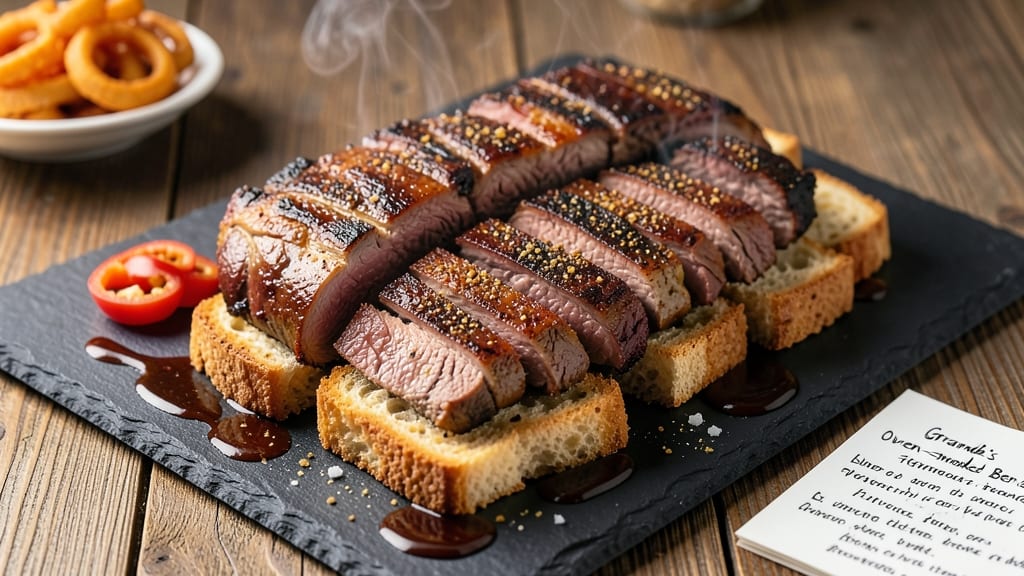
Master this oven-smoked beef brisket recipe to turn a tough cut into fork-tender perfection—no smoker needed, just your oven and a few key tricks. This oven-smoked method delivers restaurant-quality results by combining indirect heat, moisture control, and slow cooking to break down collagen while preserving flavor.
I developed it after years of perfecting brisket, and it consistently delivers that signature bark and juicy interior without hours at the grill.
The key lies in temperature precision and timing: 250°F for hours ensures even cooking while a foil tent keeps the surface moist enough to prevent drying. A simple dry rub of salt, pepper, and smoked paprika builds flavor without overwhelming the beef’s natural richness.
What sets this apart is how the oven’s consistent heat mimics smoking, infusing the meat with subtle smokiness through indirect exposure—no smoker needed.
By the time you slice into this brisket, you’ll see layers of tender, caramelized meat that falls apart at the touch, with a crust so flavorful it’ll have everyone asking for seconds.
The method is foolproof for weeknight dinners or special occasions, and the leftovers reheat beautifully for sandwiches or tacos. This is the kind of brisket that turns a simple meal into an event.
Pair it with classic sides like buttery mashed potatoes or a tangy coleslaw to complete the experience. Let’s get started on creating brisket that rivals the best barbecue joints—right in your home oven.
Ingredients for oven smoked beef brisket
Six ingredients plus a few tricks turn tough brisket into melt-in-your-mouth perfection—no smoker required.
| Ingredient | Amount | Notes |
|---|---|---|
| Beef Brisket 🥩 | 5 lb | Whole packer cut, fat cap intact |
| Kosher Salt 🧂 | ½ cup | Coarse grain for better adhesion |
| Ground Black Pepper 🌶️ | 2 tbsp | Freshly cracked for bold flavor |
| Smoked Paprika 🌶️ | 2 tbsp | High-quality for authentic smokiness |
| Garlic Powder 🧄 | 1 tbsp | Freshly ground preferred |
| Onion Powder 🧅 | 1 tbsp | For balanced sweetness |
| Brown Sugar 🍚 | 1 tbsp | Light variety for subtle sweetness |
| Apple Cider Vinegar 🍎 | 2 tbsp | For tenderizing and tang |
| Beef Broth 🍲 | 1 cup | Low-sodium preferred |
| Wood Chips 🌳 | ½ cup | Hickory or oak, soaked 30 mins |
| Heavy Whipping Cream 🥛 | ¼ cup | Full-fat for rich finish |
| Aluminum Foil 📄 | 2 sheets | Heavy-duty for moisture retention |
The brisket cut makes all the difference here. Packer cut from the grocery store's butcher section (usually around $4-$5/lb) has the perfect fat cap for flavor and moisture. If you can't find it pre-cut, ask for the whole packer cut—it's the pointy end of the brisket. Costco or Whole Foods often carry it, but check your local butcher too. The fat cap is non-negotiable—it renders down during cooking to baste the meat. Look for vibrant red color and good marbling. If it smells funky, walk away. For a crowd, you'll need about 1.5 lbs per person—this recipe makes enough for leftovers, which is a must for brisket.
No smoked paprika? Half a teaspoon of liquid smoke plus extra brown sugar gets you close, but you'll lose that authentic smoky depth. The vinegar and beef broth are your secret weapons for tenderness—don't skip them. For wood chips, hickory gives classic BBQ flavor while oak adds a slightly sweeter note. If you can't find chips, wood pellets from the smoking section work too (just soak them). The brown sugar helps caramelize the bark while keeping the meat moist. Pro tip: mix your dry rub in a bowl first—it's easier to coat the meat evenly. And trust me on the full-fat cream at the end—it elevates everything.
This brisket tastes even better the next day, so plan ahead. Wrap leftovers tightly in foil and refrigerate for up to 4 days, or freeze for 3 months in portions. The bark gets crispier when reheated—just warm in the oven at 300°F for 10-15 minutes. For serving, slice against the grain (that's the diagonal cut) for maximum tenderness. I always make extra—brisket sandwiches for lunch are a game-changer. Store your wood chips in an airtight container in the fridge after soaking to keep them fresh for your next cook.
Why You'll Love This Recipe
- No-Fuss Oven Magic: I swear by this method—just rub the brisket with salt, paprika, and garlic powder, then pop it in the oven. No smoker needed, no babysitting required. Honestly, the hardest part is waiting for the timer to ding.
- Deep, Smoky Crust: That smoked paprika and black pepper? It clings to the brisket like a second skin, giving you a crispy, caramelized exterior while the inside stays tender. Between us, it’s the kind of flavor that makes people ask, “What’s in this?”
- Leftovers for Days: One brisket feeds my family for three meals—sandwiches, tacos, even breakfast hash. I’ll be real: the second day is often better than the first, especially when it’s sliced thin and reheated.
- Budget-Friendly Feast: Brisket is cheaper than steak, and this recipe stretches it into multiple meals without breaking the bank. Plus, the spices cost pennies—just salt, pepper, and a pinch of paprika. Solid math for a week’s worth of meals.
Step-by-step instructions for oven smoked beef brisket
Here's how to transform your oven into a smoker and achieve melt-in-your-mouth tenderness.
Prepare the Brisket and Seasoning
Start by removing the beef brisket from the refrigerator and letting it sit at room temperature for 30 minutes. This ensures even cooking throughout. While it warms, combine the 0.5 cup kosher salt, 2 tablespoons ground black pepper, 2 tablespoons smoked paprika, 1 tablespoon garlic powder, 1 tablespoon onion powder, and 1 tablespoon brown sugar in a small bowl.
Mix the seasoning blend thoroughly until it forms a coarse, even powder. Pat the brisket dry with paper towels—this step is critical for developing that perfect bark later. Rub the seasoning mixture all over the brisket, pressing it firmly into the meat so it adheres well. Pay special attention to the fat cap and edges, where the seasoning helps create a flavorful crust.
Place the seasoned brisket on a wire rack set inside a rimmed baking sheet. This allows air to circulate underneath, promoting even cooking and crispy edges. Let it rest uncovered in the refrigerator for at least 4 hours, or ideally overnight. This long resting period allows the seasoning to penetrate deeply and the meat to dry out slightly, both of which contribute to that coveted tender texture.
Soak the Wood Chips and Preheat the Oven
While the brisket seasons, soak the 0.5 cup wood chips in cold water for 30 minutes. This prevents them from burning too quickly in the oven. Drain the wood chips before using them. Preheat your oven to 225°F—this low-and-slow temperature is key to achieving tender, fork-tender meat.
Place the soaked wood chips in a small, oven-safe metal container or directly on the oven rack if your oven allows. I like to use a disposable aluminum pan with holes poked in the bottom—this creates a makeshift smoker tray. Place the brisket on the wire rack in the oven and position the wood chips on the lower rack below it. This setup allows the smoke to circulate around the brisket without direct contact.
Close the oven door and resist the urge to open it during the first 2 hours of cooking. Every time you open the oven, you lose heat and moisture, which can set back your cooking time. Use an oven thermometer to ensure the temperature stays steady at 225°F. If it fluctuates, give the oven 15-20 minutes to recover before checking the brisket again.
Cook Low and Slow Until Probe-Tender
Cook the brisket for 6-8 hours, or until the internal temperature reaches 165-170°F. This is where the magic happens—the low temperature breaks down the tough connective tissue, transforming it into gelatin that makes the meat incredibly tender. You'll notice the brisket will hit "the stall" around 165°F, where the temperature plateaus. This is normal and expected.
To combat the stall, wrap the brisket tightly in 1 sheet of aluminum foil (save the second sheet for later). Add 2 tablespoons apple cider vinegar and 1 cup beef broth to the foil before sealing it. The vinegar helps tenderize the meat further, while the broth adds moisture and depth of flavor. Return the wrapped brisket to the oven and continue cooking until the internal temperature reaches 200-205°F. This usually takes another 3-5 hours, but don't rush it—patience is key.
Check for doneness by inserting a meat thermometer into the thickest part of the brisket. The meat should be fork-tender, meaning the thermometer slides in and out like butter with no resistance. If the brisket isn't tender enough, continue cooking it wrapped in the foil until it reaches the desired temperature. The longer it cooks, the more tender it becomes.
Rest and Slice for Maximum Juiciness
Once the brisket reaches 200-205°F, remove it from the oven and let it rest on a cutting board for at least 1 hour. This resting period allows the juices to redistribute throughout the meat, ensuring every slice is moist and flavorful. I like to tent the brisket loosely with the second sheet of aluminum foil to keep it warm during this time.
While the brisket rests, preheat a skillet over medium-high heat. Add 0.25 cup heavy whipping cream and let it warm through for 1-2 minutes. This cream will be used to baste the slices, adding a rich, velvety finish. Alternatively, you can also use the pan juices from the brisket for basting—just be sure to skim off any excess fat first.
Slice the brisket against the grain into ¼-inch thick slices. The grain runs horizontally across the flat and point, so adjust your angle accordingly. Serve the slices immediately, basting each one with the warm cream or pan juices. The result should be tender, smoky, and deeply flavorful slices that practically melt in your mouth. Enjoy with your favorite sides, like roasted potatoes or a fresh garden salad.
Pro Tips For Making Oven Smoked Beef Brisket
- USE A THICK CUT: Brisket’s fat cap is your friend—leave at least ¼-inch on the flat to render slowly and baste the meat. I learned this the hard way when I trimmed too much and ended up with dry, tough slices.
- SALT THE NIGHT BEFORE: Toss the brisket in kosher salt and black pepper 12–24 hours ahead. The salt breaks down the proteins, and the meat stays juicier when it hits the oven. (Yes, even if you’re impatient like me.)
- COVER IT HALFWAY: Start uncovered at 275°F (250°C) for 2 hours to build that crust, then tent with foil to trap steam. After 3 hours, uncover again for the last hour—this keeps the exterior crispy without burning the edges.
- SKIP THE SMOKED PAPRIKA RUSH: Sprinkle smoked paprika after the brisket has developed its crust, not at the start. Adding it early makes the rub clump and burn before the meat’s ready to absorb it. A light dusting at the end adds flavor without ruining the texture.
Pro cooking tips for oven smoked beef brisket
Temperature Control Secrets
Your oven’s temperature gauge can be wildly inaccurate—always use a laser thermometer like the Thermoworks Thermapen to monitor both the oven and brisket. Set your oven to 225°F but verify it’s actually hitting that mark.
I’ve seen ovens run 50°F hotter or colder than their display—this is why your brisket might cook unevenly. 🌡️
For the first 2 hours, avoid opening the oven door at all. Every time you peek, you lose 10-15°F of heat and 20 minutes of cook time. Use the oven light sparingly—if you must check, keep the door open for only 3-5 seconds.
Wood Chip Hack
Soak your wood chips in water for 30 minutes before using, but drain them thoroughly. Wet chips create more smoke than dry ones, but too much moisture can cause them to steam instead of smolder.
I like to place them in a disposable aluminum pan with holes poked in the bottom—this creates a makeshift smoker tray that sits on the oven rack below the brisket. 🌳
If you can’t find wood chips, use wood pellets from the smoking section of stores. Just soak them first and drain well. For extra smokiness, add ½ teaspoon of liquid smoke to your dry rub, but don’t overdo it—you want the oven to do most of the work.
Foil Wrap Timing
Wrap your brisket in foil when it hits 165°F internal temperature—this is called “the stall,” where evaporation slows cooking. Add 2 tablespoons apple cider vinegar and 1 cup beef broth to the foil before sealing.
The acid in the vinegar helps break down collagen further, while the broth keeps the meat moist. 💡
Don’t skip the broth—it adds depth of flavor and prevents the brisket from drying out during the final 3-5 hours of cooking. If your brisket is large, use 2 cups of broth to ensure even moisture distribution.
Resting Like a Pro
Resting is where many home cooks fail. After reaching 200-205°F, let the brisket rest for at least 1 hour—I often rest mine for 2 hours for maximum juiciness.
Tent it loosely with foil to keep it warm. The longer it rests, the more the juices redistribute, ensuring every slice is moist and flavorful. ⏰
Slice against the grain into ¼-inch thick pieces using a sharp carving knife. If you’re serving a crowd, slice it right before serving so the bark stays crispy. For leftovers, store in an airtight container and reheat in the oven at 300°F for 10-15 minutes.
Nutrition facts
Frequently asked questions
Can I use this method with a regular oven without a smoker box?
This recipe is designed specifically for home ovens. Use a disposable aluminum pan with holes poked in the bottom as a makeshift smoker tray—place soaked wood chips inside and position it on the lower oven rack. The indirect heat from the wood chips creates that signature smoky flavor without needing a dedicated smoker.
How do I know when the brisket is done?
Use a meat thermometer to check the internal temperature. The brisket is done when it reaches 200-205°F—this ensures it's fork-tender and juicy. The stall (where temperature plateaus around 165°F) is normal, so don't rush it. The longer it cooks past the stall, the more tender it becomes.
Why does my brisket turn out dry?
Dry brisket usually happens from overcooking or not wrapping it in foil at the right time. Wrap your brisket when it hits 165°F and add broth/vinegar to keep it moist. Also, never skip the 1-hour rest—this lets juices redistribute. If your oven runs hot, lower the temperature to 200°F instead of 225°F for better moisture control.
What's the best way to reheat leftover brisket?
Slice leftovers and reheat in the oven at 300°F for 10-15 minutes to maintain moisture. For sandwiches, warm slices in a skillet with a splash of beef broth. Never microwave—it makes the meat tough. Pro tip: Store leftovers in an airtight container for up to 4 days in the fridge or 3 months frozen.
Can I substitute wood chips with something else for smokiness?
If you can't find wood chips, use wood pellets (soaked first) or add ½ teaspoon liquid smoke to your dry rub. For a smoky flavor without wood, try ½ cup strong black coffee in the foil wrap—it adds depth. Just remember, nothing beats real wood chips for authentic flavor.