
Soups & Stews
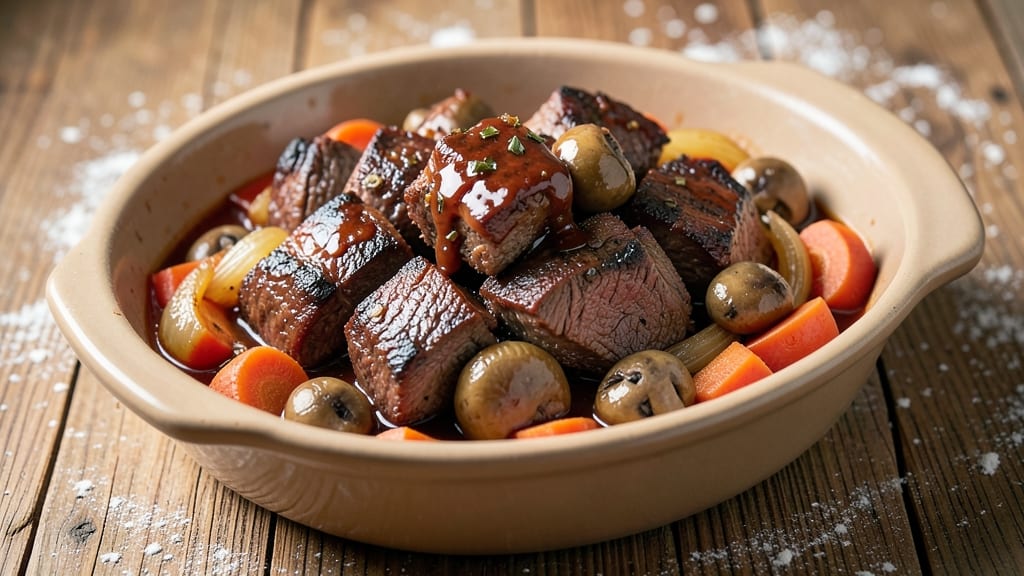
Recreating the Pioneer Woman's beef bourguignon delivers restaurant-quality richness with deep wine-infused flavor that transforms tough beef into melt-in-your-mouth perfection. This classic French stew builds layers of complexity through slow braising, where red wine reduces to create a velvety sauce that coats every bite.
The technique requires patience—browning beef properly and simmering for hours—but the result is worth every minute of effort.
What sets this recipe apart is the balance of earthy mushrooms, tender onions, and aromatic herbs that develop as they simmer. I use a full-bodied red wine like Cabernet Sauvignon for its bold flavor, while tomato paste adds subtle sweetness that rounds out the acidity.
The key to success lies in proper timing: searing the beef creates a flavorful crust, while the slow braise tenderizes the meat without drying it out.
By the time your pot comes off the stove, you'll have a deeply flavorful stew with beef that falls apart at the touch of a fork, all swimming in a rich, wine-infused sauce.
The aroma alone will have everyone gathering around the table, and the first bite delivers that perfect combination of tender meat, earthy mushrooms, and complex wine notes. This dish pairs beautifully with crusty bread or buttery mashed potatoes to soak up every last drop of sauce.
Perfect for cozy weeknight dinners or special occasions, this beef bourguignon is a crowd-pleaser that feels indulgent yet remains approachable for home cooks. The recipe includes modern shortcuts like pre-minced garlic and store-bought stock, making it achievable without sacrificing authenticity.
Let's get started on this timeless classic that brings French bistro quality to your kitchen.
Ingredients for pioneer woman beef bourguignon
Sixteen ingredients, hours of simmering, one unforgettable French bistro dish at home.
| Ingredient | Amount | Notes |
|---|---|---|
| Beef Chuck Roast 🥩 | 3 lb | Cut into 1.5-inch cubes, trimmed of fat |
| Yellow Onions 🧅 | 2 whole | Cut into 1-inch chunks, peeled |
| Garlic Cloves 🧄 | 8 cloves | Minced, or 2 tsp pre-minced garlic |
| Cremini Mushrooms 🍄 | 16 oz | Whole, wiped clean |
| Carrots 🥕 | 4 whole | Cut into 1-inch chunks, peeled |
| Tomato Paste 🍅 | 2 tbsp | Smooth, not chunky |
| Dry Red Wine 🍷 | 1 ½ cups | Bold Cabernet Sauvignon preferred |
| Beef Stock 🥫 | 3 cups | Homemade or high-quality store-bought |
| Fresh Thyme 🌿 | 2 tbsp | Leaves only, stems removed |
| Fresh Rosemary 🌿 | 1 tbsp | Needles only, finely chopped |
| Fresh Parsley 🌿 | ¼ cup | Chopped, for garnish |
| All-Purpose Flour 🌾 | 2 tbsp | For dredging beef cubes |
| Unsalted Butter 🧈 | 3 tbsp | For browning beef |
| Diamond Crystal Kosher Salt 🧂 | 1 ½ tsp | Adjust to taste |
| Freshly Ground Black Pepper 🌶️ | 1 tsp | Coarsely ground |
The beef is non-negotiable—chuck roast with good marbling is key for that melt-in-your-mouth texture. Costco or your butcher shop will have the best cuts, but don't stress if you grab supermarket beef (just trim excess fat). For the wine, any bold red works—Cabernet Sauvignon or Merlot—but avoid sweet varieties. The mushrooms? Cremini or shiitake add earthy depth, but white button mushrooms work in a pinch. Fresh herbs make all the difference—Trader Joe's sells pre-bundled thyme and rosemary that's perfect for this. If you're using dried, halve the amount and toast the spices in the pot first for extra flavor.
No red wine? Beef stock with 1 tbsp balsamic vinegar mimics the acidity, though the flavor won't be identical. Short on thyme? Dried thyme at 1/3 the amount works, but fresh is worth the extra minute. The tomato paste can be swapped for 1/4 cup crushed tomatoes if you're avoiding it, though it'll be less concentrated. For the carrots, baby carrots are fine—just trim the ends. The flour is just for dredging the beef to help it brown properly, so don't skip it. And if you're worried about the wine's alcohol content, simmering it uncovered for the first 10 minutes burns most of it off.
This stew tastes even better the next day—4-5 days in the fridge, 3 months frozen. Portion it into containers so you can reheat just what you need. For serving, I like to toast some crusty bread and sprinkle it with fresh parsley right before eating. The sauce thickens as it cools, so add a splash of stock or water when reheating. Leftovers? Freeze in single portions for quick weeknight meals. And trust me, the aroma alone will have your whole house gathering around the table.
Why You'll Love This Recipe
- One-Pot Magic: I swear by this recipe because it’s one pot—no chopping boards, no extra pans. Just brown the beef, toss in the onions, mushrooms, and carrots, then let the red wine and herbs do their thing. Honestly, the cleanup is so minimal I almost feel guilty for how good it tastes.
- Deep, Rich Payoff: That beef chuck roast? It turns tender while the mushrooms soak up all the garlic and thyme-infused wine sauce. The carrots caramelize just enough to add natural sweetness—no extra sugar needed. Between us, the first bite makes you forget it’s a weeknight dinner.
- Leftovers That Win: This recipe begs to be made in bulk. The flavors actually deepen overnight, so the next day’s lunch feels like a reward. I pack it in jars for work or freeze portions—because nothing says “I care” like a hearty, budget-friendly meal that keeps giving.
- Budget-Friendly Feast: A chuck roast and a handful of veggies stretch into six servings without breaking the bank. The wine and mushrooms feel fancy, but they’re smart splurges that make the dish feel special. Here’s what sold me: it’s the kind of meal that makes you feel like you’ve treated yourself, even when you’re just feeding the family.
Step-by-step instructions for slow-braised beef bourguignon
Here's how to transform tough beef into melt-in-your-mouth tenderness with deep wine flavor.
Sear the Beef Cubes for Maximum Flavor
Pat the trimmed 3 lb beef chuck roast dry with paper towels and cut it into 1.5-inch cubes. This drying step is crucial—it prevents steam from blocking the sear. In a large Dutch oven, melt 3 tbsp unsalted butter over medium-high heat until it foams. Working in batches to avoid crowding, add the beef cubes and sear for 2-3 minutes per side until deeply browned with a crust.
You'll know it's ready when the beef releases easily from the pan and the edges develop a rich mahogany color. Don't rush this step—the caramelized crust forms the flavor base for your entire dish. Transfer the seared beef to a plate and set aside, leaving the browned bits in the pot (this is called fond, and it's pure flavor).
Build the Aromatic Vegetable Base
In the same Dutch oven, add 2 tbsp all-purpose flour and stir vigorously for 30 seconds to coat the browned bits. This creates a roux that will thicken your sauce. Add 2 whole yellow onions cut into 1-inch chunks, 4 whole carrots cut into 1-inch chunks, and 16 oz cremini mushrooms. Cook for 5 minutes, stirring occasionally, until the vegetables begin to soften slightly.
Add 8 cloves minced garlic, 2 tbsp fresh thyme leaves, and 1 tbsp finely chopped fresh rosemary. Stir for 1 minute until fragrant—this is where all the magic happens. The garlic should sizzle slightly but not burn. Add 2 tbsp tomato paste and cook for another 2 minutes, stirring constantly to prevent burning.
Deglaze and Simmer the Wine
Pour in 1.5 cups dry red wine and scrape up all the browned bits from the bottom of the pot using a wooden spoon. This deglazing step captures all the concentrated beef flavor that would otherwise be lost. Let the wine simmer for 5-7 minutes until reduced by half, until it coats the back of a spoon and develops a rich, syrupy consistency.
Here's the thing—don't walk away. The wine needs constant attention to prevent burning. You'll see the liquid reduce dramatically, intensifying the flavors. When it reaches this stage, you'll smell that unmistakable beef bourguignon aroma developing.
Braise Until Fork-Tender
Return the seared beef cubes to the Dutch oven along with 3 cups beef stock. Add 1.5 tsp diamond crystal kosher salt and 1 tsp freshly ground black pepper. Bring to a gentle simmer, then reduce heat to low. Cover and let it cook for 2 hours, stirring occasionally to prevent sticking. The key here is patience—the longer it braises, the more tender the beef becomes.
After 2 hours, check for doneness by inserting a fork into the largest piece of beef. It should slide in easily with no resistance. If it's not quite tender, continue braising for another 30-60 minutes. The sauce should thicken gradually as the beef releases its juices. If it gets too thick, add a splash of water or stock to maintain the right consistency.
Finish and Garnish
Once the beef is fork-tender, remove the lid and increase heat to medium. Let the sauce reduce for 5-10 minutes until it coats the beef nicely. Stir in 0.25 cup chopped fresh parsley just before serving to brighten the flavors. The parsley should be added at the very end—its freshness contrasts beautifully with the rich, deep wine sauce.
Serve immediately with crusty bread or over buttered egg noodles. Each bite should deliver tender beef with a perfect balance of wine, vegetable, and herb flavors. The sauce should cling to the beef and coat every forkful with its velvety richness. This is the moment that matters—when all your hard work pays off with a dish that tastes like it simmered all day.
Pro Tips For Making Pioneer Woman Beef Bourguignon
- Brown the Roast Hard: The Pioneer Woman recipe calls for a quick sear, but I’ve learned the hard way—this isn’t the time to rush. Use a heavy pot or Dutch oven and let that chuck roast sit undisturbed for 3-4 minutes per side until it’s deep mahogany, not just pink. That crust locks in flavor and keeps the meat from turning dry later. (Yes, even if you’re impatient like me.)
- Slice Onions Thinly: Thick onion rings won’t soften properly in the braising liquid. Grab a sharp knife and slice those yellow onions paper-thin—about 1/8-inch or less. If you’re lazy, a mandoline does the job faster, but a steady hand works too. Trust me, your future self won’t want to chew through onion chunks in this rich stew.
- Deglaze with Wine Immediately: After browning the beef, don’t let those fond bits sit. Pour in the red wine right away—no waiting—and scrape every last bit off the bottom with a wooden spoon. That’s where the flavor lives, and skipping it means missing out on the depth the Pioneer Woman recipe promises. (Your taste buds will notice.)
- Simmer, Don’t Boil: The recipe says to simmer, but I’ve seen too many people crank the heat too high and turn this into a beefy soup. Keep it at a gentle bubble—tiny bubbles at the edges, not a rolling boil. If it’s too aggressive, the carrots will turn mushy and the mushrooms will release too much water, thinning out the sauce. Patience here makes all the difference.
Essential equipment for this dish
Dutch Oven Essentials
A 5-7 quart Dutch oven is non-negotiable for this recipe—I use my Le Creuset Signature (28cm) because its tight-fitting lid traps steam perfectly while allowing gentle simmering. The heavy enamel coating prevents hot spots that can burn your sauce.
For budget-friendly options, the Lodge 5.5 Quart is my go-to—it's durable, retains heat well, and develops a natural nonstick patina over time. 🔥
Precision Thermometer
Invest in a meat thermometer like the Thermoworks Smoke to monitor your braising liquid temperature. Maintain a gentle simmer at 190-200°F—any hotter risks toughening the beef. I check the temperature every 30 minutes during the 2-hour braise to ensure consistency.
For those without a thermometer, watch for small bubbles breaking the surface (not a rolling boil).
Wooden Spoon & Spatula
A heatproof wooden spoon (I prefer OXO Good Grips) is essential for deglazing and stirring without scratching your Dutch oven. Its shape helps scrape up those precious browned bits from the bottom.
For browning the beef, a stainless steel spatula like Mercer Culinary Genesis gives you better control when flipping those cubes. Never use metal utensils on nonstick coatings!
Carving Tools
After braising, you'll need a sharp carving fork (like Victorinox 10-inch) to test doneness by piercing the beef—it should slide in effortlessly. For serving, a long serrated knife (such as Wüsthof Classic) makes clean cuts through the tender beef without shredding it.
I always slice against the grain for maximum tenderness. 💡
Wine Decanter & Strainer
Use a fine-mesh strainer (like OXO Good Grips) to remove any sediment from your wine before adding it to the pot.
For a smoother sauce, I decant my wine into a glass decanter (such as Libbey) for 30 minutes before using—this allows sediment to settle and prevents cloudiness in your final dish. Never use plastic decanters for wine.
Storage Containers
For leftovers, transfer the bourguignon to glass Pyrex storage containers (I use 8x8-inch size) with tight-sealing lids. These containers maintain flavor better than plastic and are freezer-safe for up to 3 months.
For single servings, quart-sized mason jars work perfectly—they're stackable and reheat beautifully on the stovetop. Label everything with dates to track freshness! ❄️
Nutrition facts
Frequently asked questions
Can I use a different cut of beef besides chuck roast?
For best results, stick with chuck roast or beef chuck shoulder—these cuts have the right amount of fat and connective tissue for that melt-in-your-mouth texture. You could try beef short ribs (trimmed of excess fat) or even stew meat, but avoid lean cuts like sirloin or flank steak—they'll dry out during the long braise. If you must substitute, look for a cut labeled "beef for stewing" at your butcher.
What if I don't have red wine? Can I make this without it?
Yes, but the flavor will be different. Replace the wine with 3 cups beef stock plus 1 tbsp balsamic vinegar to mimic the acidity, or use 1.5 cups beef stock + 1.5 cups apple cider for a slightly sweeter profile. For depth, add 1 tsp soy sauce or 1/2 tsp Worcestershire sauce—these add umami that wine provides. Just know the sauce won't have that classic wine richness.
How do I know when the beef is fully tender?
Use the fork test: Insert a fork into the largest piece of beef—it should slide in with no resistance and the meat should feel soft all the way through. For extra accuracy, use a meat thermometer: The internal temperature should reach 203°F (95°C) for fall-apart tenderness. If the beef isn't tender after 2.5 hours, cover the pot and let it cook another 30 minutes—the extra time often does the trick.
Can I make this in a slow cooker instead of a Dutch oven?
Brown the beef in a skillet first, then transfer everything to a 6-quart slow cooker. Cook on LOW for 8 hours or HIGH for 5-6 hours, then finish by simmering on the stovetop for 10-15 minutes to thicken the sauce. The slow cooker method is perfect for busy days—just skip the wine reduction step and add the full 1.5 cups wine at the beginning. The flavors will still develop beautifully!
Why did my sauce turn out too thin or too thick?
Thin sauce? You likely didn't reduce the wine enough or added too much stock. Next time, simmer the wine uncovered for 10-12 minutes until syrupy before adding stock. Too thick? The sauce thickens as it cools—add 1-2 tbsp stock or water while reheating. For instant thickening, mix 1 tbsp cornstarch with 1 tbsp cold water, stir it into the sauce, and simmer for 2 minutes until it reaches your desired consistency.