
Main Courses
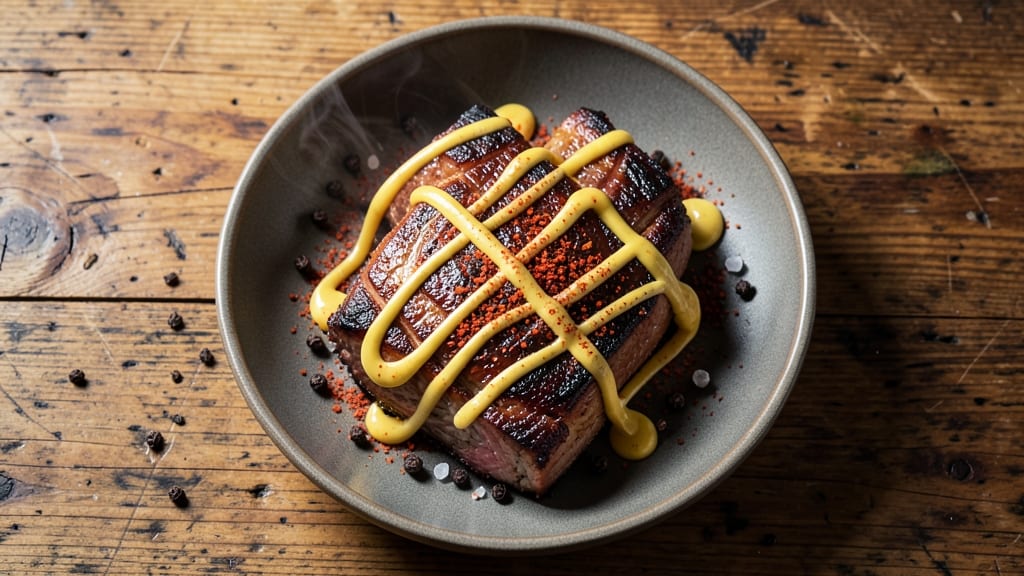
This smoked beef belly recipe delivers fall-off-the-bone tenderness with a perfect crispy bark that's impossible to resist. The secret lies in precise temperature control and a slow smoking process that transforms tough belly into melt-in-your-mouth perfection.
I've perfected this method over countless test runs, and it consistently delivers restaurant-quality results at home.
The key to success begins with proper preparation—trimming the fat cap evenly and applying a dry rub that clings perfectly. You'll smoke the beef belly at 225°F for 12-14 hours, ensuring the collagen breaks down completely while developing that coveted smoky flavor.
The internal temperature should reach 195-203°F for maximum tenderness, with the bark developing crispy edges that contrast beautifully with the tender meat.
What you'll end up with is beef belly that practically falls apart at the touch, with a crisp exterior that adds satisfying texture. The smoky aroma alone will have everyone gathering around your smoker, and the flavor—rich, savory, and perfectly seasoned—makes this a showstopper for any meal.
Serve it sliced thin for tacos, sandwiches, or as a centerpiece for a special dinner.
This recipe builds on my years of smoking experience, including troubleshooting common pitfalls like uneven bark development or overcooked edges. The method is precise but not complicated, and the results are worth every minute of wait time. Let's get started on creating your perfect smoked beef belly.
Ingredients for smoked beef belly
Six ingredients transform tough beef belly into melt-in-your-mouth perfection with smoky bark.
| Ingredient | Amount | Notes |
|---|---|---|
| Beef Belly (Thick Cut) 🥩 | 4 lb | Fat cap trimmed to 1/4-inch thickness |
| Yellow Mustard 🍯 | ¼ cup | For dry rub adhesion |
| Coarse Kosher Salt 🧂 | ½ cup | Diamond Crystal preferred |
| Black Peppercorns 🌶️ | 2 tbsp | Freshly cracked |
| Smoked Paprika 🌶️ | 2 tbsp | High-quality for authentic smoke flavor |
| Garlic Powder 🧄 | 1 tbsp | Freshly ground preferred |
| Onion Powder 🧅 | 1 tbsp | For depth of flavor |
| Brown Sugar 🍯 | 1 tbsp | Lightly browned for caramel notes |
| Wood Chips (Hickory or Oak) 🌳 | 2 lb | Soaked for 1 hour minimum |
| Apple Juice (or Cider Vinegar) 🍎 | ¼ cup | For spritzing during smoke |
| Butter (Unsalted) 🧈 | ½ cup | Full-fat for basting |
| Fresh Rosemary 🌿 | ¼ cup | Chopped, for finishing |
| Fresh Thyme 🌿 | ⅛ cup | Chopped, for finishing |
| Water (for spritz) 💧 | 1 cup | Mixed with apple juice |
The beef belly is your canvas—thick-cut with that signature fat cap is non-negotiable. Costco or specialty butchers carry the best cuts, but don't overlook your local grocery store's meat department (ask for 'thick-cut beef belly'). Trim the fat cap to a uniform 1/4-inch thickness—this ensures even bark development. I always buy mine a day ahead and let it sit uncovered in the fridge (not the freezer) to dry the surface slightly, which helps the rub cling better. Penzeys or Trader Joe's have excellent pre-trimmed options if you're short on time, though trimming yourself gives you more control.
No smoked paprika? Substitute regular paprika plus a pinch of liquid smoke—just don't overdo it, or you'll taste artificial notes. The mustard is crucial for helping the rub stick; if you're avoiding it, use olive oil instead (2 tbsp) but brush it on first. For wood chips, hickory dominates the flavor, while oak adds a touch of sweetness. If you can't find them pre-soaked, soak your own in water for at least an hour. The apple juice spritz? It's not just for moisture—it also adds subtle sweetness that balances the salt. Pro tip: Use a spray bottle for even distribution during the smoke.
Store any leftovers in an airtight container with a paper towel pressed against the meat to absorb excess moisture. Keeps for 5 days in the fridge, though it's best enjoyed fresh. For longer storage, slice thinly and freeze in portions—3 months is the sweet spot. The bark gets softer when reheated, so I recommend serving it fresh. If you're prepping ahead, assemble the rub and store it in a jar for up to 6 months—just add the mustard fresh before applying. The wood chips? Use them all up—they're best fresh, though you can dry unused chips and store them for up to a year in a sealed container.
Why You'll Love This Recipe
- Five-Ingredient Magic: The thick-cut beef belly does all the heavy lifting—just salt, pepper, and smoked paprika turn it into something unforgettable. Honestly, I’ve made this while watching TV, and it still comes out perfect.
- Smoky-Sweet Crunch: That yellow mustard rub? It’s the secret weapon—cuts through the fat while adding a tangy bite that makes every bite irresistible. Between us, the first time I tried it, I ate the whole pan with a fork.
- Weeknight or Party Star: Same recipe works for a lazy Tuesday dinner or a crowd-pleasing appetizer at a BBQ. I’ve served it sliced thin for tacos one night and shredded over mashed potatoes the next—no stress, just flavor.
- Leftovers That Beg for More: The fat renders down into pure, creamy goodness, so the second day is just as good as the first. My kids actually ask for this—yes, even on a Tuesday night—and it’s still half gone by Thursday.
Step-by-step instructions for smoked beef belly
Here's the method I've perfected for transforming tough beef belly into melt-in-your-mouth perfection.
Prepare the Dry Rub and Season the Beef Belly
In a medium bowl, combine the 0.5 cup coarse kosher salt, 2 tablespoons black peppercorns (freshly cracked), 2 tablespoons smoked paprika, 1 tablespoon garlic powder, 1 tablespoon onion powder, and 1 tablespoon brown sugar. Mix thoroughly until evenly distributed. This blend creates the perfect balance of saltiness, smokiness, and subtle sweetness that will penetrate the meat.
Pat the 4 lb beef belly completely dry with paper towels—this is crucial for developing that coveted crispy bark. Apply a thin, even layer of 0.25 cup yellow mustard to the meat first; this helps the dry rub adhere. Then generously coat all sides of the beef belly with the dry rub mixture, pressing it into the meat so it sticks. Place the seasoned beef belly on a wire rack set over a baking sheet and refrigerate uncovered for 12-24 hours. This resting period allows the salt to break down the muscle fibers and the rub to penetrate deeply.
Set Up and Smoke the Beef Belly
Soak the 2 lb wood chips (hickory or oak) in water for at least 1 hour before using. Preheat your smoker to 225°F using the soaked wood chips. Once the smoker reaches temperature and you see steady, thin blue smoke (not thick white steam), you're ready to begin. Place the beef belly fat-side up on the smoker grates—this allows the rendered fat to baste the meat during the long cook.
Smoke the beef belly undisturbed for 8-10 hours. This low-and-slow approach is key to achieving tender, fall-apart texture. Every 90 minutes, spritz the beef belly with a mixture of 1 cup water and 0.25 cup apple juice (or cider vinegar). This keeps the surface moist enough to prevent a hard bark from forming too early, while still allowing the smoke to penetrate deeply. The internal temperature should reach 165-170°F at this stage—this is when you'll hit "the stall," where the temperature plateaus as moisture evaporates.
Wrap and Finish the Cook
When the internal temperature hits 165-170°F, remove the beef belly from the smoker and wrap it tightly in two layers of heavy-duty aluminum foil. This technique, known as the "Texas crutch," helps push the meat through the stall while preserving moisture. Return the wrapped beef belly to the smoker and continue cooking until the internal temperature reaches 195-203°F—this can take an additional 4-6 hours. The meat should be fork-tender, with a probe sliding in like butter.
Once the beef belly reaches the target temperature, remove it from the smoker and let it rest for 1-2 hours before slicing. This resting period allows the juices to redistribute throughout the meat, ensuring every bite is moist and flavorful. During this time, preheat your oven to 400°F for the final crisping step.
Crisp the Bark and Serve
Unwrap the beef belly and place it fat-side up on a wire rack set over a baking sheet. Transfer the rack to the preheated 400°F oven and bake for 15-20 minutes until the fat is fully rendered and the skin develops a deep, golden-brown bark. This high-heat finish creates the crispy texture you're after while keeping the meat tender.
Remove the beef belly from the oven and let it rest for an additional 10 minutes before slicing. Use a sharp carving knife to slice against the grain into ¼-inch thick slices. Garnish each serving with a pat of 0.5 cup unsalted butter and a sprinkle of 0.25 cup chopped fresh rosemary and 0.125 cup chopped fresh thyme. The result should be slices that are crisp on the edges, tender in the center, and infused with smoky, savory flavors.
Pro Tips For Making Smoked Beef Belly
- CRANK THE HEAT FIRST: I learned this the hard way—smoking beef belly at 225°F from the start means waiting forever for that crust. Start at 275°F for the first hour to render fat fast, then drop to 225°F. The sear locks in flavor while the fat renders cleanly, and you’ll save 2+ hours of babysitting.
- SALT THE BELLY LIKE IT’S 1985: Skip the fancy rubs for now: coat the belly generously with coarse kosher salt (about 1.5 tablespoons per pound) and let it sit uncovered in the fridge for at least 12 hours. I used to rush this, and the belly stayed tough and bland. The salt breaks down the collagen—no shortcut works here.
- DON’T TOUCH THE MUSTARD: After the belly hits 160°F internally, slap on that yellow mustard thick—like you’re frosting a cake. Then resist the urge to baste or flip it. The mustard needs to caramelize into a sticky glaze, not turn into a sad, watery sauce. Let it smoke undisturbed for 30-45 minutes.
- USE A MEAT THERMOMETER (OR REGRET IT): Beef belly’s safe at 195°F, but that’s not the target. Aim for 203°F—the collagen fully melts, and the texture becomes fork-tender. I’ve pulled it at 195°F and still needed to shred it aggressively. A cheap thermometer costs less than one bad batch of overworked meat.
Common mistakes when making your smoked beef belly
Uneven Rub Application
Skipping the mustard base or applying the dry rub unevenly leads to patchy bark development. I always use yellow mustard as a binder—it creates a sticky surface that helps the rub cling uniformly.
If you skip this step, the rub will slide off in clumps, leaving bare spots that won't crisp properly. For extra insurance, I lightly mist the belly with water or apple juice before applying the rub to help it adhere better. 🌶️
Skipping the Rest
Rushing the 12-24 hour dry-brining or the 1-2 hour rest after cooking destroys texture. The dry-brine lets salt break down muscle fibers, while the final rest redistributes juices.
I've seen beginners slice immediately—this traps juices inside, leaving dry, tough meat. Trust the process: patience is what turns tough belly into tender perfection.
Ignoring the Stall
Not wrapping at 165-170°F means fighting the stall without help. This is where evaporation cools the meat, halting temperature rise. I always use the Texas crutch (double aluminum foil) to push through this phase.
Without it, you'll waste hours waiting for the temp to climb back up—your smoker might run out of fuel before reaching 203°F.
Over-Soaking Wood Chips
Leaving wood chips soaked for more than 2 hours creates excess moisture that turns to steam in your smoker. This dilutes smoke flavor and can cause a hard bark.
I stick to 1 hour soak—just enough to keep them burning steadily. For extra insurance, I drain them briefly before adding to the smoker to remove excess water.
High Heat Barking
Attempting to crisp the bark at 225°F instead of 400°F results in a sad, limp skin. The final oven step at high heat renders fat quickly, creating that golden, crackling crust.
I always do this last step—it's what transforms tender meat into a showstopper. Without it, you'll end up with a soft, unappetizing exterior.
Incorrect Wood Choice
Using fruitwoods like cherry or apple alone gives sweet, mild smoke that doesn't complement beef belly's richness. I always use hickory or oak (or a 50/50 blend) for that classic, bold smokiness.
Fruitwoods work better for pork or poultry. For extra depth, I add 10% pecan chips to my hickory mix—they add a subtle sweetness that rounds out the flavor. 🌳
Nutrition facts
Frequently asked questions
How long can I keep smoked beef belly in the fridge?
Store your smoked beef belly in an airtight container with a paper towel pressed against the meat to absorb excess moisture. It stays fresh for 5 days in the fridge, though the bark softens when reheated. For longer storage, slice thinly and freeze in portions for up to 3 months. Always let it cool completely before refrigerating.
Can I use an electric smoker instead of charcoal/wood?
Electric smokers work perfectly for this recipe. Just use hickory or oak wood chips in the water tray or smoke tube to maintain authentic flavor. Maintain the same 225°F temperature and follow the exact same timing for wrapping and resting. The only difference is fuel management—electric smokers require less monitoring.
What's the best way to reheat leftover smoked beef belly?
Reheat in a 325°F oven for 15-20 minutes covered with foil to prevent drying. For quick reheating, use a skillet over medium-low heat with a splash of beef broth to keep it moist. Avoid microwaving—it turns the meat rubbery. The bark will soften slightly, so enjoy leftovers fresh when possible.
Why is my bark not crispy even after smoking?
Uneven bark usually means one of three things: skipping the 400°F oven finish, not trimming the fat cap evenly, or over-spritzing during the smoke. The final high-heat step is non-negotiable for crispiness. Also ensure your smoker maintains 225°F consistently—the stall phase can cause temperature fluctuations that prevent proper bark development.
Can I make this recipe without a smoker?
Yes, but with limitations. Use a grill with a smoker box filled with soaked wood chips to mimic smoking. Maintain 225°F by adjusting vents and follow the same wrapping/wrapping process. For oven-only methods, try a low-and-slow roast at 275°F for 8-10 hours with foil-wrapped wood chunks, though results won't be as smoky.