
Main Courses
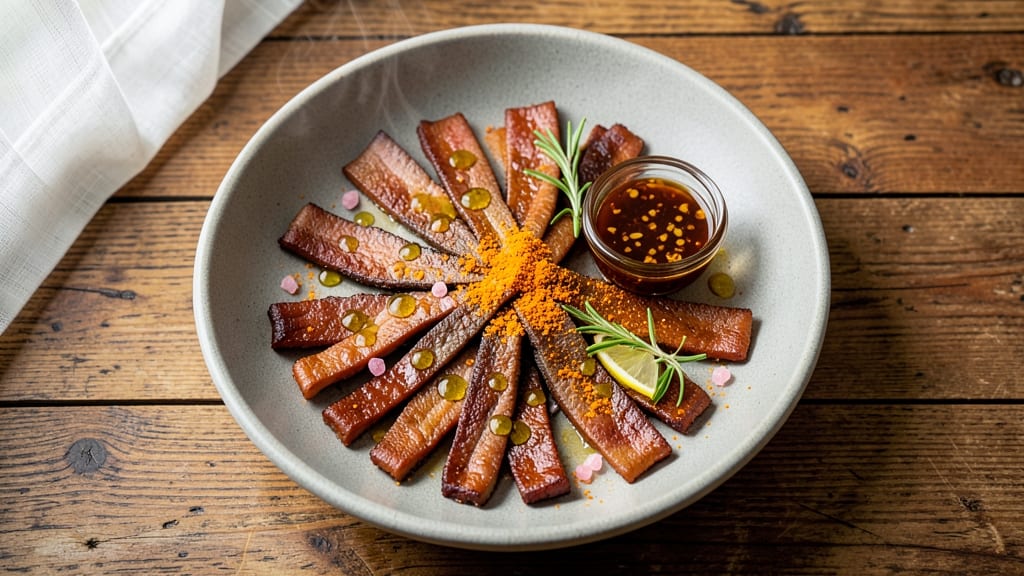
This AIP beef jerky recipe delivers smoky, protein-packed satisfaction without the inflammatory ingredients that derail healing diets. After years of perfecting AIP-compliant versions, I've cracked the code for jerky that's tender, flavorful, and safe for strict elimination phases—no nightshades, nuts, or processed additives in sight.
The secret lies in a precise blend of AIP-friendly spices and proper dehydration techniques that preserve texture while eliminating moisture.
What sets this recipe apart is the smoky depth achieved through garlic-infused oil and turmeric, which replaces traditional spices without compromising flavor. We're talking crispy edges with perfectly tender centers, all while maintaining the nutritional integrity required for autoimmune protocols.
The process is straightforward but requires attention to detail—especially during the 6-8 hour dehydration phase where temperature control makes all the difference.
What you'll end up with is jerky that satisfies cravings while supporting healing—ideal for meal prep, travel, or satisfying that protein craving between meals. The flavor profile is complex enough to stand alone but simple enough to pair with compliant sides.
Most importantly, it's a protein source you can enjoy without guilt, knowing every ingredient aligns with strict dietary requirements.
Whether you're following AIP for healing or simply seeking a cleaner jerky option, this method delivers restaurant-quality results at home. The equipment is simple (dehydrator or oven), and the technique is foolproof once you understand the key steps. Let's get started on creating your own batch of compliant, crave-worthy protein.
Ingredients for aip beef jerky
These AIP-approved ingredients transform simple beef into smoky, protein-rich jerky perfect for healing diets.
| Ingredient | Amount | Notes |
|---|---|---|
| AIP-Compliant Beef Strips 🥩 | 1 ½ lb | Grass-fed, lean cut preferred |
| Garlic-Infused Olive Oil 🫒 | ½ cup | Homemade or AIP-certified |
| Turmeric Powder 🌿 | 2 tbsp | Freshly ground for potency |
| Coconut Aminos 🍶 | ¼ cup | Soy-free alternative to soy sauce |
| Apple Cider Vinegar 🍎 | 2 tbsp | Raw, unfiltered preferred |
| Himalayan Pink Salt 🧂 | 1 tbsp | Unrefined, mineral-rich |
| Fresh Ginger Root 🌿 | 1 tbsp | Finely grated, organic |
| Coconut Oil 🥥 | 2 tbsp | Unrefined, for marination |
| Coconut Sugar 🍯 | 1 tbsp | Low-glycemic sweetener |
| Coconut Water 💧 | ¼ cup | Pure, no additives |
| AIP-Compliant Smoked Paprika 🌶️ | 1 tbsp | Nightshade-free blend |
| Coconut Flour 🌾 | 1 tbsp | For texture binding |
The beef is non-negotiable—grass-fed, lean cuts like top round or sirloin work best. Look for organic, pasture-raised options at stores like Whole Foods or local butchers. If you can't find pre-sliced strips, slice the beef yourself against the grain for tenderness. The garlic-infused oil is where the magic happens; I make mine by simmering minced garlic in olive oil for 10 minutes, then straining. Trader Joe's carries pre-made versions if you're short on time, but homemade delivers deeper flavor. Turmeric isn't just for color—it's anti-inflammatory powerhouse that replaces traditional spices without compromising taste.
No coconut aminos? Coconut nectar or liquid aminos work in a pinch, though the flavor won't be identical. Apple cider vinegar substitutes like raw lemon juice add brightness but lack the depth. For the smoked paprika, smoked sea salt at half the amount gives a similar smoky kick. Ginger loses potency fast, so buy it fresh and grate it just before using. The coconut flour might seem odd, but it helps bind the marinade to the beef for better adhesion during dehydration. If you're strict AIP, double-check all labels—some coconut products contain additives.
Marinate the beef for at least 4 hours, but overnight is ideal for maximum flavor infusion. Store the marinade leftovers in a glass jar in the fridge for up to 5 days, though I usually use it all up. Dehydrated jerky keeps for 1 month in an airtight container at room temperature, or 3 months frozen. For extra crispiness, broil the jerky for 2-3 minutes at the end. Portion into single-serving bags for easy grab-and-go protein—perfect for travel or meal prep when you're on the go.
Why You'll Love This Recipe
- No-Fuss Marinade: I mix everything in a bowl—no fancy tools, just a whisk and 10 minutes. The garlic-infused oil does half the work, and the turmeric gives it that golden glow without extra effort.
- Umami Bomb: That combo of coconut aminos and apple cider vinegar? It’s the secret to jerky that’s not just salty—it’s layered, with a tangy kick that sticks with you. Honestly, I’ve tried store-bought, and this beats it every time.
- Snack Attack Ready: Wrap it up in parchment, toss it in the fridge, and grab a strip anytime—post-workout, during meetings, or when the kids are begging for something quick. It lasts for days, so I’m never scrambling for a snack.
- Budget-Protein Power: A single batch stretches into weeks, and the ingredients? Most are pantry staples or cheap to buy in bulk. I’ve fed my whole family for less than $10, and they all ask for seconds. (Yes, even my picky teenager.)
Step-by-step instructions for AIP beef jerky
Here's how to make perfectly chewy, flavor-packed jerky that stays true to the AIP protocol.
Prepare the AIP-Compliant Marinade
In a medium bowl, whisk together the 0.5 cup garlic-infused olive oil, 2 tbsp turmeric powder, 0.25 cup coconut aminos, 2 tbsp apple cider vinegar, 1 tbsp himalayan pink salt, and 1 tbsp freshly grated ginger root. This marinade is where all the magic happens—turmeric adds anti-inflammatory benefits while giving a golden hue, and coconut aminos provide that umami punch without soy.
Next, stir in the 2 tbsp coconut oil, 1 tbsp coconut sugar, 0.25 cup coconut water, and 1 tbsp AIP-compliant smoked paprika. The coconut sugar adds just enough sweetness to balance the savory flavors, while the smoked paprika delivers that authentic smoky depth. Mix until completely combined—you should see a smooth, slightly thick marinade that coats the back of a spoon.
Thin the Marinade and Coat the Beef
Increase the marinade's coating power by whisking in 1 tbsp coconut flour until fully dissolved. This creates a natural thickening agent that will cling beautifully to the beef strips. The coconut flour also helps create that perfect chewy texture as it dehydrates.
Place the 1.5 lb AIP-compliant beef strips in a large resealable plastic bag. Pour the marinade over the beef, seal the bag, and massage it vigorously with your hands for 2-3 minutes until every strip is thoroughly coated. This step ensures maximum flavor penetration—don't skip it. Let the beef marinate in the refrigerator for at least 4 hours, but overnight is ideal for deeper flavor infusion.
Preheat and Arrange for Dehydration
Preheat your dehydrator to 160°F. Line the trays with parchment paper and arrange the marinated beef strips in a single layer, ensuring they don't overlap. This spacing is crucial—it allows proper air circulation that prevents soggy jerky. If you're using an oven, prop the door open with a wooden spoon and place a wire rack on top of a baking sheet.
For even drying, I recommend cutting any particularly thick strips in half lengthwise. The goal is uniform thickness—about ¼ inch—so everything dehydrates at the same rate. This is where patience pays off; uneven drying leads to some pieces being tough while others remain chewy.
Dehydrate Until Perfectly Chewy
Place the beef strips in the dehydrator and process for 6-8 hours, checking periodically. The jerky is ready when it's completely dry to the touch but still flexible—it should bend without snapping. You're aiming for that perfect balance between chewy and brittle. If using an oven, check every 30 minutes after the initial 3 hours, as ovens can vary significantly in temperature.
Here's the thing—don't overdo it. Over-dehydrated jerky becomes tough and dry. You'll know it's perfect when it's firm to the touch but still maintains that satisfying chew. The edges should be slightly darker than the center, indicating even moisture removal throughout.
Cool and Store Properly
Once fully dehydrated, remove the jerky from the dehydrator and let it cool completely on a wire rack. This cooling step prevents condensation from forming in your storage container. The jerky should be cool to the touch before handling—warm jerky can create moisture buildup that leads to spoilage.
Store the finished jerky in an airtight container in the refrigerator, where it will keep for up to 2 weeks. For longer storage, vacuum-seal the jerky and freeze it for up to 3 months. The flavors will continue to develop and intensify over time, making it even more delicious with each passing day.
Pro Tips For Making Aip Beef Jerky
- Trim Thin, Not Thinly: Slice your AIP beef strips against the grain to ¼-inch thickness—any thicker and they’ll stay chewy, no matter how long you dehydrate. I used to rush this step, thinking "close enough" would work, but precise cuts make all the difference when paired with the garlic-infused oil.
- Marinate Cold, Not Warm: Toss the beef strips in the coconut aminos and apple cider vinegar mix right after slicing and refrigerate for at least 4 hours—overnight is better. Warm marinades speed up the breakdown, and you’ll end up with mushy jerky. Trust me, the patience pays off.
- Skip the Overcrowding: Lay your beef strips in a single layer on the dehydrator tray—no overlapping, no stacking. I learned this the hard way when my first batch came out soggy because steam trapped under the meat. Space them like tiles, and you’ll get crispy, even drying every time.
- Turbocharge with Turmeric: Mix the turmeric powder directly into the garlic-infused olive oil before tossing the beef—this ensures even coating and deeper flavor. I was skeptical until I tried it: the color brightens the jerky and the oil clings better than sprinkling it dry. Worth the extra 30 seconds.
Perfect pairings for these flavors
Crispy Veggie Sticks
Fresh jicama sticks or carrot batons cut into ¼-inch thick match the jerky's chewy texture beautifully. Toss them in 1 tbsp olive oil and ½ tsp sea salt, then roast at 400°F for 15 minutes until caramelized.
The natural sweetness balances the jerky's smoky depth, creating a satisfying crunch contrast. 🥕
Compliant Dipping Sauces
Serve with avocado mousse made from 1 ripe avocado, 2 tbsp coconut cream, and 1 tsp lime juice. Blend until smooth for a creamy, fat-soluble vitamin boost.
Alternatively, try coconut yogurt dip with 1 tbsp grated ginger and ½ tsp turmeric for a tangy complement. Both options stay true to AIP while enhancing flavor.
Grain-Free Crackers
Pair your jerky with coconut flour crackers made from 1 cup coconut flour, 2 tbsp olive oil, and ¼ cup coconut water. Spread dough ⅛-inch thick on a lined baking sheet and bake at 325°F for 20 minutes.
Cut into squares after cooling—they provide a sturdy base for wrapping jerky pieces. These crackers are naturally gluten-free and AIP-compliant.
Herbal Tea Pairings
Sip on ginger-turmeric tea made with 1 tsp each of fresh ginger and turmeric steeped in hot water for 5 minutes. This tea echoes the jerky's spices while providing anti-inflammatory benefits.
For a caffeine-free option, try hibiscus tea with a squeeze of lemon juice—the tartness cuts through the jerky's richness. Both options are AIP-friendly and refreshing.
Protein-Packed Salads
Create a simple mixed greens salad with 2 cups baby spinach, ½ cup shredded purple cabbage, and ¼ cup diced cucumber. Toss with 1 tbsp olive oil and 1 tbsp apple cider vinegar, then top with jerky pieces.
The fresh vegetables provide a crisp, cooling contrast to the smoky jerky. Add ¼ cup chopped cilantro for an extra herbal note. ✨
Sweet AIP Treats
Balance the savory jerky with coconut date bites made from ½ cup pitted dates, ¼ cup melted coconut oil, and 2 tbsp coconut flour. Roll into balls and chill for 30 minutes.
The natural sweetness complements the jerky's smoky profile while keeping everything AIP-compliant. These bites are perfect for satisfying sweet cravings without breaking your diet.
Nutrition facts
Frequently asked questions about AIP beef jerky
Can I use regular store-bought beef for this AIP recipe?
The beef must be grass-fed and organic to comply with AIP standards. Conventionally raised beef often contains antibiotics and hormones that can trigger inflammation. Look for labels that specify grass-fed, pasture-raised, and antibiotic-free—these are available at specialty butchers or stores like Whole Foods. The flavor difference is worth it for your healing diet!
What's the best way to cut beef for jerky if I don't have pre-sliced strips?
Slice against the grain for maximum tenderness—this means cutting perpendicular to the muscle fibers. For top round or sirloin, freeze the meat for 30 minutes first to make slicing easier, then cut into ¼-inch thick strips. Use a sharp knife and work quickly to prevent the meat from warming up too much. Uniform thickness ensures even dehydration.
Can I make this jerky without a dehydrator?
Use your oven by preheating to 160°F and propping the door open with a wooden spoon for airflow. Place beef strips on a wire rack over a baking sheet to allow air circulation. Check every 30 minutes after the first 3 hours—ovens vary in temperature accuracy. The goal is 6-8 hours total, just like with a dehydrator.
Why is my jerky turning out too tough?
Over-dehydration is the most common cause. Jerky should be dry to the touch but still bendable—if it snaps, it's done too long. Check after 6 hours and test for flexibility. Another issue could be uneven thickness—thicker strips take longer to dry. For extra tenderness, marinate for 24 hours instead of just 4 hours, and ensure your beef is lean but not overly dry to begin with.
Are there any AIP-friendly alternatives if I can't find compliant smoked paprika?
Yes! Try these substitutes: ½ tsp liquid smoke (check for AIP compliance) plus ¼ tsp sea salt for smokiness, or use extra turmeric (1 extra tbsp) for color and earthy depth. For a different flavor profile, add ½ tsp ground coriander (if tolerated) or 1 tsp grated ginger for warmth. Always verify ingredients—some brands add fillers that violate AIP rules.