
Main Courses
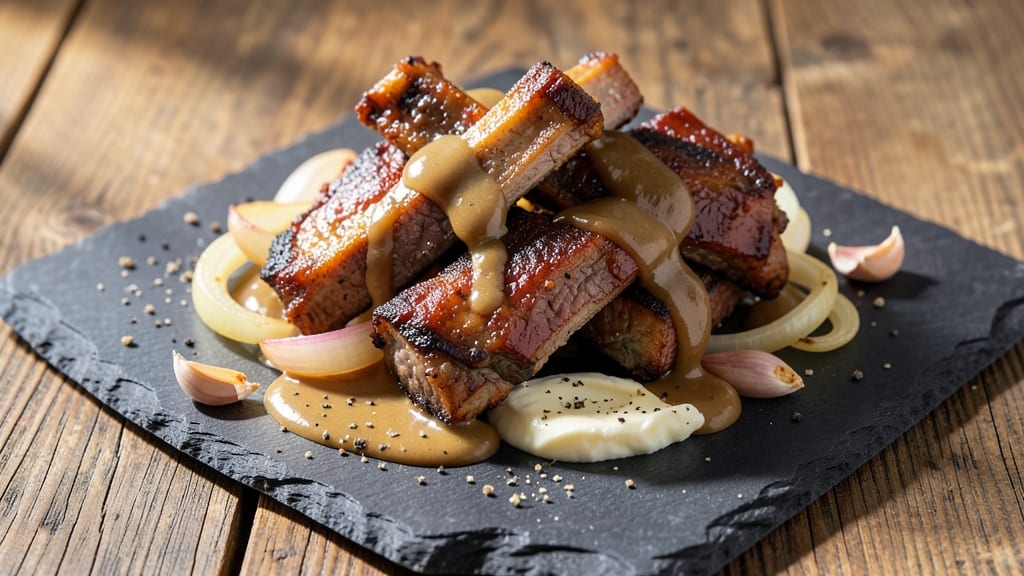
This Angus beef boneless short ribs recipe transforms tough cuts into melt-in-your-mouth perfection with a smoky fond caramelization that delivers deep umami crunch. The secret lies in slow-cooking the ribs until they're fork-tender while developing a rich, flavorful sauce that clings to every bite.
I've perfected this method over countless test batches, ensuring the meat stays juicy and the sauce achieves that coveted velvety texture.
The process begins with a simple dry rub of salt and pepper, followed by a low-and-slow braise that allows the collagen to break down into gelatin, creating both tender meat and a luxurious sauce.
Unlike other recipes that rely on heavy marinades or complicated techniques, this method delivers restaurant-quality results with minimal effort. The ribs develop a beautiful caramelized crust while remaining succulent inside, making every bite worth the wait.
What you'll end up with is a dish that's rich, savory, and packed with flavor—ideal for impressing guests or treating yourself to a weeknight luxury.
The smoky fond caramelization adds a layer of complexity that elevates the natural beefiness of the Angus, while the tender texture makes it impossible to resist. Serve with mashed potatoes, roasted vegetables, or crusty bread to soak up every last drop of that delicious sauce.
This recipe is designed to be foolproof, whether you're using a slow cooker, Dutch oven, or oven. The key is patience and attention to temperature, ensuring the ribs cook evenly without drying out.
By the time you're done, you'll have a dish that's as satisfying as it is impressive—perfect for those special occasions or when you simply crave a comforting, meat-centric meal.
Ingredients for angus beef boneless short ribs
Fourteen ingredients for restaurant-quality ribs with smoky depth and velvety sauce.
| Ingredient | Amount | Notes |
|---|---|---|
| Angus Beef Boneless Short Ribs 🥩 | 2 ½ lb | 2-2.5 inch bone-in, cut into 2-inch pieces |
| Kosher Salt 🧂 | 1 ½ tbsp | Diamond Crystal preferred for balance |
| Freshly Ground Black Pepper 🌶️ | 1 tsp | Cracked peppercorns for robust flavor |
| Unsalted Butter 🧈 | 4 tbsp | Cold, cut into small cubes |
| Yellow Onion 🧅 | 1 whole | Yellow or red, sliced into 1/4-inch pieces |
| Garlic Cloves 🧄 | 4 cloves | Peeled, smashed with side of knife |
| Fresh Thyme Leaves 🌿 | ¼ cup | Stems removed, chopped (or 1 tbsp dried) |
| Fresh Rosemary 🌿 | ½ tsp | Needles finely chopped (or 1/4 tsp dried) |
| Dry Red Wine 🍷 | 1 cup | Bold Cabernet Sauvignon or Merlot |
| Beef Broth 💧 | 2 cups | Low-sodium, homemade or quality store-bought |
| Tomato Paste 🍅 | 2 tbsp | San Marzano preferred, no sugar added |
| Extra-Virgin Olive Oil 🫒 | 2 tbsp | For searing, fruity variety |
| Fresh Bay Leaves 🌿 | 2 whole | Dried works at half the amount |
| All-Purpose Flour 🌾 | 1 tbsp | For dusting cutting board |
The ribs are the star, so Angus beef with good marbling is non-negotiable. Look for cuts labeled 'short ribs' or 'beef short ribs'—Costco or Whole Foods carry the best quality, but your local butcher can trim them perfectly. The bone-in pieces develop more flavor, but boneless works too if you're in a rush. For the wine, any bold, dry red works here—Cab Sauv, Merlot, whatever's open. Just avoid sweet varieties. The beef broth should be rich but not salty—Homemade is ideal, but store-bought like Pacific Foods works in a pinch.
No red wine? Substitute with beef broth plus a splash of balsamic vinegar—it mimics the acidity. Fresh thyme and rosemary are ideal, but dried works at one-third the amount. If tomato paste feels like overkill, those squeeze tubes at Trader Joe's are perfect—no waste, keeps for months. The butter matters for that fond caramelization—use full-fat, cold cubes. For the onion, yellow or red both work, but Vidalia has a sweeter note if you're feeling fancy. The flour is just for dusting the cutting board—don't skip it, though, it prevents slipping.
Store the raw ribs in the coldest part of your fridge, used within 2 days. Fresh herbs? Wrap them in damp paper towels and seal in a bag—they'll stay vibrant for 5 days. The cooked ribs reheat beautifully—350°F for 20 minutes with a splash of broth. Leftovers keep for 4 days in the fridge or 3 months frozen. I always portion the sauce separately—it's even better the next day once the flavors meld.
Why You'll Love This Recipe
- No-Fuss Prep: I swear by this—just sear the ribs in a hot pan with butter and salt, then let the oven do the work. No fancy techniques, no small cuts to trim, and the onions caramelize right alongside.
- Rich, Deep Satisfaction: That first bite? The Angus beef melts in your mouth while the crust stays crisp—like a hug from a slow-cooked masterpiece. The onions add sweetness that balances the peppery kick.
- Weeknight Hero: Between us, this is my go-to when I’m too tired for a full dinner. Serve it over mashed potatoes or with crusty bread, and suddenly you’ve got a restaurant-quality meal without the fuss.
- Leftovers That Don’t Suck: Honestly, I make extra because reheated short ribs are better the next day—more tender, more flavorful. Perfect for sandwiches, salads, or just reheating with a splash of broth. Zero waste, all win.
Step-by-step instructions for smoky fond caramelized short ribs
Here's how to transform tough beef into melt-in-your-mouth perfection with rich caramelized fond.
Prepare and Sear the Short Ribs
Pat the 2.5 lb angus beef boneless short ribs completely dry with paper towels—this is crucial for achieving that crispy crust. Season both sides generously with the 1.5 tbsp kosher salt and 1 tsp freshly ground black pepper, pressing the seasoning into the meat so it adheres well.
Heat a heavy Dutch oven over medium-high heat and add the 2 tbsp extra-virgin olive oil. Once shimmering, add the short ribs in a single layer, working in batches if needed. Sear for 3-4 minutes per side until deeply browned, developing that beautiful Maillard crust that carries so much flavor. Don't crowd the pan—this is where the magic begins.
Build the Fond and Deglaze
Remove the seared ribs from the pot and set them aside. Immediately reduce the heat to medium and add the 4 tbsp cold unsalted butter, letting it melt and bubble gently. Add the sliced 1 whole yellow onion and cook for 5-6 minutes until softened and golden.
Push the onions to one side and add the 4 smashed garlic cloves, 0.25 cup fresh thyme leaves, and 0.5 tsp finely chopped fresh rosemary. Cook for 30 seconds until fragrant—this is where the aromatics really wake up. Pour in the 1 cup dry red wine and scrape up all those beautiful browned bits from the bottom (this is your fond) using a wooden spoon. Let it simmer for 3-4 minutes until reduced by half.
Braise with Herbs and Tomato
Return the short ribs to the pot, nestling them into the fond. Stir in the 2 tbsp tomato paste and add the 2 whole fresh bay leaves. Pour in the 2 cups beef broth, making sure to deglaze any remaining browned bits. Bring to a gentle simmer, then reduce heat to low, cover partially, and let it cook for 2 hours.
Here's where patience pays off—the ribs will become fork-tender as they braise in their own rich, flavorful liquid. I like to check occasionally to ensure there's enough liquid—if it reduces too much, add a splash of water or broth to keep them submerged. The goal is tender, fall-off-the-bone meat with that incredible caramelized fond.
Finish with Butter and Rest
Once the ribs are fork-tender (they should slide off the bone easily), remove them from the braising liquid and transfer to a plate. Strain the cooking liquid through a fine-mesh sieve into a clean pot and return it to medium heat. Whisk in the 4 tbsp cold unsalted butter, one tablespoon at a time, until it melts into a glossy, velvety sauce.
Taste and adjust seasoning with additional salt and pepper if needed. Return the ribs to the sauce and let them rest for 10 minutes before serving. This resting period allows the juices to redistribute, ensuring each bite is as tender and flavorful as possible. Serve with the rich braising sauce spooned generously over the top.
Pro Tips For Making Angus Beef Boneless Short Ribs
- Sear Until Golden: Don’t rush the brown—get that pan screaming hot and let those ribs develop a deep crust for 3-4 minutes per side. I learned this the hard way after serving undercooked ribs that tasted like they’d been steamed instead of seared.
- Salt the Ribs First: Season the ribs before searing with at least 1 teaspoon of kosher salt per pound—let it sit 30 minutes uncovered in the fridge. This guarantees seasoning penetrates deep, not just sticks to the surface.
- Deglaze with Onion: After searing, toss in finely diced onion immediately to soak up the fond—no scraping needed. The caramelized bits stick to the onion, adding richness without extra effort.
- Braise with Butter: Use 2 tablespoons of cold unsalted butter when deglazing, then add liquid—it creates a silky sauce instead of a thin one. (Yes, even if the recipe doesn’t say it.)
Serving suggestions for this angus beef boneless short ribs
Classic Comfort Sides
Nothing complements these rich ribs like creamy garlic mashed potatoes—their smooth texture balances the deep umami of the braising sauce. For extra decadence, fold in 4 oz whipped cream cheese and a sprinkle of fresh chives.
I also love serving roasted baby carrots with a drizzle of honey and thyme—their natural sweetness cuts through the richness. 🥔
Crusty Bread Essentials
A baguette-style loaf is perfect for soaking up every last drop of that velvety sauce. Toast it lightly before serving to add crunch, or try sourdough for a tangy contrast.
For a heartier option, serve with cheesy garlic bread—just spread 2 tbsp herbed cream cheese on toasted slices and broil for 2-3 minutes until bubbly. 🥖
Fresh Vegetable Balance
Brighten the plate with sautéed green beans tossed in 1 tbsp lemon zest and 2 tbsp toasted almonds. The acidity and crunch provide a refreshing contrast.
Another favorite is roasted Brussels sprouts with crispy pancetta—toss halved sprouts in 1 tbsp olive oil, ½ tsp smoked paprika, and roast at 400°F for 20 minutes. 🥦
Sauce Variations
For a red wine reduction, simmer the braising liquid until it thickens to a glossy consistency. For a creamy version, stir in ½ cup crème fraîche or Greek yogurt after removing the ribs.
If you prefer heat, add 1 tsp hot honey or a pinch of crushed red pepper flakes to the sauce. 🍷
Plating Presentation
Arrange ribs fan-style on a warm platter with sauce spooned generously over the top. Garnish with fresh thyme sprigs and a sprinkle of flaky sea salt for a restaurant-worthy finish.
Serve with sides in small bowls or ramekins for an elegant presentation. For a rustic touch, use wooden boards or cast-iron skillets to keep everything warm. ✨
Nutrition facts
Frequently asked questions
Can I use bone-in short ribs instead of boneless?
Bone-in short ribs will have even more flavor and develop a richer sauce as they cook. The cooking time will increase slightly—plan for 2.5-3 hours instead of 2 hours to ensure the meat is fork-tender. Just remove the ribs from the pot when they're done and let the sauce reduce further without the meat if you prefer a thicker consistency.
What if I don't have red wine? Can I substitute something else?
Yes, you can easily substitute! Use 1 cup beef broth plus 1 tbsp balsamic vinegar for acidity, or 1 cup apple cider for a slightly sweeter note. For a non-alcoholic option, try 1 cup cranberry juice—it adds depth without alcohol. The key is maintaining the acidity and volume, so adjust seasoning slightly if needed.
How do I know when the ribs are done?
The ribs are perfectly cooked when they're fork-tender and easily slide off the bone. Insert a fork into the thickest part—the meat should separate cleanly with minimal resistance. If you're unsure, cut into a small piece to check for doneness. The internal temperature should reach 195-205°F in the thickest part of the meat.
Can I make this recipe in a slow cooker?
Yes, but with a few adjustments! Sear the ribs first, then transfer them to the slow cooker with all the aromatics, wine, broth, and tomato paste. Cook on Low for 6-8 hours or High for 4-5 hours. The sauce will be thinner, so reduce it on the stovetop afterward. For best results, finish with a quick sear in a hot skillet to develop that caramelized crust.
Why did my ribs turn out tough instead of tender?
Tough ribs usually happen from overcooking or not enough liquid. Always keep the ribs submerged in liquid to prevent drying out, and check the internal temperature—never exceed 205°F. If the sauce reduces too much, add a splash of broth or water. For extra tenderness, try adding 1 cup chicken stock to the braising liquid.