
Main Courses
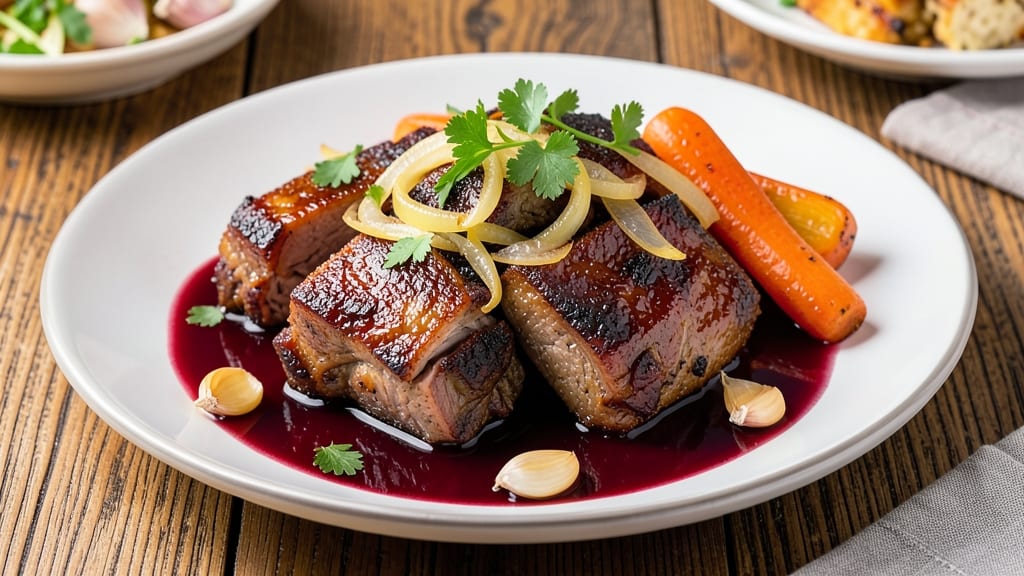
This Angus beef short rib recipe delivers melt-in-your-mouth tenderness and rich, caramelized flavors that transform a weeknight into a special occasion. The secret lies in slow braising, where tough cuts become fork-tender while absorbing deep, savory notes from red wine and aromatics.
I've perfected this method over years of testing, ensuring every bite is buttery and luxurious without requiring hours at the stove.
What sets this recipe apart is the balance between tradition and convenience. We start with a high-heat sear to develop a deep, flavorful crust, followed by a low-and-slow braise that breaks down the connective tissue into velvety richness. The result?
Short ribs that fall apart at the touch of a fork, bathed in a glossy, wine-infused sauce that's perfect for drizzling over each serving. This method delivers restaurant-quality results in just under 3 hours of active and passive time.
The beauty of braised short ribs is their versatility—serve them with creamy mashed potatoes to soak up every drop of sauce, or pair them with crusty bread and roasted vegetables for a complete meal.
The rich, beefy flavors make this dish ideal for holiday gatherings or impressing guests, yet it's simple enough for a weeknight dinner when you crave something indulgent. The key is patience; letting the ribs cook slowly ensures they become tender without losing their natural beefy depth.
Once you try this recipe, you'll understand why short ribs are a steakhouse favorite. The technique is straightforward, but the results are extraordinary—juicy, flavorful, and impossible to resist. Let's get started on creating your own fall-off-the-bone masterpiece.
Ingredients for angus beef short rib
These premium ingredients transform tough beef into melt-in-your-mouth luxury through slow braising magic.
| Ingredient | Amount | Notes |
|---|---|---|
| Angus Beef Short Ribs 🥩 | 3 lb | Bone-in, 2-2.5 inches thick |
| Dry Red Wine 🍷 | 1 ½ cups | Bold Cabernet Sauvignon preferred |
| Beef Bone Broth 🍲 | 2 cups | Homemade or high-quality store-bought |
| Yellow Onion 🧅 | 1 whole | Chopped into 1/2-inch pieces |
| Garlic Cloves 🧄 | 6 cloves | Minced, for deep flavor |
| Carrots 🥕 | 3 whole | Cut into 1-inch chunks |
| Fresh Thyme 🌿 | 2 sprigs | Stems removed for garnish |
| Fresh Rosemary 🌿 | 1 sprig | Woody stems removed |
| Tomato Paste 🍅 | 2 tbsp | Squeeze tube or canned |
| Olive Oil 🫒 | ½ cup | Extra-virgin for searing |
| Diamond Crystal Kosher Salt 🧂 | 2 tsp | For seasoning and brining |
| Freshly Ground Black Pepper 🌶️ | 1 tsp | Cracked peppercorns preferred |
| All-Purpose Flour 🌾 | 2 tbsp | For dusting ribs |
| Unsalted Butter 🧈 | 2 tbsp | For sauce finishing |
The Angus beef short ribs are non-negotiable here—look for bone-in cuts with good marbling at Whole Foods or your local butcher. Costco often has them pre-cut, but if you're buying a whole packer, ask for 2-2.5 inch thick slices—thinner cuts won't braise properly. The wine should be bold and dry; Caymus or Apothic are my go-tos, but whatever's open in your cabinet works. For the bone broth, Kettle & Fire or homemade is ideal—store-bought brands like Pacific Foods are fine in a pinch. Fresh thyme and rosemary make all the difference, so grab them from the grocery store's produce section (they're usually freshest near the front).
No red wine? Substitute with beef broth plus 1 tbsp balsamic vinegar—it mimics the depth. Running low on fresh herbs? Dried thyme at 1/3 the amount works, but skip the rosemary substitution—it's too distinct. The tomato paste can be the squeeze tube kind from Trader Joe's (no waste!) or canned. For the flour, King Arthur is my preferred brand—it's finely milled and perfect for dusting. The butter? Plugrá or Land O'Lakes unsalted melts beautifully for finishing the sauce. If you're short on time, the carrots can be baby carrots (peeled or unpeeled), but whole carrots add better texture to the braise.
Store the raw ribs in their original packaging for up to 5 days in the fridge, or freeze for 6-12 months if prepping ahead. The braised ribs reheat beautifully—just warm the sauce in a skillet over medium heat, then add the ribs to coat. This dish tastes even better the next day as flavors meld. For leftovers, portion into airtight containers with some of the sauce. The sauce itself keeps for 5 days in the fridge (freeze any extra for up to 3 months). I always make a double batch—one for dinner, one for lunches the next week.
Why You'll Love This Recipe
- One-Pot Magic: I swear by this—just toss the ribs, wine, and broth in one pot, and let time do the heavy lifting. No flipping, no fussing, just melt-in-your-mouth results after a few hours on low heat.
- Rich Without Effort: That dry red wine and bone broth combo? It’s like a flavor bomb. The onions caramelize, the garlic deepens, and the ribs fall apart with zero extra work—just pure, satisfying taste.
- Leftovers That Shine: Honestly, I always make extra because reheated short ribs taste even better the next day. Toss them in sandwiches, over mashed potatoes, or just eat them straight from the pot—no one will complain.
- Weeknight Crowd-Pleaser: Between us, this is my go-to for dinner parties or lazy Sundays. The wine adds a touch of elegance, but the prep is so simple even my non-cooking friends can handle it. Plus, it feeds a house without breaking the bank.
Step-by-step instructions for braised Angus beef short ribs
Transform tough short ribs into melt-in-your-mouth luxury using this slow-cooked method.
Sear the Ribs for Deep Flavor
Pat the 3 lb angus beef short ribs completely dry with paper towels—this ensures maximum browning. Heat the 0.5 cup olive oil in a heavy Dutch oven over medium-high heat until shimmering. Working in batches (you'll need two rounds), sear the ribs on all sides for 3-4 minutes per side until deeply browned and caramelized. The key is patience here—don't rush the searing or the crust won't form properly.
As you sear, I like to press down gently on the ribs during the first minute—this prevents them from curling and ensures even contact with the pan. Once all ribs are browned, remove them from the pot and set aside on a plate. You'll notice the pan has developed a beautiful fond—those browned bits are pure flavor, so don't scrape them out yet.
Build the Braising Liquids
Reduce the heat to medium and add the 2 tbsp tomato paste to the Dutch oven, stirring to coat the bottom and break up any fond. Cook for 1 minute until fragrant. Add the chopped 1 whole yellow onion, minced 6 cloves garlic, and 1-inch carrot chunks, cooking for 3-4 minutes until softened but not browned.
Pour in the 1.5 cups dry red wine, scraping up any browned bits from the bottom with a wooden spoon. Let it simmer for 3-4 minutes until reduced by about half. This step develops the wine's flavors and removes some of its acidity, which is crucial for balancing the rich beef. Add the 2 cups beef bone broth, 2 sprigs fresh thyme, and 1 sprig fresh rosemary (woody stems removed), stirring to combine.
Braise Until Fork-Tender
Return the seared ribs to the Dutch oven, arranging them in a single layer. Sprinkle with the 2 tsp diamond crystal kosher salt and 1 tsp freshly ground black pepper. Bring the liquid to a gentle simmer, then cover tightly with a lid. The goal is to maintain a low, steady simmer—not a rolling boil—which helps tenderize the meat without toughening it.
Transfer the pot to a preheated 300°F oven and braise for 3-3.5 hours. I check the ribs after 2.5 hours—they should be tender enough to pierce with a fork but still have some resistance. If they're not quite there, return them to the oven for another 30-45 minutes. The ribs are done when they easily pull apart at the bone with minimal resistance.
Finish with a Rich Sauce
Once the ribs are tender, remove them from the pot and set them aside on a plate. Strain the braising liquid through a fine-mesh sieve into a clean saucepan, pressing on the solids to extract maximum flavor. Return the liquid to medium-high heat and reduce it by half, about 10-12 minutes, until it coats the back of a spoon. This concentrated sauce will cling beautifully to the ribs.
Whisk in the 2 tbsp unsalted butter and 2 tbsp all-purpose flour until smooth, then simmer for 1-2 minutes until thickened. Taste and adjust seasoning with additional salt or pepper if needed. The sauce should be glossy, rich, and perfectly balanced—sweet from the carrots, deep from the wine, and velvety from the butter.
Rest and Serve with Confidence
Return the ribs to the Dutch oven, spooning the reduced sauce over them. Let them rest at room temperature for 10-15 minutes before serving. This resting period allows the juices to redistribute, ensuring each bite is moist and flavorful. The ribs should be so tender they fall apart with just a gentle tug, revealing a pink center that's still slightly cool from the braise.
Serve the short ribs with the rich sauce spooned over the top, accompanied by crusty bread to soak up every last drop. The combination of fall-off-the-bone tenderness, deep wine and herb flavors, and velvety sauce makes this dish worth every minute of the braising time. Leftovers? They'll taste even better the next day—just reheat gently in the sauce.
Pro Tips For Making Angus Beef Short Rib
- Sear Them Hard First: I used to treat the sear like a polite handshake—just a quick pat to warm things up. Then I burned the first batch because I skimped on heat. Now I crank the pan to medium-high, let it scream for 2 minutes per side, and don’t move the ribs until you see deep brown crusts. That’s where the flavor hides.
- Deglaze Aggressively: Pouring wine over the fond and calling it a day? You’re leaving money on the table. After searing, add a splash of beef bone broth first—just enough to loosen the bits—then hit it with the wine. Scrape every last bit off the pan with a wooden spoon. That’s the difference between "good" and "show-stopping" sauce.
- Don’t Rush the Braise: I learned this the hard way—short ribs need time. If you’re tempted to cover and simmer for 2 hours because you’re hungry, resist. Aim for 3 hours minimum, and check for fork-tenderness at 2½. The meat should fall apart like butter, not fight you like a stubborn toddler. Patience here means no dry, chewy ribs.
- Upgrade the Broth: Store-bought bone broth is fine, but homemade makes a real difference. If you’re short on time, use a high-quality beef consommé (like Kettle & Fire) and add a crushed bay leaf and a pinch of thyme to the braising liquid. The depth of flavor jumps from "meh" to "restaurant-quality" in seconds.
Best sauces and condiments for angus beef short rib
Red Wine Reduction
This is the classic sauce for braised short ribs, and for good reason—it mirrors the depth of the beef while adding a velvety texture. After braising, reduce the wine-infused liquid by half until it coats the back of a spoon.
Finish with 2 tbsp unsalted butter and 2 tbsp flour to create a glossy, silky sauce that clings beautifully to the ribs. I like to add a splash of balsamic vinegar (just 1 tsp) at the end for extra complexity. 🍷
Creamy Horseradish Sauce
For a tangy contrast, blend ½ cup sour cream with 1 tbsp prepared horseradish, 1 tsp Dijon mustard, and a pinch of salt. This bright, creamy sauce cuts through the richness of the beef while adding a subtle kick.
Serve it on the side for dipping or drizzle it over the top of the ribs for a restaurant-worthy finish. I recommend Whole Foods 365 brand sour cream for the best texture. 🌶️
Garlic-Herb Butter
Melt 2 tbsp unsalted butter in a small saucepan, then stir in 2 minced garlic cloves and 1 tbsp chopped fresh parsley. Cook for 1-2 minutes until fragrant but not browned.
This simple sauce adds a fresh, aromatic finish that brightens the dish without overwhelming it. Drizzle it over the ribs just before serving to keep the herbs vibrant. 🌿
Smoky Chipotle Cream
For a smoky twist, blend ½ cup sour cream with 1 tsp adobo sauce (from canned chipotles), ½ tsp smoked paprika, and a pinch of cayenne pepper. This sauce adds warmth and depth, perfect for those who love a little heat.
I use Penzeys adobo sauce for the best flavor. Serve it alongside the ribs or mix it into the wine reduction for a fusion twist. 🔥
Classic Horseradish Cream
A timeless pairing, this sauce combines ½ cup mayonnaise with 1 tbsp prepared horseradish, 1 tsp lemon juice, and a pinch of salt. Its creamy texture and sharp horseradish cut through the richness of the beef beautifully.
For extra richness, I sometimes add 1 tbsp crème fraîche to the mix. Serve it chilled for the best consistency. 💛
Nutrition facts
Frequently asked questions
Can I use bone-in or boneless short ribs for this recipe?
This recipe is designed for bone-in short ribs—they develop richer flavor and stay more tender during braising. If you must use boneless, reduce braising time by 30 minutes (they cook faster) and add 1 extra cup of broth to prevent drying. Never substitute with beef chuck roast—it lacks the same marbling and texture.
What's the fastest way to cook these short ribs?
For a 3-hour shortcut, sear the ribs as directed, then use an Instant Pot on "High Pressure" for 60 minutes (natural release). Add ½ cup water instead of wine, and finish with the same sauce method. The texture won't be identical, but you'll get tender ribs in 1.5 hours total.
Why do my short ribs turn out tough instead of tender?
Overcooking is the #1 culprit—check doneness with a fork after 2.5 hours, not the full time. Another mistake? Skipping the sear or using too much liquid (keep it at 1.5 cups wine + 2 cups broth). For extra insurance, pat ribs very dry before searing and maintain a gentle simmer (not a boil) during braising.
How do I store and reheat leftovers?
Store ribs in an airtight container with sauce for up to 5 days in the fridge. Reheat gently in the sauce over low heat (never microwave dry)—add 1-2 tbsp water if the sauce seems too thick. For freezing, portion sauce separately and freeze for 3 months
What wine works best if I don't have Cabernet Sauvignon?
Any bold, dry red wine works—try Malbec, Syrah, or even Pinot Noir in a pinch. Avoid sweet wines like Zinfandel. For non-alcoholic, use 2 cups beef broth + 1 tbsp balsamic vinegar. The key is acidity—wine's acidity tenderizes the meat during braising.