
Soups & Stews
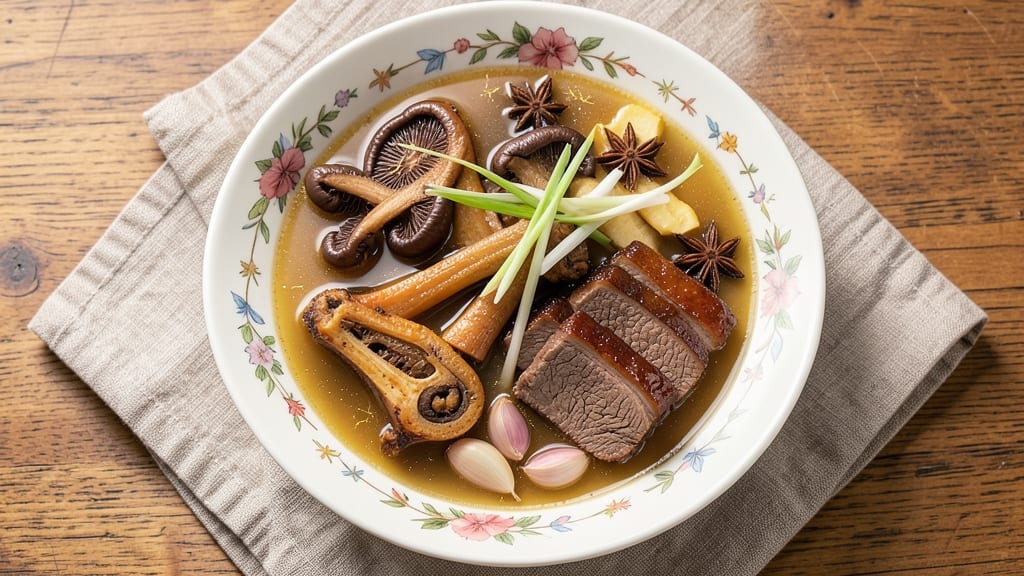
Asian beef bone soup transforms humble ingredients into a velvety, marrow-rich elixir that warms both body and soul. The secret lies in slow-simmered collagen extraction, where beef bones release their essence into a fragrant broth—rich, umami-forward, and deeply satisfying. This recipe draws from traditional Chinese techniques while adapting for modern kitchens, ensuring restaurant-quality results at home.
The foundation begins with properly prepped bones—beef marrow and knuckle bones are essential for that signature depth—paired with aromatic ginger, star anky, and garlic. A two-stage simmering process clarifies the broth while extracting maximum flavor, creating a silky texture that coats every spoonful.
The result? A broth so luxurious it feels like a hug in a bowl.
What makes this soup exceptional is its balance: tender beef slices, silky egg drops, and fresh herbs like cilantro or green onions add layers of texture and brightness. The broth absorbs these flavors beautifully, making each bite a harmonious blend of savory, aromatic, and slightly sweet notes.
Serve with steamed rice or noodles for the full experience.
Perfect for family gatherings or cozy weeknight meals, this soup keeps well for days, allowing flavors to deepen with each passing hour. The techniques here—from skimming impurities to balancing seasoning—ensure a broth that’s both professional and approachable. Let’s begin building this comforting masterpiece.
Ingredients for asian beef bone soup
Sixteen essential ingredients crafting restaurant-quality Asian beef bone soup at home.
| Ingredient | Amount | Notes |
|---|---|---|
| Beef Marrow Bones 🦴 | 4 lb | Knuckle bones preferred for collagen |
| Beef Chuck Roast 🥩 | 2 lb | Cut into 1-inch slices for serving |
| Fresh Ginger Root 🌿 | ½ cup | Peeled, sliced into 1-inch pieces |
| Star Anise Pods 🌟 | 4 whole | Whole pods for aroma extraction |
| Garlic Cloves 🧄 | 8 cloves | Smashed for deeper flavor infusion |
| Dried Shiitake Mushrooms 🍄 | ¼ lb | Rehydrated for umami depth |
| Daikon Radish 🥕 | 1 whole | Cut into 2-inch chunks |
| Green Onions 🧅 | ½ cup | Fresh, chopped for garnish |
| Cilantro 🌿 | ¼ cup | Fresh, chopped for brightness |
| Fresh Eggs 🥚 | 4 whole | For silky egg drops |
| Soy Sauce 🍶 | ¼ cup | Light or all-purpose variety |
| Sesame Oil 🫒 | 1 tbsp | Toasted, for finishing |
| White Rice Vinegar 🍶 | 1 tbsp | For subtle acidity balance |
| Salt 🧂 | 2 tsp | Diamond Crystal preferred |
| Black Peppercorns 🌶️ | 1 tsp | Crushed for subtle heat |
The bones are non-negotiable—beef marrow and knuckle bones from a reputable butcher deliver the signature collagen-rich depth. Costco or local Asian markets typically carry these, though you may need to request them in advance. Look for bones with visible marrow channels and minimal surface fat. The chuck roast should be well-marbled; Trader Joe's or Whole Foods carry excellent cuts. Fresh ginger and shiitake mushrooms amplify umami, while star anise provides aromatic complexity—Penzeys Spices offers high-quality whole pods for authentic flavor.
No marrow bones? Substitute with beef short ribs or oxtail, though texture will differ slightly. Fresh ginger can be swapped for powdered ginger at half the amount, though fresh is ideal. Shiitake mushrooms can be omitted if unavailable, but the umami will suffer. For the egg drops, use room-temperature eggs for smoother results. The soy sauce should be light—Kikkoman is reliable, but avoid dark varieties. Sesame oil should be toasted; Trader Joe's sells excellent pre-toasted bottles. Daikon radish adds subtle sweetness but can be omitted if unavailable—carrots work in a pinch.
This soup rewards patience—simmering for 4-6 hours extracts maximum collagen and flavor. Store in airtight containers for 3-4 days in the refrigerator, though flavor deepens with time. Freeze for up to 3 months by portioning into containers. The broth thickens as it cools, so reheat gently. Garnish with fresh herbs just before serving to preserve their vibrant color and aroma. Leftovers make excellent lunches—simply reheat and add a splash of water to restore silkiness.
Why You'll Love This Recipe
- Marrow Magic: I’ll be real—those beef marrow bones aren’t just for show. After simmering for hours, they melt into the broth, turning it into a rich, velvety gold that tastes like a hug in a bowl. (Yes, even on a Tuesday night.)
- One-Pot Wonder: Honestly, this is the kind of soup where you can set it and forget it. Toss in the bones, chuck, ginger, and star anise, cover it with water, and walk away. By the time you’re done with whatever else you’re doing, the house will smell like a five-star restaurant.
- Leftovers That Shine: Between us, this soup only gets better the next day. The flavors meld into something deeper, and the bones release even more collagen—perfect for reheating with a splash of soy sauce or serving over rice. My freezer’s always stocked with portions because it’s that good.
- Budget-Friendly Feast: Beef chuck and marrow bones might sound fancy, but they’re actually the secret to stretching your grocery budget. A single pot feeds four hungry people, and the bones give you that restaurant-quality broth without the price tag. Plus, star anise and ginger? Those little pods and roots go a long way.
Step-by-step instructions for Asian beef bone soup
Transform simple ingredients into a velvety, marrow-infused broth with this methodical approach.
Prepare the Bones and Aromatics
Rinse the 4 lb beef marrow bones thoroughly under cold water to remove any impurities. Place them in a large stockpot and cover with cold water by 2 inches. Bring to a boil over high heat, then immediately reduce to a simmer for 10 minutes to remove surface scum. This initial boil also helps extract collagen from the bones.
While the bones simmer, prepare the aromatics. Peel and slice the 0.5 cup fresh ginger root into 1-inch pieces. Smash the 8 cloves garlic with the side of a chef's knife to release their oils. Add the ginger, garlic, 4 whole star anise pods, and 1 whole daikon radish (cut into 2-inch chunks) to the pot. The daikon will break down during cooking, adding natural sweetness to the broth.
Simmer the Broth for Maximum Depth
Skimming any foam that rises to the surface is crucial—this ensures a clear, silky broth. Maintain a gentle simmer (small bubbles, not a rolling boil) for 4 hours. The low heat allows collagen to break down gradually, creating that signature marrow-rich texture. If the liquid level drops below the bones, add hot water to maintain coverage.
After 4 hours, add the 2 lb beef chuck roast (cut into 1-inch slices) and 0.25 lb dried shiitake mushrooms (rehydrated in hot water for 20 minutes). The mushrooms will dissolve into the broth, adding umami complexity. Continue simmering for another 2 hours until the beef is fork-tender and the broth has reduced slightly, intensifying its flavor.
Season and Finish the Broth
Strain the broth through a fine-mesh sieve into a clean pot, discarding the solids. Return the broth to the stove and add 0.25 cup soy sauce, 1 tbsp white rice vinegar, 2 tsp salt, and 1 tsp crushed black peppercorns. Simmer gently for 15 minutes to meld the seasonings. The vinegar brightens the broth while the soy sauce adds depth—taste and adjust seasoning if needed.
For the final touch, heat 1 tbsp toasted sesame oil in a small pan until fragrant (do not let it smoke). Remove from heat and drizzle this oil into the broth just before serving. This step adds a nutty aroma that elevates the soup's complexity. Keep the broth warm but not boiling until ready to serve.
Assemble and Serve
Ladle the warm broth into individual bowls. To each serving, add 1 whole fresh egg (cracked directly into the bowl) and gently swirl with a spoon to create silky egg ribbons. Garnish with 0.5 cup chopped green onions and 0.25 cup chopped cilantro for freshness. The contrast of the cool egg against the warm broth creates the perfect balance.
Serve immediately with steamed rice or crusty bread to soak up the rich, marrow-infused broth. The soup should be silky yet robust, with layers of umami from the mushrooms, sweetness from the daikon, and a subtle warmth from the ginger and garlic. Each spoonful should deliver both depth and clarity of flavor.
Pro Tips For Making Asian Beef Bone Soup
- BLANCH BONES FIRST: Skip the direct sear—drop marrow bones in boiling water for 2 minutes to loosen dirt and impurities. I learned this the hard way: unwashed bones muddy the broth, and scrubbing them later is a nightmare. Rinse well after blanching, then pat dry before browning.
- CRUSH WHOLE SPICES: Lightly smash star anise pods with the flat side of a knife before adding to the pot. This releases more flavor without turning the broth bitter. (Yes, even if it looks weird—your soup will taste better.)
- LOW AND SLOW WINS: Once the broth starts simmering, keep it at a gentle bubble—hardly any movement on the surface. I used to rush it, and the collagen never fully broke down. Aim for 3-4 hours minimum; patience here makes the difference.
- SAVE TIME WITH GINGER: Peel and slice ginger into thick matchsticks instead of grating it. They’re easier to fish out later, and the flavor infuses just as well. (Bonus: No one has to deal with ginger sludge in their soup.)
Perfect pairings for asian beef bone soup
Rice Pairings
Steamed jasmine rice is the classic choice—its delicate floral aroma complements the soup's deep umami without overpowering it. I like to cook 1 cup jasmine rice for every 2 servings, using a 1:1.25 rice-to-water ratio in a rice cooker for perfect fluffiness.
For extra indulgence, try short-grain sushi rice—its stickiness soaks up the broth beautifully. 🍚
Noodle Complements
Thin rice noodles or udon noodles transform this soup into a hearty meal. For rice noodles, soak 4 oz in warm water for 10 minutes before adding to bowls.
Udon noodles (pre-cooked) add chewy texture—simmer them directly in the broth for 2-3 minutes before serving. A drizzle of chili oil or sriracha elevates the dish further. 🍜
Pickled Vegetables
Add kimchi or quick-pickled daikon for tangy contrast. I mix ½ cup kimchi (chopped) with 1 tbsp rice vinegar and ½ tsp sugar for a bright topping. For daikon, thinly slice ½ cup and soak in ¼ cup rice vinegar with 1 tsp salt for 30 minutes.
The acidity cuts through the soup's richness perfectly. 🥬
Crusty Bread
A baguette or Asian-style mantou makes an excellent side. Toast the bread until golden, then tear into chunks. The crusty texture contrasts beautifully with the silky broth. For extra flavor, brush slices with garlic butter before baking. 🥖
Herb Garnishes
Fresh cilantro, green onions, and Thai basil add vibrant color and freshness. I chop ¼ cup cilantro and 3 green onions per bowl, then sprinkle just before serving.
For Thai basil, lightly bruise the leaves to release their anise notes—this pairs especially well with the ginger in the broth. 🌿
Dipping Sauces
Serve with hoisin sauce or a sesame-ginger dip. For the dip, whisk 2 tbsp hoisin, 1 tbsp toasted sesame oil, 1 tsp rice vinegar, and 1 tsp grated ginger.
This adds another layer of flavor for dipping noodles or bread. A sprinkle of crushed peanuts on top adds crunch. 🥄
Nutrition facts
Frequently asked questions
Why do beef marrow bones create such a rich broth?
The marrow inside these bones contains collagen and gelatin, which break down during slow simmering to create that signature silky, velvety texture. Unlike regular beef bones, marrow bones release more natural fats and umami compounds, giving the broth its luxurious depth. The 4-hour simmer is key to unlocking this richness!
Can I use a pressure cooker to speed up the process?
Yes! A pressure cooker can reduce the simmering time to about 1.5 hours instead of 4-6 hours. However, the flavor will be slightly different—pressure cooking extracts collagen faster but may not develop the same depth. For best results, use the pressure cooker for the initial bone simmer, then finish with a stovetop reduction.
What if I don't have daikon radish?
No problem! Substitute with carrots or turnips for sweetness, or omit entirely if you prefer a more concentrated beef flavor. The daikon adds subtle sweetness, but the soup will still be delicious. For extra umami, add a dash of fish sauce or an additional 1 tbsp soy sauce to compensate.
How do I prevent the broth from getting cloudy?
Skimming foam during the initial boil and using a fine-mesh sieve when straining are essential. For extra clarity, chill the broth in the refrigerator overnight—fat will solidify on top, making it easy to remove. Reheat gently before serving to preserve that silky texture.
Can I make this soup ahead of time?
This soup tastes even better the next day as flavors meld. Store in an airtight container in the fridge for 3-4 days or freeze for up to 3 months. Reheat gently on low heat, adding a splash of water if it thickens too much. The egg drops should always be added fresh before serving.