
Main Courses
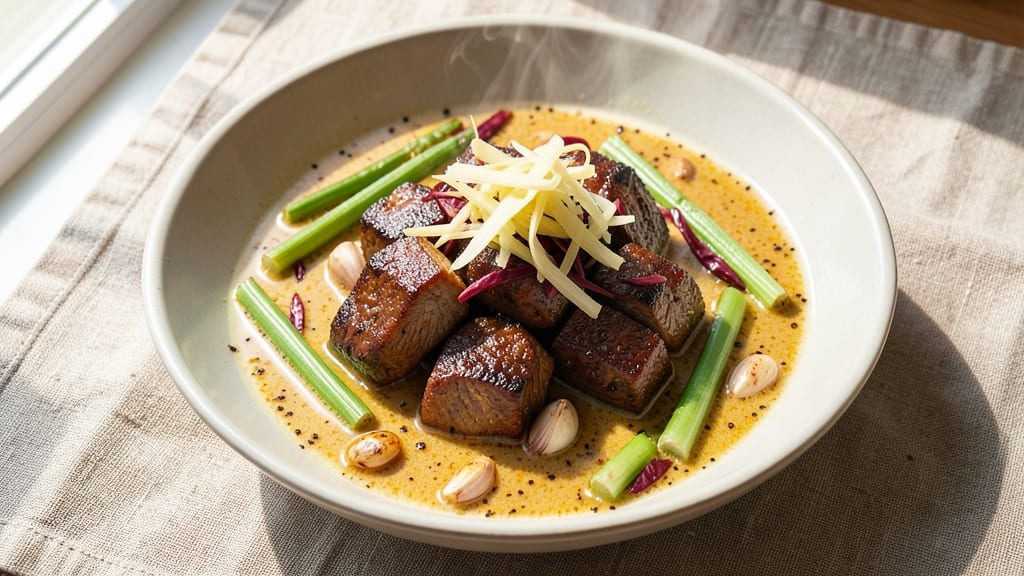
This Asian beef curry recipe transforms tough beef into melt-in-your-mouth tenderness with fragrant lemongrass and velvety coconut milk. The secret lies in marinating the beef overnight, allowing the spices to penetrate deeply while tenderizing the meat.
This isn't just another curry—it's a symphony of balanced flavors where sweet, spicy, and tangy notes harmonize perfectly.
Start with a rich paste of lemongrass, ginger, garlic, and galangal—each ingredient playing its part in building complex aromatics. The beef cooks low and slow in coconut milk until fork-tender, absorbing all the fragrant spices while maintaining its natural richness.
What makes this recipe truly special is the attention to balance: just enough heat from chili, brightness from lime, and depth from soy sauce.
By the time you serve it, you'll have a curry that's perfect—golden, aromatic, and packed with flavor. The beef falls apart at the touch of a fork, swimming in a sauce that's creamy yet not heavy, spicy without being overwhelming.
Serve it over steamed jasmine rice or warm naan, and watch as everyone at the table reaches for seconds.
This recipe scales beautifully for gatherings, and leftovers reheat just as well the next day. The technique is straightforward but delivers restaurant-quality results at home. Let's get started on creating this fragrant, comforting dish that brings a taste of Asia to your kitchen.
Ingredients for asian beef curry
Fragrant lemongrass, tender beef, and velvety coconut milk—these are the pillars of an exceptional Asian curry.
| Ingredient | Amount | Notes |
|---|---|---|
| Beef Chuck Roast 🥩 | 1 ½ lb | Cut into 1-inch cubes |
| Fresh Lemongrass 🌿 | 1 whole | White parts only, finely chopped |
| Fresh Galangal 🍃 | ½ cup | Peeled, finely minced |
| Fresh Ginger Root 🧄 | ½ cup | Peeled, finely minced |
| Garlic Cloves 🧄 | 6 cloves | Peeled, finely minced |
| Coconut Milk 🥥 | 1 ¼ cups | Full-fat, canned preferred |
| Red Curry Paste 🌶️ | 2 tbsp | Store-bought or homemade |
| Fish Sauce 🍶 | 2 tbsp | Red Boat preferred |
| Soy Sauce 🍶 | 2 tbsp | Light or dark variety |
| Brown Sugar 🍯 | 2 tbsp | Packed, not granulated |
| Lime Juice 🍋 | 2 tbsp | Freshly squeezed |
| Thai Chili Paste 🌶️ | 1 tbsp | Adjust for heat preference |
| Vegetable Oil 🫒 | 2 tbsp | For high-heat searing |
| Jasmine Rice 🍚 | 1 ½ cups | Uncooked, long-grain |
| Fresh Cilantro 🌿 | ¼ cup | Chopped, for garnish |
The beef cut matters—chuck roast delivers the best texture, breaking down beautifully during the long simmer. Look for well-marbled meat at Whole Foods or your local Asian market, where the selection is often superior. Fresh galangal and lemongrass are non-negotiable for authentic flavor, though Trader Joe's carries frozen galangal as a backup. The ginger should be young and firm, not fibrous or shriveled. For the coconut milk, Aroy-D brand is my go-to—it's thick, creamy, and free from additives that can curdle during cooking.
No fresh galangal? Substitute with 1/4 cup ginger plus 1/4 cup turmeric for color and earthiness. Running low on fish sauce? Soy sauce plus a dash of anchovy paste works in a pinch, though the umami will be slightly different. The red curry paste can be swapped for yellow curry paste plus 1/2 tsp turmeric—just reduce the brown sugar slightly to balance the sweetness. For heat control, start with half the chili paste and adjust to taste at the end. The jasmine rice should be long-grain and unscented unless you're specifically seeking aromatic varieties.
This curry tastes even better the next day as flavors meld. Store leftovers in an airtight container in the fridge for up to 5 days, or freeze for 3 months. For reheating, add a splash of water or coconut milk to prevent drying. The rice reheats beautifully too—microwave with a damp paper towel over it for 2 minutes. Garnish with fresh cilantro just before serving to maintain its vibrant color and bright flavor. If you're prepping ahead, marinate the beef overnight in the fridge for maximum tenderness.
Why You'll Love This Recipe
- One-Pot Magic: I swear by this recipe when I’m too tired to dirty multiple pans. The beef chuck roast practically melts into tender perfection while the lemongrass and galangal simmer right in the same pot—no extra bowls, no fuss.
- Flavor Bomb: That first spoonful? Chef’s kiss. The galangal adds a peppery kick, the ginger brings warmth, and the garlic—oh, the garlic—turns this into something you’ll reach for again. It’s the kind of depth that makes store-bought curry pastes look sad.
- Budget Stretch: Beef chuck roast is affordable, and a single pound feeds four with room to spare. Fresh herbs like lemongrass and galangal (which you can often find frozen) keep costs down while still delivering restaurant-quality flavor—no takeout needed.
Step-by-step instructions for fragrant lemongrass beef curry
This method delivers restaurant-quality depth with tender beef and aromatic layers.
Prepare the Aromatic Base
Heat the 2 tablespoons vegetable oil in a Dutch oven over medium-high heat until shimmering. Add the 1.5 lb beef chuck roast, cut into 1-inch cubes, and sear undisturbed for 3-4 minutes until deeply browned on all sides. This step develops the rich Maillard reaction that forms the curry's foundation.
Remove the beef and set aside. In the same pot, add the 0.5 cup fresh galangal and 0.5 cup fresh ginger root, both finely minced, along with the 6 cloves garlic cloves and white parts of 1 whole fresh lemongrass, also finely chopped. Sauté for 2-3 minutes until the galangal and ginger become fragrant and slightly softened. Here's where the curry's complex aroma begins to develop—don't rush this step.
Build the Curry Sauce
Stir in the 2 tablespoons red curry paste and cook for 1 minute, stirring constantly, until the raw paste smell disappears and it begins to darken slightly. This ensures all the spices are properly toasted and ready to infuse the coconut milk. Add the 1.25 cups coconut milk, scraping up any browned bits from the bottom of the pot—these contain concentrated flavor.
Bring the mixture to a gentle simmer, then reduce heat to low and return the beef to the pot. Pour in the 2 tablespoons fish sauce, 2 tablespoons soy sauce, 2 tablespoons brown sugar, 2 tablespoons lime juice, and 1 tablespoon Thai chili paste. Stir gently to combine, being careful not to break up the beef pieces. The sauce should begin to thicken as it simmers.
Simmer to Tender Perfection
Cover the pot and let the curry simmer gently for 1.5 to 2 hours, stirring occasionally, until the beef is fork-tender and easily pulls apart. The sauce should reduce slightly, coating the beef in a glossy, aromatic layer. I check for doneness by piercing a beef cube—it should offer minimal resistance and the juices should run clear. This slow cooking transforms tough chuck roast into melt-in-your-mouth tenderness.
If the sauce becomes too thick before the beef is fully tender, add 2-3 tablespoons water to maintain the proper consistency. The curry should be rich but not gluey, with a balance of sweet, savory, and spicy flavors. Taste and adjust seasoning if needed, adding more fish sauce for saltiness or lime juice for acidity.
Finish and Serve
Once the beef is perfectly tender, remove the pot from heat and let it rest for 5 minutes. This resting period allows the flavors to meld and the juices to redistribute within the beef. Stir in the 0.25 cup fresh cilantro, chopped, just before serving to brighten the dish with fresh herbaceous notes.
Serve the curry over 1.5 cups cooked jasmine rice, spooning generous portions of beef and sauce onto each serving. The rice should be fluffy and slightly sticky, providing a perfect base for the rich curry. Garnish with additional cilantro if desired, and serve with lime wedges on the side for those who prefer extra brightness.
Pro Tips For Making Asian Beef Curry
- CHAR THE GALANGAL FIRST: I learned this the hard way—raw galangal in curry tastes like a failed experiment. Lightly char it over a gas flame or under a broiler for 2-3 minutes until blackened in spots. That caramelized bitterness is what transforms it from "meh" to "wow."
- SLOW-BRAISE THE CHUCK: Your beef chuck won’t tenderize in 30 minutes. After searing, reduce heat to low and cover with water or coconut milk—then simmer for at least 2.5 hours. The meat should fall apart when probed; rushing it leaves you with chewy disappointment.
- MINCE GINGER LIKE YOU MEAN IT: No, "grating" ginger won’t cut it. Use a sharp knife and chop it into a paste—small enough to disappear when stirred. Fresh ginger’s punch fades when it’s just chunks; this ensures every bite gets the zing.
- SAVE THE LEMONGRASS STALKS: Tossing the tough outer layers? Don’t. Split the stalks lengthwise, scrape out the soft pith, then finely chop the inner part. You’ll get twice the flavor for half the effort—no need to buy extra.
Dietary considerations for asian beef curry
Gluten-Free Adaptations
This curry is naturally gluten-free if you use a certified gluten-free soy sauce like Kikkoman Gluten-Free Tamari. The 2 tablespoons soy sauce in the recipe can be swapped 1:1 without altering flavor.
For extra safety, check that your red curry paste and fish sauce (like Red Boat) are also gluten-free. The rest of the ingredients are inherently safe for gluten-sensitive diets. 💛
Dairy-Free Considerations
This recipe is already dairy-free, making it perfect for lactose-intolerant eaters or vegan diets when paired with coconut milk. The coconut milk provides richness without dairy, while the fish sauce and soy sauce contribute umami depth.
Just ensure your jasmine rice is prepared without butter or milk—steam it with water or vegetable broth instead.
Spice-Level Control
For those sensitive to heat, reduce the Thai chili paste to ½ tablespoon or omit it entirely. If you prefer mild heat, add 1 teaspoon sweet paprika instead for a subtle smoky note.
For extra kick, increase the chili paste to 2 tablespoons and add ½ teaspoon cayenne pepper at the end. Always taste before serving—adjustments are easy with this flexible recipe!
Protein Swaps
Need a different protein? Swap the beef for chicken thighs (cook 25-30 minutes less) or pork shoulder (simmer 2 hours). For vegetarian options, use extra-firm tofu (press and cube) or mushrooms (like shiitake), though texture will differ.
Always adjust cooking times—tender proteins like tofu cook in 10-15 minutes after the sauce forms.
Allergen-Friendly Tips
Watch for shellfish allergies with fish sauce—use coconut aminos instead for a soy-free alternative. For nut allergies, confirm your coconut milk is processed in a nut-free facility (brands like Goya are typically safe).
If avoiding seafood, replace fish sauce with 1 tablespoon miso paste for depth. Always double-check labels, as cross-contamination can occur.
Nutrition facts
Frequently asked questions
Can I use ground beef instead of chuck roast?
Ground beef works, but the texture will be different—it'll be more tender and less rich. For best results, use 80/20 ground beef and reduce simmering time to 45-60 minutes until fully cooked. The fat content helps create a richer sauce, but avoid lean ground beef as it may dry out.
How do I make this curry less spicy?
Start by reducing the Thai chili paste to ½ tablespoon or omit it completely. For mild heat, add 1 teaspoon sweet paprika instead. Taste before serving—you can always add more lime juice or coconut milk to balance any lingering spice.
What's the best way to store leftovers?
Store in an airtight container in the fridge for up to 5 days. For freezing, portion into meal-sized containers and freeze for 3 months. Reheat gently on the stove with a splash of water or coconut milk to restore moisture. Never microwave directly from frozen.
Can I substitute coconut milk with something else?
For a lighter option, use half coconut milk and half vegetable broth, but the texture will be thinner. For dairy-free richness, try cashew cream (blend soaked cashews with water). Traditional recipes rely on coconut milk for its unique fat content and subtle sweetness—don't skip it entirely.
Why does my curry sauce split or separate?
This happens when coconut milk is added too quickly or the sauce boils vigorously. Always add coconut milk gradually while stirring gently. Keep heat at low-medium and avoid rapid temperature changes. If it separates, whisk in 1 tablespoon cornstarch mixed with water to stabilize it.