
Soups & Stews
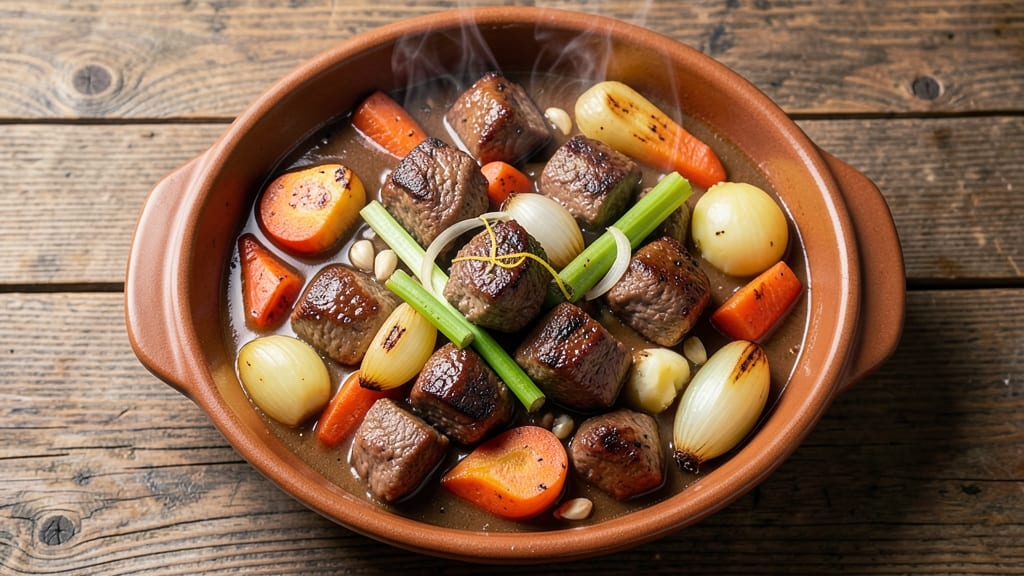
This Austrian beef stew recipe brings the hearty, slow-braised tradition of Tafelspitz to your kitchen, where tender beef and aromatic root vegetables simmer in a rich, spiced broth until every bite is melt-in-your-mouth perfection.
The secret lies in the low-and-slow cooking method, which transforms tough cuts into succulent, fork-tender pieces while developing deep, caramelized flavors from paprika, thyme, and a touch of caraway.
I’ve refined this recipe over years of testing, ensuring the balance of sweet and savory notes that define Austrian comfort food—no shortcuts, just authentic results.
The foundation of this stew is a deep, flavorful broth built from red wine, dark beer, and beef stock, which infuses the beef and vegetables with layers of complexity. Root vegetables like carrots, parsnips, and celery add natural sweetness and texture, while bay leaves and peppercorns lend subtle earthiness.
The key technique? Browning the beef deeply before adding liquid to create a rich, sticky Einbrenner (German-style fond) that forms the base of the stew. This step alone elevates the dish from ordinary to extraordinary, delivering a depth of flavor you won’t find in quick-cooked versions.
By the time it’s done, you’ll have a steaming bowl of velvety stew where the beef falls apart at the touch of a fork, and the broth clings to every vegetable like a silky embrace.
The aroma alone—warm spices, caramelized edges, and the faint tang of wine—will have everyone gathered around the table. This isn’t just a meal; it’s a weeknight celebration that feels like a homecoming, especially when paired with crusty bread to soak up every last drop of that precious, savory liquid.
Whether you’re serving a family dinner or hosting a gathering, this stew scales beautifully and tastes even better the next day. The beauty of Austrian cuisine lies in its simplicity and heartiness, and this recipe delivers both without fuss. Let’s get started—your taste buds (and leftovers) will thank you.
Ingredients for austrian beef stew
Sixteen ingredients, one unforgettable stew—where rich beef and aromatic roots meld into velvety perfection.
| Ingredient | Amount | Notes |
|---|---|---|
| Beef Chuck Roast 🥩 | 3 lb | Cut into 1.5-inch cubes, trimmed of fat |
| Yellow Onions 🧅 | 2 whole | Peeled, cut into 1-inch chunks |
| Carrots 🥕 | 4 whole | Peeled, cut into 1-inch chunks |
| Parsnips 🥕 | 2 whole | Peeled, cut into 1-inch chunks |
| Celery Stalks 🧄 | 4 whole | Trimmed, cut into 1-inch chunks |
| Garlic Cloves 🧄 | 6 cloves | Peeled, smashed with side of knife |
| Smoked Paprika 🌶️ | 2 tbsp | Hungarian variety preferred |
| Ground Caraway Seeds 🌿 | 1 tsp | Freshly ground for authentic flavor |
| Fresh Thyme 🌿 | 2 sprigs | Stems removed, leaves stripped |
| Bay Leaves 🍃 | 2 whole | Dried or fresh, standard size |
| Black Peppercorns 🌶️ | 1 tsp | Crushed lightly in mortar |
| Dry Red Wine 🍷 | 1 cup | Bold variety like Cabernet Sauvignon |
| Dark Beer 🍺 | 1 cup | Stout or porter preferred |
| Beef Stock 💧 | 4 cups | Homemade or high-quality store-bought |
| Tomato Paste 🍅 | 2 tbsp | Squeeze tube or canned |
| Olive Oil 🫒 | 2 tbsp | Extra-virgin for browning |
| Salt 🧂 | 1 ½ tsp | Diamond Crystal preferred |
| All-Purpose Flour 🌾 | 1 tbsp | For thickening if needed |
The beef is non-negotiable here. Chuck roast with good marbling is your best bet—it stays tender while others turn tough. Costco or Whole Foods carry it pre-cut, saving you time. If you're buying a whole roast, ask the butcher to cube it for you. The root vegetables? Organic carrots and parsnips from the store's produce section (not the pre-cut bagged ones) have better flavor. For the paprika, Penzeys Hungarian Smoked is worth the splurge—it's the real deal, not the generic grocery store stuff. Fresh thyme is ideal, but if you're using dried, half the amount works perfectly.
No red wine? Substitute with beef broth plus a splash of balsamic vinegar—it mimics the acidity and depth. Short on dark beer? Stout coffee or even more beef broth keeps the richness. The tomato paste can be skipped entirely if you're avoiding it, but it adds that subtle sweetness. For the caraway seeds, if you can't find pre-ground, toast whole seeds in a dry pan for 30 seconds first—it intensifies the flavor. The beef stock? Homemade is best, but Kitchen Basics or Pacific Foods brands are solid store-bought options. Don't use vegetable stock—this needs that deep meaty flavor.
This stew gets better with time—plan to make it a day ahead if possible. Store in an airtight container in the fridge for up to 5 days, or freeze portions for 3 months. The broth thickens as it cools, so you can always add a splash of water or stock when reheating. For serving, I love crusty sourdough bread to soak up every last drop. The leftovers? Even more delicious—just reheat gently on the stove with a splash of water or broth to loosen everything up.
Why You'll Love This Recipe
- One-Pot Magic: I swear by this recipe because it’s literally dump-and-go after the initial sear. Brown that chuck roast, toss in the chopped veggies—onions, carrots, parsnips, celery—cover with broth, and let it slow-cook. No extra pans, no fuss, just deep, rich flavor with almost no effort.
- Deep, Savory Crust: The secret’s in the caramelized onions and that beef chuck—tender on the inside, with a crust so rich it’ll make you groan. Between us, the first bite is always the best, and it’s the kind of flavor that lingers long after you’re done.
- Weeknight to Dinner Party: This stew is my go-to for lazy Tuesdays and when I’m hosting. Serve it over crusty bread with a side of dumplings, or pack it in jars for a picnic—it’s hearty enough for a crowd but simple enough for a quiet night in.
- Budget-Friendly Feast: A pound of chuck roast and a handful of root veggies stretch into six servings without breaking the bank. Honestly, the leftovers are even better the next day—richer, deeper—so you’re basically getting two meals for the price of one.
Step-by-step instructions for slow-braised Austrian beef stew
Here's how to create a rich, deeply flavorful Austrian beef stew with tender beef and aromatic root vegetables.
Prepare and Sear the Beef
Pat the 3 lb beef chuck roast dry with paper towels and cut it into 1.5-inch cubes, trimming any excess fat. This size ensures even cooking and maximum tenderness. In a large Dutch oven, heat 2 tablespoons olive oil over medium-high heat until shimmering.
Working in batches to avoid crowding, sear the beef cubes on all sides until they develop a deep golden brown crust—about 2-3 minutes per side. This step is crucial as it builds flavor through the Maillard reaction. Transfer the browned beef to a plate as you work. If the oil starts smoking excessively, reduce the heat slightly but maintain the sear.
Build the Flavor Base with Vegetables and Spices
In the same Dutch oven, add the 2 whole yellow onions, 4 whole carrots, 2 whole parsnips, and 4 whole celery stalks, all cut into 1-inch chunks. Cook for 5-7 minutes, stirring occasionally, until the vegetables begin to soften and the onions turn translucent. Add the 6 cloves garlic, smashed with the side of a knife, and cook for an additional 30 seconds until fragrant.
Stir in the 2 tablespoons smoked paprika, 1 teaspoon ground caraway seeds, 1 teaspoon crushed black peppercorns, 2 sprigs fresh thyme, and 2 whole bay leaves. Cook for 1 minute, allowing the spices to toast slightly and release their aromatic oils. This step ensures the spices are fully integrated into the base of your stew.
Deglaze and Simmer the Stew
Pour in the 1 cup dry red wine and scrape up any browned bits from the bottom of the Dutch oven with a wooden spoon. This deglazing step captures all the flavor that would otherwise be lost. Let the wine simmer for 2-3 minutes until it reduces by half and the alcohol burns off.
Add the 1 cup dark beer, 4 cups beef stock, and 2 tablespoons tomato paste, stirring to combine. Bring the mixture to a gentle simmer, then return the seared beef to the pot. The liquid should just cover the beef—if it doesn't, add a splash of water or stock. Partially cover the Dutch oven with a lid and transfer it to the oven.
Braise Until Tender
Braise the stew in a preheated 325°F oven for 2.5 to 3 hours, or until the beef is fork-tender and easily pulls apart. The vegetables should be soft but still hold their shape. Here's the thing—don't peek or stir the stew during this time. Each time you open the lid, you lose heat and moisture, which can make the beef tough.
About 30 minutes before the stew is done, sprinkle the 1.5 teaspoons salt and 1 tablespoon all-purpose flour over the top. Stir gently to coat the beef and vegetables. The flour will help thicken the stew slightly and create a silky texture. If the stew is too thick, add a splash of water or stock to reach your desired consistency.
Finish and Serve
Once the beef is tender, remove the stew from the oven and let it rest for 10-15 minutes. This resting period allows the flavors to meld and the juices to redistribute throughout the beef. Skim off any excess fat that has risen to the surface with a spoon, if desired.
Taste and adjust the seasoning with additional salt or pepper if needed. Ladle the stew into warm bowls, garnishing each serving with a sprinkle of fresh thyme leaves for a pop of color and freshness. Serve with crusty bread or buttered noodles to soak up every last drop of that rich, flavorful broth.
Pro Tips For Making Austrian Beef Stew
- SEAR THE CHUCK ROAST: Don’t rush this—get that beef browned deep and crusty in batches if needed. I used to skip this step to save time, but those few extra minutes of high heat make the stew taste richer and more complex. Use a heavy pot and let it sit undisturbed for 3-4 minutes per side.
- CHOP VEGETABLES UNIFORM: Cut onions into ½-inch chunks, carrots/parsnips into ½-inch rounds, and celery into ½-inch pieces. Uneven sizes mean some veggies turn mushy while others stay crunchy—no one wants that. A sharp knife and steady hand make this faster than you’d think.
- SIMMER LOW AND SLOW: After browning, reduce heat to a bare simmer—just enough to see tiny bubbles. Too much heat = tough meat and a watery stew. Cover loosely and let it cook for 2.5–3 hours, stirring occasionally. Patience here is non-negotiable.
- ADD PARSNIPS LAST: Parsnips take longer to soften than carrots, so toss them in 30 minutes before the stew is done. I learned this the hard way when my first batch had rock-hard parsnips—now I adjust timing based on their size. They’ll thank you with perfect tenderness.
Wine and beer pairings for this dish
Red Wine Pairings
Austrian beef stew thrives with bold, medium-bodied red wines that complement its deep, spiced flavors. I always reach for a Cabernet Sauvignon from Austria’s Neusiedlersee region—its dark fruit notes and subtle earthiness mirror the stew’s richness.
A Pinot Noir from nearby Burgenland also works beautifully, offering red berry undertones that cut through the beef’s heartiness. 🍷
Avoid overly tannic wines like Cabernet Sauvignon from Napa—they’ll clash with the stew’s smooth texture. Instead, opt for wines with 12-14% ABV and balanced acidity. If you can’t find Austrian wines, a California Zinfandel or Spanish Garnacha delivers similar depth and warmth.
Beer Pairings
Dark beers are a natural match for this stew, especially Austrian stouts like Stiegl Brau’s Schwarzbier or Ottakringer’s Export. Their roasted malt and caramel notes harmonize perfectly with the paprika and caraway.
For a lighter option, try a German Dunkel—its malty sweetness contrasts nicely with the stew’s savory depth. 🍺
If you prefer craft beer, a Belgian Dubbel (like Westmalle’s 8) adds fruity complexity that elevates the dish. Avoid IPAs or hoppy beers—they’ll overpower the stew’s delicate spices. Serve the beer slightly chilled (50-55°F) to enhance its malt-forward profile.
White Wine Surprises
Don’t overlook white wines—an off-dry Riesling from Austria’s Wachau region adds a refreshing contrast. Its honeyed notes balance the stew’s richness, especially when served slightly chilled (48-52°F). A German Spätlese also works, with its bright acidity cleansing the palate between bites. ✨
For a bold twist, try a Chardonnay with oaked character (like a California Monticello), but avoid buttery styles—they’ll weigh down the dish. The key is acidity: wines with 6-8 g/L acidity brighten the stew’s depth without competing.
Non-Alcoholic Options
For a mocktail, mix sparkling apple cider with a splash of ginger beer and a squeeze of lemon. The effervescence cuts through the stew’s richness, while the ginger adds warmth. Chill to 40-45°F for the best experience. 💛
Herbal teas like rooibos with a cinnamon stick also complement the stew’s spices. Brew strong and serve warm—it’s comforting and pairs surprisingly well with the beef’s depth. Avoid overly sweet options; bitterness or earthiness works best.
Nutrition facts
Frequently asked questions
Can I use a different cut of beef for this Austrian beef stew?
While chuck roast is ideal for its marbling and tenderness, you can substitute with brisket or short ribs (cut into chunks). Avoid lean cuts like sirloin—they’ll dry out during the long braising. If using short ribs, reduce the cooking time by 30-45 minutes since they’re already tenderized.
Why does my stew taste bland after braising?
Bland stews usually result from skipping the browning step or not deglazing properly. Always sear the beef deeply to build flavor, and scrape up all browned bits when adding wine. For extra depth, add 1/2 teaspoon soy sauce or 1 teaspoon Worcestershire sauce with the broth. The wine and beer should also be full-bodied—avoid light varieties.
How can I make this stew in a slow cooker?
Sear the beef and vegetables as directed, then transfer everything to a 6-quart slow cooker. Add all liquids and spices, then cook on LOW for 8-9 hours (or HIGH for 5-6 hours). The slow cooker’s gentle heat mimics oven braising. For best results, use beef stock instead of water, and add a 1/2 cup red wine at the end to brighten flavors.
What’s the best way to reheat leftovers?
Reheat gently on the stove over medium-low heat for 10-15 minutes, stirring occasionally and adding 2-3 tablespoons broth or water to restore moisture. Avoid microwaving—it makes the beef tough. For extra richness, stir in 1 teaspoon butter or 1 tablespoon cream while reheating. Leftovers taste even better the next day!
Can I make this stew vegetarian?
While traditional Austrian beef stew relies on meat, you can adapt it with mushrooms (like portobellos) or hearty beans (like cannellini) as the base. Replace beef stock with vegetable stock, and add 1 teaspoon liquid smoke for depth. The root vegetables and spices will still shine, but the texture will be softer. Serve with crusty bread to soak up the broth.