
Main Courses
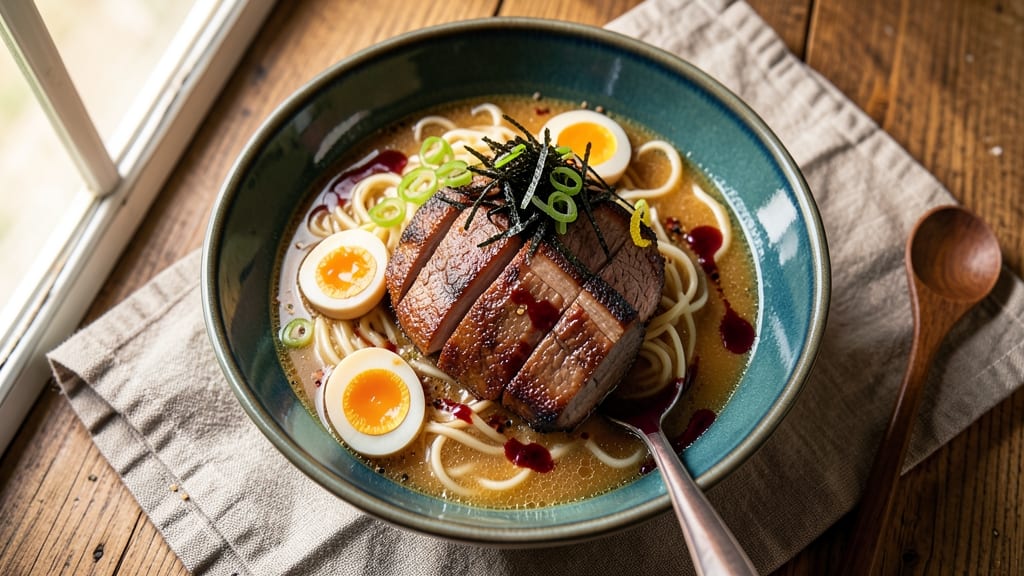
This authentic beef ramen recipe delivers the perfect marriage of rich tonkotsu broth and tender, wok-seared beef—just like your favorite Tokyo ramen shop. The secret lies in slow-simmered pork bones for a velvety base, perfectly marinated beef that develops deep umami flavor, and a crispy crust achieved through quick searing.
I’ve refined this recipe over years of testing, balancing traditional techniques with home-cook practicality.
The foundation is a silky, collagen-rich broth built from pork bones, garlic, and ginger, simmered for hours until every drop of flavor is extracted. Meanwhile, the beef is marinated in a blend of soy sauce, mirin, and sake, then seared in a hot wok for that signature crispy crust.
Every element—from the chewy ramen noodles to the classic toppings like ajitama (marinated eggs) and menma (bamboo shoots)—comes together to create a bowl that’s both comforting and deeply satisfying.
What sets this recipe apart is the attention to detail: the golden crust on the beef, the perfectly balanced broth, and the harmony of textures from the noodles to the toppings.
Whether you’re making it for a special dinner or a cozy night in, this ramen delivers the authentic experience you’ve been craving. The result is a bowl that’s rich, flavorful, and impossible to resist.
For those who love tradition but want a modern twist, consider adding a drizzle of truffle oil or a sprinkle of spicy miso for extra depth. The recipe scales effortlessly, so you can serve it to a crowd or save leftovers for another night.
Let’s get started on creating your perfect bowl of ramen.
Ingredients for authentic beef ramen
Pantry staples meet specialty ingredients for ramen that tastes like Tokyo.
| Ingredient | Amount | Notes |
|---|---|---|
| Pork Bones (Leg or Foot) 🦴 | 3 lb | Split for faster simmering |
| Beef Chuck Roast 🥩 | 1 ½ lb | Cut into 1-inch cubes |
| Japanese Short-Grain Noodles 🍜 | 14 oz | Dried, or 7 oz per package |
| Soy Sauce 🥄 | ½ cup | Japanese-style preferred |
| Mirin 🍶 | ¼ cup | Sweet rice wine |
| Sake 🍶 | ¼ cup | Dry variety preferred |
| Garlic Cloves 🧄 | 8 cloves | Minced for marinade |
| Fresh Ginger 🌿 | 2 tbsp | Finely grated, peeled |
| Sesame Oil 🫒 | 1 tbsp | Toasted, for aroma |
| Ajitama (Marinated Eggs) 🥚 | 4 whole | Store-bought or homemade |
| Menma (Bamboo Shoots) 🌱 | 8 oz | Canned, drained |
| Green Onions 🧅 | 6 whole | Thinly sliced, for garnish |
| Sesame Seeds 🌾 | 1 tbsp | Toasted for garnish |
| Vegetable Oil 🫒 | ½ cup | High smoke point |
| Dried Shiitake Mushrooms 🍄 | 4 whole | Rehydrated, sliced |
The pork bones are non-negotiable for that signature tonkotsu richness. Look for leg or foot bones at Asian markets—they yield the most collagen. If your grocery store doesn't carry them, Costco or H Mart always have them in stock. Split the bones yourself for faster simmering, or ask the butcher to do it. For the beef, chuck roast gives you that melt-in-your-mouth texture—sirloin stays too firm. Cut into even 1-inch cubes so they cook uniformly. The Japanese short-grain noodles? Nissin or Maruchan are solid brands, but if you want to splurge, Sapporo Ichiban takes it to the next level.
No mirin? Substitute 1 tbsp sugar plus 1 tbsp dry sake—it's not identical, but close. Fresh ginger is ideal, but dried works at half the amount. If you can't find ajitama, marinate hard-boiled eggs in soy sauce and mirin for 24 hours. The shiitake mushrooms add umami depth—if they're dried, rehydrate them in hot water for 20 minutes. For the oil, avocado or grapeseed oil works better than olive oil for high-heat searing. And trust me on the sesame oil—just a teaspoon in the broth at the end elevates everything.
Broth keeps for 5 days in the fridge or 3 months frozen—portion it into containers for easy reheating. The raw beef marinade stays fresh for 2 days covered in the fridge. Noodles? Store them in an airtight container to prevent drying out. The marinated eggs and bamboo shoots last 1 week refrigerated. Pro tip: Make a double batch of broth—it's even better the next day as flavors meld.
Why You'll Love This Recipe
- No-Chop Start: The pork bones and beef chuck do most of the work—just sear, simmer, and let them break down. Honestly, the hardest part is waiting for that rich broth to develop, but it’s worth every minute.
- Umami Bomb: That combo of soy sauce and mirin? It’s where the magic happens—deep, savory, and just slightly sweet without being cloying. The beef chuck melts into tender strands, while the pork bones add a collagen-rich depth you won’t find in instant ramen.
- Leftovers That Shine: This broth gets better the next day, so I always make extra. Reheat it gently, toss in fresh noodles, and boom—another satisfying meal with zero extra effort. (Yes, even on a Tuesday night.)
- Budget-Friendly Luxury: Pork bones and chuck are affordable cuts that turn into something restaurant-worthy. Between us, this is how I feed my whole family for under $15—no takeout needed. The noodles stretch, the broth stretches, and so does my wallet.
Step-by-step instructions for authentic beef ramen
Here's how to craft a rich, layered ramen where wok-seared beef meets deep umami broth.
Prepare the Pork Bones and Beef for Maximum Flavor
Split the 3 lb pork bones (leg or foot) into smaller pieces using a heavy cleaver or meat mallet. This increases surface area for better flavor extraction during simmering. Pat them dry with paper towels to remove any surface moisture, which helps create a deeper, more concentrated broth.
Cut the 1.5 lb beef chuck roast into 1-inch cubes—this size ensures even cooking while maintaining tenderness. Place both the pork bones and beef cubes in a large bowl and coat them with 0.5 cup soy sauce, 0.25 cup mirin, and 0.25 cup sake. Add the 8 cloves minced garlic and 2 tbsp finely grated ginger. Mix well to ensure every piece absorbs the marinade. Let this sit at room temperature for 30 minutes while you prepare the rest of your ingredients.
Build the Broth with Layered Depth
Heat 0.5 cup vegetable oil in a 6-quart pot over medium-high heat until shimmering. Add the marinated pork bones and beef in a single layer, letting them sear undisturbed for 3-4 minutes until a deep golden crust forms. This step is critical—it develops the Maillard reaction, creating complex flavors that will infuse the broth.
Add 4 whole dried shiitake mushrooms (rehydrated and sliced) and 8 oz menma (bamboo shoots) to the pot. Pour in 8 cups cold water and bring to a rolling boil. Once boiling, reduce heat to low and skim off any foam that rises to the surface for the first 10 minutes. This ensures a clear, clean broth. Simmer uncovered for 4 hours, maintaining a gentle simmer. The broth should reduce by about one-third, intensifying its flavor.
Wok-Sear the Beef for Crust and Tenderness
While the broth simmers, heat a wok or cast-iron skillet over high heat until smoking hot. Add 1 tbsp sesame oil and swirl to coat. Working in batches, add the beef cubes and sear for 1-2 minutes per side until they develop a deep caramelized crust. Remove the beef and set aside—it will finish cooking in the hot broth.
Return the beef to the pot with the broth and simmer for an additional 30 minutes. This step ensures the beef is fork-tender while absorbing the rich, layered flavors of the broth. Taste and adjust seasoning with additional soy sauce or salt if needed. The broth should be deeply umami, with a balance of sweetness from the mirin and acidity from the sake.
Assemble the Ramen with Textural Harmony
Cook the 14 oz Japanese short-grain noodles according to package instructions until al dente. Drain and rinse briefly under cold water to stop the cooking process, then divide them equally among 4 bowls. Ladle the hot broth over the noodles, ensuring each serving gets a generous amount of both broth and beef.
Arrange 1 whole ajitama (marinated egg) on each bowl, followed by 2 slices of green onions. Sprinkle with 1 tbsp toasted sesame seeds for a nutty finish. The contrast of the silky noodles, tender beef, crispy ajitama, and aromatic broth creates a symphony of textures and flavors in every bite.
Pro Tips For Making Authentic Beef Ramen
- BLISTER THE BONES FIRST: Char pork bones (leg or foot) over high heat until the skin blackens in spots—this unlocks deeper collagen flavor. I used to skip this step, thinking it was just about browning, but those blackened patches add a smoky depth that no slow simmer alone can match.
- CUT CHUCK IN CHUNKS: Slice beef chuck into 1.5-inch cubes, not thin strips—this ensures even cooking and prevents the broth from turning greasy. Thin slices render too fast and leave you with a pool of fat instead of rich, gelatinous meat.
- SKIP THE BOILING NOODLES: Cook noodles in the hot broth at the very end, not in boiling water—this keeps them from turning mushy and lets them absorb the full flavor. Yes, it adds 5 minutes, but the texture makes all the difference.
- BALANCE SOY AND MIRIN: Use a 3:1 ratio of soy sauce to mirin (e.g., 3 tbsp soy to 1 tbsp mirin) to avoid an overly salty or sweet broth. I learned this after tasting a batch where I doubled the mirin—it tasted like dessert, not ramen.
Best sauces and condiments for these flavors
Classic Tonkotsu Base
Start with a tonkotsu broth foundation—simmer 3 lb pork bones for 4 hours until collagen dissolves into a creamy, velvety texture. The secret? Skim foam for the first 10 minutes to remove impurities, then maintain a gentle simmer at 180-190°F.
Add 4 rehydrated shiitake mushrooms and 8 oz menma during the final 30 minutes to infuse umami depth. This rich base is the heart of your ramen, balancing the bold beef flavors. 🥄
Spicy Miso Kick
For a modern twist, stir 1 tbsp white miso paste and 1 tsp gochujang into the hot broth just before serving. This adds a sweet-heat contrast that cuts through the richness. I recommend Miso Master white miso for its clean, fermented flavor.
Adjust to taste—start with ½ tsp if you're sensitive to spice. The miso also introduces a nutty complexity that pairs beautifully with the beef. 🌶️
Sesame-Garlic Oil Drizzle
Heat 1 tbsp toasted sesame oil with 2 minced garlic cloves until fragrant, then drizzle ½ tsp over each bowl before adding toppings. This adds a nutty, aromatic punch that enhances the beef's crust.
For extra depth, finish with ½ tsp truffle oil—just a few drops elevate the dish to restaurant-quality luxury. Store-bought truffle oil works fine, but fresh is ideal if you're feeling adventurous. ✨
Chili Crisp Topping
For a crunchy, spicy contrast, mix 2 tbsp chili crisp (like Lao Gan Ma) with 1 tsp soy sauce and drizzle over the bowl. The fiery, oily texture contrasts perfectly with the silky broth and tender beef.
Sprinkle lightly—this topping is potent! If you can't find chili crisp, substitute with crushed red pepper flakes mixed into the broth during the final 5 minutes of simmering. 🔥
Yuzu Kosho Finish
Brighten the bowl with ½ tsp yuzu kosho (citrus-chili paste) right before serving. This zesty, slightly spicy paste cuts through the richness and adds a fresh, vibrant note. If you can't find yuzu kosho, mix ½ tsp sriracha with ½ tsp grated yuzu zest (or lemon zest in a pinch).
The acidity balances the umami perfectly, making every bite feel fresh and dynamic. 💫
Nutrition facts
Frequently asked questions
Can I substitute chicken or pork broth for the pork bone broth?
While you can use chicken or pork broth for a quicker version, it won't have the same rich, creamy texture that comes from slow-simmered pork bones. For authenticity, stick with pork bones—they release collagen that creates that signature velvety mouthfeel. If you're short on time, try blending leftover pork bone broth with a splash of coconut milk for a similar richness.
How do I get that perfect crispy crust on the beef?
The key is high heat and patience! Sear the beef in a smoking-hot wok or cast-iron skillet with just 1 tbsp sesame oil until it develops a deep golden-brown crust—about 1-2 minutes per side. Work in batches so the pan doesn't lose heat. The crust forms through the Maillard reaction, so don't rush it. A meat thermometer should read 135°F before removing it from the pan.
Can I make this ahead of time?
The broth can be made 5 days ahead and stored in the fridge, or 3 months frozen. The beef marinade keeps for 2 days in the fridge. For assembly, cook the noodles fresh and reheat the broth gently before serving. The flavors actually improve overnight as they meld. Just avoid storing the assembled ramen—it's best enjoyed fresh with crisp toppings.
What if I don't have mirin or sake?
No problem! For mirin, mix 1 tbsp sugar plus 1 tbsp dry sake (or dry white wine). For sake, use dry white wine or dry sherry in equal amounts. The dish will still be delicious—these substitutes just add slightly different depth. If you're avoiding alcohol entirely, use apple juice plus 1 tsp rice vinegar for a similar sweet-tangy balance.
How do I adjust the spice level?
Start with the base recipe, then customize! For heat, add ½ tsp gochugaru (Korean chili flakes) to the broth or drizzle chili crisp on top. For cooling contrast, mix ½ tsp yuzu kosho or a squeeze of lemon juice. The key is balance—start with small amounts and adjust to taste. The beef's richness pairs beautifully with both spicy and tangy elements.