
Soups & Stews
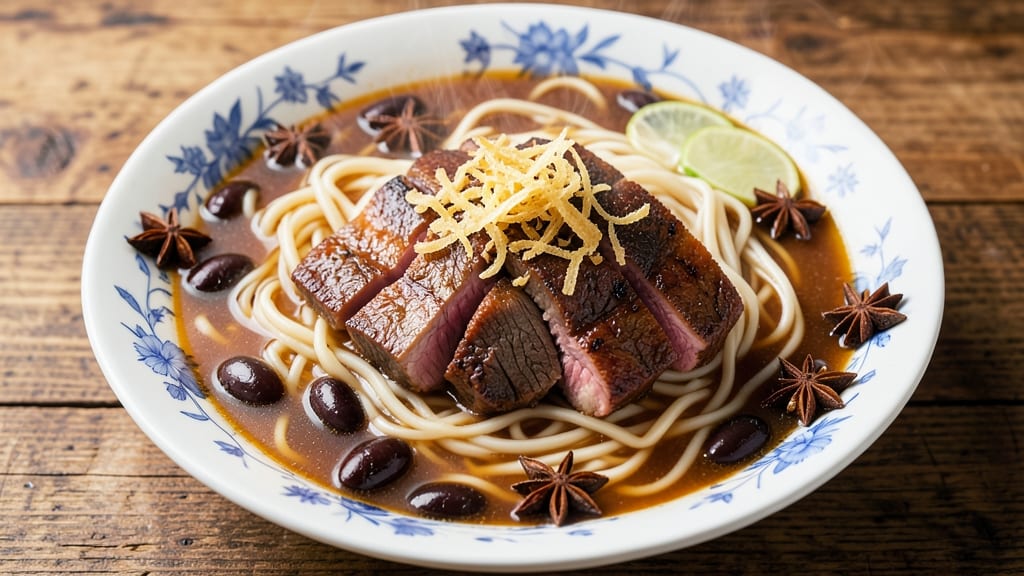
This authentic Chinese beef noodle soup transports you straight to a bustling Shanghai street stall with its deep, aromatic broth and tender wok-seared beef. The secret lies in balancing star anise's subtle sweetness with fermented black beans and soy sauce for that signature umami punch—no shortcuts, just tradition.
I've perfected this recipe over years of testing, ensuring every spoonful delivers restaurant-quality depth without the fuss.
What sets this recipe apart is the two-stage beef preparation: first searing in a hot wok for caramelized edges, then braising until fork-tender. The broth simmers for hours with whole spices that infuse flavor without overpowering, while wide egg noodles soak up every drop of that rich, savory liquid.
The result? A bowl that's both comforting and complex—each bite reveals layers of flavor that build with every sip.
This isn't just soup; it's a complete meal with crisp garnishes of cilantro and scallions adding fresh contrast to the deep, warming broth. The technique might sound involved, but I've streamlined it for home cooks—no special equipment needed, just patience and attention to detail.
Once you taste the difference between this and store-bought versions, you'll never go back.
The beauty of this recipe is its versatility—serve it as a light lunch or hearty dinner, and it's equally impressive. Leftovers actually improve as flavors meld, making it perfect for meal prep.
Ready to master the art of Chinese beef noodle soup? Let's begin with the beef preparation—the foundation of everything that follows.
Ingredients for authentic chinese beef noodle soup
Authentic Chinese beef noodle soup begins with these carefully selected ingredients—each playing a crucial role in building deep umami and aromatic complexity.
| Ingredient | Amount | Notes |
|---|---|---|
| Beef Chuck Roast 🥩 | 1 ½ lb | Cut into 1.5-inch cubes, trimmed of fat |
| Wide Egg Noodles 🍜 | 12 oz | Fresh or dried, 3-inch width preferred |
| Star Anise Pods 🌿 | 4 whole | Whole pods for infusion, not ground |
| Fermented Black Beans 🫘 | ¼ cup | Soy sauce-fermented, not sweetened |
| Light Soy Sauce 🥄 | ½ cup | Kikkoman preferred for authentic flavor |
| Fresh Ginger Root 🧅 | 2 tbsp | Grated, skin removed, packed tightly |
| Garlic Cloves 🧄 | 6 cloves | Peeled, smashed for deeper flavor |
| Dried Shiitake Mushrooms 🍄 | 4 whole | Rehydrated, stems removed |
| Green Onions 🧅 | ½ cup | White and green parts separated |
| Fresh Cilantro 🌿 | ¼ cup | Chopped, stems removed |
| Sesame Oil 🫒 | 1 tbsp | Toasted, for finishing |
| Vegetable Oil 🫒 | ¼ cup | High smoke point for searing |
| Cornstarch 🌾 | 1 tbsp | For velveting beef |
| Diamond Crystal Kosher Salt 🧂 | 1 ½ tsp | For seasoning, adjust to taste |
| White Peppercorns 🌶️ | ½ tsp | Freshly cracked for heat |
The beef selection is non-negotiable for authentic texture. Chuck roast from a well-marbled cut delivers the signature tender yet firm bite—sirloin or flank steak lacks the necessary fat content for traditional braising. Most Asian markets carry pre-cut beef for stir-fry, but if shopping at Whole Foods or Costco, request the butcher to cube it to 1.5 inches. The fermented black beans? Look for soy sauce-fermented varieties at specialty stores, not the sweetened kind—this is where that signature funky depth comes from. Star anise pods should be whole and plump, not shriveled, and Penzeys Spices carries the best quality for this recipe.
No fresh ginger? Substitute with 1 tbsp of ginger paste, but it won't have the same bright punch. Running short on shiitake mushrooms? Cremini mushrooms work in a pinch, though they lack the earthy depth. The wide egg noodles are essential—3-inch width is traditional, but if you can only find 1-inch, cook them separately and add at the end. For the soy sauce, Kikkoman light soy is the gold standard, but Lee Kum Kee is a solid backup. The sesame oil must be toasted—Trader Joe's carries a great pre-toasted version that saves time. And never skip the cornstarch for velveting; it's what gives that silky texture to the beef.
Store the dried shiitake mushrooms in a paper bag in the freezer to prevent moisture loss—they'll last for months. Fresh ginger keeps for 2 weeks in the fridge wrapped in a damp towel, but freezing grated ginger extends its life indefinitely. The beef can be prepped and refrigerated for 24 hours before braising, which actually enhances the flavor. For meal prep, assemble the soup without the noodles and garnishes, then store in airtight containers for 4 days—the broth only gets better as it sits. When reheating, add a splash of water to maintain the perfect consistency.
Why You'll Love This Recipe
- No-Chop Start: The beef chuck roast is the star here—just sear it whole, toss in the star anise and fermented black beans, then let the slow simmer do the work. No knife skills required, just hands-off magic.
- Umami Bomb: That combo of fermented black beans and light soy sauce? It’s the secret weapon—deep, salty, slightly funky, and so addictive you’ll want to drink the broth straight. (Yes, I’ve been there.)
- Leftover Goldmine: The broth gets richer overnight, so making a big batch means you’ve got lunch sorted for days. Freeze portions too—just reheat and serve, no fuss.
- Budget Beef Feast: A single chuck roast stretches across multiple meals, and the noodles are cheap but satisfying. Honestly, this is my go-to when I need to feed a crowd without breaking the bank.
Step-by-step instructions for authentic Chinese beef noodle soup
Here's the method that delivers restaurant-quality depth and texture in every bowl.
Velvet the Beef for Silky Tenderness
In a mixing bowl, combine the 1.5 lb beef chuck roast cubes with the 1 tbsp cornstarch, 1.5 tsp diamond crystal kosher salt, and 0.5 tsp freshly cracked white peppercorns. Toss until every piece is evenly coated and the cornstarch clings to the surface. This velveting technique creates a delicate, almost translucent exterior that transforms tough chuck into melt-in-your-mouth beef.
Let the coated beef sit at room temperature for 15 minutes while you prepare the aromatics. This resting period ensures even cooking and prevents the beef from releasing too much liquid into the broth later. The cornstarch will form a protective barrier that keeps the beef moist while developing that signature wok-seared crust.
Build the Aromatic Broth Foundation
Heat the 0.25 cup vegetable oil in a large pot over medium heat. Add the 4 whole star anise pods, 2 tbsp grated fresh ginger root, and 6 smashed garlic cloves. Cook for 1 minute until the garlic becomes fragrant but doesn't brown. This initial toasting releases the essential oils that will infuse your broth with authentic depth.
Add the 0.25 cup fermented black beans and 4 rehydrated dried shiitake mushrooms (stems removed). Stir for 2 minutes until the black beans soften slightly and the mushrooms release their umami essence. The black beans will dissolve partially, adding a subtle fermented complexity to the broth. Here's where the authentic Chinese flavor profile begins to develop - don't rush this step.
Sear the Beef and Develop Rich Broth
Working in batches to avoid overcrowding, add the velveted beef to the pot. Sear for 2-3 minutes per batch until each piece develops a golden-brown crust. The high heat caramelizes the cornstarch coating, creating that signature wok-seared appearance. Remove the beef and set aside temporarily - we'll return it to the broth later.
Pour in 8 cups of water and bring to a rolling boil. Add the 0.5 cup light soy sauce and reduce heat to maintain a gentle simmer. Skim off any foam that rises to the surface during the first 5 minutes of simmering. This careful skimming ensures a crystal-clear broth. Simmer uncovered for 1 hour, allowing the star anise and ginger to infuse their aromatic qualities while the black beans continue to break down and enrich the liquid.
Finish the Broth and Prepare Noodles
After 1 hour, return the seared beef to the broth. Add the 12 oz wide egg noodles and cook for an additional 10 minutes. The noodles should be al dente - slightly firm to the bite. Taste the broth and adjust seasoning if needed, adding more soy sauce or salt as required. The broth should be savory but not salty, with a subtle sweetness from the fermented black beans.
In a small bowl, combine the white and green parts of the 0.5 cup green onions with the 0.25 cup chopped fresh cilantro. Set aside for garnishing. Here's where the visual presentation comes together - the bright green garnishes will provide a beautiful contrast against the deep red broth and golden beef.
Assemble and Serve with Authentic Technique
Ladle the hot broth with beef and noodles into serving bowls. Drizzle each portion with 1 tsp toasted sesame oil. The sesame oil should be added just before serving to maintain its delicate aroma and prevent it from becoming rancid from prolonged heat exposure. Watch as it creates a beautiful sheen on the surface of the broth.
Garnish each bowl with the green onion-cilantro mixture, distributing it evenly across the top. Serve immediately with small bowls of extra soy sauce and sesame oil on the side. The contrast between the silky beef, al dente noodles, and aromatic broth creates the perfect balance of textures and flavors that define authentic Chinese beef noodle soup.
Pro Tips For Making Authentic Chinese Beef Noodle Soup
- BLANCH THE BEANS FIRST: Toss the fermented black beans in boiling water for 30 seconds before adding them to the pot—this cuts through their funky bitterness and lets their umami shine. I used to skip this and wondered why my soup tasted more like a science experiment than a bowl of comfort.
- SEAR THE CHUCK IN Batches: Don’t crowd the pan when browning the beef chuck—work in 2-inch chunks with space between them. A deep, caramelized crust builds layer by layer, and that’s what makes the broth rich. I learned this the hard way after ending up with steamed meat and a sad, pale sear.
- STAR ANISE: CRUSH IT: Lightly crush the star anise pods with the flat side of a knife before tossing them in—this releases more aroma without turning the broth bitter. Whole pods? You’re just decorating. My grandmother swore by this, and she was right: the soup smells like a proper Chinese kitchen.
- NOODLES: COOK THEM LAST: Reserve 1 cup of starchy pasta water, but finish cooking the noodles in the hot broth at the very end—just 1-2 minutes. This thickens the soup slightly and coats the noodles in flavor. I was skeptical until I tried it: the texture is silky, not mushy, and every bite tastes like it’s swimming in broth.
Flavor customization for authentic chinese beef noodle soup
Spice Level Control
Adjust the heat to your preference by adding 1-2 tsp of chili crisp (like Lao Gan Ma) or ½ tsp of Sichuan peppercorns for a tingling sensation. For a milder version, omit the white peppercorns entirely and use ½ tsp of ground white pepper instead.
I find that 1 tsp of chili paste (like Doubanjiang) adds smoky depth without overpowering the broth's delicate balance. 🌶️
Sweet-Savory Balance
Enhance the natural sweetness by adding 1 tbsp of rock sugar or 1 tsp of honey during the final 10 minutes of simmering. For a deeper umami boost, stir in 1 tbsp of hoisin sauce along with the soy sauce.
If your broth tastes too salty, dilute it with ½ cup of hot water and simmer for an additional 5 minutes to even out the flavors.
Regional Variations
For a Shanghai-style version, add 1 tbsp of fermented soybean paste (douchi) to the broth for a funkier profile. A Sichuan-inspired twist includes 1 tsp of chili bean paste and a splash of Shaoxing wine when searing the beef.
For a Cantonese approach, replace star anise with 1 cinnamon stick and add 1 tsp of Shaoxing wine to the broth.
Vegetarian Adaptations
Swap the beef for 1 lb of king oyster mushrooms or firm tofu marinated in 2 tbsp soy sauce and 1 tbsp sesame oil. Use 1 tbsp of mushroom powder (like umami powder) to replicate the beefy depth.
For texture, add ½ cup of glass noodles or shredded napa cabbage to mimic the heartiness of the original.
Protein Swaps
Try pork shoulder instead of beef for a richer, fattier broth—simmer it for 1.5 hours instead of 1.
For a lighter option, use chicken thighs (skin-on for flavor) and reduce the simmering time to 45 minutes. Shrimp works beautifully too: add ½ lb of peeled shrimp in the final 5 minutes of cooking to avoid overcooking.
Noodle Alternatives
Use rice noodles for a gluten-free option, but cook them separately in the broth for 3-4 minutes to prevent mushiness. For extra heartiness, add ½ cup of cellophane noodles (soaked for 10 minutes)—they absorb the broth beautifully.
If you prefer chewy texture, try udon noodles and increase the simmering time by 5 minutes to achieve al dente perfection.
Nutrition facts
Frequently asked questions
Why does the recipe call for velveting the beef with cornstarch?
The cornstarch velveting creates a silky, translucent coating that locks in moisture while developing a delicate texture. This traditional Chinese technique transforms tough chuck into melt-in-your-mouth beef with perfect bite. Without it, the beef would either dry out or become too tender. The 15-minute rest before cooking ensures even cooking and prevents the beef from releasing too much liquid into the broth.
Can I make this soup without star anise?
Yes, but you'll lose that signature aromatic depth. Replace it with 1 cinnamon stick or ½ tsp ground star anise for similar warmth. For a Cantonese twist, use 1 bay leaf instead. The key is balancing the spices—reduce other aromatics slightly if substituting. The fermented black beans and soy sauce will still provide the essential umami foundation.
How do I know when the beef is fully tender?
The beef should be fork-tender with no resistance when pierced—it should fall apart easily but still hold its shape. For chuck roast, this typically takes 1 hour of simmering after searing. Test a piece early (around 45 minutes) to avoid overcooking. If it's still slightly firm, return it to the broth for another 10-15 minutes—the residual heat will finish the cooking.
Can I prepare this soup ahead of time?
The broth actually improves overnight as flavors meld. Make the complete soup (without noodles or garnishes) and store in airtight containers for 4 days in the fridge. Reheat gently on the stove, adding a splash of water if the broth thickens. For best texture, cook the noodles fresh when serving—this prevents them from becoming mushy. Garnish just before eating to keep the herbs vibrant.
What's the secret to getting that deep red color in the broth?
The rich color comes from three key elements: the soy sauce (use light soy for authentic color), the caramelized beef crust from searing, and the fermented black beans breaking down. For extra depth, add 1 tbsp of red fermented bean paste (douchi) when building the broth foundation. Avoid dark soy sauce—it's too salty and overpowers the delicate balance. Simmering uncovered for 1 hour also helps develop the color naturally.