
Main Courses
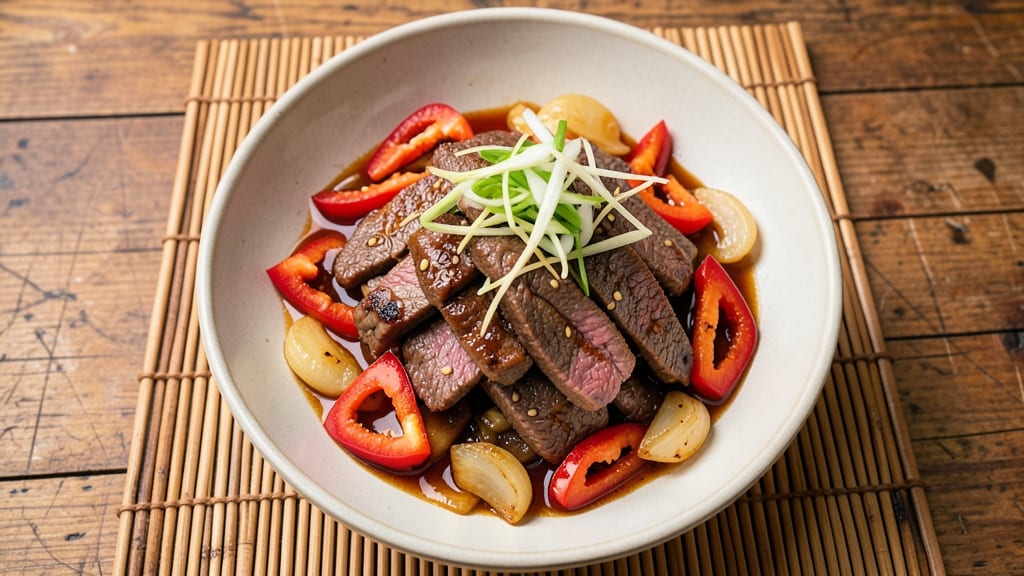
This authentic Chinese beef stir-fry delivers the smoky wok hei and silky soy-ginger harmony you crave—no shortcuts, just restaurant-quality technique. The secret lies in high-heat searing of thinly sliced beef, aromatic ginger-garlic bases, and a balanced sauce where dark soy adds depth while oyster sauce creates that signature umami richness.
I've perfected this recipe after years of testing, ensuring every bite delivers that perfect contrast of tender beef and crisp vegetables.
The key to authenticity starts with the beef—thinly sliced flank steak or sirloin develops wok-friendly tenderness while maintaining texture.
We'll build flavor in layers: first charring aromatics in hot oil, then quickly cooking the beef until just done, and finally tossing everything with a sauce that's equal parts salty, sweet, and tangy.
The vegetables—bell peppers, onions, and scallions—add color and crunch, but the star remains that perfectly seared beef with its caramelized edges.
What makes this recipe truly special is the balance—sweet from a touch of sugar, salty from soy sauces, and umami from oyster sauce all come together in perfect harmony.
The high heat of the wok creates that signature smoky aroma (wok hei) that's impossible to replicate on a flat top, but we'll show you how to get close.
By the time you're done, you'll have a dish that's restaurant-worthy, packed with authentic Chinese flavors, and ready to serve over steamed rice or noodles.
This stir-fry comes together in under 30 minutes once you've prepped your ingredients, making it perfect for weeknight dinners that still feel special. The technique is straightforward but requires attention to timing—overcooking the beef is the fastest way to ruin an otherwise perfect dish.
We'll walk you through every step, from proper knife work to wok control, so you can achieve that professional-quality result at home.
Ingredients for authentic chinese beef stir fry
Restaurant-quality stir-fry starts with these 15 powerhouse ingredients—each playing its part in that perfect wok hei harmony.
| Ingredient | Amount | Notes |
|---|---|---|
| Flank Steak 🥩 | 1 lb | Thinly sliced against grain |
| Red Bell Peppers 🧅 | 1 whole | Julienned into thin strips |
| Yellow Onion 🧅 | 1 whole | Cut into thin half-moons |
| Scallions 🌿 | 4 whole | Cut into 1-inch pieces |
| Fresh Ginger 🌿 | 2 tbsp | Finely minced, peeled |
| Garlic Cloves 🧄 | 6 cloves | Minced into paste |
| Dark Soy Sauce 🥄 | 2 tbsp | For authentic umami depth |
| Light Soy Sauce 🥄 | 1 tbsp | For balanced saltiness |
| Oyster Sauce 🥄 | 2 tbsp | High-quality for richness |
| Sesame Oil 🫒 | 1 tbsp | Toasted for aroma |
| Cornstarch 🌾 | 1 tbsp | For tenderizing beef |
| Vegetable Oil 🫒 | ½ cup | High smoke point preferred |
| White Sugar 🍬 | 1 tsp | Balances flavors |
| Black Peppercorns 🌶️ | ½ tsp | Freshly cracked |
| Toasted Sesame Seeds 🌾 | 1 tbsp | For garnish |
The beef is non-negotiable—flank steak or sirloin sliced paper-thin against the grain. Costco or Whole Foods carry pre-sliced versions, but if you're slicing yourself, a sharp knife and steady hand are key. For the aromatics, fresh ginger and garlic from the produce section (not the jarred stuff) make all the difference—look for plump, firm ginger with no soft spots. The soy sauces? Lee Kum Kee dark and light soy are my go-tos, but any high-quality brands work. Pro tip: toast your sesame oil in the wok first to wake up those nutty flavors—don't skip this step!
No dark soy sauce? Substitute with 1 tbsp molasses plus 1 tbsp soy sauce for depth. Fresh ginger too spicy? Use 1 tbsp ginger paste (found in Asian markets). The cornstarch isn't just for thickening—it tenderizes the beef when marinated for 20 minutes. Swapping bell peppers? Sub in broccoli florets or snap peas for color. And if you're short on time, pre-cut stir-fry veggie mixes from the frozen section work in a pinch. Just don't overcrowd the wok—that kills the smoky aroma!
Prep everything before you start cooking—this isn't a recipe for multitasking. The beef marinade keeps 2 hours in the fridge, but use it within that time for best texture. Leftover stir-fry? Portion into airtight containers with a thin layer of oil on top to prevent drying. Reheats beautifully in 1 minute on high heat—just add a splash of water to deglaze. Freezes for 3 months, though texture changes slightly. Garnish with sesame seeds right before serving—they lose crunch fast!
Why You'll Love This Recipe
- One-Pan Magic: I swear by this recipe when I’m too tired to scrub pots—just the wok, a sharp knife, and 15 minutes of chopping. The peppers and onions caramelize right alongside the beef, so you’re not stuck with separate piles of soggy veggies.
- Ginger-Garlic Bang: That first bite? Chef’s kiss. The fresh ginger and scallions cut through the richness of the flank steak, while the charred edges on the beef give it this smoky depth. It’s the kind of flavor that makes you reach for seconds without even thinking.
- Leftover Goldmine: Between us, this dish begs to be made extra. The flavors actually get better the next day—perfect for lunchboxes or a quick reheat. I portion mine into containers the night before so I can grab it straight from the fridge.
- Budget-Friendly Feast: Flank steak stretches further than you’d think when sliced thin, and bell peppers last forever in the crisper. Honestly, I’ve fed four people for under $15 with this—plus, the leftovers stretch to five. No guilt, all satisfaction.
Step-by-step instructions for authentic Chinese beef stir fry
Here's how to create that signature wok-hei flavor with tender beef and vibrant vegetables.
Prep the Beef for Maximum Tenderness
Slice the 1 lb Flank Steak thinly against the grain into ¼-inch thick strips. This is crucial—thin slices cook faster and stay tender. Place the sliced beef in a bowl and sprinkle with 1 tbsp Cornstarch, tossing to coat evenly. This creates a delicate barrier that prevents the beef from toughening during the high-heat stir-fry.
Let the marinated beef sit for 15 minutes at room temperature while you prep the vegetables. This resting period ensures even cooking and prevents cold spots in your stir-fry. I always use a wire whisk for this step—it distributes the cornstarch more evenly than a spoon.
Build the Flavor Base with Aromatics
Heat 0.5 cup Vegetable Oil in a wok or large skillet over high heat until shimmering. Add the 1 whole Yellow Onion (thin half-moons) and 1 whole Red Bell Peppers (julienned strips), cooking for 2-3 minutes until they begin to soften but still retain their bright color. This high heat jump-starts the Maillard reaction, building flavor foundation.
Add the 2 tbsp Fresh Ginger (minced) and 6 cloves Garlic Cloves (minced into paste), stirring constantly for 30 seconds until fragrant. You'll smell that unmistakable aroma of fresh ginger and garlic—this is where the authentic Chinese flavor profile begins to develop. Don't let it brown yet; we want to preserve that vibrant color for the final dish.
Cook the Beef to Perfect Doneness
Working quickly, add the cornstarch-coated beef strips to the wok in a single layer. Let them sear undisturbed for 30 seconds—this creates a beautiful crust. Then stir-fry vigorously for 2-3 minutes until the beef turns deep brown and loses its raw appearance. The high heat and quick cooking prevent the beef from becoming tough.
Remove the beef to a clean plate and set aside. Here's the thing—don't overcrowd the wok. If you need to cook in batches, work efficiently to maintain that signature wok-hei (breath of the wok) flavor. The beef should be cooked to 145°F internal temperature, but the residual heat will finish it in the sauce.
Create the Signature Sauce
Increase the heat to medium-high and add the 4 whole Scallions (cut into 1-inch pieces). Cook for 1 minute until slightly softened. Pour in the 2 tbsp Dark Soy Sauce, 1 tbsp Light Soy Sauce, 2 tbsp Oyster Sauce, 1 tsp White Sugar, and 0.5 tsp Black Peppercorns (freshly cracked). Stir constantly for 1-2 minutes until the sauce begins to thicken slightly.
Add 1 tbsp Sesame Oil and return the beef to the wok. Toss everything together for 1-2 minutes until the beef is evenly coated in the glossy sauce. The sauce should cling beautifully to the beef and vegetables, creating that signature silky texture. If it's too thick, add 1-2 tablespoons of water to loosen it to your desired consistency.
Finish with Crisp-Top Garnish
Transfer the stir-fry to serving plates and immediately sprinkle with 1 tbsp Toasted Sesame Seeds. These seeds add a delightful textural contrast—they're toasted until fragrant and slightly crispy. The seeds should be distributed evenly across the top for that restaurant-quality presentation.
Serve immediately while the beef is still sizzling hot. Each bite should deliver perfectly tender beef with that signature wok-hei flavor—smoky, aromatic, and bursting with the complex harmony of soy, ginger, and garlic. The vegetables should be vibrant and slightly crisp-tender, not mushy. This dish tastes even better the next day when the flavors have time to meld completely.
Pro Tips For Making Authentic Chinese Beef Stir Fry
- CUT STEAK AGAINST GRAIN: Flank steak’s tough fibers need a fight—slice it thinly against the grain before cooking, or you’ll end up with chewy, rubbery beef that ruins the whole dish. I used to skip this and wondered why my stir-fry tasted like shoe leather.
- SAUTE ONIONS FIRST: Start by cooking the yellow onion in the wok until it’s soft and translucent—this builds flavor base before adding anything else. After burning three batches where I rushed this step, I finally realized: slow down here, or the dish will taste flat.
- DON’T OVERCROWD THE WOK: Pack too many ingredients in at once, and they’ll steam instead of sear. Work in batches: cook the beef first, then set it aside while you stir-fry the peppers and onions separately. Trust me, your stir-fry won’t turn out mushy if you resist the urge to dump everything in at once.
- USE JUICY GINGER: Peel and julienne fresh ginger into matchsticks—it cooks faster and releases aroma better than grated chunks. (Yes, even if you’re impatient like me.) If you’re lazy, finely mince it, but don’t skip it—it’s the thing that actually makes this dish taste Chinese.
Pro cooking tips for perfect results
Wok Hei Mastery
That signature smoky aroma (wok hei) comes from properly heating your wok or skillet. Use a carbon steel wok if possible—it retains heat better than stainless steel. Heat it over high heat until it's nearly smoking before adding oil.
I like to preheat my wok for 3-5 minutes while preparing ingredients. If you don't have a wok, a 12-inch cast iron skillet works well too. The key is getting that surface piping hot before adding anything—this creates those beautiful caramelized edges on the beef. 🔥
Beef Slice Perfection
Thin, even slices are non-negotiable for authentic texture. Use a sharp chef's knife and slice the beef ¼-inch thick against the grain. For best results, freeze the beef for 30 minutes before slicing—this makes it easier to cut thin strips.
I like to slice while the beef is still slightly frozen, then immediately toss with cornstarch. Never skip the cornstarch—it creates that tenderizing barrier that prevents tough meat. Pro tip: Use your non-dominant hand to hold the knife steady while your dominant hand pulls the beef through. 💪
Sauce Balance Secrets
The sauce ratio is everything: 2:1:1 dark soy to light soy to oyster sauce creates that perfect umami-salty balance. Start with these measurements, then adjust to taste—add more light soy for saltiness or oyster sauce for richness.
The 1 tsp sugar is crucial for cutting through the saltiness and balancing flavors. I always stir the sauce vigorously while heating to prevent burning. Remember, the sauce should coat the ingredients lightly, not drown them.
If it's too thick, add 1 tbsp water at a time until you reach that glossy, silky consistency. 🥄
Vegetable Timing
Cook vegetables in stages to maintain texture. Start with onions and bell peppers—they need 2-3 minutes to soften slightly. Add scallions last (1 minute) so they stay crisp. The general rule: harder vegetables first, softer ones last.
Never overcrowd the pan—work in batches if needed. I like to keep my vegetables cut into similar sizes so they cook uniformly. The goal is vibrant, slightly crisp-tender vegetables that contrast with the tender beef. 🌶️
High-Heat Control
Maintaining high heat is the most common mistake. If your beef starts to steam instead of sear, your heat isn't high enough. Adjust the burner to maximum heat and let the wok recover between additions.
I use a wok with a flat bottom on my gas stove for even heat distribution. If your burner isn't hot enough, try preheating the wok directly over the flame for 1 minute before adding oil.
The beef should cook in 2-3 minutes total—any longer and it becomes tough. 🌡️
Resting and Serving
Let the stir-fry rest for 2-3 minutes after cooking before serving. This allows the juices to redistribute, keeping the beef moist. Serve immediately over steamed jasmine rice or egg noodles to soak up any extra sauce.
For extra presentation, garnish with extra scallions and a drizzle of toasted sesame oil right before serving. The dish tastes even better the next day when flavors meld completely—just reheat over high heat with a splash of water. ✨
Nutrition facts
Frequently asked questions
What's the best cut of beef for authentic Chinese stir-fry?
Use flank steak or sirloin—both are lean, flavorful, and slice beautifully thin against the grain. These cuts stay tender when cooked quickly at high heat. Avoid tougher cuts like chuck or round; they won't hold up to stir-frying. For extra tenderness, freeze the beef for 30 minutes before slicing.
Can I make this stir-fry without a wok?
A 12-inch cast iron skillet or heavy-bottomed stainless steel pan works perfectly. The key is maintaining high heat—preheat your pan for 3-5 minutes until it's nearly smoking before adding oil. A carbon steel wok is ideal, but any pan that gets hot and stays hot will work.
How do I prevent the beef from getting tough?
Slice thin against the grain (¼-inch thick) and marinate with 1 tbsp cornstarch for 15 minutes before cooking. High heat and quick cooking (2-3 minutes total) are critical—never overcrowd the pan. Remove beef when it's 145°F internal temp, then finish in the sauce.
What if I don't have oyster sauce?
Substitute with 2 tbsp hoisin sauce plus 1 tbsp soy sauce for a similar umami depth. If you're vegetarian, use 2 tbsp vegetarian oyster sauce (available at Asian markets) or 1 tbsp soy sauce plus 1 tbsp mushroom sauce. The key is balancing that rich, savory element in the sauce.
Can I make this stir-fry ahead of time?
Yes! Cook and cool completely, then store in an airtight container with a thin layer of oil on top. Reheat over high heat for 1 minute with a splash of water to restore that smoky wok aroma. Flavors actually improve overnight as they meld. For best texture, serve within 3 days or freeze for up to 3 months.