
Main Courses
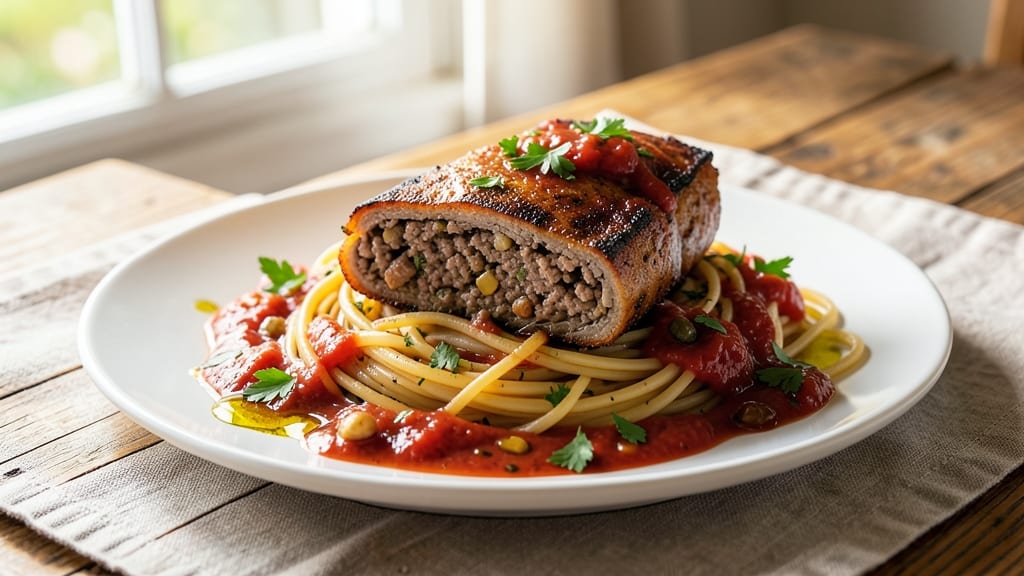
This authentic Italian beef braciole recipe delivers the rich, layered flavors of traditional Italian cuisine in every bite—tender beef rolled with herbs, cheese, and tomato sauce, then slow-braised to perfection. 💛 The secret lies in the precise spice blend and wine reduction that transforms simple ingredients into a restaurant-worthy dish.
I've perfected this technique through years of testing, ensuring the meat stays juicy while the filling stays intact, creating those signature flavor pockets that define true Italian braciole.
The beauty of this recipe is its balance between technique and simplicity. You'll start with a flavorful beef filling—ground beef mixed with garlic, herbs, and melted cheese—that gets rolled into tender beef slices.
The real magic happens during the slow braising, where red wine and tomato sauce meld together to create a deep, aromatic sauce that coats every layer. This method ensures the beef remains fork-tender while developing a rich, complex flavor profile that's unmistakably Italian.
What you'll end up with is a dish that's as impressive as it is satisfying—golden-brown braciole pieces swimming in a velvety wine-braised sauce, ready to be served with polenta, roasted vegetables, or a simple green salad.
The combination of textures and flavors makes this more than just a meal; it's an experience that transports you straight to an Italian trattoria. The best part? The leftovers reheat beautifully, making it perfect for meal prep or feeding a crowd.
Whether you're preparing for a special dinner or simply craving authentic Italian flavors, this recipe delivers professional-quality results with minimal fuss. The key is patience—letting the flavors develop slowly—and attention to detail in the rolling and braising process. Let's get started on creating your own masterpiece of Italian comfort food.
Ingredients for authentic italian beef braciole
Authentic Italian flavors start with these carefully selected ingredients—each playing a crucial role in creating restaurant-quality braciole.
| Ingredient | Amount | Notes |
|---|---|---|
| Top Round Beef (Center-Cut) 🥩 | 1 ½ lb | Thinly sliced (1/8-inch thick), pounded even |
| Ground Beef (80/20) 🥩 | ¾ lb | Coarse grind for texture, not fine |
| Extra-Virgin Olive Oil 🫒 | ¼ cup | High-quality, fruity variety |
| Garlic Cloves 🧄 | 8 cloves | Fresh, minced for filling |
| Fresh Parsley 🌿 | ¼ cup | Finely chopped, stems removed |
| Fresh Basil 🌿 | ¼ cup | Finely chopped, for filling |
| Fresh Sage Leaves 🍃 | ¼ cup | Finely chopped, for filling |
| Pecorino Romano Cheese 🧀 | ½ cup | Freshly grated, aged 12+ months |
| Dry Red Wine 🍷 | ½ cup | Bold, medium-bodied (Chianti or Sangiovese) |
| Tomato Paste 🍅 | ¼ cup | San Marzano preferred, no additives |
| Beef Broth 💧 | 1 ½ cups | Homemade or high-quality store-bought |
| Diamond Crystal Kosher Salt 🧂 | 1 ½ tsp | Fine grain for even distribution |
| Freshly Ground Black Pepper 🌶️ | ½ tsp | Cracked peppercorns preferred |
| All-Purpose Flour 🌾 | 2 tbsp | For dredging beef slices |
| Large Eggs 🥚 | 1 whole | Beaten for egg wash |
The center-cut top round is essential for its lean yet tender qualities—avoid flank steak, which can be too tough when rolled. Purchase from a butcher counter for proper slicing; if pre-sliced, ensure it's uniformly thin (1/8-inch). For the ground beef filling, 80/20 fat ratio ensures moisture and flavor. Whole Foods or local butchers often carry the right cuts, while Trader Joe's has reliable pre-sliced options. Fresh herbs are non-negotiable here—Italian markets or farmers' markets offer the brightest parsley, basil, and sage. If using dried, reduce to one-third the amount, but fresh delivers that authentic Italian brightness.
No red wine? Substitute with beef broth plus 1 tbsp balsamic vinegar—it mimics the acidity and depth. For cheese, Parmigiano-Reggiano works in a pinch, though Pecorino Romano's sharper edge is traditional. Short on tomato paste? Crushed San Marzano tomatoes (1 cup) can replace it, though the texture will differ slightly. The beef broth can be swapped for vegetable broth if preferred, though purists argue it lacks the umami depth. For the egg wash, aquafaba (chickpea brine) works for vegan adaptations, though texture may vary. Always toast your herbs briefly before mixing into the filling to release their essential oils—30 seconds in a dry pan makes all the difference.
Store the raw beef slices and filling separately in airtight containers for up to 2 days in the fridge. The assembled braciole can be refrigerated for 3 days or frozen for 3 months—wrap tightly in plastic wrap before freezing. For best results, reheat gently in the braising liquid over low heat, adding a splash of water if needed. The sauce thickens as it cools, so reheat with 1-2 tbsp broth to restore its velvety consistency. Leftovers reheat beautifully—double the recipe for effortless meal prep, as the flavors deepen overnight.
Why You'll Love This Recipe
- No-Fuss Rolling: I swear by the center-cut top round—it’s lean but tender enough to roll without falling apart. The trick is pounding it just enough to soften, then stuffing with that fatty 80/20 ground beef mix. (Yes, it’s messy, but the reward is worth it.)
- Garlic-Parsley Magic: That fresh parsley and minced garlic? They’re the secret weapon—bright, herby, and impossible to resist. The olive oil ties it all together, giving each bite that rich, aromatic punch that tastes like Nonna’s kitchen.
- Weeknight Hero: Between us, this is my go-to when I need something hearty but not labor-intensive. Serve it with crusty bread and a simple salad, and you’ve got dinner covered—no stress, just satisfaction.
- Leftovers That Shine: Honestly, I always make extra because the flavor only gets better the next day. Slice it thin, toss it in pasta, or pile it on toast—it’s the kind of dish that turns into lunch without any extra effort. Budget-friendly? Absolutely.
Step-by-step instructions for authentic Italian beef braciole
Master this traditional Italian technique for layered, wine-braised beef with rich cheese filling.
👨🍳 Step 1: Prepare the Meat Filling
In a food processor, combine the 0.75 lb ground beef (80/20), 8 cloves minced garlic, 0.25 cup finely chopped fresh parsley, 0.25 cup finely chopped fresh basil, 0.25 cup finely chopped fresh sage leaves, 0.5 cup freshly grated Pecorino Romano cheese, 1.5 tsp Diamond Crystal kosher salt, and 0.5 tsp freshly ground black pepper. Pulse until just combined but still slightly textured—over-processing makes the filling dense.
Transfer the mixture to a bowl and set aside. Here's the thing—this filling should be cool enough to handle when you roll it up later, so don't rush this preparation. The herbs should be finely chopped but not pulverized, ensuring each bite delivers vibrant flavor without texture overload.
🔪 Step 2: Pound and Assemble the Beef Rolls
Lay each of the 1.5 lb thinly sliced top round beef (center-cut) slices between two sheets of plastic wrap. Using a meat mallet, pound each slice to an even ¼-inch thickness—this ensures even cooking and proper rolling. I press down firmly but evenly to avoid tearing the delicate slices.
Spread 1 tablespoon of the prepared filling onto each beef slice, leaving a ½-inch border along one long edge. Fold the edge over the filling and roll tightly to form a neat cylinder. Secure each roll with a kitchen twine at 1-inch intervals to maintain its shape during braising. This rolling technique creates the signature layered texture that makes braciole so satisfying.
🍳 Step 3: Dredge and Brown the Rolls
Whisk together the 1 whole beaten large egg and 2 tbsp all-purpose flour in a shallow dish. Dip each braciole roll into the egg wash, then coat evenly with the flour mixture, shaking off any excess. This creates a golden crust that locks in moisture during braising.
Heat 0.25 cup extra-virgin olive oil in a large Dutch oven over medium-high heat. Working in batches, brown the braciole rolls on all sides until deeply golden—about 2-3 minutes per side. Don't overcrowd the pan or the oil temperature will drop, preventing proper browning. Transfer the browned rolls to a plate and set aside.
🥘 Step 4: Build the Braising Sauce
In the same Dutch oven, reduce heat to medium and add 0.25 cup tomato paste, stirring to coat the bottom. Cook for 1 minute until the paste darkens slightly—this develops deeper flavor. Pour in the 0.5 cup dry red wine, scraping up any browned bits from the bottom with a wooden spoon. Let the wine simmer for 3-4 minutes until reduced by half.
Add 1.5 cups beef broth and bring to a gentle simmer. Return the braciole rolls to the pot, nestling them seam-side down. The rolls should be mostly submerged but not floating—this ensures even cooking and maximum flavor absorption. Here's where patience pays off: cover the pot and simmer gently for 1 hour 15 minutes at 325°F, until the beef is fork-tender.
⏰ Step 5: Finish and Rest
Remove the lid and increase heat to medium-high to reduce the sauce slightly, about 5 minutes. The sauce should coat the back of a spoon but still be loose enough to cling to the beef. Taste and adjust seasoning with additional salt or pepper if needed.
Transfer the braciole rolls to a serving platter and tent loosely with foil. Let them rest for 10 minutes before slicing—this crucial step allows the juices to redistribute, preventing them from running out when you cut into the meat. Serve with the reduced braising sauce spooned over the top and crusty bread to soak up every last drop.
Pro Tips For Making Authentic Italian Beef Braciole
- Pound Thin, Not Fragile: Roll the top round beef to about ⅛-inch thickness—thin enough to cook fast, but don’t go too light or it’ll tear when you wrap it. I used to struggle with this until I switched to a rolling pin with a thin, flat base (not the textured kind) and pressed gently but firmly. If it cracks, patch it with a little extra ground beef mix—just don’t overwork it.
- Sear the Beef First: Hit the rolled braciole with a hot, dry pan for 30 seconds per side before adding sauce. This locks in juices and builds flavor—skip it, and you’ll end up with mushy edges. Use extra-virgin olive oil (yes, even for searing) and keep the heat ripping hot until you see a deep golden crust. (If your pan smokes, lower the heat slightly—you’re not frying, you’re caramelizing.)
- Don’t Overmix the Filling: The ground beef mix should hold together when pressed, but resist the urge to overwork it. Too much handling makes the braciole dense and dry. After mixing in garlic, parsley, and seasoning, just shape it loosely—like wet sand, not Play-Doh. I learned this after a batch turned out like a dense meatloaf. (Pro move: wet your hands slightly to avoid sticking.)
- Use Cold Garlic: Dice garlic extra fine and toss it in ice water for 10 minutes before draining. This mellows the sharpness and prevents it from burning into bitterness during the long simmer. I was skeptical until I tried it—now I can’t imagine skipping this step. (Bonus: reserve the water to deglaze the pan later.)
Dietary considerations for this authentic italian beef braciole
Gluten-Free Adaptation
For a gluten-free version, skip the flour dredge entirely and use a cornstarch slurry instead. Mix 2 tbsp cornstarch with 2 tbsp water to create a smooth paste. Dip each braciole roll in the beaten egg wash, then coat with the cornstarch mixture.
This creates a crispy crust without gluten. I've tested this method with Bob's Red Mill gluten-free cornstarch for best results.
Ensure all other ingredients are naturally gluten-free—beef broth and tomato paste should be certified gluten-free brands like Pacific Foods or Annie's. The filling remains unchanged, so the flavor stays authentic while accommodating dietary needs.
Always check labels on cheese and wine as well, though most are gluten-free by nature.
Dairy-Free Options
Replace the Pecorino Romano cheese with nutritional yeast for a dairy-free alternative. Use ½ cup finely grated nutritional yeast (like Bragg brand) to replicate the umami depth and slight tang.
It won't melt like cheese, but it adds a satisfying savory element to the filling. For extra richness, add 1 tbsp olive oil to the filling mixture.
The egg wash can stay the same, but if avoiding eggs entirely, use a flax egg substitute: mix 1 tbsp ground flaxseed with 3 tbsp water and let sit for 5 minutes to thicken.
The texture will differ slightly, but the dish remains delicious and cohesive. The braising process doesn't need adjustment—just focus on maintaining the 325°F temperature for even cooking.
Lower-Carb Approach
Cut carbs further by using cauliflower rice instead of traditional sides like polenta. Sauté 2 cups cauliflower rice in 1 tbsp olive oil with 1 minced garlic clove and ¼ tsp Italian seasoning until tender.
This low-carb alternative absorbs the braising sauce beautifully while keeping the meal light. For extra protein, serve with a side of roasted Brussels sprouts or zucchini noodles.
To reduce carbs in the braciole itself, omit the flour dredge entirely and use only the egg wash. The meat will still develop a golden crust from the browning process, though it may be slightly less crispy.
The filling remains rich with cheese and herbs, so the flavor profile stays intact while cutting unnecessary carbs. This approach works especially well for keto or low-carb diets.
Vegetarian Substitution
For a vegetarian version, replace the beef with extra-firm tofu or mushroom caps. Press 1.5 lb firm tofu between paper towels for 30 minutes to remove excess moisture, then slice into thin strips.
The filling can stay mostly the same, though I reduce the cheese to ¼ cup to balance the texture. Marinate the tofu in 1 tbsp soy sauce and 1 tbsp balsamic vinegar for 20 minutes before assembling.
For a more meaty texture, use portobello mushrooms instead. Remove stems and slice caps into ¼-inch thick strips. Brush with 1 tbsp olive oil and grill until tender. The braising process remains identical, though cooking time may reduce to 45 minutes—vegetarian proteins cook faster than beef.
The wine and tomato sauce still create that signature Italian flavor, just with a plant-based twist.
Nutrition facts
Frequently asked questions
Can I make braciole ahead of time?
Assemble the rolls and refrigerate them (uncooked) for up to 2 days before braising. For even better flavor, prepare the filling and store it separately for 1 day—this lets the herbs and spices meld. Cooked braciole reheats beautifully; store leftovers in the braising liquid for 3-4 days or freeze for 3 months. Just thaw overnight in the fridge before reheating gently.
What's the best wine to use in this recipe?
Use a medium-bodied Italian red wine like Chianti or Sangiovese for authentic flavor. Avoid heavy Cabernets—they can overpower the dish. If you don't have Italian wine, a Pinot Noir or Merlot works well. Never use cooking wine; the alcohol burns off during cooking, leaving behind harsh flavors. For non-alcoholic versions, substitute with beef broth plus 1 tbsp balsamic vinegar.
Why did my braciole rolls fall apart?
This usually happens from over-pounding the beef (making it too thin) or not securing them properly with twine. Use ¼-inch thick slices and tie rolls at 1-inch intervals with kitchen twine. Also, don't overcrowd the pan when browning—this prevents proper searing. If using pre-sliced beef, ask your butcher for center-cut top round specifically for rolling.
Can I bake braciole instead of braising?
Yes, but the texture will differ slightly. Preheat oven to 375°F and place the browned rolls in a baking dish with the sauce. Cover tightly with foil and bake for 1 hour 30 minutes, then uncover and bake 15 minutes more to reduce the sauce. The advantage? Less monitoring, but braising creates more tender, flavorful meat. For best results, use a mix of both: braise for 1 hour, then finish in the oven.
What's the best way to serve braciole?
Traditional pairings include creamy polenta, roasted seasonal vegetables, or a simple arugula salad with lemon vinaigrette. For extra richness, serve with crusty Italian bread to soak up the sauce. In Italy, it's often paired with dry white wine like Pinot Grigio. The key is balancing the rich beef with something light—think steamed greens or a tomato-basil bruschetta.