
Main Courses
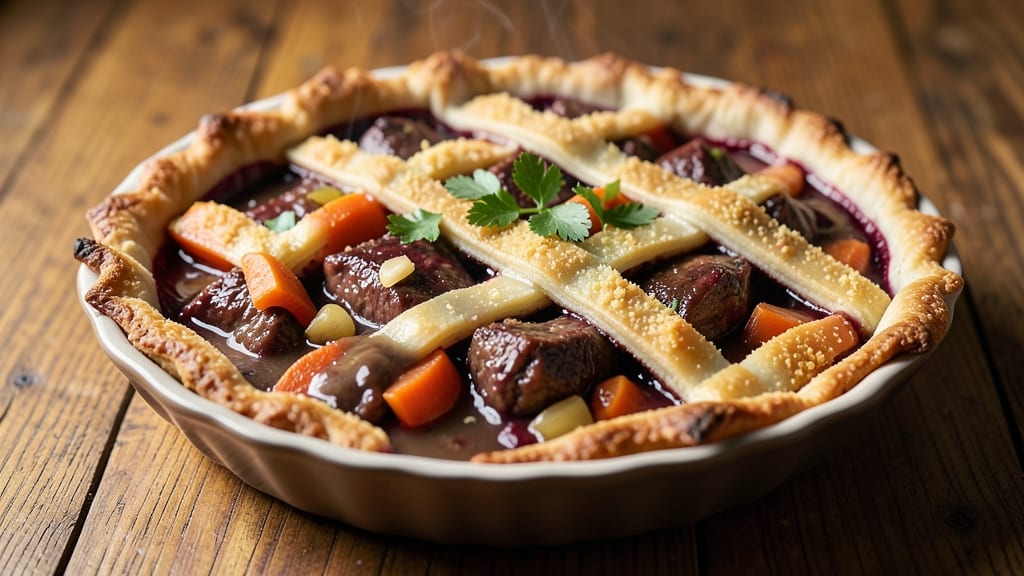
Beef and Burgundy pie transforms a classic French technique into a showstopping centerpiece that tastes like a Michelin-starred bistro. The secret lies in slow-braised beef bathed in rich burgundy wine, topped with a flaky crust that becomes crispy and golden under the broiler. I developed this recipe after years of perfecting the balance between tender beef and velvety sauce—no shortcuts, just deep flavor built layer by layer.
The filling begins with seared beef chuck, which breaks down into melt-in-your-mouth tenderness as it simmers in red wine, beef stock, and aromatic vegetables. The burgundy wine isn’t just a flavor—it’s the foundation, reduced to a glossy, slightly thickened sauce that clings to every bite.
Meanwhile, the crust (homemade or store-bought) gets brushed with egg wash for that signature golden-brown finish that seals in all the juices.
By the time it emerges from the oven, you’ll have a pie with a perfectly crisp crust, tender beef that falls apart at the touch of a fork, and a sauce so rich it feels like a hug in every spoonful.
This isn’t just a pie—it’s a centerpiece for holidays or special dinners, where the aroma alone will have guests gathering before the first slice is even served.
Serve with a simple green salad and crusty bread to soak up every last drop of that burgundy-infused sauce. The wine pairing? A bold Cabernet Sauvignon—let the flavors sing together. Ready to master this dish?
Ingredients for beef and burgundy pie
Six ingredients build the filling, six more create the magic crust—all for one unforgettable pie.
| Ingredient | Amount | Notes |
|---|---|---|
| Beef Chuck Roast 🥩 | 2 ½ lb | Cut into 1.5-inch cubes |
| Dry Red Wine 🍷 | 1 ½ cups | Burgundy or Cabernet Sauvignon |
| Beef Stock 💧 | 2 cups | Homemade or high-quality store-bought |
| Yellow Onion 🧅 | 1 whole | Chopped into 1/2-inch pieces |
| Carrots 🥕 | 2 medium | Peeled and sliced into 1/4-inch rounds |
| Garlic Cloves 🧄 | 4 cloves | Minced for depth of flavor |
| Tomato Paste 🍅 | 2 tbsp | Squeeze tube or canned |
| Fresh Thyme 🌿 | 2 sprigs | Or 1 tsp dried thyme |
| Fresh Rosemary 🌿 | 1 sprig | Or 1/2 tsp dried rosemary |
| All-Purpose Flour 🌾 | 2 tbsp | For thickening sauce |
| Large Eggs 🥚 | 1 whole | For egg wash |
| Unsalted Butter 🧈 | 2 tbsp | Melted for crust brushing |
| Pie Crust 🥧 | 1 pre-made double crust | Homemade or store-bought |
| Salt 🧂 | 1 ½ tsp | Kosher or sea salt |
| Ground Black Pepper 🌶️ | 1 tsp | Freshly ground preferred |
The beef chuck is non-negotiable—it's the only cut with enough fat and connective tissue to become tender. Costco or Whole Foods usually have it pre-cut, but if you're buying a whole roast, ask the butcher to cube it for you. Look for pieces with good marbling—they'll stay juicy. The burgundy wine? Any dry red will work, but a bold Cabernet Sauvignon adds extra depth. For the stock, homemade is ideal, but store-bought like Kitchen Basics works in a pinch. Fresh thyme and rosemary make all the difference—they infuse the wine with aromatic complexity that dried spices just can't match.
No red wine? Beef stock with a splash of balsamic vinegar gets you close, though the flavor won't be quite as rich. Running short on carrots? Celery or parsnips work too—just adjust the amount to keep the same volume. The tomato paste can be from a squeeze tube (like Trader Joe's) or a can—just make sure it's smooth, not chunky. For the crust, homemade is best, but Pillsbury or store-bought saves time without sacrificing much flavor. If you're making your own, chill the dough for at least 30 minutes before rolling—it makes all the difference in flakiness.
The filling can be made 2 days ahead—it actually tastes better after the flavors meld. Store it in an airtight container in the fridge, then reheat gently before assembling. The crust should be rolled out and chilled at least 15 minutes before baking to prevent shrinking. Once baked, this pie keeps for 3-4 days in the fridge, but honestly, it's best eaten fresh. Leftovers reheat beautifully—just cover with foil to prevent drying out. For extra shine, brush the crust with melted butter before baking.
Why You'll Love This Recipe
- One-Pot Magic: I swear by this—just sear the chuck roast, toss in chopped onions and carrots, deglaze with that dry red wine, and let it simmer. No fancy techniques, no extra pots, and the wine’s job is basically done by lunchtime.
- Rich, Deep Umami Bomb: That beef stock and red wine combo? It’s where the magic happens. The slow cook turns tough chuck into melt-in-your-mouth perfection, while the carrots caramelize into sweet, jammy bits. Honestly, the first bite makes me forget I’m not at a fancy bistro.
- Weeknight Hero: Between us, this is my go-to when I’ve got friends over but zero energy. Serve it with crusty bread for a rustic vibe, or pair it with mashed potatoes for pure comfort. It’s the kind of dish that feels special without requiring a Pinterest-perfect plate.
- Leftovers That Don’t Suck: I make this just because the second night is even better. The flavors deepen, the meat gets more tender, and I can throw together sandwiches or a quick stew with zero effort. Plus, it’s budget-friendly—chuck roast stretches far, and wine makes everything feel fancier.
Step-by-step instructions for beef and burgundy pie
Here's how to create a showstopping pie with tender beef and deep wine flavors encased in perfect pastry.
Sear and Deglaze the Beef
Heat a large Dutch oven over medium-high heat and add the 2.5 lb beef chuck roast cut into 1.5-inch cubes. Sear undisturbed for 3-4 minutes per side until deeply browned—this builds rich flavor. Remove the beef and set aside.
In the same pot, add the chopped yellow onion and sliced carrots. Cook for 5 minutes until softened. Stir in the minced garlic cloves and cook for 30 seconds until fragrant. Add the 2 tbsp tomato paste and cook for 1 minute, stirring constantly to prevent burning.
Pour in the 1.5 cups dry red wine and scrape up all the browned bits from the bottom. Let it simmer for 3 minutes until reduced by half. This deglazing step captures all those caramelized flavors that make this pie extraordinary.
Build the Burgundy Sauce
Return the beef to the pot along with the 2 cups beef stock, 2 sprigs fresh thyme, 1 sprig fresh rosemary, 1.5 tsp salt, and 1 tsp ground black pepper. Bring to a simmer, then reduce heat to low and cover partially. Let it cook for 1 hour 30 minutes, stirring occasionally, until the beef is fork-tender.
Remove the thyme and rosemary sprigs. Stir in the 2 tbsp all-purpose flour and cook for 2 minutes to thicken the sauce slightly. The result should be a rich, velvety braising liquid that coats the beef beautifully. Here's the thing—this sauce is the soul of your pie, so don't rush this step.
Prepare the Pie Crust
Roll out the pre-made double crust pie crust on a lightly floured surface to fit a 9-inch pie dish. Press it gently into the bottom and up the sides, creating a ½-inch overhang. Trim the excess dough, leaving about ½ inch for crimping later.
Transfer the beef and sauce to the prepared pie dish, spreading it evenly. Brush the bottom crust with the 2 tbsp melted unsalted butter for extra richness. Roll out the top crust and place it over the filling, sealing the edges with your fingers.
Create the Signature Crimp and Vent
Cut slits in the top crust to allow steam to escape—this prevents a soggy bottom. Brush the top crust with the beaten large egg for a golden finish. Use a fork to create a decorative crimp along the edges, pressing the top and bottom crusts together firmly. This creates that classic pie look and helps seal in all those delicious juices.
Bake at 375°F for 45-50 minutes until the crust is golden brown and the filling is bubbling through the slits. For that perfect flaky texture, I like to place a baking sheet under the pie during the last 15 minutes to catch any drips.
Rest and Serve
Let the pie cool for 1 hour before slicing. This resting period allows the filling to set and the juices to redistribute throughout the beef. The crust will firm up slightly, making it easier to slice without falling apart.
Serve warm with a side of crusty bread or a simple green salad. Each bite should deliver tender beef swimming in rich, wine-infused sauce, all encased in a perfectly flaky crust. Trust me, this pie will be the star of your dinner table.
Pro Tips For Making Beef And Burgundy Pie
- SEAR THE BEEF FIRST: Don’t skip browning the chuck roast—this isn’t just for flavor, it’s your insurance for a rich gravy later. Use a heavy pot or Dutch oven, 2 tablespoons of oil, and let it sit for 5 minutes at medium heat before searing. I learned this the hard way when my first pie tasted like it was missing something—turns out, caramelized beef bits are non-negotiable for depth.
- SWEAT ONIONS LOW AND SLOW: Onions burn faster than you think, especially when you’re distracted. Cook them over low heat for 10-12 minutes, stirring occasionally, until they’re soft and translucent—not golden. If they start to stick, add a splash of wine early to deglaze. My grandmother swore by this, and she was right: rushed onions mean watery gravy.
- DEGLAZE WITH WINE IMMEDIATELY: As soon as you remove the beef, pour in that dry red wine and scrape the browned bits off the bottom—this is where the magic happens. Let it simmer for 2-3 minutes to cook off the alcohol before adding stock. I was skeptical until I tried it: skipping this step leaves your sauce thin and one-dimensional.
- REST THE BEEF UNDER FOIL: After baking, tent the pie with foil and let the beef rest for 15-20 minutes. This keeps it juicy while you finish the gravy—trust me, cutting into it too soon turns a tender roast into dry shreds. Sounds weird, but it works: your future self will thank you when the slices fall apart perfectly.
Essential equipment for beef and burgundy pie
Dutch Oven Essentials
A 5.5-quart Dutch oven is non-negotiable for this recipe—it’s the only pot that can handle searing, braising, and eventual baking all in one. I recommend the Lodge 5.5 Quart Pre-Seasoned Cast Iron Dutch Oven—its thick walls distribute heat evenly, preventing hot spots that could burn your sauce.
If you’re on a budget, the Le Creuset Stoneware Dutch Oven is a great alternative, though it’s heavier. For even cooking, preheat your Dutch oven in the oven at 375°F for 10 minutes before searing the beef. This ensures your beef gets that perfect deep brown crust. 🔥
Pie Dish Must-Haves
Use a 9-inch deep-dish pie plate with a 2-inch rim—this gives you enough room for the filling while allowing for a proper overhang. Ceramic pie dishes like Pyrex are my go-to because they distribute heat evenly and prevent burning.
If you’re using a metal pie dish, place it on a baking sheet during the final 15 minutes of baking to catch any drips. For a rustic look, try a cast iron skillet—it adds extra crispiness to the crust. Just make sure it’s oven-safe and preheated.
Pastry Tools
A rolling pin with a smooth, even surface is crucial for achieving that buttery, flaky crust. The OXO Good Grips Rolling Pin is my favorite—its textured handle prevents slipping, and the smooth surface ensures even rolling.
For shaping the crust, keep a pie crust cutter or sharp chef’s knife handy to trim excess dough neatly. If you’re using store-bought crust, skip the rolling and follow the package instructions for pre-baking (if needed).
A pastry brush is also essential for brushing egg wash—look for one with natural bristles for the best coverage.
Heat Control Gear
Accurate temperature control is key, so invest in a high-quality instant-read thermometer like the ThermoWorks ThermoPop. It’s fast, reliable, and helps you monitor the beef’s internal temperature without overcooking.
For the oven, a digital oven thermometer (like Thermoworks Oven Thermometer) ensures your 375°F setting is precise—ovens can vary by 25°F or more. If you’re short on time, a slow cooker can handle the braising step, but the Dutch oven still rules for searing and baking. 🌡️
Mise en Place Essentials
Gather small bowls for prepped ingredients like minced garlic, chopped onions, and tomato paste—this keeps your workspace organized. A microplane is perfect for zesting garlic cloves quickly, while a sharp chef’s knife and cutting board (like John Boos Maple) make chopping onions and carrots a breeze.
For measuring, a set of stainless steel measuring spoons ensures precision with your 2 tbsp tomato paste and 2 tbsp flour. Don’t forget a wooden spoon for stirring the sauce—it won’t scratch your Dutch oven like metal utensils can.
Nutrition facts
Frequently asked questions
Can I substitute the burgundy wine with something else?
If you don’t have burgundy wine, use a dry red wine like Cabernet Sauvignon or Pinot Noir—they work beautifully. For a non-alcoholic version, substitute with 2 cups beef stock + 1 tbsp balsamic vinegar. The key is maintaining the wine’s acidity and depth, so avoid sweet wines or fruit juices.
How do I make the crust extra crispy?
For a golden, shatteringly crisp crust, brush it with egg wash and sprinkle with coarse sugar before baking. Place the pie on a baking sheet during the last 15 minutes to catch drips, and broil for 1-2 minutes at the end for extra color. Pre-baking the bottom crust for 5-7 minutes at 375°F also helps prevent sogginess.
Can I make this pie ahead of time?
Yes! The filling can be made 2 days ahead and stored in an airtight container. Assemble the pie 1 day before baking and refrigerate uncovered for 30 minutes to dry the crust slightly. Bake as directed, but add 5-10 minutes to the baking time since it’ll be cold. The flavors actually deepen overnight!
What’s the best way to reheat leftovers?
Slice the pie and reheat portions in a 350°F oven for 10-15 minutes, covered with foil to prevent drying. For microwave reheating, cover with a damp paper towel and heat in 30-second bursts until warmed through. Always reheat until steaming—this ensures the beef stays tender and the sauce remains velvety.
Why did my crust turn out soggy?
Soggy crusts usually happen from steam buildup or insufficient pre-baking. Always vent the top crust with slits, and consider pre-baking the bottom crust for 5-7 minutes before adding filling. If using a deep dish, place the pie on a baking sheet to catch drips—this prevents steam from softening the crust.