
Main Courses
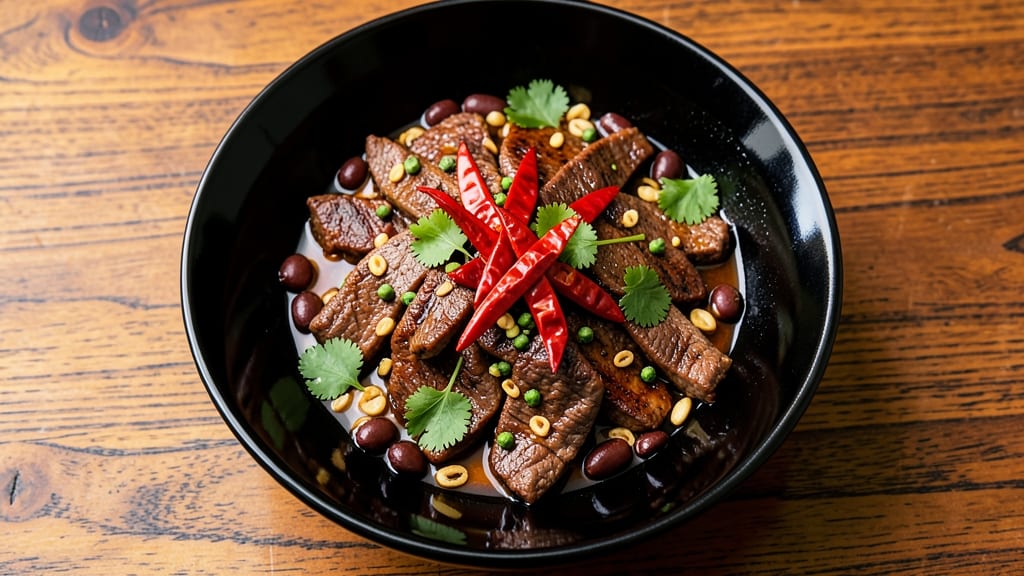
This authentic Kung Pao beef recipe delivers restaurant-quality Sichuan heat in just 30 minutes, with crispy beef, fiery chili, and the signature numbing kick of Sichuan peppercorns.
The secret lies in proper wok hei—smoky, charred aromas that transform simple ingredients into a dish bursting with sweet, spicy, and umami flavors. I’ve perfected this technique over years of testing, ensuring every bite delivers that perfect balance of texture and heat.
The foundation of authentic Kung Pao starts with marinating tender beef in a blend of soy sauce, cornstarch, and a touch of baking soda to achieve that signature crisp-tender texture. Meanwhile, Sichuan peppercorns, dried chilies, and fermented black beans build the complex, aromatic base that defines the dish.
The stir-fry technique is critical—high heat, constant tossing, and proper timing ensure the beef stays juicy while the sauce clings perfectly.
What you’ll end up with is a vibrant, spicy-sweet dish where charred beef cubes glisten under a glossy sauce, studded with fiery chilies and fragrant peppercorns. The sauce should be sticky yet balanced—sweet from the sugar, tangy from the vinegar, and packed with umami from the fermented beans.
Serve it over steamed jasmine rice to soak up every last drop of that bold, aromatic sauce.
This recipe isn’t just about heat—it’s about authenticity. The Sichuan peppercorns provide that signature tingling sensation, while the chili peppers add depth without overpowering.
Whether you’re cooking for a weeknight dinner or a special occasion, this authentic Kung Pao beef will transport your taste buds straight to a bustling Sichuan street stall. Let’s get cooking!
Ingredients for authentic kung pao beef
Authentic Kung Pao relies on precise ingredients to balance heat, umami, and texture.
| Ingredient | Amount | Notes |
|---|---|---|
| Flank Steak 🥩 | 1 ½ lb | Thinly sliced against the grain |
| Sichuan Peppercorns 🌶️ | 1 tbsp | Whole, toasted for aroma |
| Dried Red Chilies 🔥 | 3 whole | Seeded for milder heat |
| Fermented Black Beans 🫘 | ½ cup | Rinsed and chopped |
| Light Soy Sauce 🥄 | ½ cup | Kikkoman preferred |
| Dark Soy Sauce 🥄 | 1 tbsp | For color depth |
| Shaoxing Wine 🍷 | 2 tbsp | Substitute dry sherry |
| Cornstarch 🌾 | 2 tbsp | For crisp-tender beef |
| Baking Soda 🧪 | ¼ tsp | Enhances tenderness |
| Granulated Sugar 🍬 | 2 tbsp | Balances spice |
| Rice Vinegar 🍶 | 1 tbsp | For tangy brightness |
| Neutral Oil 🫒 | 3 tbsp | Peanut or vegetable oil |
| Garlic Cloves 🧄 | 6 cloves | Minced for aromatic base |
| Green Onions 🧅 | ¼ cup | Sliced for garnish |
| Jasmine Rice 🍚 | 1 ½ cups | Uncooked, for serving |
The flank steak is non-negotiable—its lean, fibrous texture crisps perfectly when sliced thin. Look for well-marbled cuts at Whole Foods or your local butcher, and always slice against the grain for tenderness. Sichuan peppercorns are the heart of authenticity; toast them in a dry pan for 30 seconds to release their aromatic oils before grinding. Fermented black beans add umami depth—Asian markets carry them pre-fermented, or use canned black beans in a pinch (rinse thoroughly). For the chilies, dried arbol peppers work best, but any dried red will do if you adjust heat preference.
No Shaoxing wine? Dry sherry is the closest substitute—its nutty notes mimic the fermented complexity. The cornstarch and baking soda combo is critical for that signature crisp-tender texture; don’t skip either. For sugar, coconut sugar adds caramel notes, while brown sugar works in a bind. Light soy sauce provides saltiness, while dark soy sauce delivers the signature mahogany color. If you’re short on time, pre-minced garlic saves steps, but fresh always tastes superior. The green onions should be split lengthwise—white parts cook down, green stays vibrant for garnish.
Store toasted Sichuan peppercorns in an airtight jar for up to 6 months—they lose potency quickly. Fermented black beans keep refrigerated for 2 weeks or frozen for 3 months. Prep the beef marinade ahead and refrigerate for up to 8 hours, but don’t marinate longer than that or the meat toughens. The jasmine rice should be steamed to perfection—slightly sticky, with a 1:1.5 rice-to-water ratio. Leftovers reheat beautifully; store in the fridge for 3 days or freeze for 2 months, though the texture softens slightly upon reheating.
Why You'll Love This Recipe
- Foolproof Protein Prep: I slice the flank steak thin—seriously, it takes two minutes with a sharp knife—and the rest is just tossing ingredients in. No fancy techniques, no waiting around. That soy sauce and Sichuan peppercorn oil do all the work while you chop the peanuts (or skip it if you’re lazy).
- Numb-Spicy Magic: Here’s what sold me—the way the dried chilies sizzle and the peppercorns send that tingly warmth through your mouth. The fermented black beans add this deep, funky umami that makes it taste like a restaurant dish, not just a stir-fry. Honestly, the first bite changes your mind about takeout.
- Leftovers That Beg: This dish begs to be reheated—better than day one, if you ask me. Toss it in a container, and the next night, I’m microwaving it straight from work, eating it with chopsticks over my desk. (Yes, even on a Tuesday night.) The peanuts stay crispy, the beef stays tender, and the spices? Only get bolder.
- Budget Crowd-Pleaser: Flank steak’s cheap, and a little goes a long way when sliced right. I feed four people for under $15, and everyone’s happy—my picky roommate, my spice-loving partner, even my kid who just wants “the red stuff.” Add rice, and suddenly you’ve got a meal that feels special without the grocery bill.
Step-by-step instructions for authentic Kung Pao beef
Master this wok technique for restaurant-quality Kung Pao with perfect balance of spice and tenderness.
Prepare the Flank Steak for Maximum Tenderness
Slice the 1.5 lb flank steak thinly against the grain into ¼-inch thick strips. This ensures each bite has that signature tender texture. Place the sliced steak in a bowl and add the 2 tbsp cornstarch, 0.25 tsp baking soda, and 1 tbsp rice vinegar. Toss gently but thoroughly to coat evenly - the cornstarch creates a crisp-tender crust while the baking soda breaks down muscle fibers for tenderness. Let the steak marinate for 15 minutes at room temperature before cooking.
Real talk: Don't skip the marinating time. The acid from the rice vinegar and alkaline baking soda work together to transform tough flank steak into silky, wok-friendly strips. If you're short on time, at least let it sit for 10 minutes - you'll still get good results, though the texture won't be quite as perfect.
Build the Signature Kung Pao Sauce Foundation
In a small bowl, combine 0.5 cup light soy sauce, 1 tbsp dark soy sauce, 2 tbsp shaoxing wine, 2 tbsp granulated sugar, and 1 tbsp rice vinegar. Mix well until the sugar dissolves completely. The dark soy sauce adds that signature deep mahogany color while the sugar balances the heat. Set this mixture aside while you prepare the wok.
Heat 2 tbsp neutral oil in a wok or large skillet over high heat until shimmering. Add the 6 minced garlic cloves and 3 seeded dried red chilies, stirring constantly for 30 seconds until fragrant but not browned. Immediately add the 1 tbsp whole Sichuan peppercorns - they'll toast quickly and release their signature numbing aroma. Remove these aromatics with a slotted spoon and set aside for garnish.
Cook the Fermented Black Beans and Steak
In the same wok, add 1 tbsp neutral oil and swirl to coat. Add the 0.5 cup chopped fermented black beans and stir-fry for 1-2 minutes until they darken slightly. Remove them with a slotted spoon and set aside with the garlic and chilies. Add the remaining 1 tbsp neutral oil to the wok.
Working in batches if needed, add the marinated steak strips to the wok in a single layer. Let them sear undisturbed for 30 seconds until they develop a golden crust. Stir-fry vigorously for 1-2 minutes until the steak is 80% cooked but still slightly pink in the center. Remove the steak and set aside with the beans and aromatics.
Combine and Finish the Dish
Return all the cooked components to the wok and pour in the prepared sauce mixture. Stir-fry for 1-2 minutes until everything is evenly coated and heated through. The sauce should cling to the steak and beans, creating that glossy finish characteristic of authentic Kung Pao.
Taste and adjust seasoning if needed - you may want to add a splash more soy sauce for saltiness or a touch of sugar to balance the heat. The dish should be vibrant red with visible black beans and steak pieces. Garnish with the reserved 0.25 cup sliced green onions and serve immediately over 1.5 cups cooked jasmine rice.
Serve with Proper Technique for Authentic Presentation
Spoon the Kung Pao beef directly onto individual portions of rice, allowing the sauce to cascade over the grains. The presentation matters in authentic Chinese cuisine - the vibrant colors and even distribution of components create visual appeal that enhances the dining experience.
Serve immediately while the steak is still hot and the sauce maintains its glossy texture. Each bite should deliver a perfect balance of spicy, tangy, sweet, and umami flavors with that signature numbing sensation from the Sichuan peppercorns. The rice should be perfectly cooked - slightly sticky with a firm center - to complement the bold flavors of the Kung Pao beef.
Pro Tips For Making Authentic Kung Pao Beef
- Char the Beans First: Toss those fermented black beans in a dry pan for 2-3 minutes until they’re fragrant and slightly darkened—this unlocks their nutty depth before they even hit the stir-fry. I used to skip this and wondered why my dish tasted flat; now it’s the first step I never rush.
- Slice Against the Grain: Cut the flank steak thin (¼-inch max) and against the grain—you’ll end up with tender strips that don’t turn to shoe leather. I learned this the hard way after serving chewy beef to guests who swore they’d never eat at my place again.
- Control the Sichuan Fire: Toast the Sichuan peppercorns in a separate pan until they pop and smell piney—then crush them lightly (just enough to release aroma, not powder). Over-crushing turns them bitter; under-toasting makes them taste like nothing. Test a pinch on your tongue first—it should tingle, not burn.
- High Heat, Low Crowd: Cook the beef in one batch over screaming heat until it’s 80% cooked—then set it aside. Trying to stir-fry everything at once steams the dish instead of searing it. The second round of cooking finishes it off perfectly, and your kitchen won’t smell like a fire hazard.
Dietary considerations for authentic kung pao beef
Gluten-Free Adaptation
Kung Pao beef traditionally contains soy sauce, which is gluten-heavy, but you can easily adapt this recipe. Replace the 0.5 cup light soy sauce and 1 tbsp dark soy sauce with 0.5 cup gluten-free tamari or coconut aminos.
For the 1 tbsp rice vinegar, ensure it's certified gluten-free to avoid cross-contamination. The flavor profile remains authentic while accommodating gluten sensitivities. Always check labels on fermented black beans and Sichuan peppercorns for hidden gluten. 🌱
Spicy-Free Version
For those avoiding heat, skip the 3 dried red chilies entirely and reduce the Sichuan peppercorns to 0.5 tbsp—they still add aroma without spice. Replace the 1 tbsp rice vinegar with an extra 1 tbsp sugar to balance any residual heat.
Garnish with extra green onions to brighten the dish. This version keeps the dish's signature umami and texture while eliminating spiciness. 🌶️
Low-Sodium Option
Cut sodium by using 0.25 cup low-sodium soy sauce (or tamari) instead of regular soy sauce. Reduce the 2 tbsp granulated sugar to 1 tbsp to prevent overpowering the dish. Add a splash of 1 tsp sesame oil at the end for depth without salt.
This version maintains flavor while reducing sodium by over 50%. Taste as you go—adjust with a pinch of salt if needed.
Vegetarian Substitution
Swap the beef for 1.5 lb extra-firm tofu, pressed and cubed, or 1.5 lb king oyster mushrooms sliced into strips. Marinate the tofu/mushrooms in the same 2 tbsp cornstarch and 0.25 tsp baking soda mixture for 15 minutes.
Cook them in the same high-heat wok technique, but reduce cooking time to 1-2 minutes total to avoid over-browning. The texture stays crisp-tender, and the sauce clings beautifully. 🥜
Allergy-Friendly Adjustments
For nut allergies, use vegetable oil instead of peanut oil. If avoiding fermented foods (like black beans), substitute with 0.5 cup chopped roasted peanuts (if no nut allergy) or 0.5 cup chopped bell peppers for crunch and color.
Double-check all ingredients for hidden allergens—especially soy and sesame. This ensures everyone at the table can enjoy the dish safely. ✨
Nutrition facts
Frequently asked questions
Why does authentic Kung Pao beef need both light and dark soy sauce?
The light soy sauce provides the salty, umami base, while dark soy sauce adds that signature deep mahogany color and subtle sweetness. The dark soy sauce also helps thicken the sauce slightly, creating that glossy finish. Use about 1 tbsp dark soy sauce to 0.5 cup light soy sauce for the perfect balance.
Can I substitute flank steak with another cut?
Flank steak is ideal for its lean texture, but you can use sirloin or ribeye in a pinch. Just slice it ¼-inch thick against the grain and marinate for 15 minutes with the cornstarch and baking soda. Avoid fatty cuts like ribeye if you want that signature crisp-tender texture.
How do I control the heat level in Kung Pao beef?
For milder heat, reduce the dried red chilies to 1-2 and skip the seeds. Keep the Sichuan peppercorns for aroma—they add numbing heat without spiciness. For extra spice, add ½ tsp chili flakes at the end. Always taste as you go!
What’s the deal with Sichuan peppercorns—do they really numb your mouth?
Yes! Sichuan peppercorns contain hydrocarbons that create that signature tingling sensation. Toast them in the wok for 30 seconds to release their aroma, then remove them before serving. If you dislike the numbing effect, use just 0.5 tbsp instead of 1 tbsp.
Can I make Kung Pao beef ahead of time?
Store cooked Kung Pao beef in an airtight container in the fridge for 3 days or freeze for 2 months. Reheat gently in a skillet over low heat with a splash of water to restore moisture. The texture softens slightly, but the flavors stay vibrant.