
Main Courses
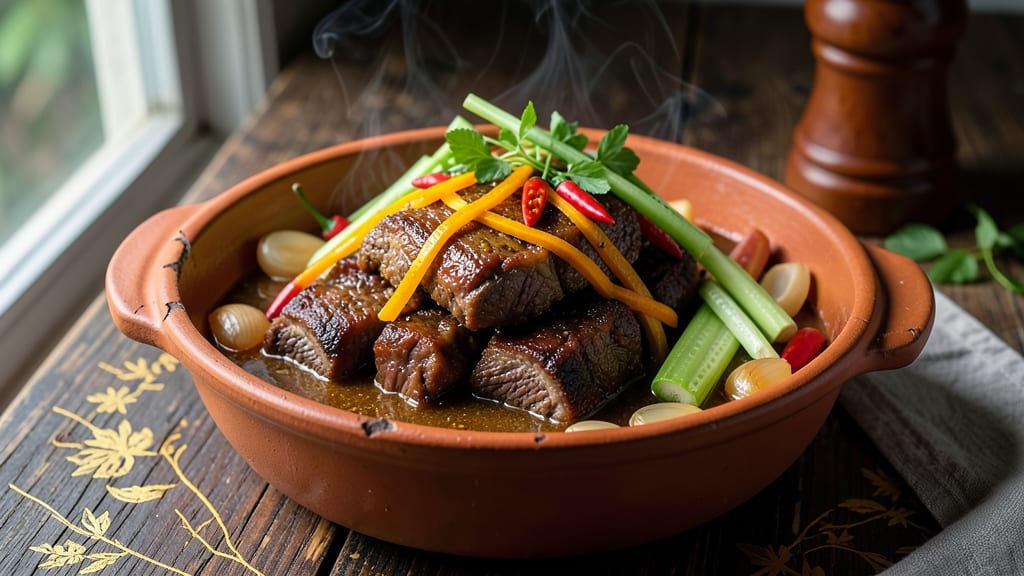
This authentic Malaysian beef rendang recipe transforms tough beef into melt-in-your-mouth perfection through slow cooking and layers of aromatic spices. The key lies in the spice paste—blended fresh turmeric, galangal, lemongrass, and chili—that infuses the beef with deep, complex flavors over hours of gentle simmering.
What starts as a simple marinade becomes the soul of this dish, creating a balance of sweet, spicy, and savory notes that define Malaysian cuisine.
The magic happens during the slow cook—where the beef tenderizes while absorbing the rich, caramelized spice sauce. Unlike quick recipes, rendang rewards patience, with flavors deepening as the sauce reduces into a glossy, sticky glaze.
This dish isn’t just a meal; it’s a celebration of tradition, where every bite carries the warmth of Malaysian kitchens and the love of slow, deliberate cooking.
By the end, you’ll have fork-tender beef swimming in a fragrant, slightly sweet sauce that clings to each piece. The aroma alone—earthy, smoky, and citrusy—will have everyone gathered around the table.
Serve it over steamed jasmine rice to soak up every last drop of that velvety sauce, and prepare for compliments that will make this dish a staple in your home.
Whether you’re hosting a dinner party or simply craving a taste of Malaysia, this rendang delivers restaurant-quality results with a method that’s approachable yet deeply satisfying. Let’s get started on creating a dish that’s as rewarding to make as it is to eat.
Ingredients for authentic malaysian beef rendang
Sixteen ingredients for a dish that tastes like home—where aromatic spices and slow cooking create magic.
| Ingredient | Amount | Notes |
|---|---|---|
| Chuck Roast Beef 🥩 | 3 lb | Tough cut for tenderizing |
| Fresh Turmeric 🌿 | 1 tbsp | Freshly grated for maximum color |
| Galangal 🌿 | 1 piece | Substitute ginger if unavailable |
| Lemongrass 🌿 | 2 stems | White part only, finely chopped |
| Fresh Chili 🌶️ | 4 whole | Bird's eye or Thai chili |
| Shallots 🧅 | 4 whole | Or 1 cup finely chopped |
| Garlic Cloves 🧄 | 8 cloves | Peeled and smashed |
| Coconut Milk 🥥 | 2 cans | Full-fat for creaminess |
| Coconut Cream 🥥 | 1 can | For thicker sauce |
| Palm Sugar 🍯 | ½ cup | Or brown sugar substitute |
| Kaffir Lime Leaves 🍋 | 4 whole | Or 2 tbsp dried lime zest |
| Ground Cumin 🌿 | 1 tbsp | Toasted for depth |
| Ground Coriander 🌿 | 1 tbsp | Freshly ground preferred |
| Salt 🧂 | 1 ½ tsp | Adjust to taste |
| Vegetable Oil 🫒 | 2 tbsp | For searing beef |
The galangal and kaffir lime leaves are non-negotiable for authentic flavor—Asian markets carry them fresh, or use ginger and lime zest in a pinch. Penzeys sells dried galangal if you can't find fresh. For the chili, Thai bird's eye delivers the classic heat, but any fresh chili works. Palm sugar adds depth—Trader Joe's carries it, or brown sugar works if you're in a hurry. The beef should be chuck roast for tenderness, but Costco often has pre-cubed versions that save time. If you can't find galangal, ginger is a decent stand-in, though it won't replicate the exact flavor.
No fresh lemongrass? Lime zest plus a splash of lime juice mimics some of its brightness. Running short on coconut milk? Full-fat Greek yogurt thinned with water adds creaminess, though the flavor won't be identical. The spice paste is where the magic happens—toast the spices lightly in a dry pan before blending to deepen their flavor. For the sugar, coconut sugar or even maple syrup can work in a bind, though palm sugar's caramel notes are ideal. The kaffir lime leaves can be substituted with lime zest plus a pinch of cinnamon if you're desperate, but fresh is always better.
This dish tastes even better the next day as flavors meld. Store in an airtight container in the fridge for up to 5 days, or freeze for 3 months. The sauce thickens as it cools, so add a splash of water when reheating. For meal prep, portion into containers with rice—steam the rice separately to avoid sogginess. The aroma alone will have everyone rushing to the table, so plan ahead if you're hosting.
Why You'll Love This Recipe
- One-Pot Magic: I swear by this—just sear the beef, toss in the galangal, turmeric, and lemongrass, then let it slow-cook. No extra pots, no fuss, and that rich, caramelized sauce practically makes itself.
- Flavor Bomb: The fresh turmeric and galangal give it that signature golden depth, while the chili and lemongrass add a bright, spicy kick. Honestly, the first bite hits like a warm hug from a Malaysian auntie.
- Leftovers That Shine: This dish begs to be made ahead—it tastes even better the next day, and it reheats like a dream. I’ll be real: I’ve had it cold in rice bowls for lunch, and it’s still dangerously good.
- Budget Crowd-Pleaser: A chuck roast feeds six for pennies, and the spices stretch across meals. Serve it at a potluck, a family dinner, or just for yourself—it’s the kind of dish that makes you look like a hero without breaking the bank.
Step-by-step instructions for authentic Malaysian beef rendang
Here's how to create this fragrant, slow-cooked masterpiece that gets better as it simmers.
Sear the Beef to Lock in Flavors
Heat the 2 tablespoons vegetable oil in a heavy-bottomed pot over medium-high heat. Pat the 3 lb chuck roast beef completely dry with paper towels—this helps create that signature crispy exterior. Working in batches if needed, sear the beef on all sides until deeply browned, about 3-4 minutes per side. You want that rich Maillard reaction happening.
Once browned, remove the beef from the pot and set it aside. The beef will release its natural juices into the pot, creating a flavorful base for your rendang. This searing step is crucial—it builds the deep, caramelized foundation that makes authentic rendang taste so distinct.
Toast the Spice Paste for Maximum Flavor
In the same pot, add the 4 whole shallots, 8 cloves garlic cloves, 1 piece galangal (peeled and sliced), 2 stems lemongrass (white parts only, cut into 2-inch pieces), 4 whole fresh chili (halved lengthwise), and 4 whole kaffir lime leaves. Sauté over medium heat for 5 minutes, stirring frequently, until the shallots soften and begin to caramelize.
Add the 1 tablespoon ground cumin, 1 tablespoon ground coriander, 1 tablespoon fresh turmeric, and 1.5 teaspoons salt. Stir continuously for 2 minutes until the spices become fragrant and the raw aroma gives way to something warm and inviting. This toasting step develops the spices' essential oils, which are the soul of your rendang.
Simmer the Rendang Low and Slow
Pour in the 2 cans coconut milk and 1 can coconut cream, scraping up any browned bits from the bottom of the pot. Return the beef to the pot, making sure it's fully submerged in the liquid. Add the 0.5 cup palm sugar and stir gently to dissolve. Bring the mixture to a gentle simmer over low heat, then reduce to the lowest setting possible—you want just a few bubbles breaking the surface.
Cover the pot and let it cook undisturbed for 3 hours. This is where the magic happens—the beef tenderizes, the spices meld, and the sauce thickens into a rich, caramelized glaze. Every now and then, gently stir the beef to ensure even cooking and prevent sticking. The key here is patience; authentic rendang needs time to develop its complex layers of flavor.
Reduce and Caramelize for Depth
After 3 hours, uncover the pot and increase the heat to medium-low. Simmer uncovered for another 1-2 hours, stirring occasionally, until the sauce reduces significantly and becomes thick and glossy. You're looking for a deep, caramelized color—this is what gives rendang its distinctive appearance and rich flavor. The beef should be fork-tender and easily pull apart.
If the sauce becomes too thick, add 2-3 tablespoons water at a time to loosen it slightly, but aim to keep it concentrated. The longer you cook it, the more intense the flavors become. This reduction step is what transforms a simple beef stew into the rich, complex dish that makes rendang so special.
Rest and Serve for Maximum Tenderness
Once the beef is tender and the sauce has reached your desired consistency, remove the pot from heat. Let the rendang rest for 15-20 minutes before serving. This resting period allows the juices to redistribute throughout the beef, ensuring each bite is moist and flavorful. Serve the beef with the caramelized sauce spooned over the top, accompanied by steamed jasmine rice to soak up every last bit of that rich, spiced goodness.
For the most authentic experience, garnish with fresh cilantro or Thai basil if you like. The rendang will continue to deepen in flavor as it sits, so it's even better the next day. This dish is all about the journey—every slow-cooked hour infuses more character into the beef and sauce, making it a true labor of love.
Pro Tips For Making Authentic Malaysian Beef Rendang
- BROWN THE BEEF FIRST: Don’t skip the sear—cut the chuck roast into 2-inch chunks and cook them in batches over high heat until deeply browned. I learned this the hard way: skipping this step means your rendang will taste like it’s missing something, no matter how long you simmer.
- GRATE THE GALANGAL: Fresh galangal packs more punch than pre-sliced—use a box grater or mandoline to get fine, even strips. Sounds weird, but it works: the surface area releases flavor faster, and you’ll taste that citrusy kick in every bite.
- LOW AND SLOW IS NON-NEGOTIABLE: After the initial sear, drop the heat to a simmer and let it cook for 3–4 hours, uncovered. I know, I know—you’re impatient like me—but rushing this turns your rich sauce into glue. The beef needs time to break down, and the sauce needs to reduce properly.
- USE THE CHILI STEMS: Don’t toss the stems and seeds from your fresh chilies—chop them fine and add them to the paste. They add heat and depth that dried chilies can’t match, and they’re the reason your rendang has that smoky, complex flavor. (Yes, even if you’re not a heat lover.)
Health benefits of authentic malaysian beef rendang
Rich Protein Source
Rendang delivers a high-protein punch with its beef base, providing about 40 grams of complete protein per serving—perfect for muscle repair and satiety. The slow-cooking process also breaks down connective tissues, making tough cuts like chuck roast easily digestible while preserving amino acids. 💪
Anti-Inflammatory Spices
The star spices—turmeric, galangal, and lemongrass—pack potent anti-inflammatory properties. Turmeric’s curcumin fights oxidative stress, while galangal contains gingerol, which may help reduce joint inflammation. Even the kaffir lime leaves add citrusy antioxidants that support immune function.
Healthy Fats Balance
Coconut milk and cream provide medium-chain triglycerides (MCTs), which fuel energy and support brain function. Unlike processed fats, these full-fat dairy alternatives help stabilize blood sugar levels when paired with protein-rich beef. The palm sugar adds natural sweetness without the blood sugar spikes of refined sugars.
Digestive Aid Benefits
The slow-cooking process tenderizes the beef while breaking down tough fibers, making it gentler on digestion than raw cuts. Galangal’s digestive enzymes aid in nutrient absorption, while the ginger-like compounds in lemongrass may help soothe stomach discomfort. A lighter version can even ease heartburn for some.
Bone-Strengthening Minerals
This dish is a mineral powerhouse, with beef supplying iron and zinc for immune support, while coconut milk contributes calcium and magnesium for bone health. The coriander and cumin add trace minerals like manganese, which supports metabolism and collagen production. 🌱
Blood Sugar Advantage
Unlike many rich dishes, rendang’s low glycemic index comes from its balanced macronutrients—protein, healthy fats, and fiber-rich spices. The palm sugar (or brown sugar substitute) is used sparingly, preventing blood sugar spikes. For diabetic-friendly versions, reduce sugar by 25% and boost herbs like lemongrass for extra flavor without calories.
Nutrition facts
Frequently asked questions
Why does authentic Malaysian beef rendang need such a long cooking time?
The slow cooking is essential for two reasons: first, it tenderizes tough cuts like chuck roast by breaking down collagen, and second, it allows the spices to develop deep, complex flavors through caramelization. The longer it simmers, the more the sauce reduces into a rich, glossy glaze that coats every piece of beef. This process transforms simple ingredients into a dish with layers of sweet, spicy, and savory notes that define Malaysian cuisine.
Can I substitute any of the traditional spices like galangal or kaffir lime leaves?
While you can make substitutions, they won't be as authentic. For galangal, use ginger (though it's not identical), and for kaffir lime leaves, try lime zest plus a pinch of cinnamon. The key is balancing the citrusy, earthy, and aromatic flavors—so if you substitute, adjust other spices to maintain harmony. For example, if you skip galangal, add an extra pinch of turmeric for warmth.
How do I know when the beef is tender enough?
The beef should easily pull apart with a fork and be fork-tender after 4-5 hours of total cooking time. If it's still slightly chewy, continue simmering uncovered for another 30-60 minutes—the sauce will reduce further and intensify in flavor. The slow cooking process is what makes the beef melt-in-your-mouth tender, so don't rush it.
Can I make this dish in a slow cooker or Instant Pot?
Yes! For a slow cooker, sear the beef first, then transfer everything to the pot and cook on low for 6-8 hours or high for 4-5 hours. For an Instant Pot, use the "Sauté" function to sear the beef and spices, then cook on high pressure for 45 minutes followed by a natural release. The key is maintaining low heat to allow the sauce to reduce properly—just add a splash of water if needed during the final reduction step.
What's the best way to store and reheat leftover rendang?
Store leftovers in an airtight container in the fridge for up to 5 days or freeze for 3 months. To reheat, simmer gently on the stove with a splash of water or coconut milk until heated through. The flavors actually improve overnight as the spices meld further. For meal prep, portion the beef and sauce separately and reheat just before serving to maintain texture.