
Soups & Stews
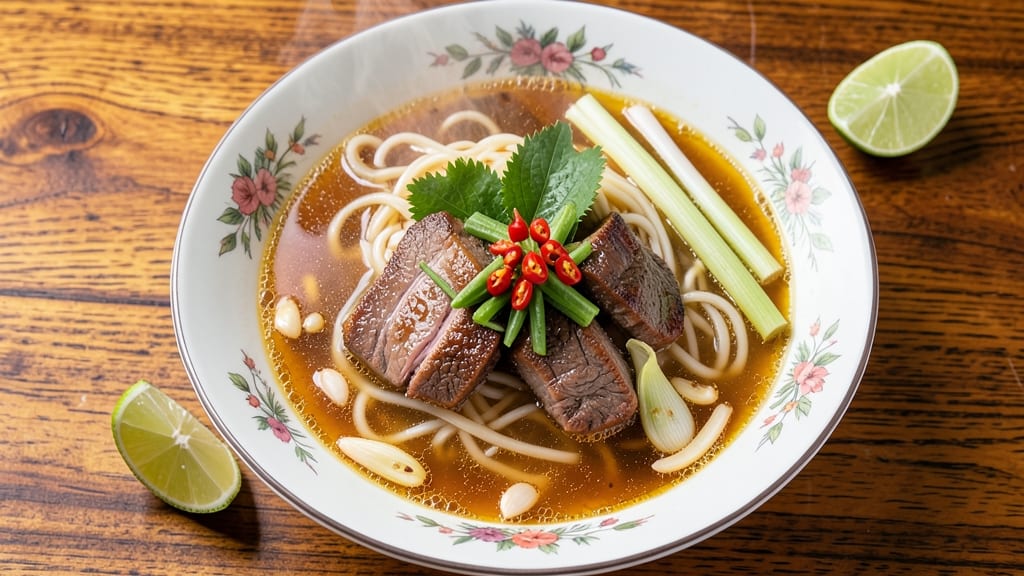
This authentic Thai beef noodle soup recipe brings the aromatic streets of Bangkok to your kitchen, where fragrant lemongrass and kaffir lime create a symphony of flavors in every spoonful. The secret lies in slow-simmered broth infused with galangal and lemongrass, creating depth that transforms simple ingredients into something extraordinary. I've perfected this recipe through years of testing, ensuring each element—tender beef, delicate rice noodles, and fresh herbs—comes together in perfect harmony.
The beauty of this dish is in its balance: rich yet light, spicy yet refreshing, with a broth so fragrant it transforms your kitchen into a Thai restaurant. We'll start with the aromatic base—lemongrass, galangal, and kaffir lime leaves—that forms the soul of the soup.
The beef cooks until fork-tender, absorbing the complex flavors, while rice noodles soak up the essence of the broth without becoming mushy. Every step is designed to preserve authenticity while making it achievable at home.
What you'll end up with is a steaming bowl of restaurant-quality beef noodle soup, where each component plays its part—tender beef, slippery noodles, fresh herbs, and a garnish of lime and chili for brightness.
The broth should be clear yet deeply flavorful, with just the right balance of spice and umami. This is the kind of soup that warms the soul and leaves you craving more, one bite at a time.
The best part? This recipe scales beautifully—whether you're feeding a family or meal prepping for the week. The broth can be made ahead and reheated, while the noodles and garnishes add freshness when assembled. Let's bring the flavors of Thailand to your table with this time-tested, authentic recipe.
Ingredients for authentic thai beef noodle soup
Fragrant galangal and lemongrass form the aromatic soul of this Thai beef noodle soup.
| Ingredient | Amount | Notes |
|---|---|---|
| Beef Chuck Roast 🥩 | 1 ½ lb | Cut into 1-inch cubes |
| Galangal Root 🍃 | 1 piece | Peeled, sliced into thin coins |
| Lemongrass Stalks 🌿 | 4 whole | Bruised, cut into 2-inch pieces |
| Kaffir Lime Leaves 🍋 | 4 whole | Bruised, torn in half |
| Shallots 🧅 | 6 whole | Peeled, thinly sliced |
| Garlic Cloves 🧄 | 6 cloves | Peeled, smashed |
| Fish Sauce 🍶 | 2 tbsp | Red Boat preferred |
| Palm Sugar 🍯 | 2 tbsp | Or light brown sugar |
| Rice Noodles 🍜 | 8 oz | Flat rice noodles, 1/4-inch wide |
| Fresh Thai Chili 🌶️ | 4 whole | Sliced into rings |
| Fresh Cilantro 🌿 | ½ cup | Chopped, for garnish |
| Lime Wedges 🍋 | 2 whole | For serving |
| Vegetable Oil 🫒 | 2 tbsp | For searing |
| Chicken or Beef Broth 💧 | 6 cups | Homemade or quality store-bought |
| Salt 🧂 | 1 tsp | Kosher or sea salt |
The galangal and lemongrass are non-negotiable here—Asian markets have the freshest, but most grocery stores carry them too. Look for galangal with tight, unblemished skin and vibrant color. The Red Boat brand fish sauce is worth the splurge for that authentic umami punch. Palm sugar can be swapped for light brown sugar, but it adds a subtle caramel note that works perfectly. For the beef, chuck roast stays tender while absorbing all those complex flavors—sirloin gets tough. If you can't find flat rice noodles, rice vermicelli works in a pinch, but soak them longer.
No galangal? Ginger at half the amount gets you close, though it won't be identical. Fresh Thai chilies too spicy? Serrano peppers work, but reduce to 2-3. The broth is where the magic happens—homemade is ideal, but that Swanson's low-sodium stuff in a pinch. Need extra richness? Add a splash of coconut milk at the end. The kaffir lime leaves are essential—their citrusy aroma is unmistakable. If you can't find them, lime zest plus a splash of lime juice helps, but it's not the same. For the noodles, soak them in hot water for 10-15 minutes before adding to the soup.
Broth keeps for 5 days in the fridge or 3 months frozen—make a double batch. The noodles are best added fresh, but prepped ahead and stored dry in an airtight container. Lime wedges and cilantro should be added right before serving. This soup tastes even better the next day as flavors meld. Portion into containers with a little broth to keep noodles from sticking. The beef reheats beautifully—just warm gently on the stove with a splash of water.
Why You'll Love This Recipe
- One-Pot Magic: I swear by this—just toss everything into a single pot and let it work its flavor. No fancy techniques, no extra bowls to wash. That galangal and lemongrass? They infuse the broth so deeply, you won’t even miss a blender.
- Umami Bomb: The beef chuck roast turns ridiculously tender, while the shallots and lime leaves add that bright, herbal punch. Honestly, the first sip makes me pause mid-stir. It’s the kind of depth that lingers, even after the last bite.
- Leftovers That Shine: This soup actually tastes better the next day—yes, really. I make a big batch on Sundays, and by Wednesday, it’s still the star of our lunch. Just reheat with a splash of water, and it’s like a fresh bowl.
- Budget-Friendly Feast: Beef chuck roast stretches further than you’d think, and the aromatics cost pennies. Between us, this is my go-to when I want restaurant-quality without the price tag. Plus, the leftovers feed me for days.
Step-by-step instructions for authentic Thai beef noodle soup
Here's how to build this fragrant, aromatic soup from scratch—layer by layer.
Build the Aromatic Base
Heat the 2 tablespoons vegetable oil in a large pot over medium heat. Add the 6 whole shallots and 6 cloves garlic cloves, cooking for 3-4 minutes until the shallots turn golden and fragrant. This is where all the magic starts—don't rush this step.
Add the 4 whole lemongrass stalks, 1 piece galangal root, and 4 whole kaffir lime leaves. Stir for 1 minute until the lemongrass releases its citrusy aroma. The galangal will add a peppery depth that's essential for authentic flavor. Keep the heat at medium—you want everything to gently sweat, not burn.
Sear the Beef for Rich Flavor
Push the aromatics to one side of the pot and add the 1.5 lb beef chuck roast cut into 1-inch cubes. Let the beef sear for 2-3 minutes until it develops a deep brown crust. This step creates the Maillard reaction that gives the soup its complex, savory depth.
Once browned, stir the beef to coat it in the aromatic oil, then add the 6 cups chicken or beef broth and 1 teaspoon salt. Bring to a gentle simmer, then reduce heat to low. Cover and let it cook for 1 hour, stirring occasionally. The beef should become fork-tender while infusing the broth with its rich flavor.
Balance the Broth with Sweet and Salty
After the beef has cooked, skim off any excess fat from the surface. Add the 2 tablespoons palm sugar and 2 tablespoons fish sauce, stirring to dissolve completely. Taste the broth—it should be perfectly balanced between sweet, salty, and umami. If it needs more depth, add another ½ teaspoon fish sauce. If it needs more brightness, add a pinch more sugar.
Simmer uncovered for another 10 minutes to let the flavors meld. The broth should now smell like a bustling Thai street market—citrusy, herbal, and deeply savory. This is where the soup's authenticity shines through.
Prepare and Assemble the Noodles
While the broth simmers, bring a separate pot of water to a boil. Add the 8 oz rice noodles and cook according to package directions (usually 2-3 minutes) until just tender. They should still have a slight bite—rice noodles finish cooking in the hot broth.
Drain the noodles and divide them among 4 bowls. Ladle the hot beef broth over the noodles, making sure each serving gets at least 1 beef cube. The hot broth will finish cooking the noodles perfectly.
Garnish and Serve for Maximum Flavor
Top each bowl with 4 slices of fresh Thai chili, 2 tablespoons chopped fresh cilantro, and serve with 2 lime wedges on the side. The chili adds a bright, spicy kick, while the cilantro brings freshness to cut through the richness. Squeeze lime juice over each bowl just before serving—this final step is non-negotiable for authentic flavor.
Serve immediately with extra lime wedges on the side. The soup should be fragrant, aromatic, and perfectly balanced—sweet, salty, spicy, and umami all in one bowl. Each bite should deliver tender beef, silky noodles, and a complex broth that sings with Thai flavors.
Pro Tips For Making Authentic Thai Beef Noodle Soup
- Char the Shallots: DESCRIPTION: Toss finely minced shallots in a dry pan over medium-high heat for 2-3 minutes until they darken and smell nutty—this builds depth before adding broth. I used to skip this, and the soup lacked that smoky backbone. Trust me, the extra 30 seconds makes a real difference.
- Slice Galangal Thin: DESCRIPTION: Use a mandoline or sharp knife to shave galangal into paper-thin slices (about 1/16-inch thick). Thicker pieces stay woody and undercooked; thin slices dissolve into the broth, releasing their citrusy punch. If you can’t find fresh, frozen works—just thaw and pat dry first.
- Simmer, Don’t Boil: DESCRIPTION: Once the broth is simmering, keep it at a gentle bubble—just small ripples breaking the surface. Boiling toughens the beef and scatters aromatics. I learned this the hard way after serving rubbery chunks to guests. A lid helps maintain low heat without direct flame.
- Save the Lemongrass Oil: DESCRIPTION: After removing the lemongrass stalks, scrape the bottom of the pot—the golden oil left behind is packed with flavor. Stir it back into the broth at the end; it’s what makes the soup taste like it came from a Bangkok street stall. (Yes, even if you’re impatient like me.)
Essential equipment for authentic thai beef noodle soup
Pot Essentials
A large, heavy-bottomed pot (I recommend All-Clad or Le Creuset) is non-negotiable for even heat distribution. The pot should hold at least 8 quarts to accommodate the broth and beef without overcrowding.
A tight-fitting lid helps trap steam for tender beef. For extra authenticity, use a wok for the initial searing—its sloped sides create better browning. 🔥
Knife and Cutting
Invest in a sharp chef's knife (like Wüsthof or Shun Premier) for efficient prep. The 1.5 lb beef chuck roast needs to be cut into 1-inch cubes—uniform size ensures even cooking.
A mandoline helps with the shallots if you prefer thin, even slices. Keep your cutting board clean to prevent cross-contamination with the raw beef. 🧂
Bruising Tools
For the lemongrass and galangal, a rolling pin or meat mallet is essential to bruise the ingredients—this releases their aromatic oils. I also use a mortar and pestle to lightly crush the kaffir lime leaves for maximum flavor extraction.
A microplane works for zesting lime wedges if fresh leaves aren't available. 🌿
Measuring Precision
Thai cooking relies on balanced ratios, so precise measurements matter. Use a digital kitchen scale for the palm sugar and fish sauce (I weigh mine to 0.01 oz for accuracy).
A spoon rest keeps your measuring spoons clean and organized. For the rice noodles, a fine-mesh strainer ensures they drain properly without breaking. ⚖️
Broth Control
A fine-mesh skimmer helps remove impurities from the broth while keeping the aromatics intact. I also keep a thermometer handy to monitor the broth temperature—it should never exceed 200°F to prevent tough beef. A slotted spoon makes it easy to transfer the beef cubes to bowls without the broth. 🌡️
Garnish Tools
Fresh Thai chilies and cilantro need sharp scissors for clean cuts. A small bowl of cold water keeps the cilantro bright while you prep. For serving, I use small ceramic bowls (like Corelle) to highlight the vibrant colors of the soup.
A lime zester adds professional garnish to the rims of bowls. 🍋
Nutrition facts
Frequently asked questions
Can I substitute beef with another protein?
While beef is traditional, chicken thighs or pork shoulder work well—they absorb flavors beautifully. For seafood lovers, firm white fish like cod (cooked for 8-10 minutes) or shrimp (added at the end) are excellent choices. Just adjust cooking times—seafood cooks much faster than beef.
How do I make the broth more aromatic?
For deeper flavor, add 1 stalk lemongrass and 1 kaffir lime leaf to the broth while simmering. Toast 1 tsp coriander seeds in a dry pan until fragrant, then steep in the broth for 10 minutes before straining. A splash of coconut milk (2 tbsp) at the end adds richness without overpowering.
Can I make this soup spicier?
Add 1 extra Thai chili per serving or increase to 3 tbsp chili flakes when balancing the broth. For heat lovers, stir in ½ tsp Thai bird's eye chili powder with the fish sauce. Always adjust gradually—you can add more, but you can't remove heat once it's in!
Why did my noodles turn mushy?
Rice noodles cook fast in hot broth—always soak them in hot water for 2-3 minutes first, then drain well. Add noodles to the soup just before serving so they absorb broth without overcooking. If using pre-cooked noodles, reheat them in the broth for 1-2 minutes only.
How can I make this vegetarian?
Replace beef with mushrooms (shiitake or oyster) or tofu (pressed and pan-fried). Use vegetable broth and add 1 tbsp soy sauce instead of fish sauce. Boost umami with 1 tsp miso paste or ½ cup coconut milk in the broth. Garnish with extra herbs and lime for brightness.