
Main Courses
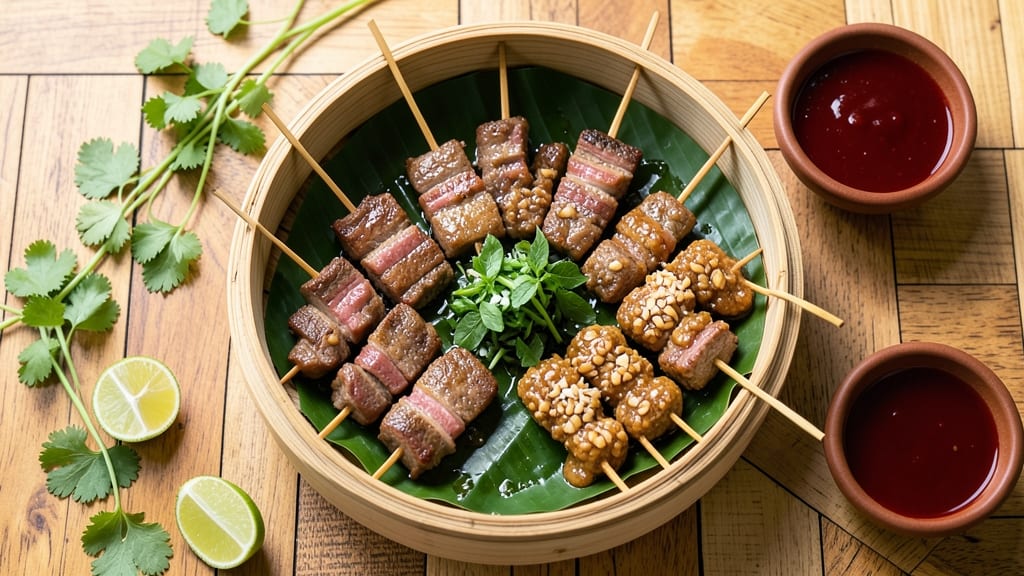
This authentic Thai beef satay recipe delivers restaurant-quality skewers with smoky char, tender beef, and fragrant herbs—just like Bangkok street stalls. The secret lies in marinating with lemongrass, galangal, and kaffir lime leaf, which infuse the beef with bright, aromatic depth.
I've perfected this technique over years of testing, ensuring every bite balances sweet, spicy, and umami flavors without overpowering the meat.
The process begins with a foolproof marinade that tenderizes the beef while building layers of flavor, followed by grilling to achieve those signature char marks. No special equipment is needed—just a grill (or skillet) and bamboo skewers.
The peanut sauce, made with coconut milk and chili, ties everything together with its creamy, slightly spicy richness. What you'll end up with is a dish that's as visually stunning as it is delicious, perfect for feeding a crowd or impressing guests.
Presentation matters just as much as taste. Skewer the beef neatly, arrange the satay on a platter with fresh herbs, and serve with a drizzle of peanut sauce and steamed jasmine rice.
The contrast of smoky, charred skewers against the vibrant green of cilantro and Thai basil creates a dish that's as much about beauty as it is about flavor. This recipe brings the soul of Thai street food to your kitchen—authentic, satisfying, and impossible to resist.
Once you master the marinade and grilling technique, you can experiment with variations like chicken or shrimp satay. The same principles apply, making this a versatile recipe for any occasion. Let's get started on creating your own taste of Thailand.
Ingredients for authentic thai beef satay
Pantry staples meet Thai market finds for skewers that taste like Bangkok street stalls.
| Ingredient | Amount | Notes |
|---|---|---|
| Flank Steak 🥩 | 1 ½ lb | Thinly sliced against grain |
| Lemongrass 🌿 | 1 whole | White part only, finely chopped |
| Galangal 🌿 | 3 inches | Peeled, sliced thin (substitute ginger) |
| Kaffir Lime Leaves 🍋 | 4 whole | Bruised and torn |
| Garlic Cloves 🧄 | 6 cloves | Minced or finely chopped |
| Fish Sauce 🍶 | 2 tbsp | Red Boat preferred |
| Palm Sugar 🍯 | 2 tbsp | Or brown sugar (1:1) |
| Turmeric Powder 🌶️ | 1 tsp | Freshly ground preferred |
| Coriander Seeds 🌿 | 1 tbsp | Toasted and ground |
| Coconut Milk 🥥 | 1 can | 13.5 oz can, full-fat |
| Peanut Butter 🥜 | ½ cup | Natural, unsweetened |
| Peanuts 🥜 | ¼ cup | Roasted, unsalted |
| Chili Paste 🌶️ | 1 tbsp | Thai or sambal oelek |
| Lime Juice 🍋 | 2 tbsp | Freshly squeezed |
| Fresh Cilantro 🌿 | ¼ cup | Chopped, for garnish |
| Bamboo Skewers 🪵 | 16 whole | Soaked in water 30 mins |
| Vegetable Oil 🫒 | 2 tbsp | For grilling |
| Salt 🧂 | 1 tsp | Kosher or sea salt |
| Black Pepper 🌶️ | ½ tsp | Freshly ground |
The beef is non-negotiable—flank steak slices thin against the grain for tenderness. Find lemongrass and galangal at Asian markets or order online; Thai Kitchen sells frozen galangal. Kaffir lime leaves? Trader Joe's carries them in the frozen section—thaw and use immediately. The Red Boat fish sauce is worth the splurge for authentic umami. Skip the pre-minced garlic—freshly minced with a knife releases more flavor. For the peanut sauce, natural peanut butter (no sugar or oil added) makes all the difference.
No galangal? Ginger at double the amount works in a pinch, though it won't be identical. Substitute palm sugar with brown sugar, but reduce to 1.5 tbsp—it's sweeter. The coconut milk can be light, but full-fat gives richer sauce. For extra heat, add 0.25 tsp cayenne to the marinade. The bamboo skewers? Soak them 30 minutes or they'll burn. If you can't find them, use metal skewers and oil them well. Fresh lime juice is a must—bottled won't cut it.
Marinated beef keeps 24 hours in the fridge, but flavor peaks after 4-6 hours. The peanut sauce can be made a day ahead—it tastes even better once the flavors meld. Store it in a jar with a thin layer of oil on top to prevent skin. Skewers reheat poorly, so grill just before serving. For leftovers, slice the beef off the skewers and toss with extra peanut sauce—it's perfect over rice or noodles.
Why You'll Love This Recipe
- One-Pan Magic: I swear by this trick—just slice the flank steak thin, toss it with the marinade (lemongrass, galangal, garlic), and let the grill or skillet do the rest. No flipping, no fussing, just that perfect char.
- Herb Bomb Flavor: Between us, the combo of kaffir lime leaves and galangal is next-level—bright, citrusy, with this underlying warmth that lingers. The garlic? Oh, it’s the cherry on top, turning every bite into a little Thai party in your mouth.
- Weeknight & Weekend Star: Honestly, this works for everything: a lazy Friday night with rice and peanut sauce, a potluck where you want to impress, or even a picnic if you’re feeling fancy. The skewers? They’re just as easy to pack as they are to eat.
- Budget-Friendly Protein Power: Flank steak stretches further than you’d think when sliced right, and the aromatics (lemongrass, galangal) make even a small portion feel luxurious. Leftovers? Toss them in a stir-fry or wrap—they’re just as good cold the next day.
Step-by-step instructions for authentic Thai beef satay
Here's how to craft restaurant-quality satay with vibrant flavors and perfectly charred skewers.
Prepare the Marination Paste
In a food processor, combine the finely chopped white part of 1 whole lemongrass, 3 inches peeled galangal, 4 whole bruised kaffir lime leaves, and 6 cloves minced garlic. Pulse until finely minced but not pasty. Transfer to a bowl and mix in 2 tablespoons fish sauce, 2 tablespoons palm sugar, 1 teaspoon turmeric powder, and 1 tablespoon toasted ground coriander seeds. Stir until fully combined—this aromatic paste is the heart of your satay.
Here's the thing—don't rush this step. The galangal and kaffir lime leaves need to release their citrusy, peppery notes into the paste. If you're substituting ginger for galangal, use the same quantity but know the flavor will be slightly milder. Taste the mixture now—it should be tangy, slightly sweet, and deeply aromatic. This is your flavor foundation.
Marinate the Beef
Slice the 1.5 lb flank steak thinly against the grain into strips about ¼-inch thick. Lay the slices in a single layer in a shallow dish and pour the marination paste over them. Using your hands, gently massage the paste into the beef until every piece is thoroughly coated. Cover and refrigerate for at least 4 hours, but I recommend overnight for maximum flavor penetration.
Don't skip this marination time—it's what transforms simple beef into tender, flavorful satay. The acidity from the fish sauce and lime will begin breaking down the meat fibers, ensuring tender bites. If you're short on time, marinate for a minimum of 2 hours, but you'll sacrifice some depth of flavor. Trust me, the wait is worth it.
Assemble and Skewer the Beef
Soak the 16 whole bamboo skewers in water for 30 minutes to prevent burning. Drain and thread 3-4 pieces of marinated beef onto each skewer, arranging them parallel to each other. Leave a small gap between each piece to ensure even cooking. You should have about 4 skewers with beef remaining—these will be perfect for seconds.
Here's a pro tip: don't overcrowd the skewers. If they're too packed, the beef won't sear properly and will steam instead of developing that beautiful charred crust. Arrange the skewers in a single layer in a dish and cover with plastic wrap. Refrigerate for 30 minutes before grilling to help them hold their shape.
Grill to Perfect Char
Heat a grill or grill pan over medium-high heat until it's screaming hot. Brush the grates with 2 tablespoons vegetable oil to prevent sticking. Grill the satay skewers for 2-3 minutes per side, turning only once. You're looking for deep golden-brown char with just a hint of blackened edges—this is what gives satay its authentic street-food appeal.
Don't walk away during this step. The high heat works quickly, and you want that perfect balance of tender beef and crispy exterior. If the skewers start to smoke heavily, reduce the heat slightly. The beef is done when it reaches an internal temperature of 145°F and pulls away from the skewer with gentle pressure. Transfer to a plate and tent loosely with foil to keep warm.
Make the Peanut Sauce
In a small saucepan, combine 1 can coconut milk, ½ cup peanut butter, 2 tablespoons lime juice, 1 tablespoon chili paste, and 1 teaspoon salt. Whisk over medium heat until the peanut butter melts completely and the mixture is smooth. Simmer for 3-4 minutes until slightly thickened—it should coat the back of a spoon but still be pourable.
Here's where it gets delicious: stir in ½ teaspoon black pepper and taste. The sauce should be creamy, slightly spicy, and tangy. If it's too thick, whisk in 1-2 tablespoons water to reach your desired consistency. Keep the sauce warm over low heat until ready to serve.
Serve with Style
Arrange the grilled satay skewers on a platter and drizzle generously with the peanut sauce. Sprinkle with ¼ cup chopped fresh cilantro and serve immediately with steamed rice and cucumber slices. For extra authenticity, offer small bowls of the peanut sauce on the side so everyone can customize their dipping experience.
Each bite should deliver perfectly charred beef with tender, juicy centers, coated in that rich, nutty, slightly spicy peanut sauce. The combination of smoky grill marks, aromatic marinade, and creamy peanut sauce is what makes this satay truly authentic. Serve with a cold Thai beer or iced tea for the complete experience.
Pro Tips For Making Authentic Thai Beef Satay
- Skewer Dry, Then Grill Fast: Pat those marinated beef strips bone dry before threading them onto skewers—wet meat sticks like glue and won’t brown. Then, hit the grill or broiler on high for the first 2 minutes to sear a crust. After burning three batches of unevenly cooked satay, I finally cracked this.
- Use Kaffir Lime Leaves Whole: Tear them into rough pieces, not tiny bits—they add aroma without turning the marinade into a leafy sludge. Toss them in with the galangal and garlic, then fish them out before grilling. Sounds weird, but it works: the flavor infuses without making your satay look like a salad.
Wine and beer pairings for these flavors
Thai Beer Pairings
For an authentic Thai dining experience, reach for a crisp Singha or Chang beer—both are staples in Bangkok street food culture. Their light, slightly malty profiles complement the smoky char of the satay without overpowering the delicate marinade flavors.
I always keep a cold Singha on hand when making satay because its subtle citrus notes echo the kaffir lime in the dish. 🍺
If you prefer something with a bit more body, try a Thai lager like Leo, which has a touch of sweetness that balances the peanut sauce's spiciness. For a local favorite, ask your Thai market for Siam Osiris, a refreshing lager that's widely enjoyed with street food.
Thai Whiskey Options
While beer is traditional, a smooth Thai whiskey like Mae Klong or Mae Taeng adds a sophisticated touch to your satay spread. These whiskeys have a caramel sweetness that pairs beautifully with the peanut sauce, while their subtle spice notes harmonize with the marinade. Serve them neat or on the rocks for a more upscale presentation.
Non-Alcoholic Pairings
For a non-alcoholic option, nothing beats Thai iced tea—sweet, creamy, and slightly tannic from the black tea leaves. Brew 2 tbsp loose-leaf Thai tea with 4 cups boiling water, add ½ cup sweetened condensed milk, and chill.
The tea's natural bitterness cuts through the richness of the peanut sauce while its sweetness complements the charred beef.
Wine for Adventurous Palates
While wine isn't traditional, a light-bodied Thai red like Oudorn Meeyo or a crisp Pinot Noir can work surprisingly well with satay. The red wine's acidity helps cleanse the palate between bites, while its berry notes complement the peanut sauce.
For a white option, try a Thai Riesling—its bright acidity and citrus flavors mirror the kaffir lime in the marinade.
Presentation Tips
Serve your satay with small bowls of both beer and peanut sauce on the side for dipping. The visual contrast of golden skewers against dark beer and creamy sauce makes for an impressive presentation.
I like to arrange the skewers in a circular pattern on a large platter, creating a sense of abundance that's perfect for sharing. 🌟
Nutrition facts
Frequently asked questions
Can I use chicken instead of beef for satay?
Chicken satay is equally delicious and works beautifully with the same marinade. Use 1.5 lbs boneless chicken thighs or breasts, sliced into ¼-inch thick pieces. Chicken cooks faster than beef, so grill for 1-2 minutes per side over medium-high heat until fully cooked (165°F internal temp). The texture will be slightly different but just as flavorful.
What if I can't find galangal or kaffir lime leaves?
No problem! For galangal, use double the amount of ginger (6 inches) for a milder flavor. For kaffir lime leaves, substitute with 1 tbsp lime zest + 1 tbsp lime juice or 2 tbsp lemon zest + 1 tbsp lemon juice. The dish will still taste amazing—just slightly less aromatic.
How do I prevent the skewers from falling apart while grilling?
Soak bamboo skewers in water for 30 minutes to prevent burning, then pat dry. Thread the beef snugly but not too tightly—leave ¼-inch gaps between pieces. Chill the assembled skewers for 30 minutes before grilling to help them hold shape. If using metal skewers, oil them well to prevent sticking.
Can I make the peanut sauce ahead of time?
Yes! The peanut sauce actually improves overnight. Store it in an airtight container with a thin layer of oil on top to prevent skin. Reheat gently on low heat, stirring occasionally, until warmed through. For extra richness, add 1 tsp coconut milk when reheating. The flavors meld beautifully over time.
What's the best way to serve satay for a crowd?
Double the recipe and set up a DIY satay station! Arrange grilled skewers on a large platter, serve peanut sauce in small bowls, and offer toppings like sliced cucumbers, Thai basil, and lime wedges. Provide extra skewers for seconds and extra sauce for dipping. For presentation, use banana leaves if available—they add authenticity and keep the skewers warm.