
Main Courses
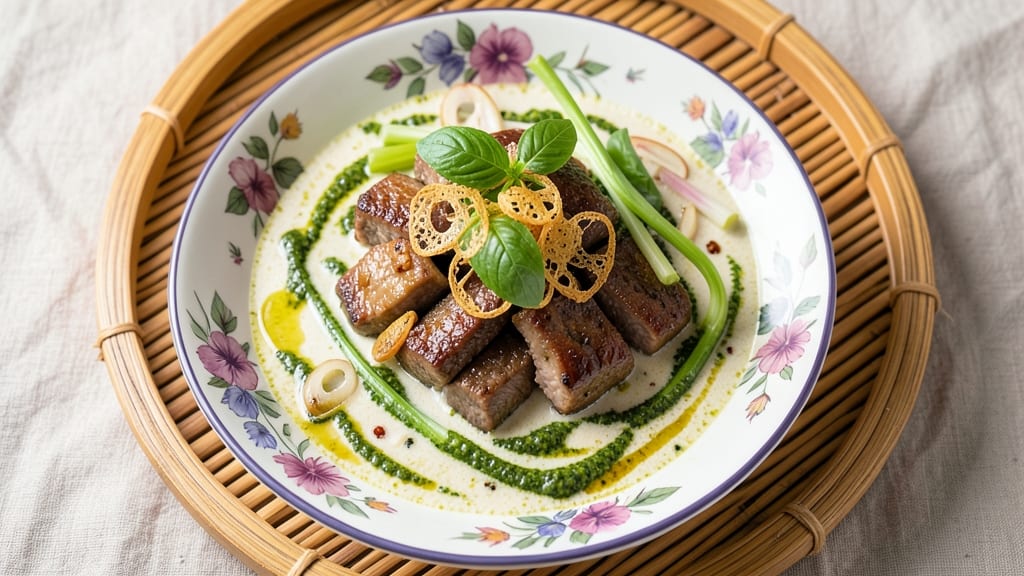
This authentic Thai green beef curry recipe delivers the perfect harmony of fiery heat, fragrant herbs, and creamy coconut—just like your favorite street-side stall in Bangkok.
The secret lies in balancing fresh green curry paste with tender beef and aromatic ingredients like lemongrass and galangal, creating layers of flavor that build with every bite.
What sets this recipe apart is the traditional technique of blooming the spices in coconut milk before adding beef, ensuring deep, caramelized flavors rather than a one-dimensional sauce. I’ve simplified the process without sacrificing authenticity, so you can achieve restaurant-quality results at home with just 45 minutes of active time.
The result is a vibrant curry with tender beef chunks swimming in a velvety-green sauce—bright from Thai basil and lime, with just the right kick from chili.
The aroma alone will have everyone gathering around the table, and the balance of heat, sweetness, and umami makes it a dish worth repeating.
Serve it over fragrant jasmine rice with steamed bok choy or a crisp cucumber salad to round out the meal. Here’s how to make it—step by step—for a curry that tastes like a trip to Thailand.
Ingredients for authentic thai green beef curry
Balanced heat, fragrant herbs, and creamy coconut—these ingredients create an authentic Thai green curry experience.
| Ingredient | Amount | Notes |
|---|---|---|
| Beef Chuck Roast 🥩 | 1 ½ lb | Cut into 1-inch cubes |
| Coconut Milk 🥥 | 1 can | 13.5 oz can, full-fat |
| Green Curry Paste 🌶️ | 3 tbsp | Store-bought or homemade |
| Lemongrass 🌿 | 1 whole | Bruised and cut into 2-inch pieces |
| Galangal 🌿 | 1 piece | 3-inch piece, peeled and sliced |
| Thai Basil Leaves 🌿 | ½ cup | Packed, stems removed |
| Lime Juice 🍋 | 2 tbsp | Freshly squeezed |
| Fish Sauce 🍶 | 1 tbsp | Red Boat brand preferred |
| Palm Sugar 🍚 | 1 tbsp | Or substitute brown sugar |
| Garlic Cloves 🧄 | 4 cloves | Minced |
| Shallots 🧅 | 2 whole | Peeled and thinly sliced |
| Kaffir Lime Leaves 🍋 | 2 whole | Bruised and torn |
| Red Chili Peppers 🌶️ | 1 piece | Bird's eye or Thai chili |
| Salt 🧂 | 1 tsp | Kosher or sea salt |
| Black Peppercorns 🌶️ | ½ tsp | Crushed |
The green curry paste is non-negotiable for authentic flavor. Maesri or Thai Kitchen brands are reliable, but if you're ambitious, making your own from scratch reveals deeper complexity. Look for vibrant green paste with visible herbs—no grayish or dull colors. Lemongrass and galangal are the aromatic backbone; Thai markets or specialty grocers carry them fresh. If galangal is unavailable, ginger works in a pinch, though it lacks the citrusy depth. The beef should be chuck roast for tenderness—Costco or local butchers often have it pre-cubed, saving prep time. For coconut milk, full-fat ensures richness, and Thai Kitchen brand is my go-to for authentic flavor.
No green curry paste? Mix 2 tbsp red curry paste with 1 tsp fresh cilantro as a substitute. Thai basil is essential—substitute regular basil at half the amount if needed, but the flavor won't be identical. Fish sauce adds umami depth; Red Boat brand is the gold standard, but any reputable brand works. Palm sugar is ideal, but light brown sugar is a fine alternative. The kaffir lime leaves are crucial for aroma—if unavailable, double the lime juice and add a pinch of lime zest. For heat control, remove chili seeds before adding, or use less chili entirely. Prep all aromatics first: bruise lemongrass and galangal with the side of your knife to release oils.
This curry tastes even better the next day as flavors meld. Store in an airtight container in the fridge for 3-4 days, or freeze for up to 3 months—portion into single servings for easy reheating. To reheat, add 2 tbsp coconut milk per serving and warm gently over low heat. The sauce thickens as it cools, so a splash of water or coconut milk can restore creaminess. Serve with jasmine rice and a side of quick-pickled vegetables to balance the richness. Garnish with extra Thai basil and lime wedges just before serving for maximum freshness.
Why You'll Love This Recipe
- One-Pot Magic: The second the green curry paste hits the pan with lemongrass and galangal, you’re halfway home. No chopping mountains of veggies—just toss in the beef, coconut milk, and let it simmer. That’s it. Done.
- Taste Like Thailand: Honestly, the first time I made this, I nearly cried. The galangal’s citrusy bite cutting through the rich coconut milk? The beef falling apart but still tender? It’s the kind of flavor that makes you want to eat it straight from the pot.
- Meal Prep MVP: This curry actually improves the next day—better flavors meld together. I make a double batch on Sundays, freeze half, and boom: zero-stress weeknight dinner. (Yes, even on a Tuesday night.)
- Budget Beef Boost: A pound of chuck roast stretches farther than you’d think when braised in coconut milk. Add some rice, and you’ve fed four people for under $15. That’s a steal for something this crave-worthy.
Step-by-step instructions for authentic Thai green beef curry
Master this traditional technique for a curry that balances vibrant green paste with tender beef and coconut richness.
🍳 Step 1: Prepare the Aromatic Base
In a heavy-bottomed pot, heat 1 tablespoon of oil over medium heat. Add the 2 whole shallots and 4 cloves garlic and sauté for 3-4 minutes until the shallots turn translucent and the garlic releases its fragrance. This foundational step builds flavor that carries through the entire dish.
Add the 3-inch piece of peeled and sliced galangal and 2-inch pieces of bruised lemongrass to the pot. Cook for another 2 minutes until the galangal softens slightly and the lemongrass releases its citrusy aroma. These aromatic roots are essential for authentic Thai flavor—don't skip this step. The galangal should smell earthy and the lemongrass should perfume the kitchen noticeably.
🍳 Step 2: Develop the Curry Paste
Increase heat to medium-high and add the 3 tablespoons green curry paste. Stir continuously for 2 minutes until the paste darkens slightly and releases its oils. This process activates the paste's flavors and prevents a raw taste in the final dish.
Watch carefully—the paste should coat the bottom of the pot and smell intensely herbal with hints of lime and chili. If it sticks, add 1 tablespoon water to help it release. The paste contains fresh herbs and chilies that will wilt down as they cook, so don't worry if it looks too much at first. This is where the authentic Thai flavor profile begins to develop.
🍳 Step 3: Cook the Beef Until Tender
Add the 1.5 lb beef chuck roast cut into 1-inch cubes to the pot. Stir to coat the beef evenly with the curry paste, then add 1 tablespoon fish sauce, 1 tablespoon palm sugar, and 1 teaspoon salt. Pour in ½ cup water and bring to a simmer.
Cover the pot and reduce heat to low. Let the beef simmer gently for 45-50 minutes, stirring occasionally, until it becomes fork-tender. The beef should pull apart easily when tested with a fork and the cooking liquid should reduce slightly. This slow cooking process is crucial for developing deep, meaty flavor while keeping the beef moist. If the liquid reduces too quickly, add 1-2 tablespoons water as needed.
🥘 Step 4: Finish with Coconut Milk and Herbs
Pour in the 1 can coconut milk and stir gently to combine. Add the 2 whole kaffir lime leaves and 1 piece red chili peppers (whole for heat control). Bring to a gentle simmer and cook uncovered for 15-20 minutes until the sauce thickens slightly and the coconut milk integrates completely.
Remove the pot from heat and stir in the 0.5 cup Thai basil leaves and 2 tablespoons lime juice. The basil should wilt slightly but remain vibrant green. Taste and adjust seasoning with additional fish sauce for saltiness or palm sugar for sweetness. The curry should balance heat, sweetness, and umami with a bright finish from the lime. Let the curry rest for 5 minutes before serving to allow flavors to meld completely.
🍽️ Step 5: Serve with Traditional Accompaniments
Discard the galangal, lemongrass, and kaffir lime leaves before serving. Ladle the curry into bowls and garnish with additional Thai basil leaves if desired. This curry pairs beautifully with jasmine rice or steamed rice noodles, which help balance the rich coconut sauce.
For an authentic experience, serve with fresh cucumber slices and a side of pickled vegetables to cut through the richness. The curry should have a vibrant green color from the herbs, a velvety texture from the coconut milk, and a complex flavor profile that combines heat, sweetness, and umami. Each bite should deliver tender beef in a well-balanced sauce that reflects the authentic Thai technique.
Pro Tips For Making Authentic Thai Green Beef Curry
- Bloom the Paste First: Toss your green curry paste into the hot pan before adding oil—this releases its aromatic oils instantly. I used to add oil first, and the paste would just sit there, burning instead of singing. Let it sizzle for 30 seconds until it darkens slightly, then add the oil. That’s when the real flavor starts working.
- Slice Galangal Thin: Galangal’s tough fibers need a good beating—literally. Pulse it in the food processor until it’s almost paste-like, then slice it paper-thin. Thick chunks just sit in the curry like awkward guests. If you’re skipping the processor, pound it with the flat side of your knife until it’s tender enough to cut.
- Don’t Rush the Beef: Beef chuck needs time—at least 2 hours simmering on low heat, covered. I’ve seen people speed this up, and the meat turns out chewy instead of meltingly tender. Check for doneness by piercing it with a fork; if it slides in like butter, you’re golden. (Yes, even if you’re impatient like me.)
- Stir the Coconut Milk: Coconut milk separates when heated, and that’s not a good look. Before adding it to the pot, give the can a good shake, then whisk the top layer back in. If you’re lazy, just skim off the thick cream that rises to the top after simmering and stir it back into the sauce—it’ll make the curry richer without curdling.
Make-ahead tips for this recipe
Prep Ahead Basics
The key to stress-free curry prep is starting with the aromatics. Bruise the lemongrass and galangal up to 3 days ahead and store them in a sealed container in the fridge. This releases their oils early, intensifying flavor.
I also prep the beef cubes and marinate them overnight in 1 tbsp fish sauce, 1 tbsp lime juice, and 1 tsp palm sugar—this keeps them tender and infuses them with Thai flavors. 🌿
Sauce Prep Shortcut
Make the curry base up to 2 days ahead by cooking the paste, aromatics, and beef through Step 3 (simmering the beef). Let it cool completely, then store in an airtight container in the fridge. When ready to serve, simply add the coconut milk and finish with fresh herbs.
The flavors deepen overnight, and the sauce will be even more balanced. This cuts your active cooking time to just 15 minutes on serving day!
Freezing for Later
Freeze the fully cooked curry (after Step 4) in single-serving portions in heavy-duty freezer bags. Label with the date—it keeps for up to 3 months. To reheat, thaw overnight in the fridge, then gently warm on the stovetop with 2 tbsp coconut milk to restore creaminess.
Microwaving works too, but add a splash of water to prevent drying out. The texture stays rich and the flavors remain vibrant. ❄️
Rice Prep Hack
Cook jasmine rice the day before and store it in the fridge. Reheat it in a steamer basket over simmering water for 5 minutes before serving—this keeps it light and fluffy. For extra efficiency, make a big batch of rice and freeze half in 1-cup portions.
When reheating, add 1 tsp oil to the pot to prevent sticking. Trust me, this saves time and keeps your rice from turning into a gluey mess. 💡
Garnish Freshness
Store Thai basil and lime wedges separately in the fridge. Add them just before serving to keep their bright flavors intact. If you're prepping ahead, store the basil leaves in a damp paper towel in a sealed container—they’ll stay fresher longer.
For lime, keep wedges in a small airtight container with a paper towel to absorb moisture. Fresh garnishes make all the difference in that final presentation. ✨
Reheating Perfection
When reheating, never skip the coconut milk splash—it prevents the sauce from splitting or becoming too thick. Heat on low-medium for 5-7 minutes, stirring occasionally. If the curry looks dry, add 1-2 tbsp water or coconut milk and simmer until creamy.
For extra richness, stir in 1 tsp butter at the end. The result? A curry that tastes almost as good as freshly made. 🔥
Nutrition facts
Frequently asked questions
What makes this green curry different from red curry?
The key difference lies in the green curry paste, which contains fresh herbs like cilantro stems, Thai basil, and green chilies, giving it a vibrant color and brighter, more herbal flavor. Red curry uses dried chilies and less coconut milk, creating a deeper red hue and richer, spicier taste. This green version balances heat with freshness from lime and basil, while red curry leans into smoky, spicy depth.
Can I substitute beef with another protein?
For a vegetarian version, use extra-firm tofu (pressed and cubed) or mushrooms like oyster or shiitake. Chicken works well too—use bone-in thighs for juiciness and cook for 25-30 minutes instead. Shrimp cooks in just 5-7 minutes but should be added after the coconut milk stage to avoid overcooking. Just adjust cooking times to ensure tenderness.
Why does my curry taste bitter or raw? Bitterness usually means the green curry paste wasn't cooked long enough to release its oils. Always stir the paste for 2-3 minutes over medium-high heat until it darkens and smells fragrant. Raw flavors come from undercooked aromatics—
How do I adjust the spice level?
For milder heat, remove the seeds from Thai chilies before adding them, or use half the amount of paste. To increase spice, add extra chopped chilies or a dash of chili flakes at the end. Balance heat with palm sugar or lime juice—sweetness and acidity naturally counteract spiciness. Taste as you go and adjust gradually.
Can I make this curry in an Instant Pot?
Yes! Sauté the shallots, garlic, galangal, and lemongrass in 1 tbsp oil on "Sauté" mode. Add the curry paste and cook for 1 minute, then add beef, fish sauce, sugar, and water. Seal the lid and cook on High Pressure for 20 minutes, followed by a 10-minute natural release. Stir in coconut milk, kaffir lime leaves, and chilies, then cook on "Sauté" for 5 minutes to finish. The pressure method keeps beef tender and speeds up cooking time.