
Main Courses
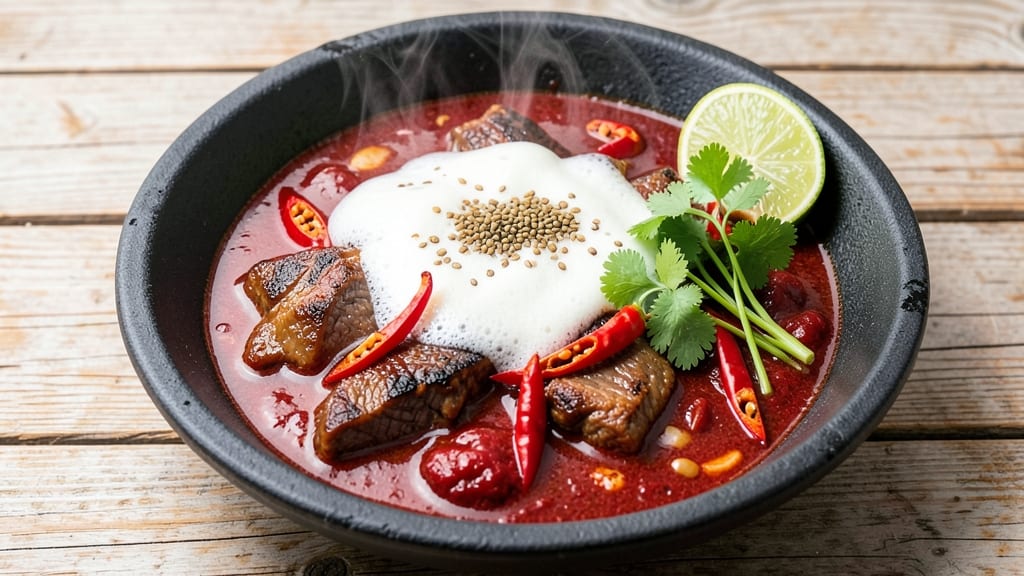
This authentic Thai red beef curry recipe delivers the bold, complex flavors you crave—deeply spiced, coconut-rich, and packed with the perfect balance of sweet, sour, spicy, and umami.
The secret lies in building the curry paste from scratch, where toasted aromatics like lemongrass, galangal, and kaffir lime leaves infuse every bite with authentic Thai soul.
I’ve perfected this one-pot method over years of testing, ensuring the beef becomes tender while absorbing the vibrant red sauce without losing its natural richness.
The beauty of this dish is in its layers—first, the paste is rendered until fragrant, then simmered with coconut milk to create a velvety base. Thin slices of beef cook low and slow, transforming into fork-tender pieces that melt in your mouth.
What sets this apart is the careful balance of flavors: a touch of palm sugar for sweetness, fish sauce for umami depth, and lime juice for that signature tang.
The result is a curry that’s as visually stunning as it is delicious, with a glossy, aromatic sauce that clings to every bite.
What makes this recipe truly special is how it captures the essence of a Thai home kitchen—no shortcuts, just time-honored techniques. The beef develops a caramelized crust from the curry paste, while the coconut milk stays creamy without curdling.
Serve it over fragrant jasmine rice or with a crisp cucumber salad to cut through the richness, and you’ll have a meal that transports you to the streets of Bangkok with every spoonful.
This is the kind of curry that disappears faster than you can say "mai pen rai." Let’s get cooking—your taste buds will thank you.
Ingredients for authentic thai red beef curry
Pantry staples meet Thai market finds for this deeply aromatic curry—everything you need for bold, one-pot magic.
| Ingredient | Amount | Notes |
|---|---|---|
| Thinly Sliced Beef 🥩 | 1 ½ lb | Ribeye or sirloin preferred |
| Coconut Milk 🥥 | 1 can | Full-fat, 13.5 oz can |
| Red Curry Paste 🌶️ | ½ cup | Store-bought or homemade |
| Palm Sugar 🍯 | 2 tbsp | Or brown sugar substitute |
| Fish Sauce 🍶 | 2 tbsp | Red Boat preferred |
| Lime Juice 🍋 | 2 tbsp | Freshly squeezed |
| Lemongrass 🌿 | 1 whole | Lower 3 inches only |
| Galangal 🌿 | 1 piece | 3-inch piece, peeled |
| Kaffir Lime Leaves 🍃 | 4 whole | Torn into strips |
| Garlic Cloves 🧄 | 6 cloves | Peeled and smashed |
| Shallots 🧅 | 4 whole | Peeled and sliced |
| Thai Chili Peppers 🌶️ | 2 whole | Adjust for heat |
| Vegetable Oil 🫒 | 2 tbsp | For toasting aromatics |
| Salt 🧂 | 1 tsp | Kosher or sea salt |
| Black Pepper 🌶️ | ½ tsp | Freshly ground |
The curry paste is non-negotiable for authentic flavor. Maesri or Simply Thai brands from the Asian market are my go-tos—they've got that perfect balance of spicy, sweet, and funky. If you're making your own, toast the aromatics (lemongrass, galangal, shallots, garlic) in oil until fragrant—that's where the soul of the dish lives. Galangal looks like ginger but tastes like a mix of pepper and citrus, so don't skip it. Asian grocery stores carry it fresh, or grab the canned version if you're in a pinch. For the beef, thin slices are key—ask your butcher to slice it against the grain if you're buying a whole cut. The ribeye stays juicier than sirloin in this long cook.
No lemongrass? Substitute 1 tbsp lime zest plus 1 tbsp lime juice—it won't be identical, but it'll work. Galangal missing? Double the ginger and add a pinch of black pepper for depth. Running low on fish sauce? Soy sauce plus a splash of Worcestershire gets you close, though the umami won't be quite the same. The palm sugar can be swapped for brown sugar, but it adds a caramel note that's hard to replicate. For the chili peppers, bird's eye peppers are traditional, but Thai chili sauce works too—just adjust to taste. And if you're worried about the lime juice making the sauce too thin, start with less and add more at the end.
This curry tastes even better the next day as the flavors meld. Store leftovers in an airtight container in the fridge for up to 4 days, or freeze for 3 months. The sauce thickens when chilled, so stir in a splash of coconut milk or water when reheating. I like to portion mine into containers with a scoop of jasmine rice on top—just grab and heat. The lime leaves add amazing aroma, but they're edible too—just tear them out before serving if anyone's sensitive. And if you've got extra paste, it keeps in the freezer for 6 months—perfect for quick curries later.
Why You'll Love This Recipe
- One-Pot Magic: I swear by this recipe—just stir-fry the beef, toss in the curry paste, splash on coconut milk, and let it simmer. No chopping, no fuss, and honestly? That’s half the battle won.
- Umami Bomb: The fish sauce and palm sugar balance like nothing else—sweet, salty, with that deep, earthy kick from the red curry paste. It’s the kind of flavor that makes you pause mid-bite, like, "Wait, why isn’t this on my weekly rotation?"
- Leftovers That Shine: This curry actually improves the next day. The beef gets even more tender, and the coconut milk thickens into a velvety sauce. I make a double batch on Sundays—one for dinner, one for lazy nights with rice and lime wedges.
- Budget-Friendly Luxury: Thinly sliced beef stretches far, and the other ingredients? Affordable staples. For the cost of a takeout order, I feed four people a dish that tastes like a Bangkok street stall. (Yes, even on a Tuesday night.)
Step-by-step instructions for authentic Thai red beef curry
This one-pot wonder delivers restaurant-quality Thai flavors with minimal cleanup—just follow the sequence.
Toast the Aromatics for Maximum Flavor
Heat the 2 tablespoons vegetable oil in a heavy-bottomed pot over medium heat. Add the 4 whole shallots, 6 cloves garlic, 2 whole Thai chili peppers, the 3-inch piece galangal (peeled and sliced into ½-inch pieces), and the lower 3 inches of lemongrass (bruised with the side of a knife). Cook for 5-6 minutes until the shallots turn golden brown and the garlic smells irresistible.
Here's the thing—this toasting step develops deep, nutty flavors that store-bought curry pastes can't replicate. Toss in the 4 whole kaffir lime leaves (torn into strips) and cook for another 30 seconds until fragrant. Remove the aromatics with a slotted spoon and set aside—you'll add them back later for infusion.
Build the Curry Base with Red Paste
Reduce the heat to medium-low and add the ½ cup red curry paste. Stir continuously for 2-3 minutes until it darkens slightly and releases its aromatic oils. This is where the magic happens—the paste's spices will bloom and create the curry's signature depth.
I like to press the paste into the bottom of the pot with a wooden spoon, scraping up any browned bits from the previous step. This ensures you capture all those flavorful fond particles. Pour in the 1 can coconut milk (don't stir yet) and let it sit for 1 minute—this creates a silky, emulsified base instead of a broken sauce.
Simmer the Beef Until Tender
Add the 1.5 pounds thinly sliced beef (ribeye or sirloin works best) and stir gently to coat in the sauce. Pour in 1 cup water (enough to barely cover the beef) and bring to a gentle simmer. Partially cover the pot and cook for 20-25 minutes until the beef is fork-tender but not falling apart.
Real talk: Don't rush this step. The beef needs time to absorb all those complex flavors. Stir occasionally, but not constantly—you want the sauce to reduce slightly and concentrate. You'll know it's ready when the beef releases easily from the sauce and has just a few minutes of resistance when pierced with a fork.
Balance and Finish the Curry
Return the reserved aromatics to the pot and add the 2 tablespoons palm sugar, 2 tablespoons fish sauce, and 2 tablespoons lime juice. Stir well and simmer uncovered for 5-7 minutes until the sauce thickens slightly and coats the back of a spoon. Taste and adjust seasoning with salt and ½ teaspoon black pepper—you might not need much salt since fish sauce is already salty.
Here's where it gets fun—the curry should sing with sweet, spicy, salty, and sour notes all in harmony. If it's too thick, add 2-3 tablespoons water to loosen it. If it needs more brightness, squeeze in a little extra lime. The goal is balance, not overwhelming heat.
Rest and Serve with Confidence
Remove from heat and let the curry rest for 10 minutes. This resting period allows all the flavors to meld together—don't skip it! Serve immediately with steamed jasmine rice to soak up that rich coconut sauce.
Each bite should deliver tender beef swimming in a velvety sauce with layers of spice, sweetness, and acidity. The kaffir lime leaves add a citrusy aroma, while the lemongrass and galangal provide that authentic Thai depth. Trust the process—this one-pot curry is packed with restaurant-quality flavor without the fuss.
Pro Tips For Making Authentic Thai Red Beef Curry
- Bloom the Paste First: After burning three batches of curry paste on the bottom of the pan, I learned to toss it in first with 1-2 tablespoons of oil and cook on medium-low for 3-4 minutes. This releases the flavors without scorching—just stir constantly and resist the urge to crank the heat. The paste should smell fragrant and deep, not bitter.
- Slice Beef Against the Grain: Thinly sliced beef cooks faster than you’d think, but if you cut it with the grain, you’ll end up with chewy, rubbery bites. Slice against the grain into paper-thin strips—about 1/8-inch thick—and pat them dry before searing. Wet beef will steam instead of brown, and that’s where the flavor hides.
- Split the Coconut Milk: Pour in half the coconut milk first, bring it to a gentle simmer, and let it reduce by about 20% before adding the rest. This thickens the sauce naturally without separating—something that happens more often than you’d expect. Stir occasionally, and if it starts to curdle, lower the heat immediately.
- Balance the Fish Sauce: Start with half the fish sauce called for, taste, and adjust. The curry paste already packs salt, and palm sugar can mask the funk if you overdo it. I used to dump it all in and wonder why the dish tasted flat—turns out, you’re tasting the aftertaste of too much, not the flavor.
Storing and reheating this recipe
Fridge Storage Tips
Let your curry cool to room temperature (about 1 hour) before transferring to an airtight container. I use glass Pyrex with tight-sealing lids to maintain freshness. Store in the fridge at 40°F or below for up to 4 days—the flavors actually deepen overnight as the spices meld.
The sauce will thicken slightly when chilled, which is normal. 🥥
Freezer Prep
For longer storage, portion the curry into freezer-safe containers or heavy-duty freezer bags, leaving 1-inch headspace for expansion. Freeze for up to 3 months. I like to freeze it in individual portions with a scoop of jasmine rice on top—just grab and reheat.
Label with the date to track freshness. ❄️
Reheating Methods
For best texture, reheat on the stovetop over medium-low heat. Add 2-3 tablespoons water or coconut milk to prevent drying out, and simmer for 5-7 minutes until heated through. Stir occasionally to distribute heat evenly. The sauce should return to a velvety consistency. 🔥
Microwave Shortcut
If you're short on time, microwave individual portions covered with a damp paper towel. Heat on 70% power for 2-3 minutes, stir, then continue in 30-second intervals until reaching 165°F. Add a splash of water if the sauce looks too thick. This method works best for quick lunches.
Reviving Leftover Sauce
If your curry sauce has separated after refrigeration, stir in 1-2 tablespoons coconut milk and heat gently. The sauce should re-emulsify into a smooth consistency. For extra brightness, add a squeeze of fresh lime juice before serving. This trick works like magic for restoring that restaurant-quality texture. 💫
Serving Suggestions
Serve reheated curry with freshly steamed jasmine rice to soak up all that rich sauce. For contrast, add a side of cucumber salad with rice vinegar and chili flakes.
Garnish with fresh cilantro or Thai basil just before serving to keep the flavors vibrant. The lime leaves add amazing aroma—remove them before serving if anyone prefers. 🌿
Nutrition facts
Frequently asked questions
Why does authentic Thai red curry need toasting?
Toasting the aromatics (shallots, garlic, lemongrass, galangal) for 5-6 minutes unlocks their full flavor potential. This step develops deep, nutty notes that store-bought pastes can't replicate. Skipping it results in a flat, one-dimensional taste—like missing the soul of the dish!
Can I substitute palm sugar in this recipe?
Yes, but expect a slightly different flavor profile. Use brown sugar in equal amounts, though it adds a caramel note that's not identical to palm sugar's delicate sweetness. For authenticity, seek out palm sugar at Asian markets—it's worth the hunt for that signature Thai balance.
How do I adjust the spice level?
Start with the 2 whole Thai chili peppers as written, then taste before serving. For more heat, add 1 extra chili pepper or a dash of chili flakes. To reduce spice, remove the chili seeds before cooking. Remember: Thai curries are meant to be balanced, not overwhelming!
What if my curry sauce separates after cooking?
Don't panic! This happens when coconut milk breaks. Stir in 1-2 tablespoons coconut milk and simmer for 2-3 minutes until smooth. For extra brightness, add 1 teaspoon lime juice. The key is gentle heat—never boil, or you'll risk curdling.
Which beef cut works best for this curry?
Ribeye or sirloin are ideal—they stay tender during the 20-25 minute simmer while developing rich flavor. Avoid lean cuts like flank steak, which can dry out. Ask your butcher to slice against the grain for maximum tenderness. Pro tip: Pat the beef dry before cooking for better searing.