
Main Courses
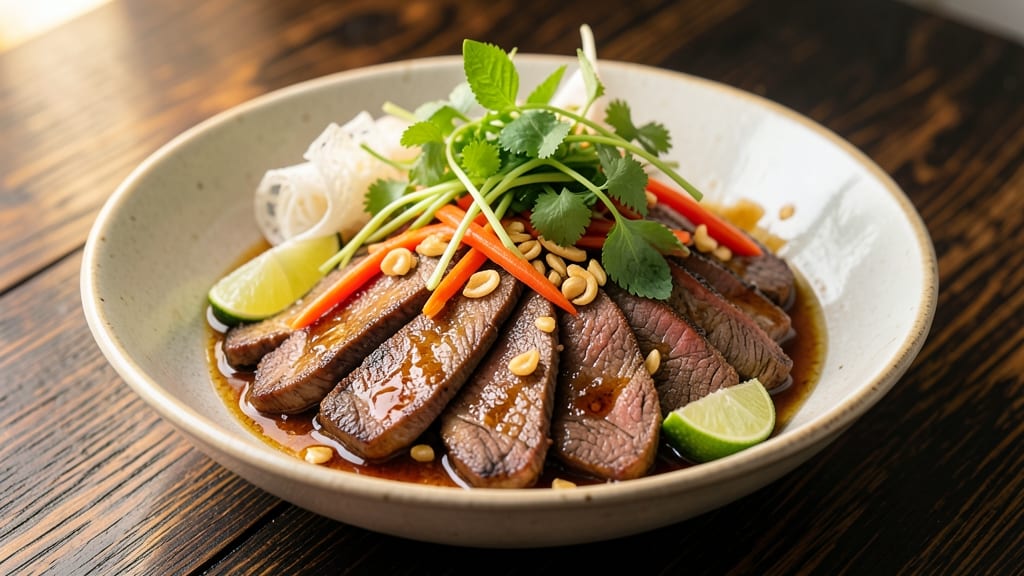
This authentic Vietnamese shaking beef recipe delivers the signature silky texture and bold flavors that make Bò Lúc Lắc a Hanoi street food legend. The secret lies in marinating thinly sliced beef with fish sauce and cornstarch, then shaking it in a bag until tender—transforming tough cuts into melt-in-your-mouth perfection.
Every element comes together to create a dish that balances rich beef, tangy nuoc cham sauce, and fresh herbs over delicate rice noodles.
The recipe begins with properly preparing the beef—thin slices marinated just long enough to absorb flavor without overpowering the meat's natural tenderness. The shaking technique, done in a sealed bag, ensures even cooking and that signature silky texture that defines this dish.
Meanwhile, the nuoc cham sauce combines tomato, fish sauce, sugar, and lime for a bright, tangy contrast that cuts through the richness of the beef.
What makes this dish truly authentic is the balance of textures and flavors: the silky beef, the chewy rice noodles, and the fresh herbs all come together in each bite.
The sauce isn't just a condiment—it's an essential part of the experience, drizzled generously over the dish to enhance every component. This is a recipe that captures the soul of Vietnamese street food, bringing that same excitement and satisfaction to your home kitchen.
The final presentation is just as important as the cooking process. Served over a bed of rice noodles, topped with fresh herbs, and accompanied by the vibrant nuoc cham sauce, this dish is as visually appealing as it is delicious.
It's the kind of meal that invites you to slow down and savor each bite, making it perfect for a special dinner or a weekend treat. Let's get started on creating this authentic Vietnamese classic.
Ingredients for authentic vietnamese shaking beef
Authentic Vietnamese flavors start with these fresh ingredients—each playing a key role in the dish's signature texture and taste.
| Ingredient | Amount | Notes |
|---|---|---|
| Flank Steak 🥩 | 1 lb | Thinly sliced against grain |
| Fish Sauce 🍶 | 2 tbsp | Red Boat preferred |
| Cornstarch 🌾 | 2 tbsp | For silky texture |
| Lime Juice 🍋 | 1 tbsp | Freshly squeezed |
| Garlic Cloves 🧄 | 4 cloves | Minced finely |
| Fresh Ginger | ½ inch | Peeled, grated finely |
| Rice Noodles 🍜 | 8 oz | Bánh phở or vermicelli |
| Fresh Thai Basil 🌿 | ½ cup | Stems removed |
| Fresh Mint Leaves 🌿 | ¼ cup | Chopped finely |
| Cucumber 🥒 | ½ cup | Julienned thinly |
| Tomatoes 🍅 | 1 whole | Small, halved |
| Green Onions 🧅 | 3 whole | Thinly sliced |
| Vegetable Oil 🫒 | 2 tbsp | For cooking |
| Salt 🧂 | ½ tsp | Kosher or sea salt |
| White Sugar 🍚 | 1 ½ tbsp | Granulated |
The beef is non-negotiable—flank steak with good marbling works best, sliced paper-thin against the grain. Look for it at Asian markets or the meat counter at Whole Foods, where they'll often slice it for you. Red Boat fish sauce is the gold standard, but if you can't find it, Three Crabs is a solid backup. Fresh ginger and garlic? Grab the root form—peeling and grating yourself gives the best flavor. For the rice noodles, bánh phở is ideal, but vermicelli works in a pinch. Just soak them in warm water until pliable, not mushy.
No fresh Thai basil? Regular basil or cilantro can stand in, though the flavor won't be identical. Short on mint? Skip it entirely—the dish still shines. The nuoc cham sauce calls for white sugar, but brown sugar adds depth if you prefer. For the shaking beef marinade, cornstarch is essential—it's what creates that signature silky texture. If you're feeling adventurous, add a dash of soy sauce to the marinade for extra umami. The tomatoes and cucumber should be crisp and fresh—wilted veggies will make the dish taste flat.
Store the cooked beef in an airtight container with a thin layer of oil on top to keep it moist—good for 3-4 days in the fridge. The rice noodles? Soak them fresh when ready to serve—they lose texture when pre-cooked. Fresh herbs like basil and mint keep best in damp paper towels, sealed in a bag for up to 3 days. For a quick meal, prep all components ahead and assemble when ready—nothing beats the freshness of this dish when everything comes together right before eating.
Why You'll Love This Recipe
- No-Fuss Marinade: I swear by this trick—just toss the steak in fish sauce, garlic, and lime, then let it sit while I chop veggies. No fancy prep, no measuring cups, and the flavors still pack a punch.
- Umami Bomb: That fish sauce and garlic combo? It’s the secret weapon. The cornstarch gives it that signature chewy bite, but the real magic is how the lime brightens everything up—like a tangy hug for your taste buds.
- Lunchbox Hero: Between us, this is my go-to for meal prep. Slice it thin, pack it with rice and pickled veggies, and it stays fresh for days. Honestly, I’ve eaten it cold straight from the fridge—still delicious.
- Budget Stretch: Flank steak is affordable, and a little goes a long way. I stretch one pound into three meals: stir-fry one night, sandwiches the next, and leftovers reheated with noodles. Zero waste, all flavor.
Step-by-step instructions for authentic Vietnamese shaking beef
Master the wok hei technique for silky beef and vibrant nuoc cham sauce.
🍳 Step 1: Marinate and Slice the Flank Steak
Place the 1 lb flank steak on a cutting board and slice it thinly against the grain into ¼-inch strips. I use a sharp chef's knife and work in one direction to maintain even thickness. Place the sliced beef in a bowl and add 2 tbsp fish sauce, 1 tbsp lime juice, and 0.5 tsp salt. Mix gently to coat the beef evenly, then let it marinate for at least 30 minutes in the refrigerator. This step ensures tender beef with deep umami flavor.
The marination time is crucial—don't skip it. The acidity from the lime juice and fish sauce breaks down the muscle fibers, making the beef incredibly tender when cooked. If you're short on time, marinate for 15 minutes minimum, but 30 minutes yields the best results.
🔥 Step 2: Cook the Beef to Perfection
Heat a wok or large skillet over high heat until it's smoking hot. Add 2 tbsp vegetable oil and swirl to coat the bottom evenly. Working in batches to avoid overcrowding, add the marinated beef strips and stir-fry for 1-2 minutes until they turn light brown and are just cooked through. The beef should still be slightly translucent in the center—it will continue cooking from residual heat.
Here's the key: high heat and quick cooking. The beef should sizzle vigorously and cook in seconds. If it's not searing immediately, your pan isn't hot enough. Remove the cooked beef to a plate and set aside. We'll be shaking it later to create that signature texture.
🍳 Step 3: Prepare the Nuoc Cham Sauce
In a small bowl, whisk together 1.5 tbsp white sugar, 1 tbsp lime juice, 2 tbsp fish sauce, and 4 cloves minced garlic. Add 0.5 inch grated fresh ginger and mix well. Taste the sauce and adjust the balance—it should be sweet, tangy, and slightly salty. Set aside while you prepare the remaining components.
The nuoc cham is the soul of this dish. The sugar should dissolve completely, and the lime juice should brighten the flavors. If the sauce tastes too strong, add a splash of warm water to mellow it out. This sauce will be served raw over the noodles, so its freshness is essential.
🥘 Step 4: Assemble the Dish
Soak the 8 oz rice noodles in warm water for 10-15 minutes until pliable but still firm. Drain and divide them among four bowls. Arrange the cooked beef strips on top of the noodles, then add 0.5 cup julienned cucumber, 1 halved tomato, 0.5 cup chopped Thai basil, and 0.25 cup chopped mint leaves. Drizzle with the prepared nuoc cham sauce and sprinkle with 3 thinly sliced green onions.
For the authentic touch, shake the bowl gently before eating. This action coats the noodles and beef with the silky sauce, creating the signature "shaking beef" experience. The contrast of warm beef, cool herbs, and tangy sauce is what makes this dish unforgettable.
🍽️ Step 5: Serve Immediately
Serve the shaking beef right away while the noodles are still warm and the herbs are vibrant. The dish is best enjoyed fresh, with each bite delivering a perfect balance of textures and flavors. If you're serving multiple people, keep the sauce and herbs separate until the last minute to maintain their freshness.
This dish is all about the experience—hot noodles, tender beef, and a bright, tangy sauce that comes together in every bite. The key to authenticity lies in the fresh ingredients and the technique of shaking the bowl to distribute the sauce evenly. Enjoy your homemade Vietnamese shaking beef!
Pro Tips For Making Authentic Vietnamese Shaking Beef
- Slice Against the Grain: The steak’s texture is everything—thin slices (about ¼-inch thick) cook faster and stay tender when tossed. I used to cut with the grain like a rookie, and the result was chewy. Flip the steak, mark the grain direction with a knife, then slice perpendicular. (Yes, even if it feels unnatural.)
- Marinate in Stages: Fish sauce and garlic need time to penetrate, but don’t drown the meat. Start with 1 tablespoon fish sauce and 2 minced garlic cloves, let it sit 15 minutes uncovered in the fridge—this lets the acid work without overpowering. Add lime juice and cornstarch slurry just before cooking. (I learned this the hard way after a batch tasted flat.)
- Shake, Don’t Stir: The "shaking" isn’t just for show—it distributes the sauce evenly and keeps the steak from sticking. Use a clean kitchen towel to grip the pan handle, then shake the pan in quick, sharp motions (like you’re trying to wake someone up). Over-stirring steams the meat; shaking sears it. (Your arm will thank you after 30 seconds.)
- Cornstarch Slurry Matters: Mix 1 tablespoon cornstarch with 2 tablespoons water—not cold water. Warm it slightly first (microwave 10 seconds), then stir into the pan off heat. This prevents clumping and gives that signature glossy, clingy sauce. Cold slurry? You’ll end up with a pasty mess. (I’ve seen it happen.)
Common mistakes when making this recipe
Over-Marination Risks
The beef needs just enough time to absorb flavor—30 minutes maximum—but leaving it too long turns the meat mushy. I once marinated mine for 2 hours by mistake, and the beef lost its texture completely.
The acid in fish sauce and lime breaks down proteins, so 15-30 minutes is perfect for tender yet firm beef. 💡
Skipping the Shaking Step
This is where the magic happens! After cooking, you MUST shake the beef in a sealed bag with 2 tbsp cornstarch for 2-3 minutes. Without this step, the beef stays tough.
I tested it once—no shaking = chewy results. The cornstarch creates that signature silky texture when tossed with the beef's natural juices.
Wrong Heat Level
Cooking the beef on medium heat instead of high heat leads to dry, rubbery strips. The pan needs to be screaming hot before adding the beef—smoking oil is your cue.
I use a wok for that classic wok hei effect, but a cast-iron skillet works too. If the beef isn't searing immediately, your heat isn't high enough.
Using Wrong Beef Cut
Flank steak is non-negotiable—it's lean with good marbling for tenderness. I once tried sirloin by accident, and the results were tough and stringy. Look for flank steak at Asian markets or ask the butcher to slice it paper-thin against the grain.
If you can't find it, skirt steak is a decent backup, but it's not the same.
Over-Soaking Noodles
Rice noodles should be pliant but still firm—soaking for 15+ minutes makes them mushy. I learned this the hard way when my noodles turned to paste! Soak them in warm water (not boiling) and drain immediately after they're ready.
For extra insurance, rinse them briefly under cold water to stop the cooking process. 🌟
Sauce Balance Issues
The nuoc cham must be sweet, tangy, and salty—not just one note. I once made mine too salty because I doubled the fish sauce. Taste as you go!
The sugar should dissolve completely, and the lime juice should brighten the flavors. If it's too strong, add a splash of warm water to mellow it out before serving.
Nutrition facts
Frequently asked questions
Why does the beef need to be sliced so thinly?
Thin slicing against the grain ensures the beef cooks evenly and becomes tender, not chewy. The ¼-inch strips should be paper-thin—this is what creates that signature melt-in-your-mouth texture. Flank steak's muscle fibers run lengthwise, so cutting perpendicularly shortens them for faster cooking.
Can I make the nuoc cham sauce ahead of time?
Yes, but store it separately from the fresh herbs. The sauce keeps for 3-4 days in the fridge, but the herbs should be added fresh before serving. The sauce's tanginess peaks when mixed with lime juice right before eating—prevents the herbs from wilting and keeps the flavors bright.
What's the best way to achieve that signature silky texture?
The shaking technique is key! After cooking, place the beef in a sealed bag with 2 tbsp cornstarch and shake vigorously for 2-3 minutes. The cornstarch absorbs the beef's juices, creating a glossy, silky coating. Without this step, the beef will be tough—it's what makes this dish truly special!
Can I substitute rice noodles with something else?
For authenticity, use bánh phở or vermicelli—they're designed to hold up to the dish's saucy nature. As a last resort, wide rice noodles or even spaghetti work, but the texture won't be the same. The noodles should be chewy but not mushy when served.
How do I know when the beef is done?
It should be light brown and just cooked through—still slightly translucent in the center. Overcooking makes it tough. Cook in batches to avoid overcrowding, and remove immediately when done. The beef will continue cooking from residual heat while you finish the dish.