
Main Courses
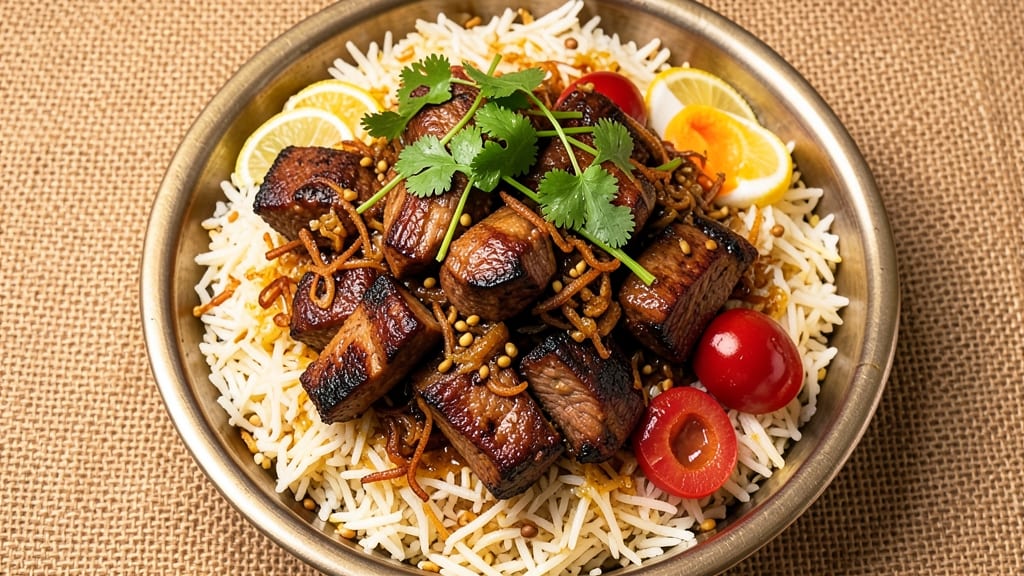
This Bangladeshi beef biryani recipe delivers restaurant-quality aromatic basmati rice and tender beef infused with traditional spices. The secret lies in marinating the beef overnight with yogurt and whole spices, then layering it with partially cooked basmati rice and slow-cooking to perfection.
Every bite combines fragrant basmati, melt-in-your-mouth beef, and layers of warm spices like shahi jeera and cinnamon that define authentic biryani.
The recipe follows traditional techniques including the optional dum cooking method, where the biryani is sealed and cooked on low heat to create steam that infuses every grain of rice.
For authenticity, we use basmati rice with a 1:1.5 rice-to-meat ratio and incorporate fried onions, boiled eggs, and raisins for texture and sweetness. The slow cooking process (40-60 minutes) ensures tender beef and perfectly fluffy rice.
What makes this biryani special is the balance of flavors - the tangy yogurt marinade, the warm spices, and the subtle sweetness from raisins and fried onions. The dish is traditionally served with raita and mirchi ka salan, creating a complete meal experience.
This recipe brings authentic Bangladeshi flavors to your home kitchen with professional results.
The biryani's aromatic qualities come from proper spice layering and cooking techniques that develop over time. The beef remains juicy while the rice absorbs the rich flavors of the marinade and spices.
Whether you're cooking for a special occasion or a family gathering, this biryani will impress with its authentic taste and presentation. Let's create this flavorful dish together.
Ingredients for bangladeshi beef biryani
Authentic biryani requires basmati rice, tender beef, and traditional spices for restaurant-quality flavor.
| Ingredient | Amount | Notes |
|---|---|---|
| Basmati Rice 🍚 | 2 cups | Long-grain, uncooked preferred |
| Beef Chuck Roast 🥩 | 3 lb | Cut into 1.5-inch cubes |
| Plain Yogurt 🥛 | 1 cup | Greek or regular, unsweetened |
| Shahi Jeera (Cumin Seeds) 🌿 | 1 tbsp | Toasted for aroma |
| Cinnamon Sticks 🌿 | 2 whole | For infusion, removed later |
| Bay Leaves 🌿 | 2 whole | Dried, for slow cooking |
| Cardamom Pods 🌿 | 8 whole | Green cardamom preferred |
| Cloves 🌿 | 6 whole | Whole, for marinade |
| Garlic Cloves 🧄 | 8 cloves | Minced for marinade |
| Ginger 🌿 | 1 ½ tbsp | Fresh, grated |
| Onions 🧅 | 2 medium | Yellow or red, sliced |
| Raisins 🍇 | ½ cup | Plump, for sweetness |
| Large Eggs 🥚 | 4 whole | Hard-boiled for garnish |
| Vegetable Oil 🫒 | ½ cup | For frying onions |
| Lemon Juice 🍋 | 2 tbsp | Freshly squeezed |
| Salt 🧂 | 1 ½ tsp | Kosher or sea salt |
| Black Peppercorns 🌶️ | 1 tsp | Crushed, for marinade |
| Garam Masala 🌶️ | 1 tbsp | For finishing |
| Fresh Mint Leaves 🌿 | ¼ cup | Chopped, for garnish |
| Fresh Cilantro 🌿 | ¼ cup | Chopped, for garnish |
The beef is non-negotiable here—chuck roast gives the best texture, but sirloin works if you're short on time. Look for well-marbled cuts at Whole Foods or your local butcher; the fat renders beautifully during slow cooking. Basmati rice is a must—Pusa Basmati or Tilda are my go-tos, but any long-grain variety will do. For the spices, spice markets or bulk bins at Indian grocery stores offer the freshest whole spices. Toast your shahi jeera and cardamom pods in a dry pan for 30 seconds before grinding—this unlocks their full aroma. The yogurt should be thick and plain; Fage Greek yogurt works perfectly.
No shahi jeera? Regular cumin seeds will do, but the flavor won't be identical. Running out of cardamom? Substitute with 1 tsp ground cardamom, but it won't have the same complexity. For the onions, yellow or red work—just avoid sweet onions. The raisins can be subbed with chopped dates if you prefer. If you're skipping the fried onions (a common shortcut), add an extra 1 tbsp of oil to the rice while cooking. The eggs? Hard-boiled and peeled in advance—they add a nice contrast in texture. For the oil, vegetable or canola work fine; avoid olive oil as it can overpower the dish.
Marinate the beef for at least 4 hours (overnight is ideal) to develop deep flavor. Store any leftover marinade in an airtight container in the fridge for up to 3 days. The cooked biryani reheats beautifully—cover with foil and warm in a 350°F oven for 20 minutes. For longer storage, portion into containers and freeze for up to 3 months. The rice stays fluffy when reheated, and the beef remains tender. Garnish with fresh mint and cilantro just before serving—they wilt quickly, so add them last. This dish tastes even better the next day as flavors meld.
Why You'll Love This Recipe
- One-Pot Magic: I swear by this—just brown the beef, layer in the basmati, and let the yogurt and spices do their thing while you sip chai. No extra pots, no stress.
- Layered Flavor Bomb: That slow-cooked beef with toasted shahi jeera and cinnamon? It’s like a warm hug for your taste buds, especially when the rice soaks up the rich, garlicky gravy.
- Weeknight Wonder: Honestly, this is my go-to when I need something impressive but low-effort. Double the batch—leftovers reheat like a dream, and it’s still better than takeout.
- Budget-Friendly Feast: Beef chuck on sale? Perfect. Yogurt and spices stretch the flavor without breaking the bank. Feeds four for less than delivery, and everyone’s happy.
Step-by-step instructions for Bangladeshi beef biryani
Master this layered rice and beef dish with aromatic spices and tender meat.
Marinate the Beef for Deep Flavor
Cut the 3 lb beef chuck roast into 1.5-inch cubes and place them in a large bowl. In a separate bowl, combine the 1 cup plain yogurt, 1.5 tbsp grated ginger, 8 cloves minced garlic, 1 tbsp toasted shahi jeera (cumin seeds), 6 whole cloves, 8 whole cardamom pods, 1.5 tsp salt, and 1 tsp crushed black peppercorns. Pour this marinade over the beef and mix thoroughly until every piece is well coated.
Cover the bowl and refrigerate for at least 4 hours, or preferably overnight. This long marinating time ensures the beef absorbs the spices deeply, resulting in rich, complex flavors. The yogurt also helps tenderize the meat, making it melt-in-your-mouth tender when cooked.
Parboil the Rice with Aromatics
In a large pot, combine the 2 cups basmati rice with 3 cups water. Add the 2 whole cinnamon sticks, 2 whole bay leaves, and 0.5 cup raisins. Bring to a boil, then reduce heat to medium-low and simmer for 6 minutes. This partial cooking, called parboiling, prevents the rice from becoming mushy when layered with the beef later.
Drain the rice immediately in a fine-mesh strainer and rinse under cold water to stop the cooking process. The rice should be al dente at this stage—it will finish cooking during the final layering. Keep the rice covered while you prepare the beef.
Cook the Marinated Beef Until Tender
Heat 0.25 cup vegetable oil in a large, heavy-bottomed pot over medium heat. Add 1 medium onion sliced into thin strips and fry until golden brown, about 5 minutes. Remove the onions with a slotted spoon and set aside for garnish. In the same pot, add the marinated beef and cook over medium-high heat for 5 minutes to brown the exterior.
Reduce heat to low, cover the pot, and let the beef cook slowly for 1.5 to 2 hours, stirring occasionally. The beef is done when it easily shreds with a fork. The slow cooking process ensures the meat remains juicy and infused with the marinade flavors. Keep the pot covered to retain moisture.
Layer and Steam the Biryani
In the same pot, spread half of the parboiled rice evenly over the cooked beef. Drizzle 1 tbsp lemon juice evenly over the rice, then sprinkle half of the remaining 1 tbsp garam masala. Repeat with another layer of beef, followed by the remaining rice, lemon juice, and garam masala. The lemon juice brightens the flavors, while the garam masala adds warmth.
Cover the pot tightly with a lid or aluminum foil and cook on low heat for 20 minutes. This gentle steaming allows the rice to absorb the beef juices and develop its signature layered texture. Avoid opening the lid during this time to prevent the steam from escaping, which is crucial for achieving the perfect biryani consistency.
Garnish and Serve
Once the biryani is done, carefully remove the lid and let it rest for 5 minutes. Fluff the biryani gently with a fork, then garnish with the fried onions, 0.25 cup chopped fresh mint leaves, and 0.25 cup chopped fresh cilantro. The garnishes add freshness and visual appeal to the dish.
Serve the biryani immediately while hot. Each bite should deliver a harmonious blend of fragrant basmati rice, tender beef, and aromatic spices. Pair it with raita or a simple cucumber salad to balance the richness of the dish. The hard-boiled eggs can be served on the side as an optional garnish or added to the biryani just before serving for extra protein.
Pro Tips For Making Bangladeshi Beef Biryani
- Parboil Rice Separately: I used to dump raw rice in with the beef and spices, thinking it’d save time—but it turns out basmati needs a head start. Parboil the rice for 5 minutes first, then drain and set aside. This keeps the grains distinct and prevents a mushy, gluey mess when you layer everything later.
- Marinate Beef Overnight: Skimping on this is a mistake. The yogurt and spices need time to tenderize the beef chuck properly—at least 8 hours, preferably overnight. I learned this the hard way when my first attempt turned out chewy. Use a mix of yogurt, shahi jeera, and cinnamon sticks crushed into a paste, then rub it deep into the meat cuts.
- Layer Rice and Beef Dry: The golden rule of biryani: no wet rice on top of the beef. After parboiling, spread the rice in an even layer, then arrange the marinated beef on top—completely dry. This creates steam pockets when you seal it, giving you that signature fluffy texture. Trust me, soggy layers are a nightmare to fix.
- Sear Beef in Batches: Crowding the pan is how you end up with unevenly cooked beef. Sear the marinated pieces in small batches over medium-high heat until they develop a deep brown crust—about 3-4 minutes per side. This adds flavor and ensures the chuck stays juicy, not greasy. (Yes, it’s extra work, but the payoff is worth it.)
Wine and beer pairings for this dish
Light Beer Pairings
For biryani's rich, spiced flavors, a crisp lagers or pilsner cuts through the heat beautifully. I love Kingfisher from India—its light body and subtle malt sweetness complement the dish without overpowering.
Another great choice is Heineken, which provides a clean finish that highlights the biryani's aromatic spices. The carbonation also helps refresh your palate between bites. 🍺
Indian Craft Beer Options
If you're feeling adventurous, try Banglar Whisky's Bengal Pale Ale—it has a malty backbone that stands up to the biryani's complexity. For something fruitier, Goa's Tinto (a Portuguese-style beer) pairs wonderfully with the dish's subtle sweetness from raisins and fried onions.
These local brews add an authentic touch to your meal. 🍻
Wine Pairings: Dry Whites
When it comes to wine, dry Riesling or Sauvignon Blanc are perfect matches. The acidity in these wines balances the biryani's richness, while their citrus notes echo the lemon juice used in the recipe.
A German Riesling with its crisp finish or a New Zealand Sauvignon Blanc with its herbal undertones both work beautifully. Avoid oaky whites—they can clash with the dish's delicate spices. 🍷
Red Wine Considerations
If you prefer red, go for a light-bodied Pinot Noir or Grenache. These wines have enough acidity to stand up to the biryani's bold flavors without being too heavy.
Look for a Spanish Garnacha—its bright fruitiness complements the dish's warmth. Just avoid full-bodied reds like Cabernet Sauvignon, as they can overpower the biryani's delicate layers. 🍇
Non-Alcoholic Options
Don't want alcohol? A sparkling mint lemonade with fresh basil and a touch of honey is refreshing and pairs perfectly. For something warmer, try masala chai—its spiced notes enhance the biryani's flavors without competing. Both options keep the meal balanced and enjoyable. 🌿
Nutrition facts
Frequently asked questions
Can I use regular long-grain rice instead of basmati?
While you can use long-grain rice, basmati is essential for authentic biryani. Its distinct aroma and separate grains prevent mushiness when layered. For a substitute, try jasmine rice—it has a similar texture and fragrance. Avoid short-grain rice like sushi rice, as it becomes sticky and loses the biryani's signature fluffiness.
How do I make biryani without a heavy-bottomed pot?
Use a Dutch oven or even a heavy stainless steel pot as your best substitutes. If you only have light pots, cook the beef in batches and layer the rice in a separate oven-safe dish. Cover tightly with foil and bake at 325°F for 20 minutes to mimic the steaming effect. The key is maintaining moisture—don't skip the tight lid!
Why does my biryani turn out mushy?
Mushy biryani usually means overcooked rice. The secret is parboiling the rice for only 6 minutes—it should be al dente. Also, avoid opening the lid during the final 20-minute steaming phase, as escaping steam causes the rice to dry out or become gummy. For extra insurance, use 1.5 cups liquid per 2 cups rice during parboiling.
Can I prepare biryani a day ahead?
Biryani tastes even better the next day as flavors meld. Store in an airtight container in the fridge for up to 3 days. Reheat covered in a 350°F oven for 20 minutes—the residual steam will restore its fluffiness. For longer storage, freeze portions for up to 3 months. Garnish with fresh herbs just before serving to maintain brightness.
What's the difference between Bangladeshi and Mughlai biryani?
Bangladeshi biryani focuses on layered flavors with tender beef, basmati rice, and subtle sweetness from raisins. Mughlai versions often include more whole spices like saffron and nuts, with richer gravies. Bangladeshi style emphasizes slow-cooked beef and lemon juice for brightness, while Mughlai leans toward creamy textures. Both use dum cooking, but Bangladeshi versions typically have more fried onions!