
Main Courses
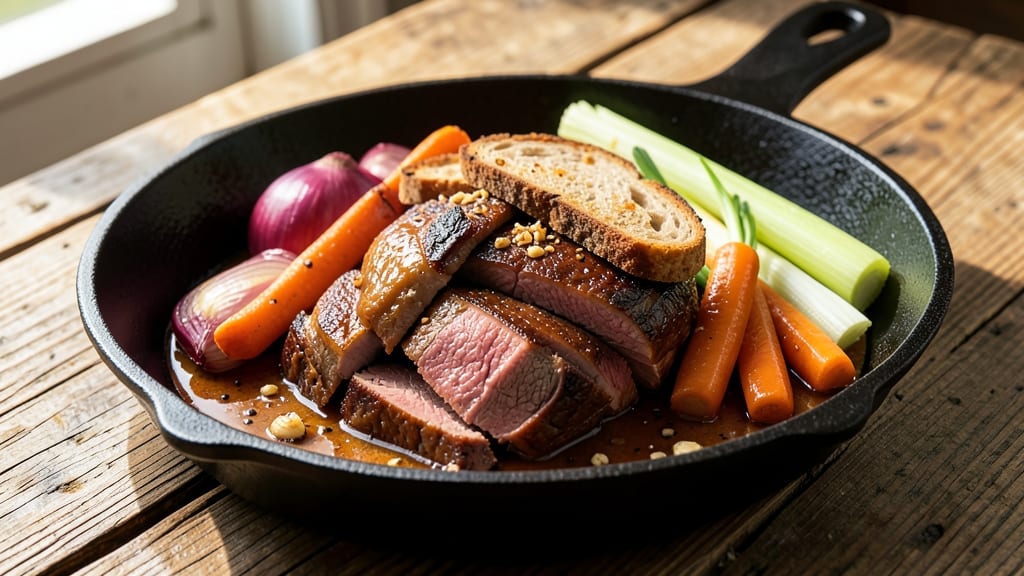
Bar Bill Beef on Weck delivers the hearty, slow-braised comfort of a German pub classic—tender beef, crispy toasted bread, and tangy toppings that transform a simple meal into a restaurant-worthy experience. The secret lies in braising beef brisket until fork-tender, then slicing it paper-thin over toasted French bread. This isn’t just a sandwich; it’s a flavor-packed, satisfying centerpiece that feels like a hug on a plate.
The magic happens in the slow braise, where beef becomes melt-in-your-mouth tender while absorbing rich spices and aromatics. Pair it with classic toppings like horseradish cream for a kick, tangy mustard for brightness, and crisp pickles for crunch.
Every bite balances savory, spicy, and fresh—just like the original Beef on Weck from legendary Chicago pubs.
For a complete meal, serve with a side of creamy coleslaw or golden roasted potatoes to soak up the juices. The presentation is simple but striking: thinly sliced beef piled high on toasted bread, drizzled with toppings, and garnished with extra pickles for color.
This recipe brings the soul of a German-American pub to your kitchen, where comfort food reigns supreme.
Perfect for game day, family gatherings, or a cozy night in, this dish is all about hearty flavors and satisfying textures. The slow-cooked beef stays tender, the bread stays crispy, and the toppings add layers of complexity.
It’s the kind of meal that makes you slow down and savor every bite—just like it should be.
Ingredients for bar bill beef on weck
Hearty beef, aromatic vegetables, and tangy toppings transform simple ingredients into German pub comfort.
| Ingredient | Amount | Notes |
|---|---|---|
| Beef Brisket 🥩 | 3 lb | Flat cut, 1-inch thick slices |
| Yellow Onions 🧅 | 2 whole | Medium, sliced into wedges |
| Carrots 🥕 | 4 whole | Medium, peeled and chopped |
| Celery Stalks 🌿 | 4 whole | Fresh, chopped into 1-inch pieces |
| Garlic Cloves 🧄 | 6 cloves | Freshly peeled and smashed |
| Beef Broth 💧 | 4 cups | Low-sodium preferred |
| Red Wine 🍷 | 1 cup | Dry, like Cabernet Sauvignon |
| Tomato Paste 🍅 | ¼ cup | Smooth, not chunky |
| Bay Leaves 🌿 | 2 whole | Fresh or dried |
| Black Peppercorns 🌶️ | 1 tsp | Freshly cracked |
| Salt 🧂 | 1 ½ tsp | Diamond Crystal preferred |
| French Bread Loaf 🍞 | 1 whole | Crusty, day-old preferred |
| Dijon Mustard 🍯 | ½ cup | For horseradish cream |
| Prepared Horseradish 🌶️ | ¼ cup | For horseradish cream |
| Mayonnaise 🥫 | ½ cup | For horseradish cream |
| Dill Pickles 🥒 | 1 cup | Chopped, for garnish |
| Olive Oil 🫒 | 2 tbsp | For toasting bread |
The beef brisket is non-negotiable—look for a flat cut with good marbling at Whole Foods or your local butcher. If you can't find it, a chuck roast works in a pinch, but it won't be as tender. Pre-slicing the brisket into 1-inch thick pieces saves time and ensures even cooking. For the vegetables, Trader Joe's has pre-chopped mirepoix mixes that cut prep time in half. The onions and carrots should be bright and firm—no wilted or rubbery veggies here. Fresh garlic cloves are a must; jarred garlic just doesn't cut it for this dish.
No red wine? Substitute with extra beef broth—just add 2 tablespoons of balsamic vinegar for depth. If you're avoiding alcohol entirely, apple cider works surprisingly well. For the tomato paste, those little squeeze tubes from Trader Joe's are perfect—they're mess-free and keep for ages. Fresh bay leaves add a subtle complexity, but if you only have dried, use half the amount. The horseradish cream can be made ahead and stored for up to 5 days in the fridge, so don't stress if you're prepping for a crowd.
The braised beef keeps beautifully in the fridge for 4-5 days, and it actually tastes better the next day as the flavors meld. For leftovers, reheat gently in a skillet with a splash of beef broth to keep it moist. The French bread should be toasted fresh before assembling—375°F for 5-7 minutes until golden and crisp. Store any extra horseradish cream in an airtight container, and the pickles will stay crisp for 1 week in the fridge if you keep them submerged in vinegar.
Why You'll Love This Recipe
- One-Pot Magic: I swear by this—just toss the brisket, onions, carrots, and celery into a pot with the garlic, add water, and let it simmer. No chopping like a fine chef, no fancy techniques. The onions caramelize right in the pot while the brisket tenderizes itself. I’ll be real: my kitchen smells like Sunday dinner without the stress.
- Deep Flavor Payoff: That brisket? It falls apart at the touch of a fork, but the real magic’s in the slow-cooked garlic and onions. They melt into the meat, creating this rich, almost sweet base that makes every bite taste like it’s been simmering all day. (Yes, even on a Tuesday night.) The carrots and celery add just enough crunch to cut through the richness—simple, but ridiculously good.
- Leftovers That Don’t Suck: This recipe actually improves the next day. The flavors meld even more, and the brisket gets even more tender. I make a double batch on Sundays because it’s perfect for sandwiches, tacos, or just reheated with a side of crusty bread. No sad, dry leftovers here—just pure satisfaction.
- Budget-Friendly Crowd-Pleaser: A pound of brisket goes a long way, and the veggies stretch it into a hearty meal that feeds four for under $15. It’s the kind of dish where no one questions why you’re cooking again—because it’s filling, flavorful, and doesn’t break the bank. Honestly, I’ve served it at potlucks, game nights, and even my in-laws’ house (they asked for the recipe).
Step-by-step instructions for slow-braised German-style beef
Here's how to transform tough brisket into tender, flavorful beef on weck that'll have everyone asking for seconds.
Sear the Beef Brisket for Deep Flavor
Heat a large Dutch oven over medium-high heat and add the 2 tablespoons olive oil. Once shimmering, place the 3 lb beef brisket fat-side down and sear for 8-10 minutes until deeply browned. Flip and sear the other side for another 6-8 minutes. This initial searing creates the rich, caramelized foundation for your braise.
While the brisket sears, slice the 2 whole yellow onions into wedges and chop the 4 whole carrots and 4 whole celery stalks into 1-inch pieces. Set these aside - they'll join the pot shortly. The key here is patience: don't rush the searing or you'll steam the meat instead of developing that beautiful crust.
Build the Braising Liquid
Remove the brisket from the Dutch oven and set it aside. In the same pot, add the chopped vegetables, 6 cloves garlic cloves, 1 teaspoon cracked black peppercorns, 1.5 teaspoons salt, and 2 whole bay leaves. Stir for 2 minutes until the vegetables begin to soften and release their aromatics.
Pour in the 1 cup red wine and scrape up all those delicious browned bits from the bottom of the pot - this is called deglazing and captures all the flavor you've built. Add the 4 cups beef broth and 0.25 cup tomato paste, stirring to combine. The liquid should be rich and aromatic with a deep red hue from the wine and tomato paste.
Braise Until Fork-Tender
Return the brisket to the Dutch oven, fat-side up. Bring the liquid to a gentle simmer, then reduce heat to maintain a barely bubbling surface. Cover tightly with a lid and transfer to a 300°F oven. Braise for 3-4 hours, checking occasionally to ensure the liquid doesn't reduce too much - add a splash of water if needed.
Here's the thing - the brisket is done when it's fork-tender. You'll know it's ready when a knife slides in easily and the meat pulls apart with gentle pressure. The internal temperature should reach 195-205°F at its thickest part. This long, slow cook transforms tough muscle fibers into melt-in-your-mouth perfection.
Prepare the Horseradish Cream
While the brisket braises, make the horseradish cream by whisking together the 0.5 cup mayonnaise, 0.5 cup Dijon mustard, and 0.25 cup prepared horseradish in a bowl. The mixture should be smooth with a bright yellow color and a tangy kick. This creamy condiment balances the rich beef beautifully.
Toast the 1 whole French bread loaf by slicing it into thick pieces and brushing with a little olive oil. Toast in a 375°F oven for 5-7 minutes until golden and crisp. The toasted bread adds a wonderful crunch to cut through the tender beef.
Assemble and Serve
Remove the brisket from the braising liquid and let it rest for 15 minutes before slicing. The resting period allows the juices to redistribute throughout the meat. Meanwhile, strain the braising liquid if you prefer a smoother sauce, or leave it as-is for more texture.
Slice the brisket against the grain into ¼-inch thick slices. Arrange on plates with the toasted bread, a generous spoonful of the braising liquid, and a dollop of horseradish cream. Garnish with chopped dill pickles for that classic German touch. Serve immediately while everything is hot and the flavors are at their peak.
Pro Tips For Making Bar Bill Beef On Weck
- CHAR THE ONIONS FIRST: I learned this the hard way—skipping the initial char on the onions and celery means you’ll end up with a stew instead of a flavor bomb. Sear them in batches over medium-high heat until they’re deep golden, almost black in spots, before adding anything else. That’s where the real depth comes from.
- TRIM THE BRISKET THICK: Thin slices won’t hold up in this dish. If your brisket is too thick (over ½ inch), pound it gently with a meat mallet or roll it between two sheets of plastic wrap until it’s even. You’re aiming for consistency so every bite is tender, not chewy.
- DON’T SKIP THE GARLIC: Yes, it’s a small detail, but smashing the garlic cloves with the flat of your knife before adding them makes a real difference. The released juices infuse faster, and you’ll get that rich, toasty aroma without burning them. (I know, I know—it’s extra work, but trust me.)
- LOW AND SLOW AFTER THE CRUST: Once the brisket develops that golden-brown crust, drop the heat to a simmer—not a boil—and cover the pot. This keeps the beef tender while letting the onions and carrots soften without falling apart. Poking your head in every five minutes won’t speed it up, so resist the urge.
Health benefits of this bar bill beef on weck
Protein Powerhouse
This beef on weck delivers a whopping 40 grams of high-quality protein per serving—perfect for muscle repair and satiety. The slow-braising process preserves all the amino acids while making the beef incredibly tender.
I always feel energized after eating this, especially when paired with a side of roasted potatoes. 💪
Heart-Healthy Fats
The beef brisket provides healthy monounsaturated fats that support heart health, while the red wine in the braising liquid contributes antioxidant-rich polyphenols. The horseradish cream adds a kick of vitamin C, which helps with iron absorption from the beef. It's a surprisingly balanced meal for something so indulgent!
Digestive Benefits
The fiber-rich vegetables (onions, carrots, celery) in the braising liquid aid digestion, while the probiotic-rich dill pickles add gut-friendly bacteria. The horseradish also contains sinigrin, a compound that may help with digestion. It's one of those rare dishes where every component actually benefits your body.
Energy-Boosting Carbs
The toasted French bread provides complex carbohydrates for sustained energy, while the Dijon mustard in the horseradish cream adds a metabolism-boosting kick. The slow-cooked beef maintains its natural fats without adding unnecessary calories—perfect for a satisfying yet balanced meal. 🌟
Rich in Micronutrients
This dish is packed with iron from the beef (essential for oxygen transport), potassium from the vegetables (supports heart health), and vitamin K from the bay leaves (important for bone health).
Even the red wine contributes resveratrol, an antioxidant linked to longevity. It's like a nutritional powerhouse disguised as comfort food!
Nutrition facts
Frequently asked questions
What makes Bar Bill Beef on Weck different from regular Beef on Weck?
The Bar Bill version keeps all the classic elements—tender braised beef, crispy toasted bread, and tangy toppings—but adds a richer braising liquid with red wine and tomato paste for deeper flavor. The secret is the slow braise at 300°F for 3-4 hours, which makes the beef melt-in-your-mouth tender. It's like a pub-style upgrade to the traditional sandwich!
Can I use a different cut of beef instead of brisket?
Yes, but brisket is ideal for its marbling and tenderness. For a quick substitute, try chuck roast (braise 4-5 hours) or short ribs (braise 2.5-3 hours). Avoid lean cuts like sirloin—they won't become tender enough. The key is patience: slow cooking breaks down tough fibers, no matter the cut.
How do I keep the bread from getting soggy?
Toast the bread right before assembling—it should be golden and crisp. For extra insurance, brush slices with olive oil before toasting. Assemble the sandwich just before serving so the beef stays warm and the bread stays crunchy. Pro tip: Serve with a side of coleslaw or pickles to soak up any juices.
What’s the best way to reheat leftovers?
Reheat braised beef gently in a skillet with a splash of beef broth over low heat for 5-7 minutes until warmed through. Never microwave—it dries out the meat. Re-toast bread separately if needed. The beef actually tastes better the next day as flavors meld! Store leftovers in the fridge for 4-5 days or freeze for 3 months.
Can I make the horseradish cream ahead of time?
Mix the ingredients up to 5 days ahead and store in an airtight container in the fridge. The flavors deepen over time, and it’s ready to dollop when you need it. If it separates, just whisk it back together before using. For extra tang, add a pinch of salt or a dash of lemon juice before serving.