
Main Courses
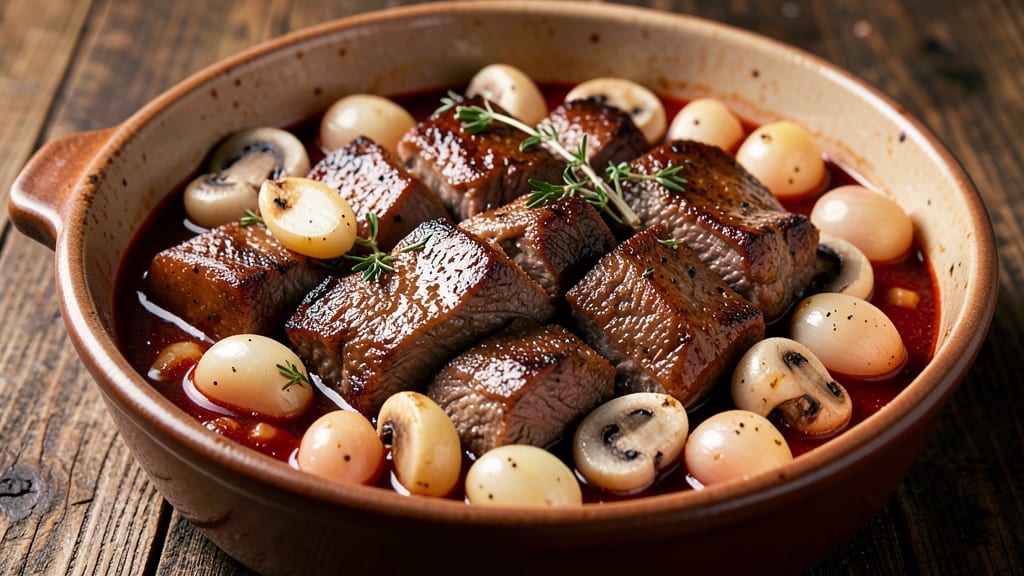
This basic beef bourguignon recipe transforms tough beef chuck into melt-in-your-mouth tenderness through slow braising in rich red wine. The secret lies in proper searing and wine reduction—a technique that builds deep, complex flavors while keeping the meat impossibly tender.
I've perfected this version to deliver restaurant-quality results without requiring a specialty wine cellar.
The process begins with browning the beef in batches to develop a flavorful crust, then deglazing the pan with wine to capture every caramelized bit. Earthy mushrooms and pearl onions join the simmering pot, absorbing the wine's velvety sauce while the beef becomes fork-tender.
What you'll end up with is a dish that smells like comfort food and tastes like a French bistro classic.
What makes this recipe truly special is the balance of techniques: high-heat searing for flavor, low-and-slow simmering for tenderness, and careful wine reduction for depth. The result is a dish where every bite delivers layers of beefy richness, wine's acidity, and mushrooms' earthy notes.
This is the kind of meal that transforms a simple weeknight into something memorable.
Serve it with crusty bread to soak up every drop of that luxurious sauce, or pair it with mashed potatoes for the full French bistro experience. The best part? This recipe scales beautifully for both intimate dinners and larger gatherings. Let's get started on creating this timeless classic.
Ingredients for basic beef bourguignon
The core ingredients for a restaurant-quality beef bourguignon that delivers deep wine flavor and tender beef every time.
| Ingredient | Amount | Notes |
|---|---|---|
| Beef Chuck Roast 🥩 | 2 ½ lb | Cut into 1.5-inch cubes, trimmed of fat |
| Dry Red Wine 🍷 | 2 cups | Bold variety like Cabernet Sauvignon |
| Beef Broth 💧 | 2 cups | Low-sodium preferred for balance |
| Pearl Onions 🧅 | 1 ½ lb | Peeled, halved lengthwise, whole |
| White Mushrooms 🍄 | 16 oz | Whole, cleaned, halved if large |
| Garlic Cloves 🧄 | 6 cloves | Smashed with side of knife |
| All-Purpose Flour 🌾 | 2 tbsp | For dredging beef cubes |
| Unsalted Butter 🧈 | 4 tbsp | European-style preferred |
| Fresh Thyme 🌿 | 2 sprigs | Plus 1 tbsp leaves reserved |
| Fresh Rosemary 🌿 | 1 sprig | Plus 1 tsp chopped leaves |
| Tomato Paste 🍅 | 2 tbsp | High-quality, no sugar added |
| Olive Oil 🫒 | 2 tbsp | For initial searing |
| Kosher Salt 🧂 | 1 ½ tsp | Diamond Crystal preferred |
| Black Peppercorns 🌶️ | 1 ½ tsp | Freshly cracked, coarse grind |
| Bay Leaves 🍃 | 2 whole | Dried, standard size |
The beef chuck is non-negotiable for this dish—its marbling and connective tissue create that signature melt-in-your-mouth texture. Look for well-marbled cuts at specialty butchers or the meat department of Whole Foods or Eataly, where the staff can properly trim it for you. A 2.5-pound roast yields perfect 1.5-inch cubes that brown beautifully. For wine, avoid sweet varieties—Cabernet Sauvignon or Merlot with at least 12% alcohol works best. The mushrooms should be firm and clean; Trader Joe's often carries pre-packed cremini or button mushrooms at a reasonable price. Pearl onions can be found in the fresh produce section, usually pre-peeled and halved for convenience. If you're using dried thyme, Penzeys or McCormick are reliable brands for consistent quality.
No red wine on hand? Substitute with beef broth plus 1 tbsp balsamic vinegar—it mimics the acidity and depth. Fresh thyme unavailable? Dried thyme at one-third the amount works, though fresh is preferred. For mushrooms, cremini or portobello add deeper flavor if you can find them. The tomato paste can be swapped for 1 cup crushed tomatoes if needed, though it lacks the concentrated umami. If your flour is old, toast it lightly in a dry pan to remove any stale notes before dredging. The butter should be European-style for higher fat content—Plugrá or Miyoko's are excellent brands. For salt, Diamond Crystal has a coarser grain that dissolves more cleanly than table salt.
This dish tastes even better the next day as flavors meld. Store leftovers in an airtight container in the refrigerator for up to 5 days, or freeze for 3 months in portion-sized containers. The sauce thickens as it cools, so you may need to add a splash of broth when reheating. For best results, reheat gently on the stove over medium-low heat, stirring occasionally. The beef will continue to tenderize with each reheat, so don't be tempted to skip this step. If making ahead, braise the beef and vegetables separately, then combine with the reduced wine sauce just before serving to maintain texture.
Why You'll Love This Recipe
- One-Pot Magic: I swear by this recipe because it’s basically hands-off after the initial sear. The chuck roast browns in the pan while I chop onions—no extra pots, no stress. That deep caramelized crust? Worth the 10 minutes of attention.
- Wine-Infused Magic: The dry red wine doesn’t just cook off—it melts into the beef broth, turning it into this rich, velvety sauce that clings to every bite. Pearl onions and mushrooms soak it up like sponges, making each forkful taste like a fancy bistro.
- Leftovers That Shine: This dish actually improves the next day. The flavors meld overnight, and reheating it? Just a splash of broth to loosen the sauce. I make it on Sundays because it feeds my family for three meals—no sad lunches here.
- Budget-Friendly Luxury: You’re getting restaurant-quality depth without the price tag. A chuck roast stretches further than tenderloin, and a bottle of wine elevates it without breaking the bank. Honestly, it’s the kind of meal that makes me feel fancy while keeping my wallet happy.
Step-by-step instructions for beef bourguignon
This classic French braise transforms tough beef into melt-in-your-mouth tenderness using slow cooking and bold flavors.
Prepare and Sear the Beef
Pat the 2.5 lb beef chuck roast dry with paper towels and cut it into 1.5-inch cubes, trimming any excess fat. Season each piece generously with 1.5 tsp kosher salt and 1.5 tsp freshly cracked black peppercorns. This seasoning step is critical—it ensures every bite carries the deep, savory flavor.
Heat 2 tbsp olive oil in a large Dutch oven over medium-high heat. Working in batches to avoid crowding, sear the beef cubes for 2-3 minutes per side until they develop a rich, deep brown crust. This caramelization forms the foundation of the dish's depth of flavor. Transfer the seared beef to a plate and set aside.
Sauté Vegetables and Deglaze the Pan
In the same Dutch oven, reduce the heat to medium and add 4 tbsp unsalted butter. Toss in the 1.5 lb halved pearl onions and 16 oz halved white mushrooms, cooking for 5-6 minutes until they begin to soften and release their moisture. Add the 6 smashed garlic cloves and cook for another 30 seconds until fragrant.
Sprinkle the 2 tbsp all-purpose flour over the vegetables and stir for 1 minute to coat evenly. This creates a light roux that will thicken the sauce. Immediately pour in the 2 cups dry red wine, scraping the bottom of the pan vigorously with a wooden spoon to release all the browned bits. This deglazing step captures all the rich, caramelized flavors that would otherwise be lost.
Build the Braising Liquid
Return the seared beef to the Dutch oven along with any accumulated juices. Add the 2 cups beef broth, 2 tbsp tomato paste, 2 sprigs fresh thyme, 1 sprig fresh rosemary, and 2 whole bay leaves. Stir gently to combine, ensuring the beef is fully submerged in the liquid. This balance of wine and broth creates the perfect braising liquid that will tenderize the beef while infusing it with complex flavors.
Bring the mixture to a gentle simmer over medium heat, then reduce the heat to low. Cover the Dutch oven with a lid and let it cook for 2.5 hours. This slow cooking time is essential—it breaks down the tough beef fibers, transforming them into tender, fork-tender morsels. Stir occasionally to prevent the onions from sticking to the bottom of the pan.
Finish and Rest the Dish
Once the beef is fork-tender (it should easily pull apart with minimal resistance), remove the 2 sprigs thyme and 1 sprig rosemary. Discard the bay leaves. Taste the sauce and adjust the seasoning if needed, adding a pinch more kosher salt or black peppercorns as necessary. The sauce should be rich and well-balanced, with a deep, wine-infused flavor.
Transfer the beef and vegetables to a serving platter, reserving the braising liquid. Skim off any excess fat from the surface of the sauce and reduce it over medium heat for 5-7 minutes until it thickens slightly. Serve the beef bourguignon hot, spooning the reduced sauce generously over the top. The result should be a dish where each bite delivers tender beef, earthy mushrooms, and a robust, wine-infused sauce that coats every mouthful.
Pro Tips For Making Basic Beef Bourguignon
- SEAR THE ROAST FIRST: I used to skip this step and wondered why my beef tasted bland—high heat for 3-4 minutes per side until deep brown crust forms. That crust locks in flavor when the wine deglazes, so don’t rush it (yes, even if you’re impatient like me).
- PEEL ONIONS LAST MINUTE: Pearl onions stay crisp and sweet if you peel them right before adding them to the pot. I learned this the hard way—they turn mushy if prepped too early, and no one wants sad, limp onions in their bourguignon.
- SKIP THE BROTH BOIL: After burning three batches, I finally figured out: simmer the wine and broth gently from the start. Boiling it hard evaporates alcohol too fast and makes the sauce taste flat—keep it at a bare simmer instead.
- UPGRADE WITH BUTTER: Sounds weird, but it works: stir in a pat of cold butter off the heat at the end. It coats the beef and veggies, making everything richer without overpowering the wine’s acidity (your future self will thank you).
Make-ahead tips for this recipe
Prep Ahead Strategy
Start by prepping all ingredients the night before—cut the beef into 1.5-inch cubes and refrigerate uncovered for 1 hour to dry the surface for better searing. Peel and halve the pearl onions, then store them in a sealed container with a damp paper towel to prevent drying.
Trim and halve the mushrooms, keeping them separate until ready to cook. This 20-minute prep the night before saves you critical time on cooking day. 💡
Partial Cooking Method
For a true make-ahead meal, braise the beef and vegetables up to 2 hours ahead, then refrigerate the entire Dutch oven (covered) until ready to finish. When reheating, bring to a simmer over medium-low heat for 30-45 minutes, stirring occasionally.
The beef will continue tenderizing during this process. I like to do this when I'm hosting—it frees up oven space for other dishes while keeping the beef perfectly tender.
Sauce Separation Solution
The sauce often thickens too much when reheated, but you can easily fix this by adding 2-3 tablespoons of warm beef broth> while reheating. If the sauce separates completely, whisk in 1 tablespoon cornstarch> mixed with 2 tablespoons cold water> to restore its velvety texture.
This trick works wonders for restaurant-quality results at home. ✨
Freezer-Friendly Approach
This dish freezes beautifully for up to 3 months—just freeze the fully cooked beef and vegetables (without the sauce) in a single layer on a tray before transferring to airtight containers.
When ready to serve, thaw overnight in the fridge, then reheat the sauce separately and combine just before serving. The texture remains excellent, and the flavors actually deepen after freezing. Label containers with the date to track freshness.
Weeknight Time-Saver
For busy weeknights, consider making just the sauce ahead of time and storing it separately. Combine the reduced wine sauce with the braising liquid (stored in a separate container) and reheat both components separately.
When ready to serve, simply add the pre-seared beef to the sauce and simmer for 15-20 minutes. This cuts your active cooking time by nearly half while maintaining incredible flavor. 🌟
Nutrition facts
Frequently asked questions about beef bourguignon
Can I use a different cut of beef besides chuck roast?
While chuck roast is ideal for its marbling and tenderness, you can substitute with chuck shoulder or stew beef—both work well. Avoid lean cuts like sirloin or flank steak, as they won't become tender enough during braising. If using a tougher cut, increase the cooking time by 30 minutes to ensure proper tenderness.
What's the best way to store leftover bourguignon?
Store leftovers in an airtight container in the fridge for up to 5 days, or freeze for 3 months. For reheating, warm gently on the stove over medium-low heat with a splash of beef broth to restore moisture. The flavors actually improve after resting overnight, making it perfect for meal prep!
How do I prevent the sauce from being too acidic?
If your red wine is particularly tart, balance it by adding 1 tbsp tomato paste or 1 tsp sugar during the braising process. Also, ensure your wine isn't overly acidic—look for Cabernet Sauvignon or Merlot with 12-14% alcohol. The beef broth helps mellow the acidity naturally as it simmers.
Can I make this dish in a slow cooker?
Yes! Brown the beef and vegetables in a skillet first, then transfer everything to the slow cooker with all liquids. Cook on low for 6-8 hours or high for 3-4 hours. The slow cooker's gentle heat will create tender beef, though the sauce may be thinner—reduce it on the stove before serving if needed.
What's the secret to perfectly tender beef?
The key is high-heat searing followed by low-and-slow braising. Sear the beef until deeply browned to lock in juices, then cook it submerged in liquid at 300°F or lower for at least 2 hours. The connective tissue breaks down during this time, resulting in melt-in-your-mouth texture. Never skip the searing step!