
Main Courses
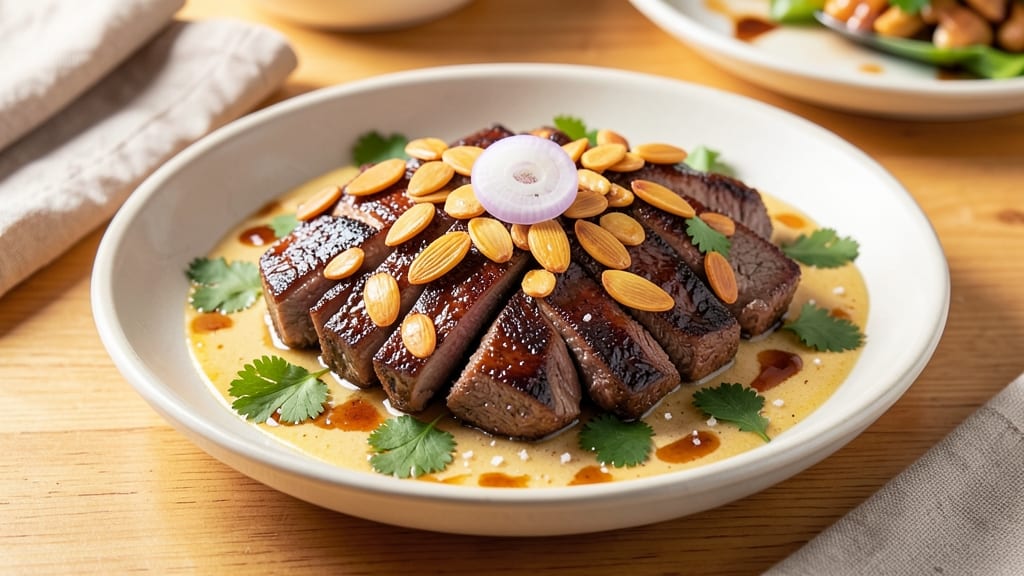
This beef almond ding recipe delivers the perfect balance of textures—crispy golden top and a luscious, silky coconut-cream center that's impossible to resist. 🌟 The dish combines tender beef with almonds and coconut milk, creating a rich, aromatic sauce that's both comforting and sophisticated.
I've refined this recipe to achieve that signature crispy crust while keeping the filling tender and flavorful, inspired by traditional Chinese dining techniques.
The magic lies in the layering: a crispy, caramelized almond topping contrasts beautifully with the creamy coconut-beef filling underneath. This dish isn't just about the flavors—it's about the experience of cutting into that perfect golden crust to reveal the velvety center.
The almonds add a satisfying crunch, while the coconut milk keeps everything moist and aromatic, with just the right amount of sweetness to complement the savory beef.
What makes this recipe stand out is its versatility—it's elegant enough for a dinner party but simple enough for a weeknight meal. The beef is marinated in a blend of soy sauce, ginger, and garlic, ensuring deep, complex flavors that pair perfectly with the coconut cream.
The almond topping isn't just decorative; it's a crucial textural element that elevates the dish from ordinary to extraordinary.
Whether you're serving this as a main course or a showstopper for guests, the presentation is just as important as the taste. The crispy almond crust holds its shape beautifully, making it easy to slice and serve with steamed rice or a fresh green salad.
Let's get started on creating this restaurant-quality dish at home!
Ingredients for beef almond ding
This recipe balances rich textures: crispy almond crust meets velvety coconut-beef filling for restaurant-quality results.
| Ingredient | Amount | Notes |
|---|---|---|
| Beef Chuck Roast 🥩 | 1 ½ lb | Cut into 1-inch cubes |
| Full-Fat Coconut Milk 🥥 | 13 ½ oz | Canned, unsweetened |
| Sliced Almonds 🥜 | 1 ½ cups | Toasted, unsalted |
| All-Purpose Flour 🌾 | ½ cup | For almond topping |
| Granulated Sugar 🍚 | ¼ cup | For caramelization |
| Light Soy Sauce 🥄 | ½ cup | For marinade |
| Ginger Root 🌿 | 2 tbsp | Freshly grated |
| Garlic Cloves 🧄 | 6 cloves | Minced |
| Sesame Oil 🫒 | 1 tbsp | For aroma |
| Egg Whites 🥚 | 2 whole | For binding |
| Cornstarch 🌾 | 1 tbsp | For thickening |
| Vegetable Oil 🫒 | 3 tbsp | For frying |
| Salt 🧂 | 1 ½ tsp | Diamond Crystal preferred |
| White Pepper 🌶️ | ½ tsp | Freshly ground |
The beef cut is critical—chuck roast delivers tender, flavorful cubes after slow cooking. Costco or Whole Foods carry pre-cubed versions, saving prep time. For almonds, Planters brand sliced almonds toast beautifully—just spread them on a baking sheet at 350°F for 8-10 minutes until golden. The coconut milk should be full-fat and unsweetened—Thai Kitchen brand works perfectly. Ginger and garlic should be freshly grated/minced for maximum aromatic impact, though pre-minced will suffice in a pinch.
No sliced almonds? Blanched almonds work equally well, though they lack the same toasted crunch. Substitute coconut milk with light coconut milk if preferred, but expect slightly less richness. For soy sauce, Kikkoman light soy is ideal, though any light soy will do. The egg whites bind the almond topping—room temperature works best for even coating. Short on cornstarch? Arrowroot powder at equal measure thickens just as effectively. The sesame oil adds depth—toasted sesame oil intensifies the flavor further.
Prep the almond topping in advance for better texture—mix all dry ingredients first, then whisk in egg whites and oil. Store the beef marinade in an airtight container for up to 3 days in the fridge. The assembled dish reheats beautifully—cover with foil and bake at 350°F for 20 minutes to restore crispiness. Keeps for 4 days refrigerated or 3 months frozen, though the texture suffers slightly after freezing. Serve with jasmine rice for optimal presentation.
Why You'll Love This Recipe
- One-Pot Magic: I swear by this recipe when I’m too tired to scrub pots. The beef braises right in the same pan with coconut milk until it’s fork-tender—no extra dishes, just rich, sticky goodness that clings to every bite.
- Crispy-Creamy Contrast: That flour crust on the almonds? Pure genius. The outside gets golden and crunchy while the inside stays soft, and the coconut milk turns the beef into a melt-in-your-mouth masterpiece. Honestly, it’s the kind of balance that makes you close your eyes and savor it.
- Weeknight & Holiday Hero: Between us, this dish works for everything. Throw it together for a busy Tuesday night, or serve it at a potluck when you want to impress without stressing. The almonds add a fancy touch, but the beef keeps it hearty—no one will guess it’s this unfussy.
- Budget-Friendly Feast: A chuck roast stretches forever, and coconut milk makes this feel luxurious without breaking the bank. Plus, leftovers reheat like a dream—better the next day, if you ask me. My wallet and my taste buds thank me every time.
Step-by-step instructions for beef almond ding
Master the contrast of textures here—crispy almond crust meets velvety coconut center.
🍳 Step 1: Marinate and Sear the Beef
In a large bowl, combine the 1.5 lb beef chuck roast cut into 1-inch cubes, 0.5 cup light soy sauce, 2 tbsp freshly grated ginger root, and 6 minced garlic cloves. Massage the marinade into the beef until fully coated. Let it sit for 30 minutes at room temperature while you prepare the remaining components.
Heat 3 tbsp vegetable oil in a heavy-bottomed skillet over medium-high heat until shimmering. Working in batches, sear the beef cubes for 2-3 minutes per side until they develop a deep mahogany crust. Remove the beef and set aside—these caramelized edges will form the flavor base for your dish.
👨🍳 Step 2: Prepare the Almond Topping
In a separate bowl, whisk together the 2 whole egg whites, 1.5 tsp salt, and 0.5 tsp freshly ground white pepper until frothy. Gently fold in the 1.5 cups toasted sliced almonds and 0.5 cup all-purpose flour until evenly distributed. The mixture should hold its shape when spooned—this ensures your crispy topping will adhere perfectly.
Spread the almond mixture evenly over the seared beef in a single layer. This creates a uniform surface for maximum crispiness when we fry it later. For best results, work quickly to prevent the egg whites from drying out.
🔥 Step 3: Fry to Golden Perfection
Heat 2 inches of vegetable oil in a deep skillet or Dutch oven to 350°F. Carefully lower the beef-almond mixture into the hot oil using a slotted spoon or fish spatula. Fry for 3-4 minutes per side until the almond topping turns a rich golden brown and the oil bubbles vigorously around the edges.
Here's the thing—don't overcrowd the pan. Fry in batches if needed to maintain proper oil temperature. The moment the almonds release their nutty aroma and the beef releases easily from the topping, it's ready. Drain on a wire rack over paper towels to remove excess oil while keeping the bottom crisp.
🥘 Step 4: Create the Coconut Cream Sauce
In a saucepan, combine the 13.5 oz full-fat coconut milk, 0.25 cup granulated sugar, 1 tbsp sesame oil, and 1 tbsp cornstarch. Whisk constantly over medium heat until the mixture thickens to a glossy, pudding-like consistency—about 5-7 minutes. The sauce should coat the back of a spoon and leave a slight sheen.
Taste and adjust seasoning with additional salt if needed. The coconut cream should balance sweetness with subtle savory notes from the sesame oil. Keep it warm until ready to serve—this velvety sauce is what transforms the crispy exterior into a complete dish.
🍽️ Step 5: Assemble and Serve
Arrange the fried beef almond ding on a warm serving platter. Spoon the coconut cream sauce generously over the top, allowing it to cascade down the sides. The contrast of temperatures—warm sauce over room-temperature beef—creates that luxurious mouthfeel.
Serve immediately while the almond topping remains crisp and the coconut sauce is still silky. Each bite should deliver the satisfying crunch of almonds, followed by tender beef and the rich, cooling coconut cream. For presentation, garnish with additional toasted almonds if desired.
Pro Tips For Making Beef Almond Ding
- SEAR THE ROAST FIRST: The chuck roast needs a deep, caramelized crust before it goes into the coconut milk—don’t skip the 4-5 minutes per side on high heat. I used to rush this, and the sauce would never stick right; now I treat it like a steak, and the flavor clings to every bite.
- TOAST ALMONDS LOW AND SLOW: Toss the sliced almonds in a dry pan over medium-low heat, stirring constantly, until they’re just golden—not brown. High heat burns them fast, and you end up with bitter bits instead of the nutty crunch you want in the final dish.
- DON’T OVERCOOK THE COCONUT MILK: Once the sauce starts simmering, keep it at a gentle bubble—not a rolling boil. I learned this after reducing three batches too fast, turning the coconut milk into a gluey mess instead of a rich, velvety base for the almonds and beef.
- USE FLOUR AS A SLURRY: Mix the all-purpose flour with a splash of cold water (about 2 tablespoons) before stirring it into the coconut milk. This keeps the sauce smooth and prevents lumps—no one wants to fish out flour clumps while eating. (Yes, I’ve done it.)
Regional styles of this recipe
Cantonese Roots
The beef almond ding originates from Cantonese cuisine, where "ding" refers to a crispy, golden-brown coating that encases a soft, savory filling. This dish traces back to 19th-century Guangdong province, where home cooks perfected the technique of frying almond topping to create that signature crunch.
The combination of coconut milk and beef reflects the region's love for sweet-savory balance—a hallmark of Cantonese dining. 🌟
In traditional versions, you'll often find pork or chicken instead of beef, but the almond topping remains consistent. The dish was historically served during Lunar New Year celebrations, symbolizing prosperity and abundance. The crispy exterior represents wealth, while the creamy filling signifies luck—perfect for festive gatherings.
Modern Hong Kong Twist
Hong Kong chefs elevated this dish by incorporating Japanese and Western techniques, particularly in the frying process. The modern version often includes toasted sesame oil for depth and white pepper for a subtle kick, setting it apart from older recipes.
Restaurants like Tim Ho Wan in Hong Kong popularized the dish with their signature crispy almond crust and silky coconut sauce. 🍚
Today, you'll find variations with mushrooms or water chestnuts added to the filling for extra texture. Some versions even use almond butter in the sauce for a richer, nuttier profile. The key remains the same: achieving that perfect golden-brown crust while keeping the filling tender.
Taiwanese Fusion
Taiwanese chefs took the dish further by blending it with Japanese teriyaki flavors. You'll often see a soy-glazed beef filling topped with the almond crust, then drizzled with a reduced teriyaki sauce instead of coconut cream. The result is a sweet-savory hybrid that's both familiar and exciting. 🥜
In Taipei, street vendors serve mini versions of this dish as snack-sized bites, perfect for on-the-go eating. The almond topping is sometimes replaced with crushed peanuts for a budget-friendly twist, though purists argue nothing beats the nutty richness of almonds.
The Taiwanese version also emphasizes umami bombs like dried shiitake mushrooms in the filling.
Singapore Street Food
Singapore's hawker stalls transformed this dish into a quick, handheld snack called "Almond Ding Bao." Here, the beef filling is wrapped in a steamed bun instead of fried, with the almond topping pressed onto the top.
Vendors fry the buns in hot oil for just 30 seconds to achieve that signature crisp. 🍜
The Singaporean version often includes chili paste in the filling for heat, balancing the coconut cream's sweetness. It's a late-night favorite in places like Chinatown, where the dish is served with a side of sweet chili sauce for dipping.
The key difference? The bun adds a soft, pillowy texture that contrasts with the almond's crunch.
Malaysian Adaptation
In Malaysia, the dish is known as "Ding Aik" and often features a spicier profile with sambal oelek mixed into the coconut sauce. The almond topping is sometimes coated with palm sugar before frying for extra caramelization. 🌶️
Malaysian home cooks also experiment with local ingredients like candlenuts (a substitute for almonds) and lemongrass in the marinade. The dish is commonly served during Ramadan iftars, where its rich flavors complement the fasting experience.
The Malaysian version keeps the crispy almond crust but often serves it with cucumber slices to cut through the richness.
Nutrition facts
Frequently asked questions
What makes the almond topping stay crispy?
The secret is frying at the right temperature (350°F) and draining properly. Use a wire rack over paper towels to remove excess oil while keeping the bottom crisp. The egg whites in the almond mixture act as a binder, helping the coating maintain its structure even after frying.
Can I make this dish ahead of time?
Assemble the dish and refrigerate for up to 4 days. Reheat covered with foil at 350°F for 20 minutes to restore crispiness. For freezing, wrap tightly and freeze for 3 months, though texture may soften slightly. The coconut sauce reheats beautifully—just warm it gently to maintain its silky texture.
What's the best way to toast the almonds?
Spread 1.5 cups sliced almonds on a baking sheet and toast at 350°F for 8-10 minutes until golden brown. Stir halfway for even toasting. For extra flavor, add a pinch of salt during toasting. The nutty aroma is key to the dish's signature taste—don't skip this step!
How do I adjust the sweetness in the coconut sauce?
The sauce should balance sweet and savory. Start with 0.25 cup sugar, then adjust to taste. For less sweetness, reduce to 2 tbsp or omit entirely. If using sweetened coconut milk, reduce sugar by half. The sesame oil adds depth, so don't overcompensate with more sugar.
What's the best beef cut for this recipe?
Chuck roast is ideal—it's flavorful and tender when cooked properly. For quicker prep, buy pre-cubed beef from stores like Costco or Whole Foods. Avoid lean cuts like sirloin, as they won't stay juicy during frying. The 1-inch cubes ensure even cooking and maximum flavor.