
Main Courses
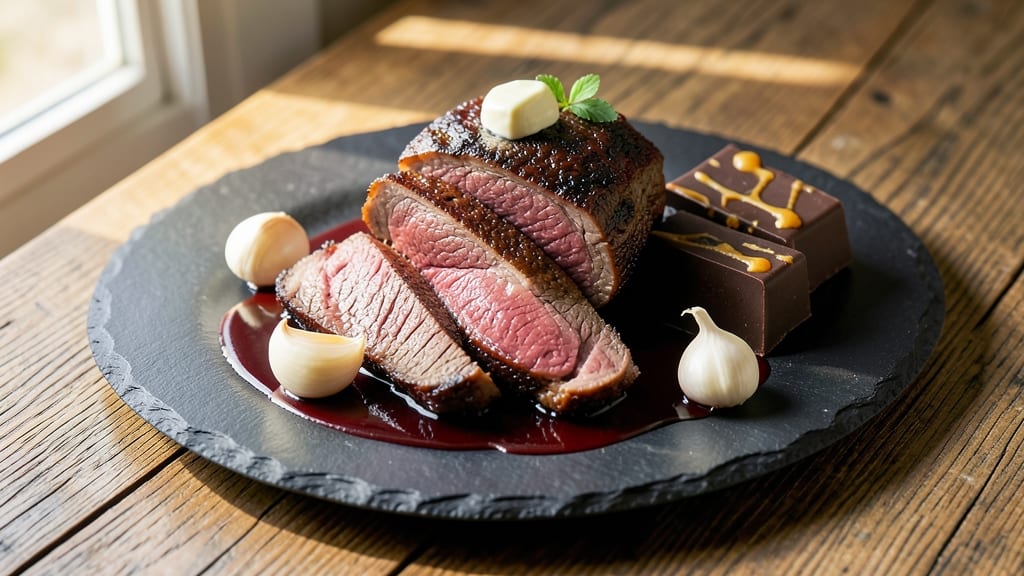
This beef and chocolate recipe transforms an unexpected pairing into a restaurant-worthy dish where rich cocoa deepens the beef's natural umami. 🌟 The secret lies in balancing sweetness with savory depth—whether through a dark chocolate glaze, mole-inspired marinade, or even a cocoa-rubbed crust—while ensuring the beef remains tender and flavorful.
What starts as a bold concept becomes a harmonious meal when executed properly.
The foundation begins with perfectly prepared beef—whether seared short ribs, slow-cooked chuck roast, or even a quick-pan beef tenderloin—each method designed to complement the chocolate's intensity. The key is integrating cocoa early, whether in a marinade, sauce reduction, or finishing glaze, to let its flavors meld without overpowering the dish.
This isn’t just about sweet and salty; it’s about layering textures and aromas for a dish that feels both indulgent and refined.
Imagine a deep brown glaze pooling over caramelized beef, its bittersweet notes cutting through the richness, or a velvety chocolate-mole sauce clinging to fork-tender meat. The result is a dish that surprises yet satisfies—bold enough for a special occasion but simple enough for weeknight cooking.
Pair it with roasted root vegetables or crisp polenta to round out the plate, and you’ve got a meal that’s equal parts unexpected and unforgettable.
Whether you’re inspired by Mexican mole traditions or French chocolate-crusted techniques, this recipe adapts to your style while delivering that perfect balance. The beauty of beef and chocolate lies in its versatility—sweet enough to delight, savory enough to impress. Let’s bring this decadent pairing to life.
Ingredients for beef and chocolate
Rich cocoa meets tender beef in this decadent pairing where umami and sweetness harmonize perfectly.
| Ingredient | Amount | Notes |
|---|---|---|
| Beef Chuck Roast 🥩 | 2 lb | Center-cut for tenderness, trimmed of excess fat |
| Dark Chocolate Bars 🍫 | 8 oz | 70% cocoa or higher, finely chopped |
| Unsalted Butter 🧈 | ½ cup | Cold, cubed for even melting |
| Red Wine 🍷 | 1 cup | Bold dry red like Cabernet Sauvignon |
| Beef Broth 🥄 | 1 ½ cups | Homemade or high-quality store-bought |
| Garlic Cloves 🧄 | 6 cloves | Minced, skin-on for deeper flavor |
| Shallots 🧅 | 2 whole | Finely diced, 2 tbsp total |
| Fresh Thyme 🌿 | ¼ cup | Leaves only, stems discarded |
| Olive Oil 🫒 | 2 tbsp | Extra-virgin for high heat searing |
| Brown Sugar 🍚 | 2 tbsp | Light or dark, packed measurement |
| Ground Black Pepper 🌶️ | 1 tsp | Freshly cracked for maximum aroma |
| Kosher Salt 🧂 | 1 ½ tsp | Diamond Crystal preferred for accuracy |
| Heavy Cream 🥛 | ½ cup | Full-fat for optimal richness |
| Polenta 🌾 | 1 cup | Fine grind, cooked al dente |
| Red Wine Vinegar 🍶 | 1 tbsp | For balancing acidity in glaze |
The beef chuck roast is non-negotiable for this recipe—its marbling ensures tender, flavorful results. Costco or Whole Foods typically carry high-quality cuts with excellent marbling. If you opt for a pre-cut roast, look for pieces with visible fat streaks throughout. The dark chocolate should be at least 70% cocoa; Valrhona or Lindt Excellence brands deliver consistent quality. For the cocoa depth to shine, avoid pre-shredded chocolate—freshly chopping ensures even distribution and prevents clumping in the sauce. The red wine selection matters too; opt for a bold, dry variety like a Cabernet Sauvignon or Malbec—avoid sweet dessert wines that will overpower the dish.
No red wine on hand? Beef broth with an extra splash of balsamic vinegar creates a similar depth. The chocolate can be substituted with espresso powder (2 tbsp) for a coffee-chocolate fusion, though purists may prefer the original. If you're avoiding dairy, replace the heavy cream with full-fat coconut milk—it adds richness without the same creaminess. The polenta can be swapped for mashed potatoes or creamy risotto to round out the plate. For those with time constraints, pre-made mole sauce (like La Costeña) can replace the chocolate-wine reduction, though homemade delivers superior depth. Always toast your shallots and garlic in the olive oil first—this step builds a fragrant base that carries through the entire dish.
The beef should be cooked low and slow to achieve tender perfection, then finished with a chocolate-wine glaze that pools beautifully over the surface. Store any leftovers in an airtight container in the fridge for up to 4 days, though the flavor actually improves overnight as the sauce melds further. For longer storage, freeze portions for up to 3 months. The polenta reheats beautifully—simply microwave with a splash of water or broth. To elevate presentation, garnish with toasted hazelnuts or fresh thyme sprigs before serving. The glaze can be made ahead and reheated gently with a splash of beef broth to restore its velvety texture.
Why You'll Love This Recipe
- One-Pot Magic: I swear by this recipe when I’m too tired to juggle pans—just sear the beef, deglaze with wine, toss in chocolate and broth, and let it melt into a rich, velvety sauce. The chuck roast practically falls apart on its own, so minimal effort equals maximum reward.
- Unexpected Richness: Between us, chocolate and beef shouldn’t work—but here, it’s ridiculously good. The dark chocolate bars melt into the red wine reduction, cutting through the beef’s richness while adding a deep, almost caramelized sweetness. It’s like a grown-up dessert sneaking into your dinner.
- Weeknight to Dinner Party: This recipe is my secret weapon for when my in-laws show up unannounced. The leftovers reheat beautifully for lunches, and the sauce thickens perfectly to drizzle over mashed potatoes or crusty bread. (Yes, even on a Tuesday night.)
- Budget-Friendly Luxury: A chuck roast is cheap, and dark chocolate bars stretch further than you’d think when shaved into thin strips. The wine and butter elevate it without breaking the bank—this is comfort food that feels special without the restaurant price tag.
Step-by-step instructions for decadent beef and chocolate pairing
Transforming humble beef into a luxurious chocolate-infused masterpiece requires precision timing and technique.
🔥 Step 1: Sear the Beef Chuck Roast for Deep Flavor
Pat the 2 lb Beef Chuck Roast completely dry with paper towels—moisture is the enemy of a proper sear. Heat 2 tbsp olive oil in a Dutch oven over medium-high heat until shimmering. Place the roast in the pot and sear for 4 minutes per side, pressing gently with a spatula to ensure even contact. You'll know it's ready when a deep golden-brown crust forms and the internal temperature reaches 140°F on an instant-read thermometer.
Remove the roast and set aside. The goal here is to develop that fundamental Maillard reaction that creates complex flavors. If your pan isn't hot enough, the beef will steam instead of sear—this is where patience pays off. I like to sear at this lower temperature first to prevent overcooking the exterior before the interior comes up to temperature.
🍳 Step 2: Build the Chocolate-Wine Reduction
In the same Dutch oven, reduce heat to medium and add 2 tbsp brown sugar, 6 cloves minced garlic cloves, and 2 whole finely diced shallots. Cook for 3-4 minutes until the vegetables soften and become fragrant. Deglaze with 1 cup red wine, scraping up all those flavorful browned bits from the bottom of the pot—this is called fond, and it's packed with umami goodness.
Add 8 oz finely chopped dark chocolate bars and 0.5 cup unsalted butter (cold cubes work best). Stir constantly until the chocolate melts completely and the mixture becomes silky smooth. This should take about 2-3 minutes—if it starts to seize up, add 1-2 tbsp beef broth to help it come together. The chocolate should be fully incorporated but still maintain a glossy sheen.
🥘 Step 3: Slow-Braise with Aromatics and Chocolate
Return the seared beef roast to the Dutch oven. Add 1.5 cups beef broth, 0.25 cup fresh thyme leaves, 1.5 tsp kosher salt, and 1 tsp ground black pepper. Bring to a gentle simmer, then cover and transfer to a 325°F oven. Braise for 2.5-3 hours until the beef is fork-tender and the sauce has thickened to a velvety consistency.
Here's the thing about braising—patience is everything. The chocolate will continue to develop its rich, complex flavors as it melds with the beef and wine. Check the internal temperature periodically after 2 hours—it should reach 205°F when probe-tender. If the sauce starts to reduce too much, add a splash of beef broth to maintain balance. The thyme should infuse the dish with an earthy aroma that complements the chocolate beautifully.
⏰ Step 4: Create the Polenta Cushion
While the beef braises, cook 1 cup polenta according to package instructions using 2.5 cups water and 0.5 tsp salt. The polenta should be creamy but still hold its shape slightly—think al dente pasta. For extra richness, stir in 0.5 cup heavy cream and 1 tbsp red wine vinegar during the last 2 minutes of cooking. This acidity brightens the chocolate notes while adding a luxurious creaminess.
Real talk: Don't skip the vinegar. It might seem counterintuitive, but that bright acidity cuts through the richness of both the beef and chocolate, creating a perfect balance. The polenta should be smooth enough to spread easily but still have some bite to it—this provides the perfect textural contrast to the tender beef.
🍽️ Step 5: Finish and Plate for Maximum Impact
Remove the beef from the braising liquid and let it rest for 15 minutes before slicing. The chocolate-wine sauce should now be thick enough to coat the back of a spoon—if not, reduce it further over medium heat for 5-7 minutes. Skim off any excess fat that has risen to the surface, then stir in the remaining 0.5 cup heavy cream to create a glossy finish.
Slice the beef against the grain into ½-inch thick pieces. To plate, spread a generous portion of the creamy polenta on each plate, top with beef slices, and ladle the chocolate-wine sauce artfully around it. The contrast between the deep red sauce, golden polenta, and rich beef creates a visually stunning dish that's almost too beautiful to eat—almost.
Pro Tips For Making Beef And Chocolate
- SEAR THE ROAST FIRST: That beef chuck needs a deep, caramelized crust before it goes into the wine and chocolate sauce—don’t skip the 8-10 minutes on high heat. I used to rush this, and the sauce just couldn’t compete with the bland meat underneath.
- CHOP CHOCOLATE SMALL: Tiny, even pieces melt faster and blend smoother into the sauce—no clumps, no guessing. Use a sharp knife or pulse in a food processor, but don’t overdo it (you’re not making ganache).
- DEGLAZE WITH WINE IMMEDIATELY: As soon as that roast comes off the pan, splash in the red wine and let it bubble for 2 minutes. That’s when the browned bits lift up and turn into flavor—waiting just makes you scrub the pot later.
- USE BROTH LAST: Add the beef broth only after the chocolate’s melted and the wine’s reduced—about 5 minutes before the end. Too early, and the sauce turns thin and watery; too late, and it won’t integrate fully.
Essential equipment for this dish
Dutch Oven Essentials
A 5-7 quart Dutch oven is your secret weapon for this recipe—it handles searing, braising, and sauce reduction all in one pot. I recommend the Le Creuset Stoneware for its even heat distribution, or the Lodge Cast Iron for budget-friendly durability.
The deep sides prevent splatter when deglazing with wine, and its heavy construction maintains stable temperatures during the 325°F oven braise. 🔥
Precision Thermometer
An instant-read thermometer like the ThermoWorks Thermapen is non-negotiable for perfect results. Use it to monitor the beef's internal temperature during searing (140°F) and braising (205°F).
The chocolate sauce also benefits from temperature control—keep it under 212°F to prevent scorching while melting the 8 oz dark chocolate. A cheap dial thermometer won't cut it here.
High-Quality Chocolate
Invest in 70% or higher cocoa content bars like Valrhona Guanaja or Lindt Excellence for professional results. Pre-shredded chocolate contains anti-caking agents that prevent proper melting. Finely chop your own chocolate using a sharp chef's knife or microplane for even distribution.
The bittersweet notes in high-cocoa chocolate balance the beef's richness without overpowering it.
Wine Decanter
A glass wine decanter with an airtight stopper isn't essential but makes a huge difference when reducing wine with chocolate. I use a Riedel Decanter to aerate the 1 cup red wine before adding it to the pan—this enhances its flavor complexity.
If you don't have one, simply pour the wine into the Dutch oven and let it sit for 5 minutes before deglazing to mimic aeration.
Polenta Maker
For restaurant-quality polenta, use a stainless steel pot with a tight-fitting lid—like the All-Clad Stainless Steel Saucepan. Avoid nonstick pans as they can impart flavors. The 1 cup polenta should cook over medium-low heat with constant stirring to prevent lumps.
A wooden spoon works best for scraping the bottom while stirring in the 0.5 cup heavy cream at the end.
Silicone Tools
Silicone tongs and a spatula are game-changers for handling hot beef and scraping fond from the Dutch oven. I prefer OXO Good Grips for their heat resistance and ergonomic design.
The silicone won't react with acidic ingredients like red wine vinegar, and it won't scratch your cookware. Keep them nearby during the 4-minute sear to flip the beef safely.
Nutrition facts
Frequently asked questions
Why does chocolate work so well with beef?
The secret lies in chocolate's complex flavor profile—its bittersweet notes enhance beef's natural umami while adding depth. High-cocoa chocolate (70%+) contains tannins that pair beautifully with red wine and rich meats, creating a sophisticated balance. The fat in beef also helps emulsify the chocolate, preventing graininess in sauces. Think of it as a flavor bridge between sweet and savory!
Can I substitute beef chuck roast with another cut?
For quicker cooking, use beef tenderloin (sear only, no braising) or short ribs (braise 2-2.5 hours). Avoid lean cuts like sirloin—they won't stay tender enough with chocolate's moisture. If using ribs, increase braising time by 30 minutes and add 1 extra cup broth to prevent drying.
What if my chocolate sauce gets grainy?
This happens when chocolate cools too quickly or isn't properly melted. Fix it by whisking in 1 tbsp warm heavy cream or beef broth while heating gently over low heat. For prevention, chop chocolate finely and melt it slowly with butter before adding wine. Never use microwave—it creates hot spots that cause graininess.
How can I make this dish less sweet?
Reduce the brown sugar to 1 tbsp and use 85% cocoa chocolate instead of 70%. Add 1 tsp espresso powder to the sauce for coffee-chocolate depth, which balances sweetness naturally. The red wine vinegar in the polenta also helps cut sweetness—don't skip it!
Can I make this recipe in a slow cooker?
Yes! Sear the beef first, then transfer everything (except polenta) to a 6-quart slow cooker. Cook on Low 6-7 hours or High 3-4 hours. For the sauce, finish it on the stovetop by reducing it further and adding cream. The slow cooker won't develop the same caramelized fond, but it's still delicious—just less complex.