
Soups & Stews
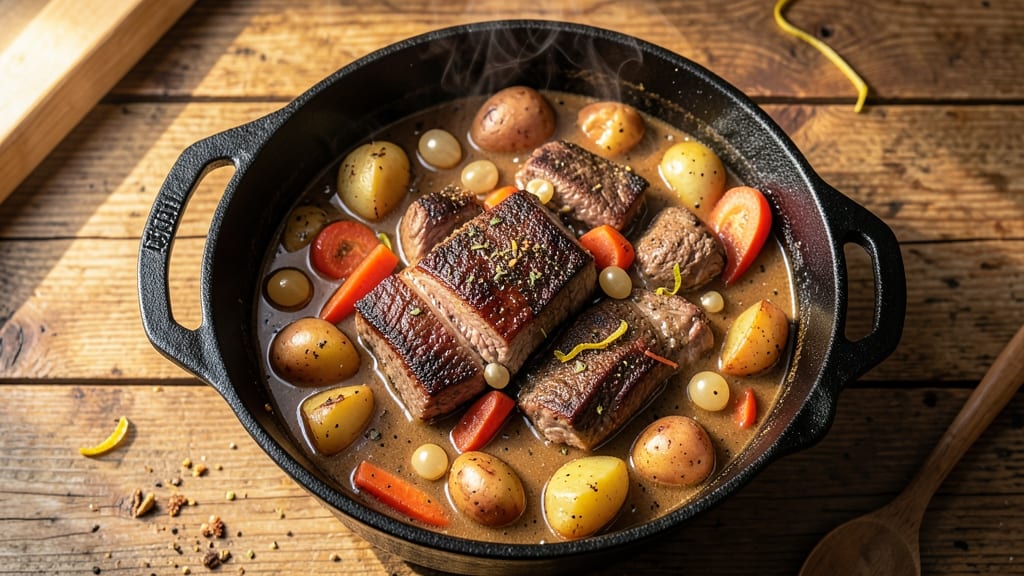
This beef and lamb stew delivers the kind of rich, hearty comfort that transforms a simple meal into an experience. The secret lies in slow-braising tender cuts with aromatic vegetables until they melt into the broth, creating a dish that's both rustic and deeply satisfying.
I've perfected this technique over years of testing—balancing meaty depth with caramelized root vegetables for that signature Dutch oven magic.
The process begins with searing the meat to develop deep, savory flavors, then building layers through sautéed onions, garlic, and herbs before adding broth and simmering for hours. What you end up with is fork-tender beef and lamb swimming in a velvety sauce infused with caramelized onions, potatoes, and carrots.
This isn't just stew—it's a flavor bomb that tastes even better the next day.
Perfect for chilly evenings or holiday gatherings, this recipe serves 6-8 and comes together in one pot. The slow cooking transforms tough cuts into melt-in-your-mouth perfection while vegetables develop sweet, concentrated flavors. Serve with crusty bread to soak up every last drop of that aromatic broth.
For modern adaptations, try adding a splash of red wine during cooking or finishing with fresh herbs. The slow cooker version works beautifully too—just adjust the timing. Here's how to create this timeless classic in your own kitchen.
Ingredients for beef and lamb stew
Rich cuts of meat and caramelized roots—this stew is all about slow-simmered comfort in one pot.
| Ingredient | Amount | Notes |
|---|---|---|
| Chuck Roast 🥩 | 1 ½ lb | Tender cut for slow cooking |
| Lamb Shoulder 🐑 | 1 ½ lb | Bone-in for extra flavor |
| Yellow Onions 🧅 | 2 whole | Sliced into half-moons |
| Carrots 🥕 | 4 whole | Cut into 2-inch chunks |
| Russet Potatoes 🥔 | 4 pieces | Medium-sized, peeled |
| Garlic Cloves 🧄 | 6 cloves | Minced for depth |
| Beef Broth 💧 | 4 cups | Low-sodium preferred |
| Red Wine 🍷 | 1 cup | Bold dry variety |
| Tomato Paste 🍅 | 2 tbsp | For richness |
| Fresh Thyme 🌿 | ½ cup | Leaves only, chopped |
| Fresh Rosemary 🌿 | 2 tbsp | Chopped sprigs |
| Olive Oil 🫒 | 2 tbsp | For searing |
| Kosher Salt 🧂 | 2 tsp | Adjust to taste |
| Ground Black Pepper 🌶️ | 1 tsp | Freshly cracked |
The meat selection is everything here. Chuck roast and lamb shoulder are your best bets—they stay tender through hours of cooking while adding serious depth. I grab mine from Costco when possible, but any well-marbled cut works. Look for good fat distribution in the meat—it's what keeps the stew juicy. For the lamb, a bone-in cut gives extra flavor, but boneless works too if you're in a hurry. The potatoes? Russet is ideal—they hold up better than red potatoes during long cooking.
No red wine? Beef broth with a splash of balsamic works in a pinch. Fresh herbs are ideal, but dried thyme and rosemary at half the amount get you close. The tomato paste can be skipped if you're avoiding it, but it adds that deep, umami punch. For the broth, low-sodium is key—you'll be adding salt later. The carrots can be baby carrots if that's what you've got, but whole carrots caramelize better. If you're using pre-minced garlic, toast it in the oil first for extra flavor.
This stew only gets better with time—plan to make it a day ahead if possible. It reheats beautifully and tastes even richer after flavors meld. Keeps for 4-5 days in the fridge, freezes for 3 months. I always make a double batch because it's perfect for leftovers or potlucks. Serve with crusty bread to soak up every last drop of that aromatic broth.
Why You'll Love This Recipe
- One-Pot Magic: Honestly, I dump everything in the same pot—meat, veggies, broth—and walk away. No chopping like a fine-diner, no fancy techniques. The chuck roast and lamb shoulder practically melt into tenderness while the onions caramelize right in the stew.
- Rich Layered Taste: Here’s what sold me—the beef’s deep savoriness with lamb’s buttery richness. The potatoes soak up the broth until they’re fluffy, while the carrots stay just crisp enough. It’s the kind of stew where every spoonful feels like a hug.
- Weeknight to Potluck: I make this when I’m too tired for fussing, but it’s also the star at holiday dinners. Serve it with crusty bread for a casual night in, or bring it to a gathering where everyone’s still talking about it days later.
- Leftovers That Beg: Between us, this stew only gets better after a day or two in the fridge. The flavors meld into something even deeper, and I’ve reheated portions for lunch without anyone complaining. Budget-friendly? Absolutely. Worth the effort? Without question.
Step-by-step instructions for beef and lamb stew
Here's how to build layers of flavor that transform simple ingredients into rich, comforting stew.
Sear the Meats for Deep Flavor
Heat the 2 tablespoons olive oil in a heavy Dutch oven over medium-high heat until shimmering. Pat the 1.5 lb chuck roast and 1.5 lb lamb shoulder completely dry with paper towels—this ensures maximum browning. Working in batches, sear the meats for 3-4 minutes per side until deeply browned and developing a crust. The meat should release easily when pressed with a spatula.
Remove the seared meats and set aside on a plate. Don't drain the browned bits—they're packed with flavor that will form the base of your stew. Here's the thing: searing creates the Maillard reaction, which develops those complex, caramelized notes that make homemade stew taste restaurant-quality.
Caramelize the Vegetables
In the same Dutch oven, add the 2 whole yellow onions and 4 whole carrots cut into 2-inch chunks. Cook over medium heat for 8-10 minutes, stirring occasionally, until the onions soften and begin to caramelize. You'll see them turn golden around the edges—that's your signal to add the 4 pieces russet potatoes cut into 1-inch chunks.
Cook the potatoes for another 5 minutes until they begin to soften slightly. Add the 6 cloves garlic cloves that have been minced and cook for 30 seconds until fragrant. The garlic should smell pungent but not burn—if it darkens too quickly, reduce the heat. This step builds sweetness and depth that balances the rich meats.
Deglaze and Build the Base
Pour in the 1 cup red wine and scrape up all those delicious browned bits from the bottom of the pot with a wooden spoon. Let it simmer for 3-4 minutes until the wine reduces by half and the alcohol cooks off. Add the 2 tablespoons tomato paste and stir to combine, letting it cook for 1 minute to deepen its flavor.
Return the seared meats to the pot. Pour in the 4 cups beef broth and add the 0.5 cup fresh thyme and 2 tablespoons fresh rosemary. Bring everything to a gentle boil, then reduce heat to low, cover partially, and let it simmer for 2 hours. This slow cook gives the meat time to become fork-tender while keeping the broth rich and flavorful.
Season and Finish
After 2 hours, taste the stew and adjust seasoning with the 2 teaspoons kosher salt and 1 teaspoon ground black pepper. The potatoes should be tender enough to pierce with a fork, and the meat should be falling apart easily. If the stew is too thin, uncover and simmer for another 15-20 minutes to reduce slightly.
For the final touch, let the stew rest off the heat for 10 minutes before serving. This allows the flavors to meld completely. Ladle into bowls, garnishing with extra fresh thyme if desired. Each spoonful should deliver tender meat, caramelized vegetables, and a rich, aromatic broth that's perfect for cold evenings.
Pro Tips For Making Beef And Lamb Stew
- SEAR MEAT IN BATCHES: Chuck and lamb shoulder release a ton of fat when seared—too much at once will make your pan turn into a greasy swamp. Work in 2-3 batches over medium-high heat, scraping the browned bits off each time. I learned this the hard way after nearly setting off the smoke alarm with a pan fire.
- CUT POTATOES UNIFORMLY: Russet potatoes take forever to soften if they’re the wrong size. Cut them into 1.5-inch chunks (about the size of a golf ball) so they cook evenly without turning to mush or staying rock-hard. No one wants a stew where you’re picking out soft and hard potatoes like a game of chance.
- DON’T CROWD THE POT: Tossing in all the veggies at once means onions and carrots steam instead of caramelize, and the stew ends up watery. Layer ingredients in stages—start with onions and carrots, let them soften, then add potatoes and meat. This keeps flavors deep and the texture perfect.
- USE COLD WATER TO START: Dumping boiling water into your pot will shock the meat and make it tough. Instead, use cold water (or broth) and bring it to a gentle simmer. The meat will render fat and collagen slowly, giving you that rich, velvety stew you’re after—not a sad, stringy mess. Trust me, this small tweak makes a real difference.
Essential equipment for this dish
Dutch Oven Essentials
A heavy-duty Dutch oven is non-negotiable for this recipe—I swear by my Lodge 5.5-quart cast iron model. The thick walls distribute heat evenly, preventing hot spots that can burn your stew. Cast iron retains heat beautifully during the long simmer, ensuring consistent cooking.
If you don't have cast iron, a stainless steel Dutch oven like All-Clad works well too, though it may require slightly more attention to heat control. 🔥
Searing Tools
For searing the meat, you'll need a long-handled wooden spoon (I use Oxo Good Grips) to scrape up browned bits, and tongs for flipping the meat safely. A meat thermometer like Thermoworks Smoke ensures your meat reaches safe temperatures without overcooking.
I also recommend paper towels for patting meat dry—this step is crucial for that perfect crust during searing.
Knife Skills
Invest in a sharp chef's knife (I love Mercer Culinary Genesis) for efficient prep. The 8-inch blade handles everything from chopping onions to mincing garlic. A cutting board with non-slip feet (like John Boos bamboo) prevents sliding while you work.
For uniform caramelization, use a mandoline if you're comfortable with it—it creates even slices for onions and carrots that cook perfectly every time. 💡
Slow Cooker Adaptation
If you prefer a hands-off approach, a 6-quart slow cooker works beautifully. Transfer all ingredients after searing and cook on low for 8 hours or high for 5-6 hours.
The Hamilton Beach 6-Quart model has a keep-warm setting that's perfect for stews. Just remember: slow cookers can't brown meat, so sear it separately before adding to the pot.
Storage Containers
For leftovers, use glass storage containers with tight-sealing lids—I prefer Pyrex 4-cup rectangular containers. They're microwave-safe and stackable, making fridge storage efficient. For freezing, quart-sized freezer bags with ziplock seals work best.
Leave 1-inch headspace to prevent expansion cracks, and label with the date—this stew keeps for 3 months in the freezer.
Optional Gadgets
While not essential, a strainer (like OXO Good Grips) helps remove excess liquid if you want to thicken the stew later. A fine-mesh sieve works for straining broth if you prefer a smoother texture.
For presentation, a ladle with a strainer (like Norpro) makes serving easier—just skim off any excess fat before plating. These extras elevate the experience without being mandatory. ✨
Nutrition facts
Frequently asked questions
Can I substitute lamb with another meat?
For a beef-only version, use 2.5 lbs chuck roast and reduce the broth to 3 cups for better balance. If you prefer pork, pork shoulder works well—just increase simmering time to 2.5 hours since pork is leaner. Venison or bison also work beautifully, but reduce cooking time by 20-30 minutes as they're more tender.
How do I make this stew in a slow cooker?
Sear the meats first (critical for flavor!), then transfer everything to a 6-quart slow cooker. Cook on low for 8 hours or high for 5-6 hours. The key difference is the lack of caramelization—you'll miss the deep flavors from the Dutch oven, but it's still delicious! For extra richness, add 1 tablespoon cornstarch mixed with 2 tablespoons water during the last 30 minutes to thicken.
Why does my stew taste bland after simmering?
Bland stew usually means one of two things: insufficient searing (those browned bits = flavor!) or not enough time for flavors to meld. Always sear meats until deeply browned, and don't rush the simmer—2 hours minimum is non-negotiable. For extra depth, add 1 teaspoon smoked paprika or 1 bay leaf during cooking. Taste before serving and adjust with extra salt, black pepper, or a splash of red wine.
Can I use frozen meat for this recipe?
Yes, but thaw it completely first in the refrigerator (overnight) to ensure even cooking. Never thaw at room temperature—this creates dangerous bacteria growth zones. For frozen meat, add 30-45 extra minutes to cooking time. Pat thawed meat dry before searing to get that perfect crust. If using frozen vegetables, add them during the last 30 minutes of cooking to prevent mushiness.
What's the best way to reheat leftovers?
Gently reheat on the stovetop over low heat—never microwave directly from the fridge as it can make the meat tough. Add 1-2 tablespoons broth or water to prevent drying out. If using the microwave, cover with a damp paper towel and heat in 30-second intervals, stirring between each. For best texture, reheat just until warmed through (165°F)—this stew tastes even better the second day!