
Soups & Stews
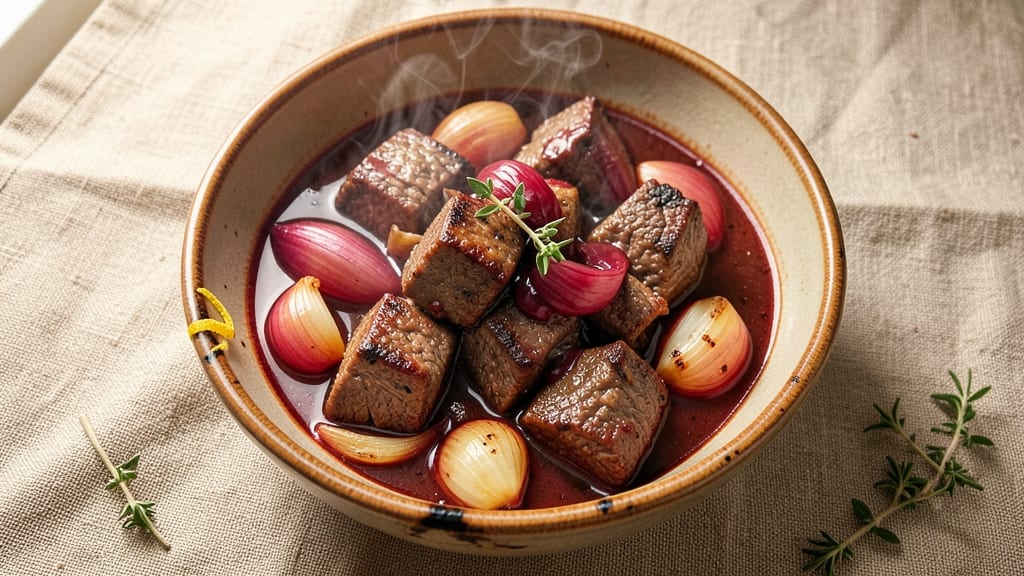
This beef and onion stew recipe transforms tough cuts into melt-in-your-mouth tenderness through slow simmering and deep caramelized onions. The secret lies in proper browning and layering flavors—where rich beef meets sweet, savory onions in perfect harmony.
I've perfected this technique over years of testing, ensuring every spoonful delivers restaurant-quality depth without the fuss.
The process begins with searing beef in a Dutch oven until deeply browned, then deglazing with wine or broth to capture all those flavorful bits. As the stew simmers for hours, onions caramelize beautifully, creating a thick, velvety sauce that coats every bite.
This method builds complex flavors that store-bought versions simply can't match, making it worth the time investment.
By the end, you'll have a hearty stew with tender beef, perfectly softened onions, and a rich broth that's perfect for cold nights. The aroma alone will have everyone gathered around the table, while the texture—tender beef and caramelized onions—makes each bite satisfying.
It's the kind of dish that tastes even better the next day as flavors meld further.
Serve with crusty bread to soak up every last drop of that flavorful sauce. This recipe scales beautifully, so it's ideal for family dinners or meal prep. Let's get cooking—your taste buds will thank you.
Ingredients for beef and onion stew
Pantry staples plus a few key ingredients for rich, deep-simmered beef and onion perfection.
| Ingredient | Amount | Notes |
|---|---|---|
| Chuck Roast 🥩 | 2 lb | Cut into 1.5-inch cubes |
| Yellow Onions 🧅 | 4 whole | Peeled, quartered lengthwise |
| Red Wine 🍷 | 1 cup | Bold, dry variety like Cabernet |
| Beef Broth 💧 | 3 cups | Low-sodium preferred |
| Tomato Paste 🍅 | 2 tbsp | Squeeze tube preferred |
| Garlic Cloves 🧄 | 4 cloves | Minced, for depth |
| Fresh Thyme 🌿 | 2 sprigs | Or 1 tsp dried |
| Bay Leaves 🌿 | 2 whole | Remove before serving |
| Olive Oil 🫒 | 2 tbsp | For searing beef |
| Salt 🧂 | 1 ½ tsp | Kosher or sea salt |
| Black Pepper 🌶️ | 1 tsp | Freshly cracked |
| All-Purpose Flour 🌾 | 1 tbsp | For thickening sauce |
| Worcestershire Sauce 🍶 | 1 tbsp | For umami depth |
| Balsamic Vinegar 🍷 | 1 tbsp | Optional for brightness |
| Fresh Parsley 🌿 | ¼ cup | Chopped, for garnish |
The chuck roast is non-negotiable here—it's the tough cut that turns tender through slow cooking. Costco or local butchers usually have it pre-cut, but if you're buying a whole roast, ask for the chuck section. Look for good marbling—those white fat streaks melt during cooking and keep the meat juicy. I always grab extra because it's so versatile. For the onions, yellow onions give the best caramelization, but red onions add sweetness if you want variety. The key is patience—don't rush the browning or the onions won't caramelize properly.
No red wine? Beef broth with a splash of balsamic works just as well. Fresh thyme is ideal, but dried works at one-third the amount—just remember to toast it first in the pot for 30 seconds to wake up the flavors. The tomato paste can be from a squeeze tube (those at Trader Joe's are perfect) or a small can. If you're avoiding gluten, skip the flour and just stir in an extra splash of broth at the end. The Worcestershire sauce adds that umami kick—Lea & Perrins is the classic choice, but any good brand works. For extra richness, a pinch of sugar helps balance the acidity from the vinegar.
This stew tastes even better the next day as flavors meld—4-5 days in the fridge, no problem. Freezes beautifully for 3 months, so make a double batch. I always portion mine into containers with a little extra sauce on top—perfect for quick lunches. The onions can be prepped ahead and stored in the fridge for 3 days, saving you time on cooking day. If you're short on time, use frozen onions (they work great), but fresh will give you that restaurant-quality caramelization.
Why You'll Love This Recipe
- One-Pot Magic: I swear by this when I’m too tired to wash extra dishes. Chuck roast and onions practically cook themselves in the same pot—the broth thickens into a rich sauce, and the red wine adds depth without extra effort. Just brown the meat, toss in everything else, and walk away.
- Deep Umami Bomb: That combo of tomato paste and red wine? It’s like a flavor bomb. The onions caramelize into sweet layers, while the beef broth keeps everything tender and savory. Honestly, I’ve tried other stews, but this one hits different—it’s got character.
- Lunchbox Hero: Between us, this stew is my meal prep MVP. The leftovers reheat beautifully, whether I’m packing it for work or feeding the kids after soccer practice. (Yes, even my picky eater asks for seconds when it’s cold.) Plus, it freezes like a dream—just thaw and reheat.
- Budget Win: Chuck roast is cheap, but it feels like a fancy dinner. A bottle of red wine and a can of tomato paste stretch this recipe far, and the onions add freshness without breaking the bank. I’ll be real: it’s my go-to when I need to feed a crowd without stressing over cost.
Step-by-step instructions for beef and onion stew
Here's how to build rich, caramelized layers of flavor in this comforting stew.
Sear the Chuck Roast for Deep Flavor
Heat a large Dutch oven over medium-high heat. Add the 2 tablespoons olive oil and let it shimmer for about 30 seconds. Pat the 2 lb chuck roast dry with paper towels—this helps create a better sear. Working in batches if needed, add the beef cubes and sear for 3-4 minutes per side until they develop a deep golden-brown crust. Don't crowd the pan or the temperature will drop.
As you sear, I like to press down gently on the beef with a spatula during the first minute—this prevents it from curling and ensures even contact with the hot pan. Once all pieces are browned, transfer them to a plate and set aside. You'll want to keep them warm while you build the stew's foundation.
Caramelize the Onions for Sweet Depth
In the same Dutch oven, reduce heat to medium and add the 4 whole yellow onions, peeled and quartered lengthwise. Cook them undisturbed for 5 minutes to let the cut sides caramelize. Stir occasionally, scraping up any browned bits from the bottom—they're packed with flavor. After about 10 minutes, the onions should be soft and golden brown with some crispy edges.
This is where the magic happens—the slow caramelization develops natural sweetness that balances the savory beef. If the onions start to stick before they're fully caramelized, add 1-2 tablespoons of beef broth to deglaze and keep them moving. Once they're beautifully browned, push them to the side of the pot and add the 4 cloves minced garlic, stirring for 30 seconds until fragrant.
Build the Sauce Base
Return the seared beef to the pot. Sprinkle the 1 tablespoon all-purpose flour over the beef and stir to coat evenly. This helps thicken the sauce later. Pour in the 1 cup red wine and scrape up any browned bits from the bottom with a wooden spoon—this deglazing step captures all the meaty flavor you just created. Let the wine simmer for 3-4 minutes until reduced by half.
Add the 3 cups beef broth, 2 tablespoons tomato paste, 1.5 teaspoons salt, 1 teaspoon black pepper, 1 tablespoon Worcestershire sauce, and 1 tablespoon balsamic vinegar. Stir well to combine. Bring the mixture to a gentle boil, then reduce heat to low. Add the 2 sprigs fresh thyme and 2 whole bay leaves, then nestle them among the beef. The stew should simmer gently—you'll see small bubbles breaking the surface, but it shouldn't be a rolling boil.
Simmer Until Tender and Flavorful
Cover the pot and let the stew simmer for 2 to 2.5 hours on low heat. This slow cooking breaks down the tough beef fibers, transforming them into fork-tender pieces. Every 30 minutes, give the stew a gentle stir to prevent the onions from sticking to the bottom. You'll notice the liquid gradually reduces and the flavors deepen—this is exactly what you want.
About 30 minutes before the stew is done, check for doneness by piercing the largest piece of beef with a fork. It should slide in easily with just slight resistance. If the stew is still too thin, uncover it and simmer for another 10-15 minutes to thicken slightly. The onions should be completely tender, and the beef should pull apart easily when pierced.
Finish and Serve with Fresh Herbs
Remove the 2 sprigs thyme and 2 whole bay leaves before serving. Taste the stew and adjust seasoning if needed—you might want to add a pinch more salt or a splash of balsamic vinegar for brightness. For a final touch, stir in the 0.25 cup chopped fresh parsley just before serving. This adds a fresh contrast to the rich, deep flavors.
Serve the stew hot, ladling it over mashed potatoes, crusty bread, or egg noodles. The beef should be fork-tender with just a hint of chew, and the onions should be caramelized to perfection. Each spoonful delivers layers of flavor from the seared beef, sweet onions, and rich sauce—this is comfort food at its finest.
Pro Tips For Making Beef And Onion Stew
- Sear the Chuck Roast Hard: I learned this the hard way—skipping a deep sear means your stew will taste like broth with beef chunks instead of rich, caramelized flavor. Get that roast screaming hot in a dry skillet for 4-5 minutes per side until it’s dark brown, not just pink. The crust locks in juices and adds depth the wine can’t replicate on its own.
- Slice Onions Thinly, Evenly: Thick onion rings? Nope. For even cooking and melt-in-your-mouth texture, aim for ⅛-inch slices—no need to peel the outer layer, just trim the root end. Uneven pieces burn on the edges while staying raw in the middle, and that’s a waste of your red wine’s acidity.
- Deglaze with Wine Immediately: That browned onion and beef fond is pure flavor gold—don’t let it sit. As soon as you remove the roast, pour in the red wine hot straight from the stove, scraping every last bit with a wooden spoon. Let it bubble for 2 minutes before adding broth; otherwise, you’re flushing flavor down the drain.
- Simmer Low and Covered: After adding broth and tomato paste, crank the heat to boil once, then drop to a gentle simmer—you should see tiny bubbles, not a rolling boil. Cover tightly and walk away for 2.5 hours (yes, even if you’re impatient like me). High heat = tough meat; low heat = fork-tender perfection.
Essential equipment for perfect results
Dutch Oven Essentials
Your Dutch oven is the heart of this recipe—it's the only pot that can handle searing, simmering, and caramelizing all in one.
I swear by my Le Creuset 6-quart for its even heat distribution and durable enamel coating, but any 5-6 quart Dutch oven (like Lodge or All-Clad) will work.
The key is choosing a pot with thick walls and a tight-fitting lid—this helps trap heat and moisture for perfect slow cooking. If you're on a budget, the Lodge Pre-Seasoned Dutch Oven is my go-to for its affordability and performance. 🔥
Heat Control Tools
A kitchen thermometer is non-negotiable for this recipe. I use a Thermoworks Smoke to monitor the stew's internal temperature and ensure it stays between 190-200°F during simmering.
For heat control, a cast iron skillet (like Mauviel M'Cook) helps with initial searing, while a stovetop burner with precise temperature settings (like Induction burners) gives you better control over the simmer. If your stove runs hot, reduce the heat to medium-low to prevent boiling.
Deglazing Essentials
After searing the beef, you'll need wooden spoons and spatulas to scrape up those flavorful browned bits from the bottom of the pot. I prefer a sturdy silicone spatula for scraping and a wooden spoon for stirring—both are heat-resistant and gentle on your Dutch oven's surface.
A small whisk comes in handy for blending the tomato paste into the broth smoothly. Don't skip this step—those browned bits are packed with flavor that makes the difference between good and amazing stew. 💫
Measuring and Prep Tools
For precise measurements, a set of stainless steel measuring cups and a digital kitchen scale (like OXO Good Grips) ensure accuracy with ingredients like flour and tomato paste. A sharp chef's knife and cutting board are essential for prepping onions and garlic efficiently.
I also recommend a microplane for garlic if you want to avoid mincing—it adds a finer texture and more surface area for flavor release. A large mixing bowl helps keep the seared beef warm while you finish building the stew's foundation.
Optional Time-Savers
If you're short on time, a high-quality immersion blender (like Ninja) lets you quickly blend a portion of the stew for a smoother texture without transferring to a blender.
For meal prep, glass storage containers with tight-sealing lids (like Pyrex) keep the stew fresh for up to 5 days in the fridge.
If you're using a pressure cooker (like Instant Pot), follow the same searing and deglazing steps, then cook on high pressure for 45 minutes—it cuts the simmering time dramatically while delivering similar results. 💡
Nutrition facts
Frequently asked questions
Can I use a different cut of beef instead of chuck roast?
For best results, choose tougher cuts like chuck shoulder or stew meat—they break down beautifully during slow cooking. Avoid tender cuts like sirloin or filet mignon, as they'll turn mushy. If using round steak, trim excess fat and cut into 1.5-inch cubes for even cooking.
How do I make this stew without red wine?
No problem! Replace the wine with 1 cup beef broth plus 1 tablespoon balsamic vinegar for acidity. For extra depth, add 1 teaspoon soy sauce or 1 tablespoon tomato paste—both enhance umami. The key is balancing flavors, so adjust salt accordingly after simmering.
Can I make this stew in a slow cooker?
Yes! Brown the beef in a skillet first, then transfer everything to a 6-quart slow cooker. Cook on low for 7-8 hours or high for 4-5 hours. The onions will caramelize more slowly, so add 1 tablespoon sugar to help with color. Stir occasionally to prevent sticking.
Why did my stew turn out too thin?
This usually happens from over-simmering or not enough thickening agent. For future batches, stir in 1 tablespoon cornstarch mixed with 2 tablespoons water during the last 10 minutes of cooking. Alternatively, reduce the broth by 1 cup and simmer uncovered for 15 minutes to thicken naturally.
What's the best way to reheat leftover stew?
Gently reheat on the stove over medium-low heat until warmed through (5-7 minutes). For best texture, add 1-2 tablespoons broth to prevent drying. Microwave in 1-minute intervals on 50% power, stirring between each interval. Never reheat to boiling—just until steaming.