
Soups & Stews
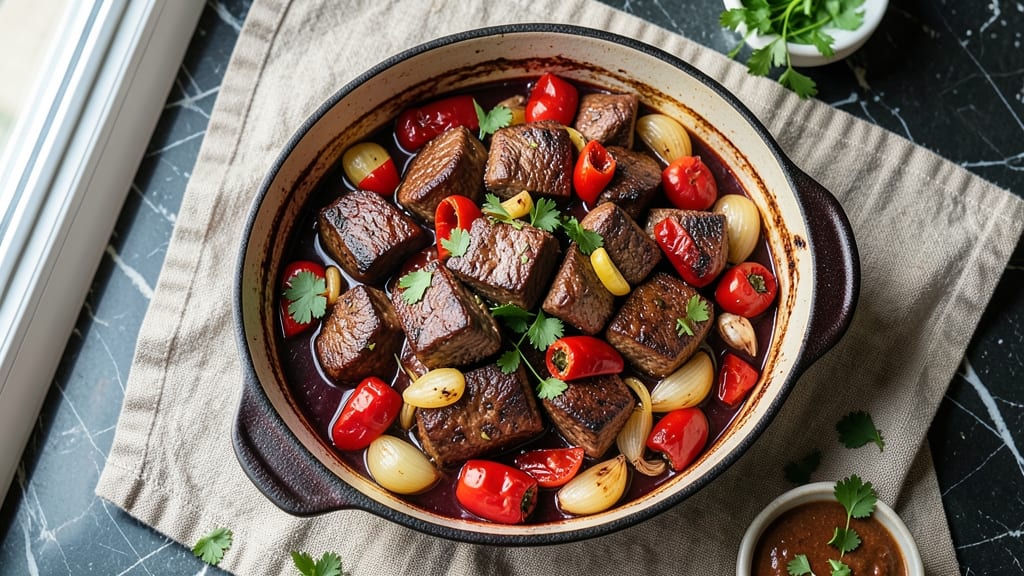
This beef and pepper stew recipe transforms tough cuts into melt-in-your-mouth tenderness through slow braising and caramelized fond development. The deep wine reduction and layered spices create a rich, complex sauce that clings to every bite—perfect for chilly evenings when you crave hearty, restaurant-quality comfort.
What sets this apart is the two-step browning process that builds intense flavor from the bottom of the pot upward.
The secret lies in proper technique: searing the beef in batches to avoid crowding, then deglazing with wine to capture all those flavorful browned bits. Bell peppers add sweetness and texture while onions and garlic form the aromatic base.
As it simmers for hours, the beef becomes fork-tender while the vegetables soften into the sauce, creating a perfect balance of textures and flavors that will have everyone reaching for seconds.
By the time you serve this stew, you'll have achieved that coveted restaurant-quality result—deep red wine undertones, tender beef that falls apart easily, and peppers that maintain their shape while absorbing the rich sauce.
The aroma alone will transform your kitchen into a cozy dining experience, and the leftovers taste even better the next day as flavors meld further.
Serve with crusty bread for soaking up every delicious drop or alongside buttered egg noodles to create a complete meal. This recipe scales beautifully for gatherings, making it ideal for family dinners or holiday feasts where you want to impress without spending hours in the kitchen.
Ingredients for beef and pepper stew
Bold flavors and tender beef make this stew restaurant-quality comfort in your kitchen.
| Ingredient | Amount | Notes |
|---|---|---|
| Chuck Roast Beef 🥩 | 2 lb | Cut into 1.5-inch cubes |
| Red Bell Peppers 🌶️ | 2 whole | Seeded and sliced into strips |
| Yellow Onions 🧅 | 2 whole | Thinly sliced, about 2 cups |
| Garlic Cloves 🧄 | 4 cloves | Minced finely |
| Red Wine 🍷 | 1 cup | Bold dry variety like Cabernet |
| Beef Broth 💧 | 3 cups | Low-sodium preferred |
| Tomato Paste 🍅 | 2 tbsp | Smooth, not chunky |
| Olive Oil 🫒 | 2 tbsp | Extra-virgin for richness |
| Dried Thyme 🌿 | 1 tsp | Or 1 tbsp fresh thyme |
| Bay Leaves 🍃 | 2 whole | Fresh preferred |
| Salt 🧂 | 1 ½ tsp | Kosher or sea salt |
| Ground Black Pepper 🌶️ | 1 tsp | Freshly ground preferred |
| All-Purpose Flour 🌾 | 1 tbsp | For thickening sauce |
| Fresh Parsley 🌿 | ¼ cup | Chopped for garnish |
The beef is everything here. Chuck roast breaks down beautifully—sirloin or ribeye won't tenderize the same way. Grab a pre-cubed package from the meat counter to save time, or ask your butcher to cut it for you. For the wine, Cabernet Sauvignon or Merlot work best—they stand up to the rich flavors without overpowering. If you're using dried thyme, crush the leaves between your fingers first to release the aroma. The bell peppers should be firm and vibrant; red and yellow give the best color contrast.
No red wine? Beef broth with 1 tbsp balsamic vinegar works in a pinch. Fresh thyme is ideal, but dried at one-third the amount gets you close. For the tomato paste, Trader Joe's squeeze tubes are perfect—they're convenient and last months in the pantry. If you're short on time, swap the bell peppers for frozen diced peppers (thaw and drain first). The flour is just for thickening at the end, so don't skip it if your sauce feels too thin—it'll thicken as it cools.
This stew tastes even better the next day, so make a double batch if you can. Store leftovers in an airtight container for up to 5 days in the fridge, or freeze for 3 months. The sauce thickens as it cools, so add a splash of broth when reheating. For serving, I like to sprinkle the parsley on top right before eating—it keeps the color bright and adds freshness. The crusty bread you'll serve with it? Toast it in the oven while the stew simmers for a perfect pairing.
Why You'll Love This Recipe
- One-Pot Magic: I swear by this—just chuck the beef, toss in the peppers and onions, add the wine, and let it slow down. No pots to wash, no pans to scrub. That rich red wine cuts through the beef’s toughness while the peppers soften into sweet, melt-in-your-mouth strips. Honestly, it’s the kind of meal that makes me want to cook more often.
- Wine-Infused Richness: The red wine doesn’t just add depth—it transforms. That first sip of stew? It’s like a glass of your favorite cabernet but in every bite. The garlic and onions caramelize into a sticky, savory base, while the beef practically falls apart. I’ll be real: my partner asks for seconds before I even finish my first bowl.
- Crowd-Pleaser Every Time: This stew is the hero at potlucks, game days, or lazy Sundays. Serve it over mashed potatoes, with crusty bread, or straight from the pot—no one judges. Between us, I’ve made it for my book club, my mom’s birthday, and my roommate’s terrible hangover. It never fails.
- Budget-Friendly Feast: Chuck roast is cheap, but it tastes like a steakhouse cut when slow-cooked. A single roast feeds four for under $15, and the leftovers? Even better the next day. I freeze portions all the time—perfect for when I’m too tired to cook or when I just don’t want to think. Solid, reliable, and my secret weapon for stretching a paycheck.
Step-by-step instructions for beef and pepper stew
This rich, wine-braised stew delivers deep flavor and tender beef with caramelized vegetables.
Sear the Beef for Maximum Flavor
Heat the 2 tablespoons olive oil in a large Dutch oven over medium-high heat until shimmering. Working in batches, add the 2 lb chuck roast beef cut into 1.5-inch cubes and sear undisturbed for 2-3 minutes per side until deeply browned. This step creates a flavorful crust that forms the base of your stew.
As you sear, resist the urge to overcrowd the pan—this prevents the temperature from dropping and ensures proper browning. Transfer the seared beef to a plate and set aside. You'll know it's ready when the edges are deep golden brown and the meat releases easily from the pan.
Build the Flavor Base with Vegetables and Aromatics
In the same Dutch oven, add the 2 whole yellow onions sliced thinly and the 2 whole red bell peppers cut into strips. Cook for 5-6 minutes until the onions soften and the peppers begin to caramelize. Add the 4 cloves garlic minced finely and cook for 30 seconds until fragrant.
Here's where the magic happens: Stir in the 2 tablespoons tomato paste and cook for 1 minute to deepen the flavor. This step develops the rich, caramelized fond that will form the foundation of your sauce. The vegetables should be tender but still retain some texture—don't let them turn mushy.
Deglaze and Simmer the Stew
Pour in the 1 cup red wine and scrape up all the browned bits from the bottom of the pan with a wooden spoon. This deglazing step captures all the concentrated beef flavor. Let the wine simmer for 3-4 minutes until reduced by half and the alcohol has cooked off.
Add the 3 cups beef broth, 1.5 teaspoons salt, 1 teaspoon ground black pepper, 1 teaspoon dried thyme, and 2 whole bay leaves. Return the beef to the pot and bring to a gentle simmer. Partially cover and let it cook for 1 hour and 15 minutes until the beef is fork-tender and the flavors have melded together.
Thicken and Finish the Stew
Sprinkle the 1 tablespoon all-purpose flour over the stew and stir gently to combine. Let it simmer uncovered for an additional 10-15 minutes until the sauce has thickened to your desired consistency. The stew should coat the back of a spoon but still be spoonable—this indicates proper thickening.
Taste and adjust seasoning if needed. The stew should be rich and flavorful with a perfect balance of wine, beef, and vegetable flavors. Remove the bay leaves before serving. Garnish each serving with ¼ cup chopped fresh parsley for a pop of freshness and vibrant color.
Rest and Serve for Best Results
Let the stew rest for 10 minutes before serving. This resting period allows the flavors to fully develop and the juices to redistribute throughout the stew. Serve hot with crusty bread or over mashed potatoes to soak up every last bit of that luxurious sauce.
The beef should be fork-tender with a rich, caramelized exterior, and the vegetables should be tender yet still retain some bite. Each spoonful should deliver a perfect balance of wine-braised beef, caramelized vegetables, and aromatic herbs.
Pro Tips For Making Beef And Pepper Stew
- SEAR THE BEEF FIRST: Chuck roast needs that crust to stay tender later—don’t skip the 4-5 minutes per side in a screaming-hot pan. I used to rush this and end up with dry meat; high heat seals the juices in, and the wine will carry that flavor through.
- CHAR THE ONIONS LOW: Onions caramelize best at medium-low heat, not blistering hot—otherwise, they burn before they sweeten. Cover the pan for the first 5 minutes to break them down faster, then uncover to develop color.
- DEGLAZE WITH WINE IMMEDIATELY: As soon as you pull the beef out, pour that red wine right into the hot pan—don’t let it sit. The residual heat will pull up all the browned bits, giving your stew depth instead of a dull sauce.
- SALT THE BEEF TWICE: Generously salt the chuck roast 24 hours ahead (yes, even if you’re in a hurry), then add another pinch right before searing. The first salt tenderizes; the second ensures seasoning penetrates through the crust.
Troubleshooting this dish
Meat Not Tender Enough
If your beef isn't breaking apart after 1 hour and 15 minutes, it likely needs more time. Chuck roast should cook until it reaches an internal temperature of 203°F—use a meat thermometer to check the thickest piece.
If it's still tough, return the pot to low heat and simmer uncovered for another 30-45 minutes, adding ¼ cup water if needed to prevent drying. 💡
Another trick is to increase the liquid slightly—try adding ½ cup more beef broth and simmering another 30 minutes. The extra moisture helps tenderize the meat without diluting flavors. For future batches, consider cutting the beef into slightly smaller 1-inch cubes instead of 1.5-inch to ensure even cooking.
Sauce Too Thin or Watery
A thin sauce usually means you didn't thicken it properly. After simmering the stew, sprinkle 1 tablespoon cornstarch mixed with 2 tablespoons cold water into the pot and stir vigorously. Simmer for 5 minutes until thickened. If the sauce still feels thin, repeat with another ½ tablespoon cornstarch. 🥄
For prevention, always thicken the sauce at the end with 1 tablespoon flour or 1 teaspoon cornstarch—this is non-negotiable for a proper stew texture. If your sauce is too thin from the start, reduce it by simmering uncovered for 10-15 minutes to evaporate excess liquid.
Never rush this step; patience is key for a velvety consistency.
Vegetables Too Mushy
Overcooking the vegetables is a common mistake. Bell peppers and onions should be tender but still hold their shape. To fix mushy veggies, add them back to the pot in the final 15 minutes of cooking instead of including them from the start.
For next time, reduce their cooking time to 30-45 minutes total—add them after the beef has already tenderized. 🌶️
If your stew is already overcooked, strain out the excess liquid and reduce it separately to create a thicker sauce. Return the vegetables to the pot and simmer with the reduced sauce for 5 minutes to reabsorb the flavor.
For future batches, consider adding vegetables in stages: onions first, then peppers, and finally garlic in the last 5 minutes.
Bitter or Harsh Wine Flavor
If the wine taste is too strong or bitter, it likely didn't reduce enough. Always simmer the wine for at least 5 minutes to cook off the alcohol and concentrate the flavor.
For a milder taste, add ½ cup more beef broth after the wine reduces to dilute the intensity. 🍷
To prevent this, use a bold red wine like Cabernet Sauvignon or Merlot—they hold up better to long cooking. If you're using a lighter wine, reduce it by half before adding it to the stew.
Another trick is to add a pinch of sugar (¼ teaspoon) when deglazing to balance any bitterness. Taste as you go and adjust with a splash of broth or a pinch of salt.
Stew Too Salty
If your stew tastes overly salty, don't panic—there are easy fixes. Add ½ cup additional beef broth or water and simmer for 10 minutes to dilute the saltiness. For a more dramatic fix, stir in 1 tablespoon unsalted butter or 1 tablespoon cream, which helps balance the flavor. 🧈
To avoid oversalting, taste the broth before adding the beef back in. If it's already salty, reduce the salt by ½ teaspoon or skip it entirely—you can always add more later. For future batches, add salt gradually and taste frequently.
Remember, you can't remove salt, but you can always add more broth or acid (like a splash of lemon juice) to balance it.
Nutrition facts
Frequently asked questions
Can I use a different cut of beef for this stew?
Chuck roast is ideal because it's marbled with fat that melts during cooking, creating tender meat. You can substitute with stew meat or brisket, but avoid lean cuts like sirloin or filet mignon—they won't tenderize properly. For best results, look for cuts labeled "stew meat" at your butcher.
How do I prevent the stew from becoming too dry?
Never let the stew boil vigorously—keep it at a gentle simmer to prevent evaporation. If the liquid reduces too much, add ¼ cup beef broth at a time. For extra insurance, cover the pot partially (not completely) to trap steam while allowing some moisture to escape. The flour thickening at the end helps stabilize the sauce.
What's the best way to reheat leftovers?
Reheat gently on the stovetop over low heat with a splash of broth to restore moisture. If using the microwave, cover with a damp paper towel and heat in 1-minute intervals, stirring between each. Leftovers taste even better the next day as flavors deepen—store in an airtight container for up to 5 days in the fridge.
Can I make this stew in a slow cooker?
Sear the beef first, then transfer everything to the slow cooker. Cook on low for 8 hours or high for 4-5 hours, adding ½ cup broth if needed. The slow cooker's gentle heat ensures tender beef without monitoring. Just thicken the sauce with cornstarch at the end since slow cookers can make sauces thinner.
What are the best sides to serve with this stew?
Crusty bread is perfect for soaking up the rich sauce, but you can also serve it with buttered egg noodles, mashed potatoes, or fluffy rice. For a lighter option, try a simple green salad with a tangy vinaigrette. The hearty stew pairs well with anything that balances its richness—think roasted root vegetables or steamed greens.