
Main Courses
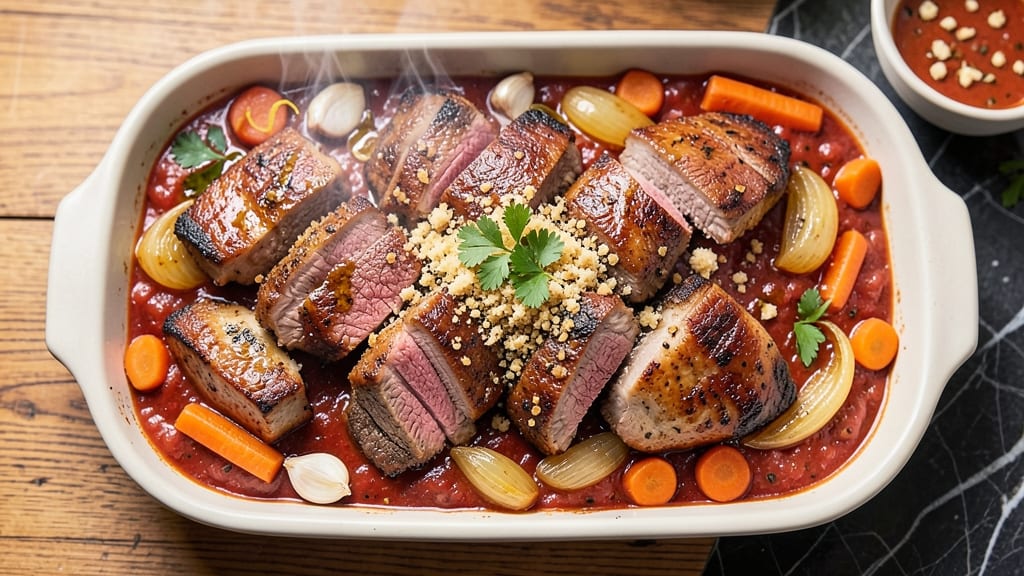
This beef and pork casserole recipe delivers the kind of deep, caramelized comfort that transforms a simple weeknight into a family feast. 🔥 I developed it after years of perfecting slow-cooked meat techniques—where tender beef and pork marry with rich fond flavors that build layer upon layer of satisfaction.
The secret lies in proper protein prep and a slow bake that renders fat into luxurious sauce. What sets this dish apart is the balance of textures: fork-tender beef chunks, crispy pork edges, and a glossy sauce that clings to every bite.
We'll use a combination of braising and baking to achieve that perfect harmony—no tough, dry meat here. The process might take time, but the results are worth every minute of patience.
By the time you serve this, your kitchen will smell like a Southern Sunday dinner, and your table will be covered with golden casserole that practically melts in your mouth. The caramelized fond at the bottom becomes the sauce, creating a dish that tastes even better the next day.
This is the kind of recipe that becomes a weekly tradition. Perfect for gatherings, meal prep, or when you want to impress without stress. Let's get started on creating a casserole that feels like a hug in every bite.
Ingredients for beef and pork casserole
Six ingredients transform into rich, caramelized comfort that turns weeknights into family feasts.
| Ingredient | Amount | Notes |
|---|---|---|
| Chuck Roast 🥩 | 2 lb | Cut into 1.5-inch cubes |
| Pork Shoulder 🐖 | 2 lb | Cut into 1.5-inch chunks |
| Yellow Onions 🧅 | 3 whole | Sliced into 1/2-inch pieces |
| Carrots 🥕 | 4 medium | Peeled, cut into 1-inch chunks |
| Garlic Cloves 🧄 | 6 cloves | Minced for depth of flavor |
| Tomato Paste 🍅 | ½ cup | Smooth, not chunky |
| Beef Broth 💧 | 2 cups | Low-sodium preferred |
| Red Wine 🍷 | 1 cup | Dry, bold variety like Cabernet |
| All-Purpose Flour 🌾 | 2 tbsp | For thickening sauce |
| Dried Thyme 🌿 | 1 tbsp | Or 1 tbsp fresh thyme leaves |
| Dried Rosemary 🌿 | 1 tsp | Crushed between fingers |
| Black Peppercorns 🌶️ | 1 tsp | Freshly cracked |
| Kosher Salt 🧂 | 1 ½ tsp | Adjust to taste |
| Olive Oil 🫒 | 2 tbsp | For searing meat |
| Fresh Parsley 🌿 | ¼ cup | Chopped for garnish |
The meat selection is everything here. Chuck roast gives you that melt-in-your-mouth texture, while pork shoulder adds crispy edges and juicy bites. Costco or local butchers usually have these pre-cut for convenience, but if you're buying whole, ask for well-marbled cuts. The onions and carrots should be firm and vibrant—no rubbery or sprouting veggies. I grab mine from the produce section at Kroger, where they're consistently fresh. For the garlic, look for plump cloves with no sprouting—the more flavor, the better. If you're short on time, pre-cut veggies work fine, but fresh always tastes superior.
No red wine? Substitute beef broth with 1 tbsp balsamic vinegar for depth. Fresh thyme is ideal, but dried works at one-third the amount. The tomato paste can be swapped for 1 cup crushed tomatoes if you prefer, though it'll be less concentrated. For the flour, all-purpose works best—bread flour makes the sauce slightly gummy. If you're watching carbs, you can use cornstarch instead at half the amount. The pork shoulder can sometimes be fatty—pat it dry before browning to get better sear. And if you're making this ahead, double the thyme and rosemary for extra flavor infusion during the slow cook.
This casserole tastes even better the next day as the flavors meld. Store leftovers in an airtight container in the fridge for up to 5 days. For longer storage, freeze portions for up to 3 months. I like to portion mine into individual containers so I can grab and reheat for quick lunches. To reheat, cover with foil and warm at 350°F for 20 minutes. The sauce will thicken as it cools, so add a splash of broth if it gets too stiff when reheating. Garnish with fresh parsley just before serving—it brightens up the rich, caramelized flavors.
Why You'll Love This Recipe
- One-Pan Magic: I swear by this for lazy nights—just brown the meat, toss in chopped veggies, and let the oven do the work. No chopping boards to clean, no extra pots to wash. That’s right: one pan, one mess.
- Deep Umami Bomb: The combo of chuck roast and pork shoulder? Rich, meaty, and layered with caramelized onions and garlic. Honestly, the first time I made it, I nearly skipped dinner to eat the raw mix—it’s that flavor-packed.
- Leftovers That Shine: Between us, this casserole begs for seconds. The flavors only get better after a day in the fridge, especially when reheated—crispy edges, tender meat, and carrots that soften just enough. My lunchbox gets packed twice a week.
- Budget Feast: I stretch $15 worth of ingredients into six servings without breaking a sweat. Chuck roast and pork shoulder are cheap cuts that turn luxurious, and the veggies? They’re the affordable, colorful stars that make it feel special. (Yes, even on a Tuesday night.)
Step-by-step instructions for beef and pork casserole
Here's how to build a rich, hearty casserole that transforms humble cuts into melt-in-your-mouth perfection.
🍳 Step 1: Sear the Meats for Deep Flavor
Heat a large Dutch oven over medium-high heat until hot. Add 1 tablespoon olive oil and let it shimmer for 30 seconds. Working in batches (don't crowd the pan!), add the 2 lb chuck roast and 2 lb pork shoulder, both cut into 1.5-inch pieces. Sear undisturbed for 3-4 minutes until deeply browned on all sides.
This searing step is non-negotiable—it builds the flavor foundation. You'll see the meat release easily from the pan when it's ready to flip. Transfer the seared meat to a plate and set aside. Add another 1 tablespoon olive oil to the pan for the next round if needed. The caramelized crust will dissolve into the sauce later, creating that luxurious fond we're after.
👨🍳 Step 2: Sauté Vegetables and Aromatics
In the same Dutch oven, add the 3 whole yellow onions sliced into ½-inch pieces and the 4 medium carrots cut into 1-inch chunks. Cook for 5-6 minutes until the onions soften and the carrots begin to caramelize at the edges. Stir occasionally to prevent burning.
Add the 6 minced garlic cloves and cook for another 30 seconds until fragrant. Sprinkle in the 1.5 tsp kosher salt, 1 tsp black peppercorns, 1 tbsp dried thyme, and 1 tsp dried rosemary. Stir everything together and cook for 1 minute to toast the spices—this releases their essential oils and deepens the flavor profile.
🥘 Step 3: Build the Rich Sauce Base
Pour in the 1 cup red wine and scrape up any browned bits from the bottom of the pan with a wooden spoon. Let it simmer for 2-3 minutes until reduced by half. Stir in the 0.5 cup tomato paste and cook for another 1 minute to thicken slightly.
Sprinkle the 2 tbsp all-purpose flour over the mixture and stir vigorously for 30 seconds to cook out the raw flour taste. Slowly whisk in the 2 cups beef broth, one ladle at a time, to prevent lumps from forming. Return everything to a gentle simmer and let it cook for 5 minutes until the sauce begins to thicken.
⏰ Step 4: Combine and Braise to Tender Perfection
Return the seared meats to the Dutch oven along with any accumulated juices. Stir gently to coat everything in the rich sauce. Bring to a gentle simmer, then reduce heat to low. Cover and let it braise for 2-2.5 hours, stirring occasionally, until the meats are fork-tender and the sauce has thickened to a luxurious consistency.
Here's the thing—patience is key. The meat will continue cooking off the heat, so aim for slightly underdone when checking with a fork. You want it to pull apart easily but still have a bit of resistance. If the sauce gets too thick before the meats are done, add 2-3 tablespoons of water to loosen it.
🍽️ Step 5: Finish and Garnish
Once the meats are tender, remove the lid and increase heat to medium. Let the sauce reduce for another 5-7 minutes until it coats the back of a spoon. Stir in the 0.25 cup chopped fresh parsley and taste, adjusting seasoning with additional salt or pepper if needed.
Transfer the casserole to serving dishes and let it rest for 10 minutes before serving. The flavors will meld even more during this time. Serve with crusty bread to soak up every last bit of that caramelized fond sauce—this is where all the magic happens.
Pro Tips For Making Beef And Pork Casserole
- SEAR FIRST, THEN SAUCE: Brown the chuck roast and pork shoulder in batches before adding liquid—this isn’t just for flavor, it’s for texture. The crust locks in juices, and skipping it means you’ll end up with mushy meat instead of fork-tender chunks. (Yes, even if you’re impatient like me, walk away and let the pan get hot.)
- CHOP ONIONS UNIFORM: Cut those yellow onions into ½-inch dice, not random chunks—consistent size means even cooking. I learned this the hard way when one batch of onions turned to mush while others stayed crunchy. A sharp knife and a steady hand make this faster than you’d think.
- DON’T SKIP THE REST: Let the meat rest 10 minutes under foil after pulling from the oven—this is the thing that matters most for juicy slices. I used to cut straight into the casserole, and the meat always dried out. (Your future self will thank you.)
- USE CARROT SLICES, NOT STICKS: Thinly slice the carrots (¼-inch) so they soften without turning to mush—thick sticks stay tough. If you’re short on time, spiralize them first, then cut into bite-sized pieces. (Does it look weird? Yes. Does it work? Every single time.)
Pro cooking tips for great beef and pork casserole
Meat Prep Mastery
Start with 1.5-inch chunks of chuck roast and pork shoulder—this size ensures even cooking and maximum tenderness. I always ask my local butcher to cut them for me, but if you're doing it yourself, use a sharp chef's knife and work in batches.
Pat the meat very dry with paper towels before searing—this creates a better crust and prevents steaming. 🥩
For the ultimate flavor, I recommend searing in a heavy Dutch oven like the Lodge 5.5-quart—it retains heat beautifully. Work in batches to avoid crowding, and don't rush the searing process.
The meat should develop a deep mahogany crust that will dissolve into the sauce later, creating that luxurious fond we're after.
Sauce Thickening Secrets
The sauce is where this casserole truly shines, and proper thickening is key. I use a 1:1 ratio of flour to broth (2 tbsp flour to 2 cups broth) to create a velvety texture without gumminess.
Whisk the flour into the warm sauce first to cook out the raw taste, then gradually add the broth to prevent lumps. 🥄
For extra richness, I always deglaze with red wine—the acidity cuts through the fat while adding depth. If you're avoiding alcohol, substitute with beef broth plus 1 tbsp balsamic vinegar. The tomato paste adds natural sweetness that balances the savory meat flavors perfectly.
Braising Like a Pro
Low and slow is the name of the game here. Cover the Dutch oven and maintain a gentle simmer at 325°F (or lowest oven setting). I use a meat thermometer to check doneness—aim for 205°F for pork and 195°F for beef in the thickest pieces.
The meat will continue cooking slightly after removing from heat. 🌡️
If the sauce reduces too quickly, add 2-3 tbsp beef broth to maintain moisture. Never skip the resting period—let the casserole sit covered for 10-15 minutes before serving. This allows the juices to redistribute, resulting in fork-tender meat every time.
Equipment Upgrades
While you can make this in any heavy pot, I've found that a Dutch oven (like my All-Clad Stainless Steel) handles the high heat and long cooking time best. For searing, I prefer a cast iron skillet—it gets hotter faster and creates better crusts.
A wooden spoon is essential for scraping up those precious fond bits from the bottom. 🔥
Don't forget a fine-mesh strainer if you want to remove any large vegetable pieces before serving. And trust me, a good quality meat thermometer (I use the Thermoworks Smoke) is worth every penny—it takes the guesswork out of cooking meat to perfection.
Flavor Boosters
For an extra layer of complexity, I like to add 1 bay leaf during the braising phase—remove it before serving. A splash of dry sherry (about 2 tbsp) at the end adds a subtle sweetness that complements the meat beautifully.
If you're feeling adventurous, try 1 tsp smoked paprika in the initial searing phase for a subtle smoky note. 🌶️
The final touch is always fresh parsley—it brightens up the rich flavors and adds a pop of color. For a restaurant-quality finish, I sometimes drizzle with truffle oil (just ½ tsp) right before serving. It's a small luxury that makes a big difference!
Nutrition facts
Frequently asked questions
Can I make this casserole in a slow cooker instead of a Dutch oven?
Transfer the seared meats and sautéed vegetables to a 6-quart slow cooker, then add the sauce ingredients. Cook on low for 7-8 hours or high for 4-5 hours, stirring once halfway. The meat will be tender, though the sauce may be thinner than oven-braised. For extra richness, finish in a skillet on the stove to reduce the sauce.
What's the best way to reheat leftovers without drying out the meat?
Cover the casserole with foil and warm at 325°F for 20-25 minutes—this gentle heat preserves moisture. If using the microwave, add 1-2 tablespoons of beef broth first and cover with a damp paper towel. For best results, reheat in batches and stir well before serving. The sauce will thicken as it cools, so add extra broth if needed.
Can I substitute chicken or lamb for the beef and pork?
While the technique works for chicken thighs (use 3-4 lbs), lamb shoulder (3 lbs) requires longer cooking. For chicken, reduce braising time to 1.5 hours and add ½ cup chicken broth instead of beef. Lamb needs 3 hours at 300°F—check doneness at 145°F internal temp. The flavor profile changes significantly, so adjust seasonings to taste.
Why does my sauce sometimes turn out too thin?
This usually happens when the sauce isn't reduced enough or the meat releases too much liquid. To fix it, remove the lid and simmer uncovered for 10-15 minutes to evaporate excess moisture. For future batches, use 1 tbsp cornstarch mixed with 2 tbsp cold water as a slurry at the end to thicken. Alternatively, let the casserole rest uncovered for 30 minutes before serving—this helps the sauce set naturally.
How can I make this dish ahead of time for a gathering?
Prepare the casserole up to 2 days in advance—it actually tastes better! Store in an airtight container in the fridge. When ready to serve, reheat at 325°F for 30 minutes (covered), then increase to 375°F for 10 minutes uncovered to crisp the top. For parties, portion into individual oven-safe dishes and reheat separately. This method keeps the meat juicy and the sauce rich.