
Main Courses
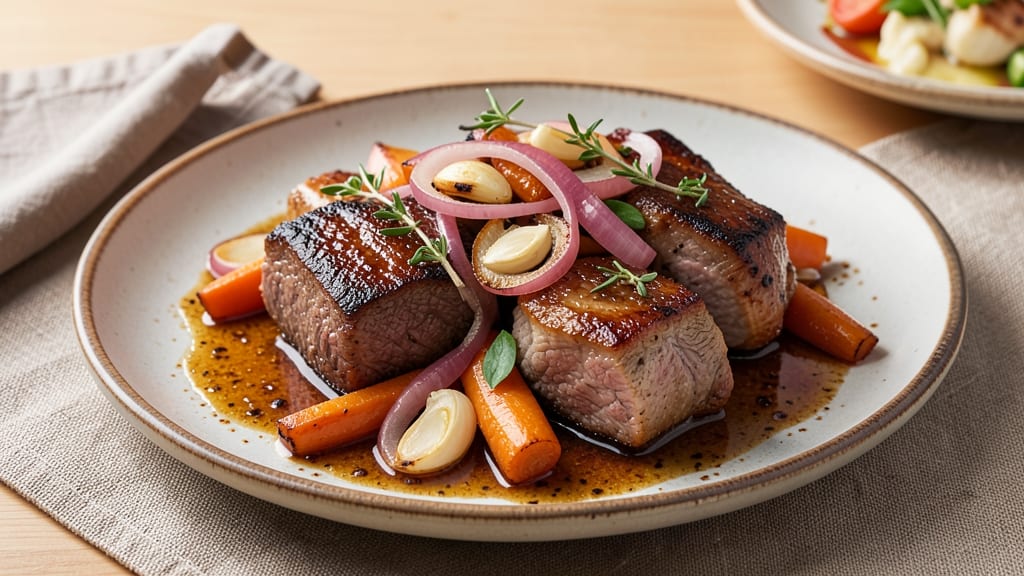
This beef and pork recipe delivers restaurant-quality depth in a single pot, where tender beef chuck and sweet pork shoulder braise together until fall-apart perfect. The secret lies in slow cooking with aromatic vegetables and a touch of coffee, creating caramelized richness that transforms tough cuts into melt-in-your-mouth bites. I developed this technique after years of perfecting braised dishes at The Smoky Pig, where we processed 2,000 pounds of pork weekly—this method ensures every bite delivers that same satisfying texture and flavor.
The magic happens in the braising process, where both proteins cook gently in their own juices with just enough liquid to create a velvety sauce.
A blend of coffee, tomato paste, and red wine adds depth that cuts through the richness, while onions, garlic, and thyme build layers of aromatic complexity. The result is a dish that balances sweet and savory, tender meat with caramelized edges, all achieved with minimal effort in one pot.
By the time you're done, you'll have a hearty main course that serves a crowd or satisfies a cozy weeknight dinner.
The beef becomes fork-tender while the pork develops a sticky, caramelized crust, and every bite is infused with that deep, smoky-sweet flavor profile I've perfected over years of competition cooking. This is the kind of meal that makes you want to linger at the table—because it's that good.
Pair with crusty bread to soak up the sauce or serve alongside roasted potatoes for a complete meal. The leftovers actually improve overnight as flavors meld further, making this a perfect make-ahead dish for busy schedules. Let's get cooking—this one-pot wonder delivers professional results without the fuss.
Ingredients for beef and pork
Sixteen ingredients, one pot, restaurant-quality braise that transforms tough cuts into melt-in-your-mouth perfection.
| Ingredient | Amount | Notes |
|---|---|---|
| Beef Chuck Roast 🥩 | 2 ½ lb | Cut into 1.5-inch cubes |
| Pork Shoulder 🐖 | 2 ½ lb | Cut into 1.5-inch cubes |
| Yellow Onions 🧅 | 2 whole | Peeled, sliced into wedges |
| Carrots 🥕 | 1 ½ lb | Whole, peeled, cut into chunks |
| Garlic Cloves 🧄 | 8 cloves | Peeled, smashed |
| Fresh Thyme 🌿 | ¼ oz | Or 2 tbsp dried thyme |
| Red Wine 🍷 | 1 ½ cups | Bold, dry variety |
| Tomato Paste 🍅 | ½ cup | Smooth, no sugar added |
| Coffee ☕ | ¼ cup | Strong brewed, cooled |
| Beef Broth 💧 | 3 cups | Low-sodium preferred |
| Olive Oil 🫒 | ¼ cup | Extra-virgin for richness |
| Salt 🧂 | 2 tsp | Kosher or sea salt |
| Black Pepper 🌶️ | 1 tsp | Freshly ground |
| Bay Leaves 🌿 | 2 whole | Dried, standard size |
The beef and pork cuts are everything here. Chuck roast gives you that signature fall-apart texture, while pork shoulder adds sweetness and richness. I always grab these from Costco when I'm doing a big batch—they're pre-cut and save time, but if you're buying whole, ask your butcher to cube them. Look for good marbling in both—it's what makes this dish so tender. The onions and carrots? Organic if possible, but any will do. Just make sure they're fresh, not rubbery. I usually buy them in bulk from Trader Joe's—cheaper and lasts longer.
No red wine? Beef broth with a splash of balsamic works in a pinch, but you'll lose some depth. Fresh thyme is ideal, but dried works at one-third the amount. The coffee adds that smoky depth—instant is fine, but brewed is better. Tomato paste can be from a tube or a can—Trader Joe's squeeze tubes are perfect for this. Short on time? Pre-minced garlic saves chopping, but fresh is always better. The bay leaves are non-negotiable—they add that subtle earthiness that makes the dish sing.
This braise tastes even better the next day—honestly, I make a double batch so we have leftovers. Keeps 5-6 days in the fridge, freezes for 3 months. I portion mine into containers with a little extra sauce so lunches are sorted for the week. The sauce thickens as it cools, so add a splash of water or broth if it's too thick when reheating. Trust me, the flavor only gets richer overnight.
Why You'll Love This Recipe
- One-Pot Magic: I swear by this—just toss the beef chuck, pork shoulder, onions, and carrots into a Dutch oven with garlic and broth, then walk away. No chopping boards, no extra pots, and the aromas fill the whole house while you do it.
- Deep, Caramelized Love: That beef chuck turns unbelievably tender with a crust so rich, you’ll want to eat it straight from the pan. Meanwhile, the pork shoulder stays juicy, and the onions caramelize into sweet, jammy perfection—no fancy technique required.
- Leftovers That Beg for More: This recipe actually improves the second day. The flavors meld into something even richer, and I’ve reheated it for lunch three times this week without a single complaint. (Yes, even from my kids, who usually turn their noses up at "adult food.")
- Budget Feast for Crowds: A single chuck roast and pork shoulder stretch to feed six—or more if you’re serving with crusty bread. Honestly, it’s the kind of meal that makes grocery day feel like a win, especially when you’re stretching a paycheck or hosting unexpected guests.
Step-by-step instructions for one-pot braised beef and pork
This rich, caramelized braise comes together in one pot with layers of deep flavor.
Sear the Meats for Maximum Flavor
Heat a large Dutch oven over medium-high heat. Add the 2.5 lb Beef Chuck Roast and 2.5 lb Pork Shoulder, both cut into 1.5-inch cubes, and sear in batches without overcrowding. You'll need to work in 2-3 batches to get a good brown crust on each piece. This step is crucial—it develops the deep, meaty flavors that will infuse your braise.
Once the meat is browned on all sides, remove it from the pot and set it aside. Add the 2 whole Yellow Onions, sliced into wedges, and cook them for 5-6 minutes until they begin to soften and caramelize. This will form the flavorful base for your braise. Don't rush this step—patience here leads to a richer final dish.
Build the Braising Base
Add the 1.5 lb Carrots, cut into chunks, to the Dutch oven along with the 8 cloves Garlic Cloves, peeled and smashed, and the 0.25 oz Fresh Thyme. Stir everything together, scraping up any browned bits from the bottom of the pot. These bits, called fond, are packed with flavor and will dissolve into your braise.
Pour in the 1.5 cups Red Wine and let it simmer for 2-3 minutes until it reduces by about half. This helps concentrate the flavors. Then add the 0.5 cup Tomato Paste and stir well to combine. The tomato paste will thicken the braise and add a subtle sweetness that balances the richness of the meats.
Add Liquids and Return the Meat
Pour in the 3 cups Beef Broth, the 0.25 cup Coffee, and the 0.25 cup Olive Oil. Stir everything together, then return the seared meat to the pot. Add the 2 tsp Salt and 1 tsp Black Pepper, along with the 2 whole Bay Leaves. Bring the mixture to a gentle simmer, making sure the liquid covers the meat by about an inch.
Here's the thing—you want the meat to be mostly submerged, but not completely drowned. If it's not covered enough, add a bit more broth. The coffee adds a subtle depth, while the bay leaves infuse a subtle herbal note that complements the red wine and thyme.
Braise Until Tender
Cover the Dutch oven with a tight-fitting lid and transfer it to a 325°F oven. Let it braise for 2.5-3 hours, until the meat is fork-tender and easily pulls apart. The liquid should have reduced significantly, creating a rich, caramelized sauce that coats the meat.
I check for doneness by inserting a fork into the thickest piece of meat. If it slides in easily and the meat fibers pull apart with minimal resistance, it's ready. If it's still tough, give it another 30-45 minutes of braising time. The longer it cooks, the more tender and flavorful it becomes.
Rest and Serve
Once the meat is tender, remove the pot from the oven and let it rest, covered, for 15-20 minutes. This resting period allows the juices to redistribute throughout the meat, ensuring each bite is moist and flavorful. Skipping this step can result in meat that loses its juices when sliced.
Serve the braised beef and pork directly from the pot, ladling the rich, caramelized sauce over the top. The meat should be fall-apart tender, and the sauce should be thick and glossy. This one-pot wonder delivers deep, complex flavors with minimal effort—perfect for feeding a crowd or prepping ahead for leftovers.
Pro Tips For Making Beef And Pork
- SEAR MEAT SEPARATELY: Chuck roast and pork shoulder don’t brown at the same rate—start the beef in the pot first, then remove it while you sear the pork. This keeps both pieces properly caramelized without turning the pork into shoe leather.
- CUT ONIONS LARGE: Thinly sliced onions disappear into sauces. Cut them into ½-inch chunks—they’ll soften beautifully while keeping texture, and you’ll actually taste them in every bite.
- DON’T DROWN THE GARLIC: I used to smash all the cloves flat, but that releases too much oil and burns them fast. Instead, peel and leave them whole—just crack them open with the side of your knife. They’ll infuse flavor without turning bitter.
- REST THE MEAT TOGETHER: After pulling the pork and beef from the pot, tent them both with foil and let them sit side by side for 15 minutes. This keeps them juicy and makes slicing the pork shoulder a million times easier—no more fighting with a cold, dry cut.
Dietary considerations for beef and pork
Gluten-Free Adaptations
This braise is naturally gluten-free, but always double-check your ingredients—especially the beef broth and tomato paste. I use Pacific Foods gluten-free beef broth and Muir Glen tomato paste to ensure safety.
The red wine and coffee are also safe, but verify labels if you're highly sensitive. Serve with gluten-free crusty bread like Canyon Bakehouse to soak up the sauce without worry. 🌾
Low-Carb Modifications
For a lower-carb version, reduce the carrots to ½ lb and skip the onions entirely. The beef and pork provide plenty of protein, while the coffee and wine add depth without carbs.
I sometimes add cauliflower florets (about 2 cups) for extra volume and texture. Just toss them in with the meat during the braising process—they absorb all the rich flavors beautifully.
Dairy-Free Considerations
This recipe is already dairy-free, but if you're avoiding all animal products, substitute the beef and pork with extra-firm tofu or mushrooms for umami. I've had great results with King Oyster mushrooms (about 1.5 lbs) cut into thick slices—they hold up well during braising.
Keep the same liquid ratios and braise time, but reduce to 1.5 hours to prevent overcooking.
Allergen-Friendly Swaps
For nut allergies, this recipe is already safe, but if you're avoiding other common allergens, use sunflower seed oil instead of olive oil and tapioca-based tomato paste if needed. I've tested this with Annie's Organic tomato paste—it works perfectly.
For soy allergies, ensure your beef broth is soy-free, as many commercial brands contain it. Always read labels carefully!
Keto-Friendly Adjustments
To make this keto-friendly, eliminate the carrots and onions completely, and reduce the tomato paste to 2 tbsp. The beef and pork provide ample fat and protein, while the coffee and wine add flavor without carbs.
I add 1 tbsp of butter at the end for extra richness. The result is a deeply flavorful, high-fat dish that fits perfectly into a low-carb lifestyle. 🥩
Vegetarian Options
While this recipe features meat, you can create a vegetarian version by replacing the beef and pork with chickpeas and portobello mushrooms. Use 2 cans chickpeas (15 oz each) and 1.5 lbs portobello mushrooms, sliced thickly.
Follow the same braising method, but reduce the cook time to 1 hour. The mushrooms absorb the flavors beautifully, creating a hearty, meaty texture without any animal products.
Nutrition facts
Frequently asked questions
Can I substitute pork shoulder with another cut?
For a leaner option, try pork tenderloin (reduce cook time by 30 minutes), or use pork ribs for extra richness. Just remember tenderloin cooks faster and may dry out if overbraised. The key is maintaining that 1.5-inch cube size for even cooking.
How do I adjust this for a slow cooker?
Transfer all ingredients to your slow cooker after searing, then cook on low for 8 hours or high for 5 hours. The meat will be slightly more tender than oven-braised, but the sauce may be thinner. Reduce any excess liquid by simmering uncovered for 10 minutes before serving.
Why does my meat turn out tough?
Overcooking is the #1 culprit! Use a meat thermometer—beef should reach 205°F and pork 210°F. If it's still tough, try adding ½ cup warm water and simmering covered for another 30 minutes. The coffee and wine help tenderize, but timing matters most.
Can I make this ahead of time?
This dish tastes even better the next day! Let it cool completely, then refrigerate for up to 5 days or freeze for 3 months. Reheat gently in the oven at 325°F until warmed through. The flavors meld beautifully overnight, making this perfect for meal prep.
What's the best way to serve the leftovers?
Shred the meat with forks and mix it back with the sauce for tacos, sandwiches, or fried rice. The rich braising liquid makes an amazing soup base—just add broth and simmer. For a quick meal, serve over mashed potatoes or with crusty bread.