
Soups & Stews
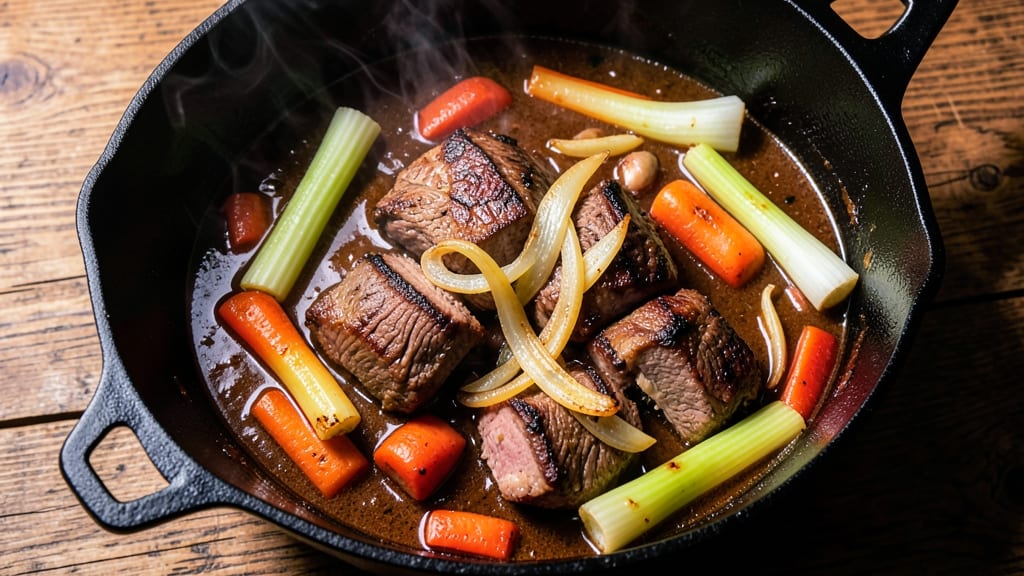
This beef and pork stew recipe transforms tough cuts into melt-in-your-mouth tenderness using the slow-cooking magic of red wine and aromatic herbs. As someone who's spent years mastering the art of braising at The Smoky Pig, I can tell you the secret lies in proper searing and patience—no shortcuts, just deep flavor. The rich, caramelized fond that builds in the pot becomes the foundation for a sauce so velvety it'll make your taste buds sing.
What sets this stew apart is the balance of textures and flavors: crispy edges on the pork shoulder, fork-tender beef chunks, and vegetables that soften just enough to absorb the wine-infused broth.
I use a combination of red wine, tomato paste, and fresh herbs to create that perfect harmony of acidity and depth that elevates simple ingredients into something extraordinary. The slow simmer allows all those flavors to meld together over hours, creating a dish that tastes even better the next day.
This isn't just comfort food—it's a restaurant-quality meal that comes together in one pot. The aroma alone will have everyone gathering around your table, and each bite delivers layers of savory, slightly sweet, and herby notes that keep you reaching for seconds.
The beauty of this recipe is its versatility: serve it with crusty bread to soak up every last drop of that rich sauce, or pair it with roasted root vegetables for a complete winter meal.
I developed this recipe during a particularly cold Atlanta winter when I needed a dish that could feed a crowd and warm the soul. The technique I use here—browning the meat thoroughly before adding liquid—is what creates that deep, complex flavor that makes this stew unforgettable.
It's the kind of recipe that gets better with time, both in the pot and in your memory.
Ingredients for beef and pork stew
Six hearty ingredients transform tough cuts into melt-in-your-mouth perfection with red wine magic.
| Ingredient | Amount | Notes |
|---|---|---|
| Chuck Roast 🥩 | 2 lb | Well-marbled for tenderness |
| Pork Shoulder 🐖 | 2 lb | Bone-in preferred for flavor |
| Yellow Onion 🧅 | 2 whole | Chopped into 1-inch pieces |
| Carrots 🥕 | 4 whole | Baby carrots or sliced |
| Celery Stalks 🥬 | 4 whole | Cut into 1-inch pieces |
| Garlic Cloves 🧄 | 6 cloves | Smashed, not minced |
| Red Wine 🍷 | 1 ½ cups | Bold, dry variety like Cabernet |
| Tomato Paste 🍅 | 2 tbsp | Squeeze tube preferred |
| Fresh Thyme 🌿 | 2 tbsp | Leaves only, chopped |
| Fresh Rosemary 🌿 | 1 tbsp | Needles only, chopped |
| Beef Broth 💧 | 4 cups | Low-sodium preferred |
| Olive Oil 🫒 | 2 tbsp | For searing meat |
| Salt 🧂 | 1 ½ tsp | Kosher or sea salt |
| Black Pepper 🌶️ | 1 tsp | Freshly ground |
| Bay Leaves 🍃 | 2 whole | Remove before serving |
The meat selection is everything here. Chuck roast for beef and bone-in pork shoulder for pork—both cuts need the long cook to break down. I always grab these from Whole Foods or my local butcher shop where they cut them fresh. Look for good marbling—those little white flecks of fat are what make the meat tender. If you're in a pinch, Costco sells pre-cut chuck roast that works perfectly. The aromatics—onions, carrots, celery—are the flavor base, so don't skip chopping them evenly. I double-check my knife skills here because consistent sizes mean even cooking.
No red wine? Substitute beef broth with 1 tbsp balsamic vinegar—it adds that same deep richness. Fresh herbs are ideal, but dried thyme and rosemary at half the amount work in a bind. The tomato paste can be swapped for crushed tomatoes if that's what you've got, but trust me on the paste—it's the secret to that velvety sauce. For the broth, low-sodium is key so you can control the saltiness. If you're using pre-chopped vegetables, give them a quick rinse—they're often coated in preservatives that can make the stew taste off.
This stew tastes even better the next day—honestly, I make double batches just so I can have leftovers. Store it in an airtight container in the fridge for up to 5 days, or freeze portions for 3 months. The sauce thickens as it cools, so add a splash of broth when reheating. I always portion it into containers with crusty bread on the side—perfect for quick lunches. The meat gets fork-tender, so use a spoon to scrape up every last bit of that rich sauce. Trust me, you'll want seconds.
Why You'll Love This Recipe
- One-Pot Magic: I swear by this recipe—just toss the chuck roast, pork shoulder, and that classic onion-carrot-celery combo (the "holy trinity") into one pot. No extra dishes, no stress, and the flavors meld like they’ve been simmering all day.
- Deep, Savory Payoff: Between us, the slow-cooked beef and pork develop this rich, almost smoky depth—like a hug in a bowl. The carrots stay tender-crisp while the pork practically falls apart, and that’s when you know you’ve hit flavor gold.
- Leftovers That Beg: This stew tastes better the next day, honestly. I make a double batch on Sundays and freeze half—perfect for lazy nights or when company drops by. Even my picky teen grabs seconds, and that’s saying something.
- Budget-Friendly Feast: Chuck roast and pork shoulder stretch for miles, and the veggies? Cheap as chips. You’re feeding a crowd for next to nothing, and the leftovers keep giving. My wallet and my freezer thank me every time.
Step-by-step instructions for beef and pork stew
Here's how to build rich, deep flavors in one pot—no shortcuts, just patience and technique.
Sear the Meats for Maximum Flavor
Heat a heavy pot or Dutch oven over medium-high heat until hot. Add the 2 tablespoons olive oil and let it shimmer for 30 seconds. Working in batches if needed, add the 2 lb chuck roast and 2 lb pork shoulder, cutting any large pieces into 1-inch chunks as you go. Sear undisturbed for 3-4 minutes until deeply browned on all sides.
This step is non-negotiable—browning creates the fond that dissolves into the wine, forming the stew's flavor base. Don't rush it; you want that caramelized crust. Once browned, transfer the meat to a plate and set aside. The pot should have a good layer of browned bits clinging to the bottom.
Build the Vegetable Base
In the same pot, add the 2 whole yellow onion, 4 whole carrots, and 4 whole celery stalks, all chopped into 1-inch pieces. Cook over medium heat for 8-10 minutes until softened and slightly caramelized. Stir occasionally to prevent burning.
Here's the thing—you want these vegetables to develop some color and sweetness before adding liquid. They'll continue cooking later, but this initial step builds depth. Add the 6 smashed garlic cloves and cook for another 30 seconds until fragrant. This is when your kitchen should smell like a French bistro.
Deglaze with Wine and Tomato Paste
Pour in the 1.5 cups red wine and scrape up all those browned bits from the bottom of the pot with a wooden spoon. Let it simmer for 3-4 minutes until reduced by half. Add the 2 tablespoons tomato paste and stir to combine, letting it cook for 1 minute to deepen the color.
This is where the magic happens—the wine dissolves the fond, creating a rich, velvety sauce. If you skipped the searing step, you'd miss out on this crucial flavor layer. The tomato paste adds body and a subtle sweetness that balances the acidity of the wine.
Simmer with Herbs and Broth
Return the meat to the pot. Add the 4 cups beef broth, 1.5 teaspoons salt, 1 teaspoon black pepper, 2 tablespoons fresh thyme, 1 tablespoon fresh rosemary, and 2 whole bay leaves. Bring to a gentle boil, then reduce heat to low and cover partially. Simmer for 2.5-3 hours, stirring occasionally, until the meat is fork-tender.
Patience is key here. The stew should bubble gently, not vigorously. If it reduces too much, add a splash of water or broth. The meat is done when it pulls apart easily with a fork. The vegetables should be tender but still hold their shape—no mushy bits allowed.
Rest and Serve with Confidence
Remove the bay leaves and let the stew rest for 10-15 minutes before serving. This allows the flavors to meld and the juices to redistribute. Taste and adjust seasoning if needed—you might need a pinch more salt or a crack of pepper.
Serve the stew hot, ladling over crusty bread or mashed potatoes. The rich, red wine-infused sauce should coat every bite, with tender chunks of beef and pork falling apart easily. This isn't just a stew; it's a flavor-packed experience that tastes even better the next day.
Pro Tips For Making Beef And Pork Stew
- Sear the Meat Separately: Chuck roast and pork shoulder have different fat levels—don’t crowd the pan or you’ll steam them instead of browning. Work in batches over medium-high heat until both meats hit deep golden crusts. I learned this the hard way when my first batch came out gray and sad.
- Cut Carrots and Celery Evenly: Roughly chopped veggies disappear unevenly, leaving some mushy and others still crunchy. Aim for ½-inch pieces—small enough to cook through but big enough to hold shape. (Yes, even if you’re impatient like me, this makes a real difference.)
- Deglaze with Red Wine: Skip the water or broth for a quick upgrade: After searing the meat, splash in ½ cup red wine and scrape every last bit from the pan. The acid cuts through fat, and the alcohol burns off to deepen the stew’s flavor. My grandmother swore by this, and she was right.
- Simmer Low and Long: This isn’t a quick weeknight dish—plan for 3–4 hours on low heat. The pork shoulder needs time to fall apart, and the chuck roast to tenderize. If you’re short on time, add a splash of beef broth halfway through, but don’t rush it. (Your future self will thank you.)
Serving suggestions for this recipe
Crusty Bread Essentials
Nothing beats this stew with a slice of warm, crusty bread that soaks up every drop of that red wine-infused sauce. I swear by a baguette or sourdough—their open crumb structure handles the richness beautifully.
For extra authenticity, toast the bread lightly in the oven with a sprinkle of flaky sea salt and a drizzle of garlic-infused olive oil. The contrast between the crispy crust and tender meat is pure magic. 🥖
Root Vegetable Sides
Roasted root vegetables add earthy depth that complements the stew's richness. Try parsnips, carrots, and sweet potatoes tossed in olive oil, thyme, and a pinch of smoked paprika, then roasted at 400°F for 30 minutes until caramelized.
The natural sweetness balances the stew's savory notes perfectly. I often serve these on the side for a complete winter meal.
Polenta Perfection
Creamy polenta transforms this stew into a hearty Italian-inspired feast. Cook 1 cup polenta in 4 cups simmering broth (or water) until thick and creamy, then stir in 2 tablespoons butter and ¼ cup grated Parmesan.
Serve the stew ladled over the polenta for a comforting, one-bowl meal. The polenta's mild flavor lets the stew shine while adding a satisfying texture. 🍲
Garnish Like a Pro
Fresh herbs elevate the dish at the table. A sprinkle of chopped parsley or thyme leaves adds brightness, while toasted breadcrumbs (mix 2 tbsp breadcrumbs with 1 tbsp butter and toast in a dry pan) add crunch.
For a pop of color, finish with microgreens or edible flowers—they look stunning and add a fresh note. I always garnish before serving to keep the flavors vibrant.
Wine and Beer Pairings
A bold Cabernet Sauvignon or Syrah mirrors the stew's deep red wine notes, while a Malbec adds a touch of fruitiness. For beer lovers, a dark ale or stout (like Guinness) complements the richness.
I personally love a glass of Charleston's own High Cotton Vineyards Cabernet—it's the perfect match for this dish. 🍷
Leftovers Reinvented
Turn tomorrow's lunch into something special by transforming leftovers into stew-stuffed potatoes or croquettes. Halve 4 baked potatoes, fill with stew, top with cheese, and broil until bubbly.
For croquettes, mix stew with 1 egg and ½ cup breadcrumbs, shape into patties, and pan-fry until golden. These creative twists make leftovers feel like a gourmet meal. 💫
Nutrition facts
Frequently asked questions
Can I use a slow cooker for this beef and pork stew?
For a slow cooker version, follow the same searing steps in a skillet first. Transfer the browned meat and all aromatics to your slow cooker, then add the red wine, tomato paste, broth, and seasonings. Cook on low for 8 hours or high for 5 hours until the meat is tender. The slow cooker works beautifully for hands-off cooking, especially on cold days.
What's the best cut of pork to use instead of pork shoulder?
If you can't find pork shoulder, try pork butt or pork ribs—both work well. For a leaner option, use pork loin, but reduce the cooking time to 2 hours since it's more tender. I recommend sticking with bone-in cuts when possible—they add incredible flavor to the broth.
Why does my stew taste too salty?
This usually happens when using high-sodium broth or adding too much salt early. The fix? Add 1 cup of water or broth and simmer uncovered for 10-15 minutes to dilute the saltiness. You can also add 1 potato or 1 apple slice while simmering—these absorb excess salt. Always taste as you go!
Can I make this stew in an Instant Pot?
Yes! Sear the meat first, then add all ingredients except herbs. Cook on high pressure for 30 minutes, then quick-release. Add fresh herbs at the end and let it sit for 10 minutes before serving. The Instant Pot cuts cooking time dramatically while still delivering deep flavor.
How do I know when the meat is fully cooked?
The meat is done when it's fork-tender and easily pulls apart. For beef, the internal temperature should reach 203°F (it continues cooking after removing from heat). For pork, aim for 195°F. If you're unsure, cut into the largest piece—juices should run clear, not pink.