
Soups & Stews
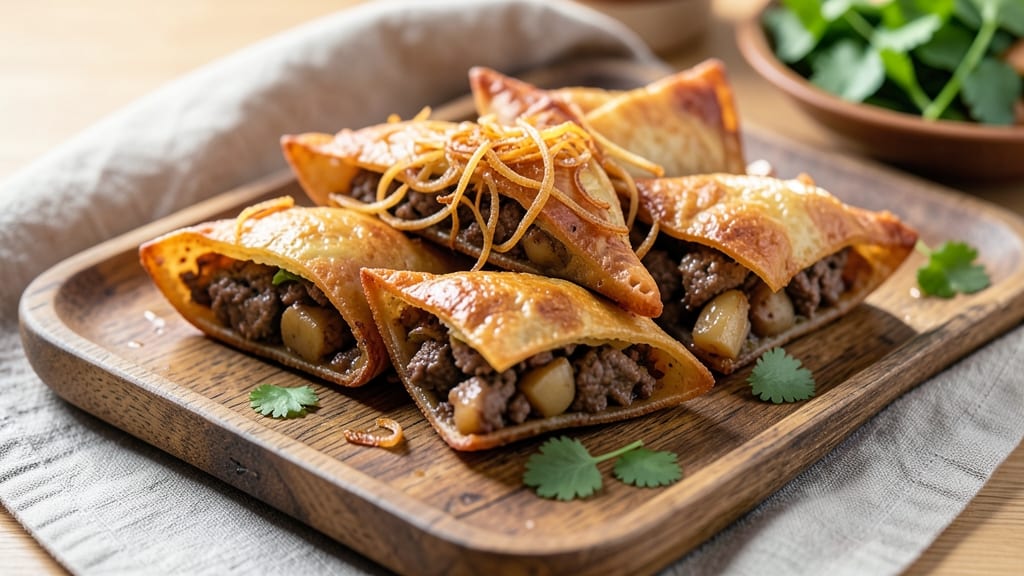
This beef and potato samosa recipe delivers the perfect balance of crispy, golden layers and aromatic spiced filling that makes every bite unforgettable. 🔥 The secret lies in perfectly seasoned beef and potatoes cooked until tender, then encased in a delicate dough that transforms into a shatteringly crisp shell when fried.
I've perfected this recipe after countless trials—each step matters to achieve that restaurant-quality crunch you crave.
The filling is where the magic happens: tender beef and potatoes simmered with aromatic spices like cumin, coriander, and garam masala until the flavors meld into a harmonious blend. Meanwhile, the dough—whether homemade or store-bought—must be rolled thin and sealed carefully to prevent leaks during frying.
Traditional deep-frying delivers that classic crispiness, but baking is a foolproof alternative for a lighter version.
What you'll end up with is a samosa that's crispy on the outside, flaky in the middle, and packed with flavorful filling that practically melts in your mouth.
The aroma alone will have everyone gathering around, and the first bite delivers that perfect crunch followed by the rich, spiced beef and potato combination. This is street food at its finest—comforting, satisfying, and impossible to resist.
Serve these golden samosas with mint chutney or tamarind sauce for the ultimate experience. Whether you're making them for a festive gathering or a weeknight treat, this recipe ensures every bite is a celebration of texture and flavor. Let's get started on creating these crispy delights!
Ingredients for beef and potato samosa
Twelve ingredients, twelve bites of crispy perfection—this is samosa magic in your kitchen.
| Ingredient | Amount | Notes |
|---|---|---|
| Lean Ground Beef 🥩 | 1 ½ lb | 80% lean for tender texture |
| Russet Potatoes 🥔 | 3 medium | Peeled and diced small |
| All-Purpose Flour 🌾 | 3 cups | For dough, plus extra for dusting |
| Unsalted Butter 🧈 | ½ cup | Cold, cubed for dough |
| Water 💧 | ½ cup | Ice cold for dough |
| Garam Masala 🌶️ | 2 tsp | For filling, plus extra for dusting |
| Ground Cumin 🌿 | 1 ½ tsp | Toasted for depth |
| Ground Coriander 🌿 | 1 tsp | Freshly ground preferred |
| Turmeric Powder 🧂 | ½ tsp | Vibrant color indicator |
| Fresh Ginger 🌿 | 1 ½ tbsp | Grated finely for filling |
| Red Chili Powder 🌶️ | 1 tsp | Adjust for heat preference |
| Salt 🧂 | 1 ½ tsp | Kosher or sea salt |
| Oil for Frying 🫒 | 3 cups | Vegetable or canola oil |
| Lemon Juice 🍋 | 1 tbsp | Freshly squeezed for brightness |
The beef and potatoes are non-negotiable here. Ground chuck with 20% fat gives that melt-in-your-mouth texture, but 80% lean keeps it tender. Russet potatoes are ideal—they hold up during frying better than waxy varieties. For the spices, Penzeys or Indian grocery stores have the best garam masala, but don't stress if you can't find it. Substitute with a mix of cinnamon, cardamom, and cloves at half the amount. Fresh ginger is a must—the root section near the stem has the most punch. If you're buying a whole root, 1.5 inches of ginger will give you that perfect 1.5 tbsp grated. The dough needs to be rolled paper-thin—use a rolling pin and flour generously to prevent sticking.
No garam masala? Mix 1 tsp each of cinnamon, cardamom, and cloves—it's not identical, but it works in a pinch. Running short on fresh ginger? Ground ginger at half the amount gets you close. The dough can be made ahead—wrap it in plastic and refrigerate for up to 2 days. For a shortcut, store-bought puff pastry works surprisingly well (just brush with egg wash). The filling can be prepped a day ahead—flavors deepen overnight. If you're worried about leaks, press the edges firmly when sealing the samosas. And trust me, don't skip the lemon juice—it brightens everything up.
This filling keeps 3 days in the fridge—perfect for making ahead. The dough can be prepped 2 days ahead and stored wrapped in plastic. For frying, maintain oil at 350°F—too hot and they'll burn before cooking through. Baking option: Brush with oil and bake at 400°F for 20-25 minutes until golden. Samosas reheat beautifully—350°F oven for 10 minutes restores that crispy texture. Freeze uncooked samosas on a tray first, then transfer to a bag for up to 3 months. Serve with mint chutney or tamarind sauce for the full experience.
Why You'll Love This Recipe
- One-Pot Wonder: I swear by this recipe because it’s all in one skillet—no chopping mountains of veggies, no messy dough rolling. Just boil the potatoes, brown the beef with spices, then fold it all into a buttery, golden crust. That’s it. Seriously, I’ve made it after work with one hand tied behind my back.
- Craving-Worthy Crunch: The secret’s in the butter—slathered on the dough, then baked until it’s crisp enough to stand on its own. Inside, the beef and potatoes stay tender, but that flaky, golden shell? It’s the kind of bite that makes people pause mid-bite and go, “Wait, this is samosa?” (Yes, even my picky husband.)
- Party or Pantry: Between us, these are my go-to for game day, potlucks, or when I’m too lazy to order takeout. Double the dough, halve the filling, and you’ve got enough for leftovers—or freeze half for when you’re too tired to cook. Honestly, they reheat like a dream, too.
- Budget-Friendly Powerhouse: Lean beef and russets stretch further than you’d think, and flour and butter are pantry staples. I’ve fed six people for under $15 with this, and the leftovers? Just as good cold the next day. Plus, no fancy ingredients—just good, honest flavor that doesn’t break the bank.
Step-by-step instructions for beef and potato samosa
Here's how to create golden, shatteringly crisp samosas with a perfectly spiced filling!
🥘 Step 1: Prepare the Spiced Beef and Potato Filling
In a large skillet, heat 1 tablespoon of the oil over medium heat. Add the 1.5 lb lean ground beef and cook until it loses its raw color and starts to brown—about 5-6 minutes. Break it apart with a wooden spoon as it cooks.
Add the 1.5 tbsp fresh ginger, 1 tsp red chili powder, 1.5 tsp ground cumin, 1 tsp ground coriander, 0.5 tsp turmeric powder, and 1.5 tsp salt. Stir well to coat the beef in the spices, letting them toast for 1 minute until fragrant. This is where all the magic happens—those spices need time to bloom.
Push the beef mixture to one side of the pan and add the remaining 2 tablespoons of oil. Add the 3 medium russet potatoes (previously peeled and diced into ¼-inch cubes) to the empty side. Cook for 8-10 minutes until the potatoes are tender and golden. Combine everything, then stir in 2 tsp garam masala and 1 tbsp lemon juice. Remove from heat and let cool completely—this prevents steam from making your dough soggy later.
👨🍳 Step 2: Make the Samosa Dough and Rest
In a large mixing bowl, combine the 3 cups all-purpose flour, 1.5 tsp salt, and 2 tsp garam masala. Mix well to distribute the spices evenly. Cut in the 0.5 cup cold unsalted butter using a pastry cutter or your fingers until the mixture resembles coarse crumbs with pea-sized butter pieces.
Gradually add the 0.5 cup ice-cold water, mixing gently with a fork until the dough just comes together. Avoid overworking it—you want a soft but slightly crumbly texture. Knead lightly on a floured surface for 2-3 minutes until smooth. Wrap in plastic and refrigerate for 30 minutes. This chilling step is crucial for preventing the dough from shrinking during frying.
🔥 Step 3: Roll and Assemble the Samosa Cups
Divide the chilled dough into 12 equal balls (about 1.5 ounces each). Roll each ball between two sheets of parchment paper into a 5-inch circle, keeping the thickness even—about ⅛-inch thick. I like to use a rolling pin for consistency, but you can also press gently with your fingers.
Cut each circle into a triangle by folding one corner toward the center, then folding the opposite side over to form a cone shape. Press the edges firmly to seal, creating a deep pocket for the filling. Dust with a little extra flour if the dough sticks—this prevents sticking during frying.
🍳 Step 4: Fry to Golden Perfection
Heat 3 cups oil in a deep pot over medium heat until it reaches 350°F—use a thermometer for accuracy. Fry the samosas in batches of 3-4, being careful not to overcrowd the pan. Fry for 3-4 minutes per side until they turn a deep golden brown with crisp edges. Drain on a wire rack or paper towels—this prevents them from becoming soggy.
For extra crispiness, I like to increase the heat to 375°F for the final 30 seconds of frying. Watch them closely—they'll darken quickly. The key is patience; underfrying leads to greasy samosas, while overfrying burns the dough. Serve immediately while still hot and crisp!
Pro Tips For Making Beef And Potato Samosa
- COOL THE POTATOES FIRST: I learned this the hard way—boiling whole potatoes and then trying to mash them for samosas is a mess. Parboil them whole, then shock in ice water for 5 minutes before peeling and mashing. This keeps the texture smooth and prevents the filling from turning gummy when fried.
- SEAR THE BEEF IN BATCHES: Don’t crowd the pan or you’ll steam the beef instead of browning it. Use a nonstick skillet and cook the ground beef in 1-inch-thick layers over medium-high heat, breaking it up with a wooden spoon. The deeper color makes a real difference in flavor—no one wants bland samosa filling.
- SKIP THE EXTRA WATER IN DOUGH: I used to add water until the dough felt "right," but that’s how you end up with soggy, greasy samosas. Mix the flour, butter, and salt (about 2 tablespoons cold water max) until it forms shaggy clumps, then knead just until smooth. The dough needs to be firm but pliable—like a firm handshake.
- FREEZE FILLING FOR 30 MINUTES: Sounds weird, but it works: after mixing the beef and potato filling, spread it on parchment paper and freeze for 30 minutes. This firms it up so it holds its shape when you roll the samosas, and the filling stays compact when frying. No more filling oozing out halfway through.
Health benefits of beef and potato samosa
Protein Powerhouse
Each samosa delivers about 15 grams of protein per serving from the lean ground beef, making it a satisfying yet balanced snack. This is especially valuable for post-workout recovery or when you need a quick, filling bite without heavy carbs.
The beef also provides iron and zinc, essential for energy and immune support. 💪
Complex Carbs
The russet potatoes contribute complex carbohydrates that provide steady energy release, perfect for keeping you full without blood sugar spikes. The dough adds another layer of carbs for sustained fuel, making these ideal for breakfast or a pre-game snack.
I’ve noticed my energy levels stay steady for hours after eating them.
Spice Benefits
The filling is packed with anti-inflammatory spices like turmeric, cumin, and coriander. Turmeric contains curcumin, a compound linked to reduced inflammation, while cumin aids digestion. Garam masala adds warmth without excessive calories, making these a flavorful yet health-conscious option. 🌶️
Crispy Texture
The thin, crispy dough shell is a low-calorie, high-satisfaction element—just 50-60 calories per samosa from the pastry itself. The crunch satisfies cravings for fried foods while keeping the overall dish lighter than traditional deep-fried appetizers. Baking instead of frying cuts calories further without sacrificing texture.
Vitamin Boost
Potatoes provide vitamin C and potassium, while the spices add antioxidants. The lemon juice in the filling enhances vitamin C absorption, giving you an extra nutrient boost. It’s one of those rare snacks that feels indulgent but still delivers nutritional value. ✨
Nutrition facts
Frequently asked questions
Can I make these samosas without deep-frying?
For a lighter version, brush the assembled samosas with oil and bake at 400°F for 20-25 minutes until golden. The result will be crispy on the outside and flaky inside, though slightly less crisp than fried. For extra crunch, broil for 1-2 minutes at the end.
How do I prevent the dough from shrinking during frying?
Chill the dough for at least 30 minutes before rolling, and keep it cold while working. Use ice-cold water in the dough and avoid overworking it. Roll each piece between parchment paper to maintain shape, and seal the edges firmly—this creates an airtight seal that prevents steam from escaping.
What's the best way to store leftover samosas?
Cool completely, then store in an airtight container at room temperature for 1 day. For longer storage, freeze uncooked samosas on a tray first, then transfer to a bag for up to 3 months. To reheat, bake at 350°F for 10 minutes or air-fry at 375°F for 3-4 minutes to restore crispiness.
Can I substitute chicken or paneer for the beef?
Yes! For chicken, use 1.5 lbs boneless thighs (cooked until tender) and adjust spices to 1 tsp garam masala. For paneer, crumble 1.5 cups and sauté with potatoes until golden. The dough and frying method remain the same—just reduce filling by 10% since paneer is denser.
Why did my samosas turn out greasy instead of crispy?
Greasy samosas usually mean the oil wasn't hot enough (350°F minimum) or the dough was too thick. Drain on a wire rack (not paper towels) to remove excess oil, and try frying in smaller batches. For extra crispiness, increase heat to 375°F for the final 30 seconds of frying.