
Soups & Stews
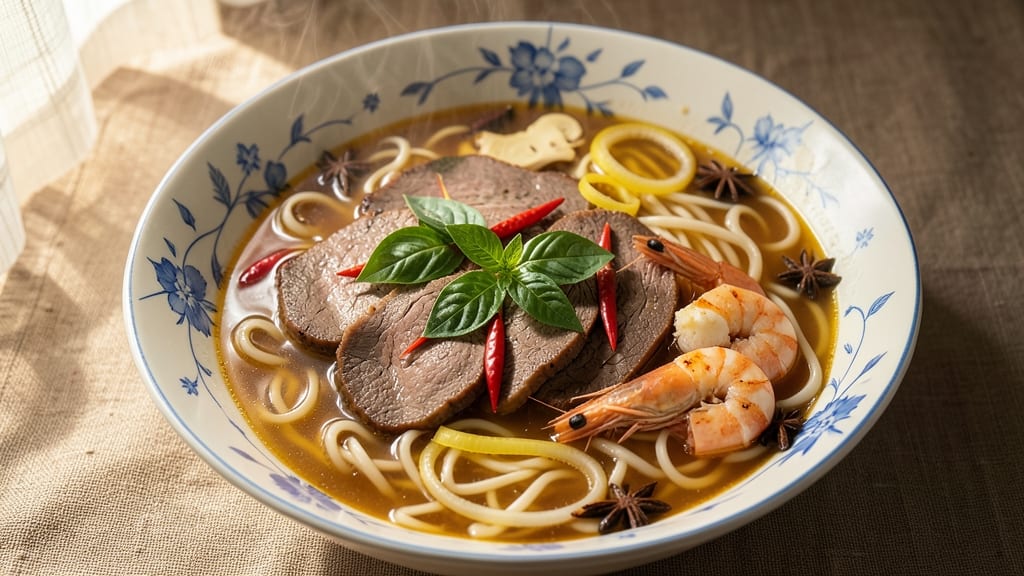
This beef and shrimp pho recipe delivers the aromatic, comforting flavors of Vietnam's most beloved soup—rich with star-anise and ginger. The secret lies in a deeply infused broth that simmers for hours, extracting maximum flavor from beef bones and aromatic spices.
While traditional versions require overnight preparation, I've adapted it with modern shortcuts that preserve authenticity without sacrificing depth.
The recipe begins with a beef broth base, where star-anise, cinnamon, and cardamom create that signature pho aroma. Thinly sliced beef and shrimp cook separately to ensure perfect textures—tender beef that melts in your mouth and shrimp that stays delicate.
Fresh herbs and lime add brightness at the end, balancing the broth's richness. For a pescatarian version, simply omit the beef or use a vegetarian broth base.
What makes this recipe special is its flexibility—whether you're making it for a family dinner or meal prepping for the week. The broth can be made ahead and reheated, while the noodles and proteins cook quickly when ready to serve.
Each bowl delivers that perfect harmony of savory broth, tender proteins, and fresh garnishes that define authentic pho.
The result is a bowl of soup that transports you to Hanoi's bustling streets, with every spoonful offering layers of flavor and comfort. Ready in about 90 minutes (with prep time), this recipe proves you can achieve restaurant-quality pho at home.
Let's get started on creating your own fragrant, flavorful masterpiece.
Ingredients for beef and shrimp pho
Deeply aromatic spices meet tender proteins in this authentic Vietnamese-inspired dish.
| Ingredient | Amount | Notes |
|---|---|---|
| Beef Bones 🦴 | 2 lb | Marrow-rich for depth |
| Yellow Onion 🧅 | 1 whole | Chopped, 1-inch pieces |
| Fresh Ginger 🧄 | ½ cup | Julienned, 1/4-inch slices |
| Star-Anise 🌟 | 2 whole | Pods, lightly crushed |
| Cinnamon Stick 🌿 | 1 whole | 2-inch length |
| Cardamom Pods 🌿 | 4 whole | Lightly crushed |
| Cloves 🌶️ | 4 whole | Whole, not ground |
| Garlic Cloves 🧄 | 6 cloves | Smashed, not minced |
| Shrimp 🦐 | 1 lb | Large, peeled, deveined |
| Beef Sirloin 🥩 | ½ lb | Thinly sliced, 1/8-inch |
| Rice Noodles 🍜 | 8 oz | Banh pho or flat rice noodles |
| Fish Sauce 🍶 | 2 tbsp | Red Boat preferred |
| Lime 🍋 | 1 whole | Juiced, for serving |
| Fresh Thai Basil 🌿 | ¼ cup | Chopped, for garnish |
| Fresh Cilantro 🌿 | ¼ cup | Chopped, for garnish |
| Bean Sprouts 🌱 | 1 cup | For crunchy texture |
| Jalapeño 🌶️ | 1 whole | Sliced, optional heat |
The star-anise and cinnamon are non-negotiable for that signature pho aroma. Whole Spice or Penzeys carry the best quality pods—avoid pre-ground spices here. For the ginger, fresh is essential; the juice and oils are what give pho its depth. The beef bones should be marrow-rich—ask your butcher for knuckle or neck bones. If you can't find them, beef chuck roast works in a pinch, but the broth won't be as rich. The shrimp should be large and firm—frozen works fine, just thaw overnight in the fridge.
No star-anise? Anise seeds at double the amount work, but the flavor won't be identical. Short on fish sauce? Soy sauce plus a pinch of sugar gets you close. The Thai basil is crucial—regular basil won't cut it. No fresh basil? Cilantro plus a pinch of red curry powder is the next best thing. For the noodles, banh pho is ideal, but rice vermicelli. Just soak them in hot water for 10 minutes before serving. The jalapeño is optional—skip it if you prefer mild flavors.
The broth keeps beautifully—3-4 days in the fridge or 3 months frozen. I always make a double batch and freeze portions for quick weeknight dinners. The noodles and proteins cook in minutes, so you can assemble bowls as needed. For best texture, reheat the broth gently—never boil. The shrimp should cook for just 1-2 minutes in the hot broth, while the beef goes in last minute to stay tender. Garnishes like bean sprouts and herbs should be added fresh at serving time.
Why You'll Love This Recipe
- One-Pot Magic: The beef bones and aromatics—star-anise, cinnamon, ginger—simmer in the same pot where the broth builds. No extra dishes, no fuss. Just layer the onions and shrimp later, and you’re done.
- Deep Umami Bomb: That beef bone broth? It’s the star. The slow simmer unlocks a richness you won’t find in store-bought, and the shrimp soak up the flavor like sponges. Honestly, the first sip makes you forget it’s weeknight dinner.
- Weeknight to Party Fix: Same recipe, different vibes. Serve it with rice noodles for a quick family meal, or add fresh herbs and lime for a restaurant-worthy spread. My roommates never guess how little effort this takes.
- Broth Goldmine: Make a double batch—this stuff keeps for days. Freeze half for lazy mornings or when you’re too tired to cook. Between us, the leftovers are often better than the first round. (Yes, even on a Tuesday night.)
Step-by-step instructions for beef and shrimp pho
Master this aromatic broth technique—layered spices and slow-cooked bones create depth.
Prepare the Bone Broth Foundation
Rinse the 2 lb beef bones thoroughly under cold water to remove any blood or impurities. Place them in a large stockpot and cover with 8 cups cold water. Bring to a boil over high heat, then immediately reduce to a gentle simmer for 15 minutes to remove surface impurities. Skim off any foam that rises to the surface with a fine-mesh skimmer.
Add the 1 whole yellow onion (chopped), 0.5 cup fresh ginger (julienned), 2 whole star-anise (lightly crushed), 1 whole cinnamon stick, 4 whole cardamom pods (lightly crushed), and 4 whole cloves. Simmer uncovered for 3 hours—this slow extraction develops the complex spice flavors. The broth should reduce slightly and take on a rich amber color.
Build the Aromatic Base
After the initial 3-hour simmer, add the 6 cloves garlic (smashed) to the broth. Continue simmering for another 1 hour—this ensures the garlic infuses fully without burning. The broth should smell deeply aromatic with notes of star-anise and ginger. Strain the broth through a fine-mesh sieve into a clean pot, pressing gently on the solids to extract maximum flavor.
Return the strained broth to the pot and add 2 tbsp fish sauce, stirring well to combine. Taste and adjust seasoning—you want a balance of umami from the fish sauce and subtle spice from the aromatics. Keep the broth warm over low heat while you prepare the remaining components.
Cook the Protein Components
In a separate skillet, sear the 0.5 lb beef sirloin (thinly sliced) over medium-high heat for 1-2 minutes per side until just cooked through—it should remain tender. Remove and set aside. In the same skillet, add the 1 lb shrimp (peeled and deveined) and cook for 1-2 minutes per side until they turn opaque and curl slightly. Season both proteins lightly with salt and black pepper before removing.
For the rice noodles, rinse the 8 oz rice noodles under cold water to remove excess starch, then soak them in a bowl of hot water for 10-15 minutes until pliable but still slightly firm. Drain and set aside—overcooking will make them mushy.
Assemble and Serve
Divide the cooked noodles among four bowls. Ladle the hot broth over the noodles until they're fully submerged. Arrange the seared beef sirloin and shrimp on top of the noodles. Garnish with 1 cup bean sprouts, 0.25 cup fresh Thai basil, 0.25 cup fresh cilantro, and slices of 1 whole jalapeño. Finish with a squeeze of lime juice from the 1 whole lime.
Serve immediately with additional lime wedges and extra fish sauce on the side. Each bowl should have a balance of tender noodles, rich broth, and fresh garnishes. The star-anise and ginger will linger in your mouth long after the last bite—this is the hallmark of a well-made pho.
Pro Tips For Making Beef And Shrimp Pho
- Char the Bones First: I learned this the hard way—skipping the charring means your broth will taste like soup, not pho. Blacken the beef bones on high heat until they’re sticky and smell smoky, then deglaze with water. That crust packs serious flavor, and rushing it means missing out on the deep umami base your broth needs.
- Slice Ginger Paper-Thin: No, your knife skills don’t have to be perfect, but thin slices (almost translucent) dissolve cleanly into the broth without turning it mushy. Use a mandoline if you’re impatient—just don’t let it turn to paste, or your pho will taste like ginger syrup.
- Don’t Crowd the Pot: Tossing in all the aromatics at once—star-anise, cinnamon, onions—steams them instead of toasting. Work in batches: char the onions first, then add spices one by one to the dry pot. This guarantees they caramelize, not just simmer.
- Save the Shrimp Shells: Sounds weird, but it works: reserve the shrimp shells after peeling and toss them into the broth with the bones. They’ll release sweetness and color without overpowering the beef flavor. Just strain them out before serving—no one wants shell bits in their bowl.
Make-ahead tips for beef and shrimp pho
Broth Prep Ahead
The pho broth is the heart of this dish, and it makes the perfect make-ahead component.
After simmering your 2 lb beef bones with spices for 4 hours, strain and store the broth in airtight containers in the fridge for up to 4 days or freeze for 3 months.
I like to portion it into quart-sized freezer bags—just leave 1 inch of space at the top for expansion. When ready to serve, reheat the broth gently over low heat (never boil) until steaming. This preserves all those delicate star-anise and ginger flavors. 🌟
Protein Prep Strategy
Cook your proteins separately to maintain perfect textures. Sear the 0.5 lb beef sirloin and 1 lb shrimp ahead of time, then store them in separate airtight containers in the fridge for up to 2 days.
Reheat the beef in a skillet over medium heat for 1-2 minutes until warmed through, while the shrimp should only need 30 seconds in the hot broth when serving. This keeps them tender and ready to go. 🦐
Noodle Prep Shortcut
Rice noodles are the easiest make-ahead component—just soak the 8 oz rice noodles in hot water for 10 minutes, drain, and store them in a resealable plastic bag with a damp paper towel to keep them pliable. They'll stay fresh in the fridge for 2 days.
When ready to serve, simply rinse them under cold water to refresh, then soak again in hot water for 2-3 minutes before assembling. This saves you 15 minutes of prep time during busy weeknights. 🍜
Garnish Prep Kit
Prep all your garnishes in one go to make assembly a breeze. Chop 0.25 cup Thai basil, 0.25 cup cilantro, and 1 cup bean sprouts and store them in a small container with a damp paper towel to maintain freshness. Slice the jalapeño and store it separately.
Keep these in the fridge for up to 3 days. When serving, just grab a handful of each garnish and toss it on top of your assembled bowl. This keeps your pho looking vibrant and fresh every time. 🌿
Complete Meal Prep
For ultimate convenience, assemble full bowls ahead of time—just omit the lime juice and fresh garnishes. Store the assembled bowls (without broth) in airtight containers for up to 2 days. When ready to serve, heat the broth separately, ladle it over the noodles, and top with fresh garnishes.
This is perfect for busy mornings or meal prep Sundays. Just reheat the broth for 5 minutes and add the garnishes right before serving. 💡
Freezer-Friendly Broth
If you're planning to freeze your pho broth, let it cool completely before transferring to freezer-safe containers. I recommend using glass jars or BPA-free plastic containers to avoid absorbing odors. When ready to use, thaw the broth overnight in the fridge, then reheat it gently.
Never microwave the broth directly—it can create hot spots that ruin the delicate flavors. This method keeps your broth tasting fresh and aromatic for up to 3 months. ❄️
Nutrition facts
Frequently asked questions
Can I make this pho vegetarian or pescatarian?
For a pescatarian version, simply omit the beef and use a vegetarian broth base made from mushrooms, tofu, or kombu seaweed. The shrimp will still provide that delicious seafood element. For a fully vegetarian option, replace the shrimp with extra mushrooms or tofu and use vegetable broth instead. The aromatic spices and noodles will still shine!
How do I get the shrimp perfectly cooked without overcooking?
The secret is cooking shrimp just 1-2 minutes per side in the hot broth or skillet. They're done when they turn opaque and curl slightly—this usually takes about 2 minutes total. For extra insurance, use a meat thermometer and aim for 145°F internal temperature. Never overcook them or they'll turn rubbery.
Can I use pho instant powder instead of making broth from scratch?
Yes, but with some adjustments! Use 2 packets of pho instant powder (about 2 tbsp) per 4 cups water instead of the beef broth. Add extra fish sauce (1 extra tbsp) and increase the ginger to 1 tsp ground ginger to compensate for the less complex flavor. The texture will be different but still delicious—great for quick weeknight meals!
Why does my pho broth taste bitter? Bitterness usually comes from overcooking the spices or using too much star-anise. Remove the star-anise pods after 1 hour of simmering (instead of the full time) to prevent bitterness. Also,
What's the best way to store leftovers?
Store the broth separately from the noodles and proteins. Keep broth in airtight containers for up to 4 days in the fridge or 3 months frozen. Reheat gently over low heat (never boil). For noodles, store them in a resealable bag with a damp paper towel and soak again in hot water for 2-3 minutes before serving. Proteins should be reheated separately in a skillet.