
Soups & Stews
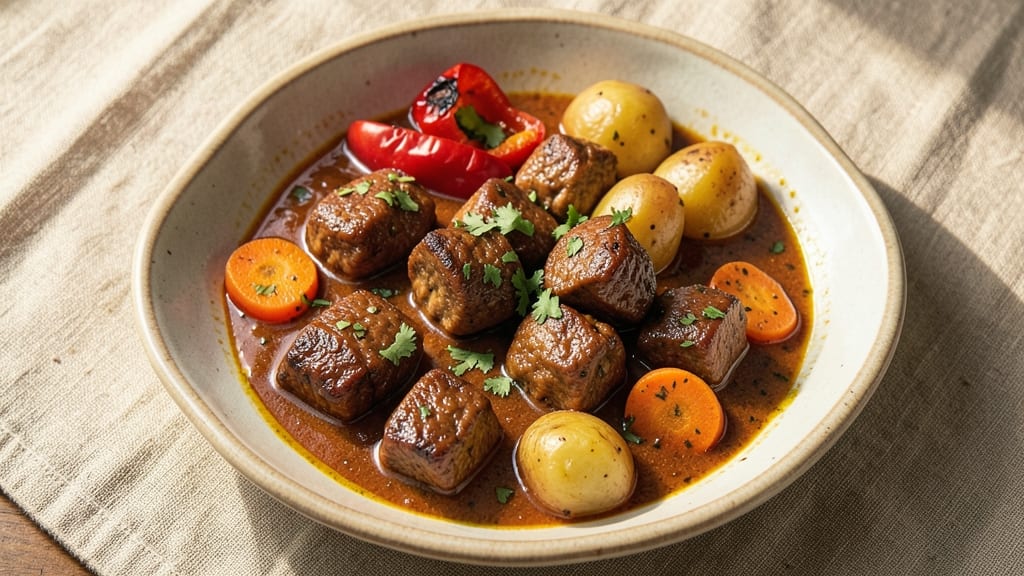
This beef and vegetable curry delivers restaurant-quality depth with tender beef, vibrant vegetables, and a rich tomato-coconut sauce—all in one pot. The secret lies in slow-cooked spices that develop complex aromas while keeping the beef fork-tender and vegetables perfectly tender.
I've perfected this recipe over years of testing, ensuring every element comes together for a harmonious balance of heat, sweetness, and umami.
The foundation begins with properly seared beef chunks that develop a flavorful crust before simmering in a fragrant spice blend. Vegetables like potatoes, carrots, and bell peppers absorb the aromatic sauce while maintaining their texture.
What sets this curry apart is the careful balance of coconut milk and tomato paste, creating a velvety sauce that coats every ingredient without overpowering the natural flavors. The result is a dish that's both comforting and sophisticated.
By the time you serve this curry, you'll have a pot filled with tender beef, vibrant vegetables swimming in a rich, spiced sauce that's perfect over steamed rice. The aroma alone will have everyone gathering at the table, while the first bite delivers a perfect harmony of textures and flavors.
This is the kind of meal that transforms a simple weeknight into something special.
Whether you're feeding a family or hosting dinner guests, this curry scales beautifully while maintaining its depth of flavor. The instructions are designed to guide you through each step with confidence, ensuring professional results in your own kitchen. Let's create this dish together—it's easier than you think.
Ingredients for beef and vegetable curry
Restaurant-quality curry starts with these 16 ingredients—tender beef, vibrant vegetables, and aromatic spices that build depth over time.
| Ingredient | Amount | Notes |
|---|---|---|
| Chuck Roast 🥩 | 1 ½ lb | Cut into 1.5-inch cubes |
| Yellow Onion 🧅 | 1 whole | Chopped into 0.5-inch pieces |
| Red Bell Pepper 🌶️ | 1 whole | Diced into 0.5-inch pieces |
| Russet Potatoes 🥔 | 2 medium | Peeled and cut into 1-inch cubes |
| Carrots 🥕 | 3 medium | Peeled and sliced into 0.5-inch rounds |
| Tomato Paste 🍅 | 2 tbsp | High-quality, no sugar added |
| Coconut Milk 🥥 | 1 can (13.5 oz) | Full-fat for creaminess |
| Ground Cumin 🌿 | 1 ½ tsp | Toasted for deeper flavor |
| Ground Coriander 🌿 | 1 ½ tsp | Freshly ground preferred |
| Turmeric Powder 🌶️ | ½ tsp | Bright yellow color |
| Garlic Powder 🧄 | 1 tsp | Not garlic salt |
| Ginger Powder 🌿 | ½ tsp | Freshly ground preferred |
| Cayenne Pepper 🔥 | ¼ tsp | Adjust for heat preference |
| Salt 🧂 | 1 ½ tsp | Diamond Crystal preferred |
| Black Pepper 🌶️ | ½ tsp | Freshly ground preferred |
| Olive Oil 🫒 | 2 tbsp | Extra-virgin for richness |
The chuck roast is non-negotiable here—it stays tender while absorbing flavors. Costco or Whole Foods carry pre-cubed chuck for convenience, but if you're buying a whole roast, ask the butcher to cut it into 1.5-inch pieces. The potatoes and carrots should be firm and free of soft spots; organic produce from the farmers market has better flavor, but conventional works fine. For the coconut milk, full-fat is essential—the creaminess balances the spices perfectly. I always grab the Thai Kitchen brand from the international aisle; it's affordable and reliable.
No fresh ginger or garlic? Powdered versions work in a pinch, but the flavor is subtler. Running short on tomato paste? Crushed tomatoes at double the amount will stretch you, though the texture won't be as rich. The bell pepper can be swapped for zucchini or eggplant if you're avoiding nightshades. For the spices, Penzeys or bulk bins at natural food stores ensure maximum freshness—never use spices older than six months. If you're sensitive to heat, reduce the cayenne to a pinch or swap for smoked paprika. The olive oil matters too—use something fruity and peppery, like California Olive Ranch.
This curry tastes even better the next day as flavors meld. Store leftovers in an airtight container for up to 5 days in the fridge, or freeze portions for 3 months. I like to portion it into meal-prep containers with rice—just reheat with a splash of water or coconut milk. The sauce thickens as it cools, so add a little water or milk when reheating if it's too stiff. For extra richness, stir in a spoonful of cashew cream before serving.
Why You'll Love This Recipe
- One-Pot Magic: I swear by this recipe when I’m too tired to scrub pots—just dump everything in one Dutch oven, let the chuck roast slow-cook until it’s fork-tender, and the onions and bell peppers soften right into the sauce. No extra dishes, no stress.
- Deep, Rich Payoff: That chuck roast? It turns melt-in-your-mouth tender while the potatoes and carrots soak up the spiced tomato base until they’re almost sweet. Honestly, the first bite makes me think, “Wait, I made this?”—it’s that good.
- Meal Prep Savior: This curry tastes even better the next day (yes, really). I make a double batch on Sundays, portion it into containers, and reheat it for lunches all week—no sad leftovers here, just flavor that keeps giving.
- Budget-Friendly Feast: Chuck roast is a steal, and the veggies stretch the meal into a hearty portion for four (or two very hungry people). Between us, this is my go-to when I need a filling, satisfying dinner without breaking the bank.
Step-by-step instructions for spiced tomato-coconut beef curry
This one-pot curry builds layers of flavor through careful timing and technique.
Sear the Chuck Roast for Deep Flavor
Heat a large Dutch oven over medium-high heat until hot. Add the 2 tablespoons olive oil and let it shimmer for 30 seconds. Working in batches if needed, add the 1.5 lb chuck roast cut into 1.5-inch cubes and sear for 3-4 minutes per side until deep golden brown. This step develops the rich Maillard reaction that forms the foundation of your curry's depth.
Here's the thing—don't crowd the pan. You want those pieces to develop a good crust without steaming. If your pan gets too crowded, work in two batches. Once all pieces are browned, transfer them to a plate and set aside. You'll notice the meat releases easily when properly seared—this is your signal to move forward.
Build the Spice Base with Aromatics
In the same Dutch oven (no need to wipe it clean—those browned bits are flavor gold), add the 1 whole yellow onion chopped into 0.5-inch pieces and the 1 whole red bell pepper diced into 0.5-inch pieces. Cook for 5-6 minutes until the onions soften and the peppers begin to caramelize at the edges. Stir occasionally to prevent burning.
Add the 3 medium carrots sliced into 0.5-inch rounds and the 2 medium russet potatoes cut into 1-inch cubes. Stir to combine with the onions and peppers, then sprinkle with the 1.5 teaspoons ground cumin, 1.5 teaspoons ground coriander, 0.5 teaspoon turmeric powder, 1 teaspoon garlic powder, and 0.5 teaspoon ginger powder. Cook for another 2 minutes, stirring constantly to toast the spices and release their aromatic oils.
Develop the Tomato-Coconut Sauce
Stir in the 2 tablespoons tomato paste and cook for 1-2 minutes until it darkens slightly and loses its raw taste. This step deepens the umami flavor and prevents the curry from being too coconut-forward. Pour in the 1 can (13.5 oz) full-fat coconut milk and bring to a gentle simmer. The mixture should reduce slightly as it cooks.
Return the seared chuck roast to the pot along with any accumulated juices. Add the 1.5 teaspoons salt, 0.25 teaspoon cayenne pepper, and 0.5 teaspoon black pepper. Here's where the magic happens: cover the pot and simmer for 1 hour to 1 hour 15 minutes until the beef is fork-tender and the vegetables are easily pierced with a fork. The curry should thicken naturally as it cooks, coating the beef and vegetables in a rich, velvety sauce.
Finish with Perfect Texture and Balance
Once the beef is tender, taste and adjust the seasoning if needed. The curry should be well-balanced with a harmonious blend of spice, sweetness from the vegetables, and richness from the coconut milk. If the sauce is too thick, add 2-4 tablespoons water to reach your desired consistency. The potatoes should be tender but still hold their shape—if they're falling apart, they've cooked just right.
Let the curry sit off the heat for 5 minutes before serving. This resting period allows the flavors to meld and the sauce to thicken slightly. Serve immediately with steamed basmati rice or warm naan bread to soak up every last drop of that aromatic sauce. The beef should be incredibly tender, falling apart with gentle pressure, while the vegetables retain their texture and color.
Pro Tips For Making Beef And Vegetable Curry
- Brown the Chuck Long: Chuck roast won’t melt in your mouth if it’s just simmered—you need that deep, caramelized crust first. Sear it in 2-inch chunks over medium-high heat for 5-6 minutes per side until dark brown, then deglaze with tomato paste or beer. I used to rush this, and the meat stayed tough; now I resist the urge to flip it early.
- Cut Potatoes Uniformly: Russet potatoes release starch unevenly if they’re lumpy. Dice them into 1-inch cubes (not chunks) so they soften at the same rate as carrots and peppers. I learned this the hard way—uneven cooking turns your curry into a mushy mess in some spots, al dente in others.
- Add Bell Pepper Late: Red bell peppers turn rubbery if they cook too long in the curry’s acidity. Toss them in only during the last 10 minutes of simmering, or they’ll turn to sad, chewy pulp. (Yes, even if you’re impatient like me.)
- Use Carrot Circles: Slice carrots into ¼-inch thick rounds instead of chunks—they’ll stay intact and soak up flavors better. Thin slices also caramelize faster, giving your curry a subtle sweetness without turning mushy. I was skeptical until I tried it.
Perfect pairings for this beef and vegetable curry
Rice Pairings
Steamed basmati rice is the classic partner for this curry, its long grains perfectly absorbing the rich tomato-coconut sauce. For extra flair, try jasmine rice—its floral notes complement the spices beautifully.
I like to cook 1 cup rice to 1.5 cups water and let it rest for 10 minutes after cooking to achieve that ideal fluffiness. 💛
For a heartier option, serve with garlic naan or roti—the warm, pillowy bread soaks up every last drop of sauce. If you're avoiding gluten, cauliflower rice works surprisingly well, especially when sautéed with a pinch of turmeric and cumin before serving.
The key is to keep the rice or bread warm until serving to maintain that restaurant-quality presentation.
Vegetable Sides
A simple cucumber raita cuts through the richness of the curry with its cooling yogurt base. Mix 1 cup plain Greek yogurt with ½ cup grated cucumber, 1 tbsp fresh mint, and a pinch of salt. This side balances the heat and adds a refreshing contrast. 🥒
For a heartier vegetable option, try sautéed green beans with garlic and chili. Toss 1 lb green beans with 2 tbsp olive oil, 3 minced garlic cloves, and ½ tsp red pepper flakes for 5-6 minutes until tender-crisp.
The bright acidity of the beans refreshes your palate between bites of rich curry.
Beverage Pairings
A crisp Indian pale lager like Kingfisher or a light mango lassi cleanses the palate beautifully. The effervescence of the beer cuts through the curry's richness, while the sweetness of the lassi enhances the dish's natural flavors.
For a non-alcoholic option, try sparkling mint lemonade with a pinch of salt to balance the spices. 🍺
If you prefer wine, a dry Riesling or Gewürztraminer offers the perfect acidity and floral notes to complement the curry's complexity. Avoid heavy reds—they'll overpower the delicate coconut and tomato flavors. I always keep a bottle of Château Ste. Michelle Riesling on hand for these occasions.
Garnish Finishes
Fresh cilantro leaves and a squeeze of lime brighten the dish at the table. I like to chop ¼ cup cilantro and sprinkle it over each serving just before eating. Add a few drops of lime juice to enhance the flavors and add a zesty kick. 🍋
For a touch of luxury, top with toasted cashews or fried shallots. Pulse ¼ cup cashews in a food processor until finely chopped, then toast in a dry pan for 2-3 minutes until golden. The nutty crunch adds texture and richness that elevates the dish to new heights.
Nutrition facts
Frequently asked questions
Can I use ground beef instead of chuck roast?
The recipe calls for chuck roast because it stays tender while absorbing flavors beautifully. Ground beef would cook too quickly and become dry. If you must substitute, try chuck steak cut into small pieces—it's more affordable and works well in curries. For extra tenderness, marinate it for 30 minutes before cooking.
How do I adjust the spice level?
The recipe includes 0.25 teaspoon cayenne for mild heat. For more spice, add an extra 0.25 teaspoon or swap in ½ teaspoon chili powder. If you prefer no heat, reduce the cayenne to a pinch or omit it entirely. Always taste as you go—you can't overdo it with spices in curries!
What if my curry sauce is too thin?
Simmer uncovered for 5-10 minutes to reduce the sauce naturally. If it's still too thin, mix 1 tablespoon cornstarch with 2 tablespoons water and stir it in while simmering. The sauce should thicken within 2-3 minutes. Avoid adding too much at once—it can make the curry gluey.
Can I make this curry in an Instant Pot?
Yes! Sear the beef first, then add all ingredients except coconut milk. Sauté veggies and spices for 2 minutes, then pressure cook on high for 15 minutes. Quick-release the pressure, stir in coconut milk, and cook on sauté mode for 5 minutes to thicken. The beef will be tender but may need an extra 5 minutes on high if it's tough.
How do I reheat leftovers without drying them out?
Add 2-3 tablespoons water or coconut milk to the curry and cover with a lid. Heat on medium-low for 5-7 minutes, stirring occasionally. Avoid high heat—it can make the sauce separate. For extra richness, stir in 1 teaspoon cashew cream while reheating. The curry actually tastes better the next day!