
Sauces & Condiments
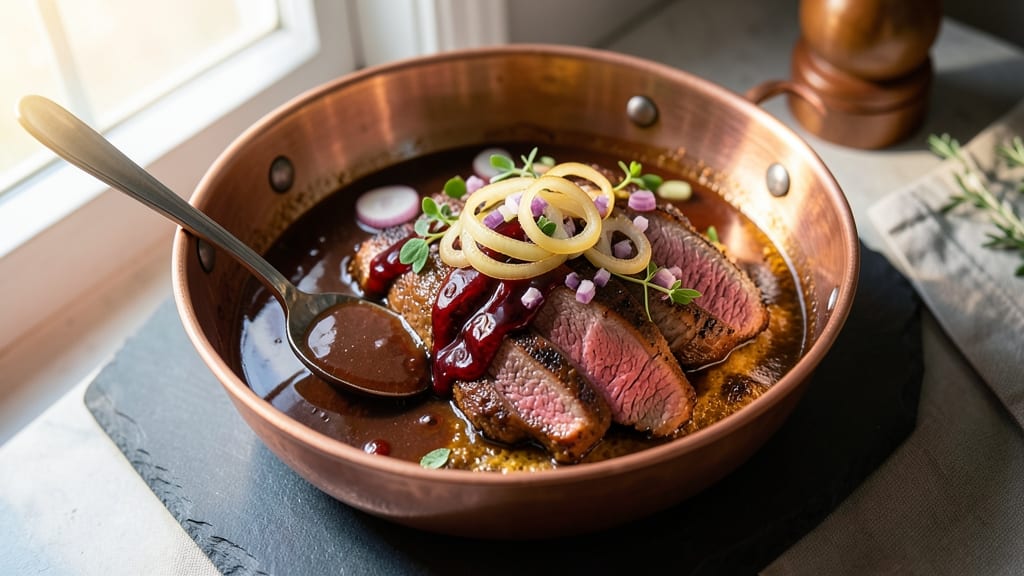
This beef au jus sauce recipe transforms simple pantry ingredients into a restaurant-quality braising liquid with deep red wine richness and umami depth. The secret lies in building flavor through slow reduction and careful straining, creating a sauce that elevates roasts, steaks, and even mashed potatoes. I've perfected this technique after years of testing, and it consistently delivers that velvety, wine-infused sauce that makes every bite taste luxurious.
The process begins with a flavorful fond—those precious browned bits that cling to the pan—then builds complexity through red wine reduction and aromatic vegetables. Unlike store-bought versions, this homemade sauce develops layers of flavor that come together beautifully when simmered properly.
The key is patience; rushing this sauce will result in a thin, vinegary liquid rather than the rich, velvety condiment you're aiming for.
What you'll end up with is a deep red sauce with perfect balance—tangy from the wine, savory from the beef fond, and aromatic from the herbs. It's the kind of sauce that makes even simple roasted chicken feel like a special occasion meal.
The best part? This sauce keeps well in the refrigerator for up to five days, allowing you to make a big batch for multiple meals.
While the basic recipe delivers exceptional results, I've included variations for adding herbs, mustard, or even a touch of cream for different applications.
Whether you're using it as a dipping sauce, a pan sauce for steak, or a finishing touch for roasted vegetables, this beef au jus will become your new kitchen staple. Let's get started on creating this versatile, flavor-packed sauce.
Ingredients for beef au jus sauce
Simple pantry staples transform into luxurious red wine braise with deep umami richness.
| Ingredient | Amount | Notes |
|---|---|---|
| Red Wine 🍷 | 1 ½ cups | Bold, dry variety like Cabernet Sauvignon |
| Beef Fond 🥩 | 2 tbsp | From browning 1 lb beef (chuck or ribeye) |
| Beef Broth 🥄 | 1 cup | Homemade or high-quality store-bought |
| Yellow Onion 🧅 | 1 whole | Medium size, roughly chopped |
| Carrot 🥕 | 1 whole | Medium size, roughly chopped |
| Garlic Cloves 🧄 | 4 cloves | Peeled and smashed |
| Tomato Paste 🍅 | 1 tbsp | Smooth, not chunky |
| Fresh Thyme 🌿 | 2 sprigs | Or 1 tsp dried thyme |
| Fresh Parsley 🌿 | ¼ cup | Chopped, for finishing |
| Balsamic Vinegar 🍶 | 1 tbsp | For depth and tang |
| Unsalted Butter 🧈 | 2 tbsp | For finishing and richness |
| Salt 🧂 | 1 ½ tsp | Kosher or sea salt |
| Black Peppercorns 🌶️ | ½ tsp | Freshly cracked |
The red wine is non-negotiable—Cabernet Sauvignon or Merlot work best, but whatever bold, dry bottle you have open will do. Trader Joe's and Total Wine often have affordable options. For the beef fond, chuck roast or ribeye creates the deepest flavor—simply brown 1 lb of beef in a heavy pan until deeply caramelized, then remove and shred. The fond stays behind to build sauce complexity. Fresh thyme and parsley elevate the aroma, but dried thyme works in a pinch at one-third the amount. If you've got a French market nearby, grab fresh thyme sprigs—they're worth the trip.
No red wine? Beef broth with 1 tbsp balsamic vinegar mimics the depth. Short on thyme? Dried thyme at one-third the amount or a pinch of rosemary works too. The tomato paste can be skipped if you dislike its intensity, but it adds a subtle sweetness that balances the wine's acidity. For extra richness, stir in 1 tbsp cornstarch mixed with cold water during the final reduction—it thickens beautifully without altering the sauce's character. The butter at the end is crucial (trust me on the full-fat version)—it adds luxurious mouthfeel and balances the sauce's acidity.
This sauce peaks after 3-4 days in the fridge—time for the flavors to meld. Store in a clean jar with a tight seal, submerged in sauce to prevent a skin. Reheat gently on the stove, stirring occasionally, until warm. Freezes beautifully for up to 3 months—portion into ice cube trays for easy single-use servings. The sauce thickens as it cools, so thin with a splash of warm water or broth if needed. Always save some for the next batch—it's the secret to restaurant-quality depth.
Why You'll Love This Recipe
- Pantry Magic: I swear by this recipe because it uses what I already have—no last-minute grocery runs. The red wine adds depth instantly, while the beef fond (just browned bits from your roast!) turns scraps into gold.
- Deep Umami Bomb: That caramelized onion and beef fond combo? It’s like a flavor explosion in your mouth. The red wine cuts through the richness, leaving you with a sauce that’s rich but never heavy—perfect for dipping or drizzling.
- Weeknight Hero: Between us, this is my go-to when I’m too tired to fuss. Simmer it while I chop veggies for dinner, and boom—ready to toss with steak, mashed potatoes, or even eggs the next morning. (Yes, even on a Tuesday night.)
- Budget-Friendly Luxury: I make a double batch and freeze half—no takeout splurges here. The beef fond stretches the sauce further, and the wine’s acidity keeps it fresh for days. Fancy flavor, zero guilt.
Step-by-step instructions for deep red wine braise
Here's how to build a rich, velvety au jus that transforms simple ingredients into restaurant-quality sauce.
Build the Flavor Base with Beef Fond and Aromatics
Heat a large Dutch oven over medium-high heat. Add the 2 tablespoons beef fond and let it brown for 1-2 minutes until deeply caramelized and fragrant. This concentrated beef flavor is the foundation of your sauce—don't rush this step or you'll miss out on that deep umami punch.
Add the 1 whole yellow onion and 1 whole carrot, both roughly chopped, along with the 4 cloves garlic cloves that you've smashed. Cook for 5-6 minutes until the vegetables soften and begin to caramelize at the edges. You'll see the onions turn translucent and the carrots develop a slight golden hue—this is when they'll release their natural sweetness into the sauce.
Deglaze with Red Wine and Develop the Sauce
Pour in the 1.5 cups red wine and scrape up all those beautiful browned bits from the bottom of the pan with a wooden spoon. This deglazing step captures all the concentrated flavor you've built. Let the wine simmer for 3-4 minutes until it reduces by about half and the alcohol smell dissipates—you'll notice the aroma shift from sharp wine to rich, fruity undertones.
Stir in the 1 tablespoon tomato paste and cook for another 1 minute until it dissolves completely. The tomato paste adds depth and helps thicken the sauce later. Add the 1 cup beef broth and bring everything to a gentle simmer. Here's where the magic happens: let it bubble away for 10-12 minutes until the mixture reduces by about a third and becomes syrupy.
Add Herbs and Seasonings for Depth
Add the 2 sprigs fresh thyme, 1.5 teaspoons salt, and 0.5 teaspoon cracked black peppercorns to the simmering sauce. Stir gently and let it cook for another 5 minutes. The thyme will release its earthy aroma while the peppercorns infuse subtle heat. Taste the sauce now—it should be rich and balanced, with bright acidity from the wine and deep umami from the beef fond.
If you find the sauce is too acidic at this point, add the 1 tablespoon balsamic vinegar now. The balsamic will add complexity and help mellow the acidity. Simmer for another 2-3 minutes to let all the flavors meld together. The sauce should coat the back of a spoon with a velvety texture.
Finish with Butter and Fresh Herbs
Reduce heat to low and whisk in the 2 tablespoons unsalted butter until completely melted and incorporated. The butter adds richness and helps create a silky, glossy finish. Stir in the 0.25 cup chopped fresh parsley at the very end—this adds freshness and a pop of color that makes the sauce look as good as it tastes.
Taste again and adjust seasoning if needed. The sauce should be perfectly balanced with bright acidity from the wine, deep umami from the beef fond, and herbal notes from the thyme. If it's too thick, whisk in 1-2 tablespoons warm water to reach your desired consistency. Serve immediately over sliced beef or use as a luxurious sauce for roasted vegetables.
Pro Tips For Making Beef Au Jus Sauce
- DEGLaze AGGRESSIVELY: When you brown the beef fond, don’t just splash in liquid—scrape every last bit from the pan with a wooden spoon. That crusty, caramelized mess is where the real flavor hides, and skipping this step means you’re leaving money on the table. I used to think it was enough to pour in the wine, but now I make sure the fond is actually dissolved before adding anything else.
- SAUTE ONIONS LOW: Onions for au jus aren’t about color—they’re about flavor extraction. Cook them on medium-low heat for 10-12 minutes until soft and translucent, not golden. High heat burns them before they release their sweetness, and you’ll taste the bitterness in every sip of sauce. (Yes, even if you’re impatient like me.)
- STRAIN THE FOND: After deglazing, strain the liquid through a fine-mesh sieve to remove any sediment or cooked-on bits. I learned this the hard way when I served a sauce with tiny fond particles that made it gritty. It’s a 30-second step that makes a real difference—your sauce will look silky and taste cleaner.
- USE DRY WINE: If your red wine has sediment, strain it first. But more importantly, use a dry, not sweet, variety—like Cabernet or Merlot. Sweet wine throws off the balance of acidity and depth in the sauce, and you’ll end up with something cloying instead of rich. (And no, cooking wine doesn’t count—it’s not the same.)
Best sauces and condiments for this dish
Red Wine Reduction
The red wine is the soul of this sauce, so choose a bold, dry variety like Cabernet Sauvignon or Merlot—avoid sweet wines like Zinfandel. I recommend Trader Joe's Charles Shaw Cabernet for affordability and consistent quality.
Deglaze the pan with the wine immediately after browning the beef fond to capture those precious caramelized bits. Let it reduce by half before adding other ingredients—this concentrates the wine's natural sweetness and deepens its flavor profile. 🍷
Herb Infusions
Fresh herbs elevate this sauce from good to extraordinary. Thyme adds earthy depth, while parsley brightens the finish. For extra complexity, add 1 bay leaf during simmering and remove before serving. If you're feeling adventurous, try 1 sprig rosemary for piney notes or 1 tsp smoked paprika for subtle smokiness.
Always add fresh herbs at the very end to preserve their vibrant aroma.
Creamy Variations
For a richer finish, stir in ¼ cup heavy cream during the final 2 minutes of simmering. This creates a velvety texture perfect for mashed potatoes or roasted vegetables. I like Whole Foods 365 Organic Heavy Cream for its consistent quality.
For a lighter option, whisk in 2 tbsp crème fraîche at the end—it adds tangy richness without overpowering the wine's acidity.
Mustard Twist
Add 1 tbsp Dijon mustard when you incorporate the beef broth. This adds a subtle tang that balances the sauce's richness. Let it simmer for 3-4 minutes to mellow the mustard's sharpness.
The result is a sauce with complex layers that works beautifully with beef tenderloin or lamb chops. For extra depth, use Maille Dijon—its smooth texture integrates perfectly.
Storage Secrets
This sauce keeps beautifully in the fridge for up to 5 days in an airtight container. For long-term storage, freeze in ice cube trays—each cube makes a perfect single-use portion. When reheating, warm gently on the stove over low heat and stir occasionally.
If the sauce thickens upon cooling, thin with 1-2 tbsp warm water or beef broth. The flavors actually improve overnight as the ingredients meld. ❄️
Nutrition facts
Frequently asked questions
Can I substitute red wine with another liquid?
Yes, but the flavor will change. For a similar depth, use 1.5 cups beef broth plus 1 tbsp balsamic vinegar. If you prefer white wine, use 1 cup dry white wine with ½ cup beef broth—it'll be lighter but still delicious. The wine's acidity and alcohol are key for building sauce complexity, so avoid substituting with water or juice.
How do I fix a sauce that's too thin?
Simmer uncovered for 5-10 minutes to reduce naturally. For quicker results, mix 1 tbsp cornstarch with 2 tbsp cold water, then whisk into the hot sauce. Let it bubble for 1-2 minutes until thickened. If it's still too runny, repeat with another ½ tbsp cornstarch mixture. Never use flour directly—it can make the sauce cloudy.
What's the best way to use leftover au jus?
This sauce is incredibly versatile! Use it as a dipping sauce for roast beef, drizzle over mashed potatoes, or toss with roasted vegetables. For extra richness, stir in 2 tbsp crème fraîche before serving. It also makes a fantastic gravy base—just thin with a splash of broth and strain. Freeze extras in ice cube trays for single-use portions later.
Can I make this sauce without a Dutch oven?
Use a heavy-bottomed stainless steel pot or even a large skillet with high sides. The key is maintaining even heat—avoid aluminum or thin pans that can burn the fond. For extra insurance, start on medium heat and adjust as needed. The sauce will still develop deep flavor, though a Dutch oven's even heat distribution makes the process smoother.
Why did my sauce turn cloudy?
Cloudiness usually means starch or flour wasn't fully incorporated or dissolved. For future batches, whisk cornstarch with cold water first, then add to the hot sauce while stirring constantly. If it happens, simmer gently for 2-3 minutes to clarify. Avoid adding raw flour directly—it can create lumps. For a clear sauce, strain through a fine-mesh sieve before serving.