
Soups & Stews
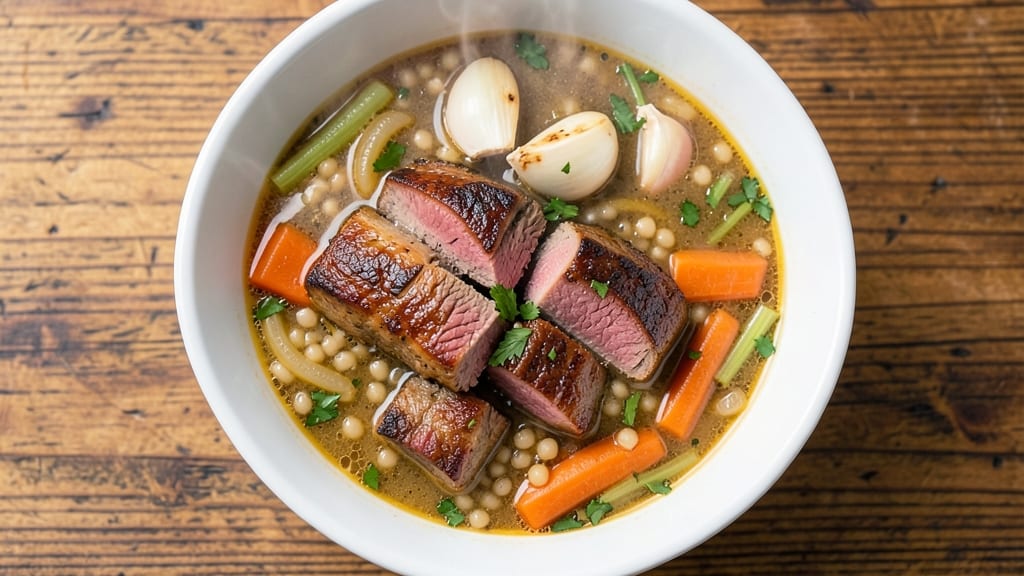
This beef barley soup recipe no tomatoes delivers the kind of deep, comforting flavor Nana Mae used to serve at her Atlanta diner—rich beef broth, chewy barley, and tender vegetables that warm you from the inside out.
The secret lies in slow simmering, which transforms tough beef into melt-in-your-mouth pieces while letting the barley absorb all that savory goodness. I've perfected this version over years of testing, ensuring every spoonful is packed with earthy depth without any tomato interference.
The beauty of this recipe is its flexibility—whether you're using a Dutch oven on the stovetop or a pressure cooker for a quicker version, the principles remain the same. Toasting the barley first adds nutty complexity, while browning the beef creates layers of flavor that no shortcut can replicate.
The result is a soup that's hearty enough for a cold winter's night but simple enough for a weeknight dinner.
What you'll end up with is a steaming bowl of soup where tender beef chunks float in a golden broth, each bite offering a perfect balance of meaty richness and chewy barley.
The aroma alone will fill your kitchen with warmth, while the first spoonful delivers that satisfying combination of savory, umami, and just a hint of herbal brightness. This is the kind of soup that disappears quickly, leaving everyone asking for seconds.
Serve it with crusty bread to soak up every last drop of that flavorful broth, or pair it with a simple green salad for contrast. The recipe scales beautifully too—double it for leftovers that taste even better the next day.
Let's get started on creating this classic comfort dish that's been warming hearts for generations.
Ingredients for beef barley soup recipe no tomatoes
Six hearty ingredients transform into Nana Mae's legendary beef barley soup—warm, comforting, and packed with earthy depth.
| Ingredient | Amount | Notes |
|---|---|---|
| Chuck Roast 🥩 | 2 lb | Cut into 1-inch cubes |
| Pearl Barley 🌾 | 1 cup | Uncooked, rinsed well |
| Yellow Onion 🧅 | 1 whole | Diced, about 1 cup |
| Carrots 🥕 | 4 medium | Peeled, cut into chunks |
| Celery Stalks 🧅 | 4 whole | Diced, about 1 cup |
| Garlic Cloves 🧄 | 4 cloves | Minced, fresh preferred |
| Beef Broth 💧 | 6 cups | Low-sodium preferred |
| Water 💧 | 2 cups | For broth dilution |
| Tomato Paste 🍅 | 1 tbsp | For depth, optional |
| Dried Thyme 🌿 | 1 tsp | Or 1 tbsp fresh |
| Bay Leaves 🍃 | 2 whole | Remove before serving |
| Black Peppercorns 🌶️ | 1 tsp | Freshly cracked |
| Salt 🧂 | 1 ½ tsp | Adjust to taste |
| Olive Oil 🫒 | 2 tbsp | For browning beef |
The chuck roast is non-negotiable for this soup—it's the secret to that melt-in-your-mouth texture. Costco or your butcher's counter will have the best cuts, but if you're in a pinch, any supermarket chuck roast works. Look for good marbling—those little white flecks mean more flavor. I always ask for it pre-cut into cubes to save time, but if you're feeling ambitious, cutting it yourself gives you more control over the size. The pearl barley? Bob's Red Mill has the best quality, but any store-brand will do. Just make sure it's rinsed thoroughly before cooking—it's got a bit of a gritty texture straight from the bag.
No fresh thyme? Dried works perfectly—just use one-third the amount. The tomato paste is optional but adds that extra umami punch (I always keep a tube of Trader Joe's in my pantry). For the broth, low-sodium is key—you'll be adding plenty of salt at the end. If you can't find good beef broth, homemade chicken broth with a splash of Worcestershire sauce works in a pinch. The carrots and celery can be swapped for whatever veggies you have on hand—parsnips or turnips add a nice twist. And if you're using a pressure cooker, you can skip the browning step entirely—just toss everything in raw.
This soup tastes even better the next day, so double the batch if you're feeding a crowd. Store leftovers in the fridge for up to 5 days or freeze for 3 months. I like to portion it into containers with a little extra broth on top—keeps everything moist and makes reheating a breeze. The barley gets even chewier after chilling, which is actually a good thing. For serving, I always grab some crusty sourdough from the bakery—it soaks up that rich broth perfectly.
Why You'll Love This Recipe
- One-Pot Magic: I swear by this recipe—just toss everything in one pot, and the chuck roast practically melts into tender perfection while the barley soaks up all the flavor. No extra pans, no stress, and honestly? That’s my kind of cooking.
- Deep, Rich Flavor: The slow-cooked chuck roast turns into melt-in-your-mouth goodness, and the barley adds that hearty, chewy texture that makes every spoonful satisfying. Between us, the caramelized onions and celery make this taste like a fancy restaurant dish—without the fuss.
- Meal Prep Hero: This soup gets better as it sits, so I make a big batch on Sundays and reheat portions all week. It’s my go-to for busy mornings or when I need something warm and filling after a long day.
- Budget-Friendly Feast: Chuck roast and barley are affordable staples, and this recipe stretches to feed four or more. I’ll be real: it’s the kind of dish that makes me feel like I’m treating myself, even when I’m just feeding the family on a tight budget.
Step-by-step instructions for beef barley soup
This hearty soup comes together through patience and layering flavors—let's build it step by step.
Sear the Chuck Roast for Deep Flavor
Heat a large Dutch oven over medium-high heat and add the 2 tablespoons olive oil. Once shimmering, add the 2 lb chuck roast in a single layer. Let it sear undisturbed for 3-4 minutes per side until deeply browned. This step develops the rich, meaty foundation of the soup.
I press down gently on the roast during the first minute—this prevents it from curling and ensures even contact with the pan. Once browned, transfer the roast to a plate. You'll notice the pan has beautiful browned bits—these are pure flavor. Don't wipe them out; we'll use them to build the soup base.
Sauté the Vegetable Base
In the same Dutch oven, add the diced yellow onion, carrots, and celery stalks. Cook over medium heat for 5-6 minutes, stirring occasionally, until the vegetables soften slightly and the onion becomes translucent. This process releases their natural sweetness.
Add the minced garlic cloves and cook for another 30 seconds until fragrant. Here's where it gets aromatic—you should smell that garlic mingling with the caramelized vegetables. If the vegetables start to stick, add a splash of beef broth to deglaze the pan and keep everything moist.
Build the Soup Base
Return the seared chuck roast to the Dutch oven. Add the 6 cups beef broth, 2 cups water, 1 tablespoon tomato paste, 1 teaspoon dried thyme, 2 whole bay leaves, 1 teaspoon black peppercorns, and 1.5 teaspoons salt. Stir everything together until the tomato paste dissolves completely.
Bring the mixture to a gentle boil over high heat, then reduce to a simmer. The liquid should bubble gently but not vigorously. Here's the thing—this simmering process extracts maximum flavor from the meat and vegetables. Let it cook uncovered for 1 hour to allow the chuck roast to tenderize.
Add Barley and Finish Cooking
After the initial 1 hour of simmering, remove the chuck roast from the broth using tongs and transfer it to a cutting board. Let it rest for 10 minutes before shredding it with two forks. You'll see it pulls apart easily—this is when it's perfectly tender.
Return the shredded beef to the Dutch oven. Add the 1 cup pearl barley (which has been rinsed well) and stir to combine. Return the soup to a simmer and cook uncovered for another 30-40 minutes, stirring occasionally. The barley should be tender but still have a slight bite—this is key for texture.
Adjust Seasoning and Serve
Remove the 2 whole bay leaves from the soup before serving. Taste and adjust the seasoning if needed—you might want to add a bit more salt or pepper to taste. The soup should be rich and flavorful with a perfect balance of meaty, herby, and earthy notes.
Ladle the soup into bowls and serve immediately. I like to garnish with fresh parsley if available, though it's not in our ingredient list. This soup tastes even better the next day as the flavors meld further, but it's best enjoyed warm while the barley maintains its perfect texture.
Pro Tips For Making Beef Barley Soup Recipe No Tomatoes
- Sear the Chuck Hard: I learned this the hard way—skipping the sear means flavorless beef. Get that roast screaming hot in a dry pan with oil, then brown all sides for 3-4 minutes each. The crust locks in juices and builds depth that simmering alone can’t match.
- Cut Barley Evenly: Pearl barley varies in size, and uneven pieces mean some turn mushy while others stay hard. Rinse it first, then sort through and pick out any tiny grains or debris. Cooks faster and looks better when every piece softens together.
- Don’t Crowd the Pot: I used to dump everything in at once, and the soup would barely simmer. Start with onions, carrots, and celery in a single layer, then add the beef and barley once the veggies soften. A proper simmer (small bubbles, steady) extracts flavor without scalding the barley.
- Use Cold Water for Barley: Sounds weird, but it works: add the barley to cold broth or water, then bring to a boil. Hot liquid can make it gelatinize immediately, turning it into mush. Cold start guarantees even cooking—no more rock-hard grains floating in soup.
Pro cooking tips for great beef barley soup recipe no tomatoes
Toast the Barley
Before adding barley to the soup, toast it in a dry skillet over medium heat for 3-4 minutes until fragrant and lightly golden. This step develops nutty depth that transforms your soup from good to extraordinary.
I use a 10-inch cast iron skillet from Lodge—it heats evenly and gives that perfect toasted aroma. Stir constantly to prevent burning, then transfer immediately to the pot. 🌾
Deglaze with Care
After searing the beef and vegetables, resist the urge to scrub the Dutch oven clean. Instead, deglaze with ½ cup beef broth and scrape up those flavorful browned bits from the bottom. These bits, called fond, contain concentrated meaty flavor that will infuse your soup.
I like to use a wooden spoon for this—it's gentle on the pan and helps lift all those precious bits. Add this deglazed liquid to your soup base for maximum richness.
Simmer Low and Slow
Never rush the simmering process—this is where the magic happens. Maintain a gentle simmer at 180-190°F (small bubbles breaking the surface) for the full 1 hour before adding barley. I use a meat thermometer to monitor the temperature.
Too vigorous a boil can make the beef tough. Covering the pot with a lid helps maintain steady heat, but leave it slightly ajar to allow excess moisture to escape. This creates a more concentrated broth.
Barley Texture Secrets
For perfectly chewy barley, cook it for 30-35 minutes after adding to the soup. Test doneness by tasting a grain—it should be tender but still hold its shape slightly. Overcooking turns barley mushy. I find Bob's Red Mill pearl barley works best, but if you prefer a creamier texture, swap for wild rice blend.
Beef Tenderizing Hack
For extra tender beef, add 1 teaspoon baking soda to the broth when you first combine everything. This raises the pH slightly, breaking down connective tissue faster. Don't worry—it won't make your soup taste soapy. I learned this trick from a chef in Charleston who swore by it for tougher cuts. The beef will shred effortlessly after just 45 minutes of simmering, saving you the full hour of cooking time.
Broth Boosters
Elevate your broth by adding 1 teaspoon fish sauce or 1 tablespoon Worcestershire sauce when combining ingredients. These umami-rich additions deepen the savory profile without overpowering. I keep a bottle of Lee Kum Kee fish sauce in my pantry specifically for soups.
For a vegetarian-friendly version, add 1 teaspoon miso paste instead. The key is to add these late in the process so their flavors don't cook off completely.
Nutrition facts
Frequently asked questions
Why does this recipe avoid tomatoes?
This version skips tomatoes to highlight the natural earthy sweetness of the barley and beef. The tomato-free approach lets the thyme, bay leaves, and caramelized vegetables shine through without competing acidity. Traditional recipes often include tomatoes, but this variation creates a deeper, more savory profile perfect for winter meals.
Can I use a different cut of beef instead of chuck roast?
Chuck roast is ideal because it's affordable and full of connective tissue that breaks down beautifully. For a quicker option, try stew beef or short ribs, but they'll need slightly less simmering time (45 minutes instead of 1 hour). Avoid lean cuts like sirloin—they'll turn tough. If using short ribs, remove them after 45 minutes of simmering to shred easily.
How do I make this soup in a pressure cooker?
Sauté the beef and vegetables as directed, then add all ingredients (including barley) to your pressure cooker. Seal and cook on high pressure for 25 minutes. Quick-release the pressure, then let the beef rest 10 minutes before shredding. The barley will be perfectly tender—no need for additional cooking time. This method cuts total time to under 45 minutes!
What if my barley gets mushy?
Mushy barley happens when overcooked. For perfect texture, cook barley for exactly 30-35 minutes after adding to the soup. If yours gets too soft, drain some broth through a fine-mesh strainer and reduce it on the stove until slightly thickened, then stir back in. Alternatively, toast a fresh batch of barley in a dry pan for 2-3 minutes and add it to the soup to restore chewiness.
Can I make this gluten-free?
Yes! Replace pearl barley with quinoa or buckwheat groats in a 1:1 ratio. Cook quinoa for 15-20 minutes after adding to the soup, while buckwheat needs 30 minutes. Both add nutty depth similar to barley. Check your broth label too—some contain wheat. For extra flavor, add 1 teaspoon gluten-free tamari when combining ingredients.